
Sport
History in the making as Afghanistan face South Africa in their ICC T20 World Cup semi-final
South Africa’s former president Nelson Mandela saw sport as a unifying mechanism that could lessen divisions between the people

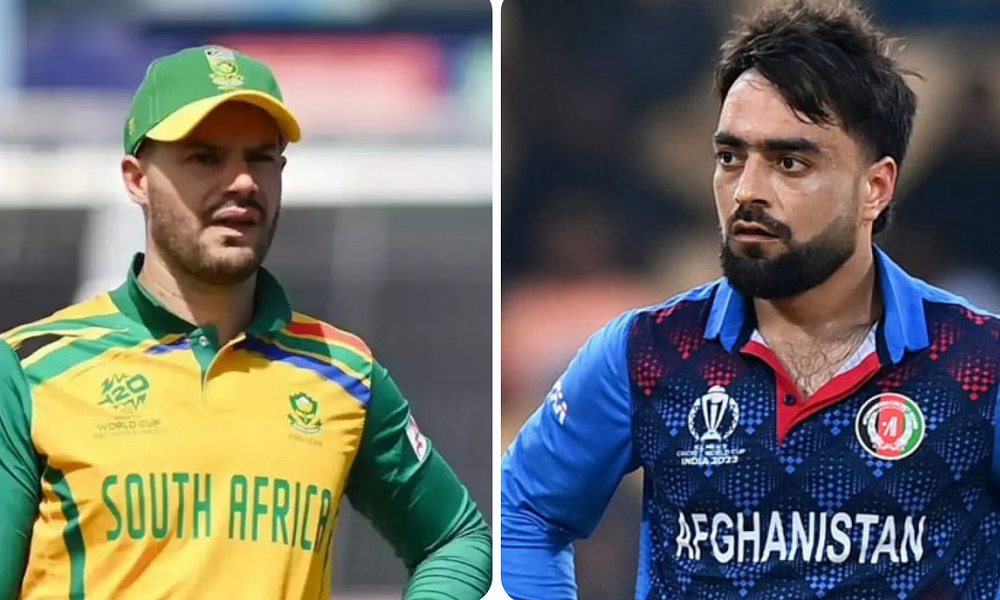
Afghanistan and South Africa are set to face off early Thursday in the first semi-final of this year’s T20 World Cup and whichever team wins will make history, as neither have ever played in an ICC T20 World Cup final.
For Afghanistan, the mere thought of making it this far in the tournament was a pipe dream just a few years ago.
However, the team has taken the world by surprise and risen up through the T20 ranks at a meteoric pace.
Since being granted international status in 2011, Afghanistan’s success in just 13 years is testimony to the Afghan cricketing fraternity and the players’ resilience and commitment to the game.
Excitement ahead of the match was almost palpable by Wednesday afternoon with social media platforms buzzing with anticipation for a potential India vs Afghanistan final.
Thousands of users expressed their support for Rashid Khan and his men, a team that has carried the tag of “underdog” for quite some time. While others leaned more towards an India vs South Africa final, an “underdog” win on a global sport stage is not unheard of.
In fact South Africa, also once considered an underdog, pulled off an incredible win in the 1995 Rugby World Cup, after having been in global isolation for years, due to sanctions leveled against the former apartheid government.
This Rugby World Cup had been the first major sporting event to take place in South Africa following the end of apartheid and it was the first Rugby World Cup in which South Africa was allowed to compete.
Today, that match stands as a hugely symbolic moment in South African history.
‘One Team, One Country’ – Nelson Mandela’s slogan to forge unity among a divided nation in 1995
The president at the time, Nelson Mandela, used the opportunity to orchestrate a show of unity among the people of a deeply divided nation by using the slogan “One Team, One Country.”
The former government’s policy of apartheid along with its gross human rights violations had long made South Africa an international pariah and from 1964 to 1992 the country was banned from most global sporting events including the Olympic Games.
Mandela however saw the rugby world cup as a way to help lessen divisions between Black and White South Africans and foster a shared national pride – especially as the country was host to this global event.
By the time South Africa made it to the final, against New Zealand, the nation had rallied in support of the team, put aside their differences, and were rooting wholeheartedly for their country.
Since then, South Africa has gone on to become a global powerhouse in rugby and in cricket, with countless players earning international respect by playing for foreign clubs and leagues.
To a degree, parallels can almost be drawn between South Africa’s history and Afghanistan’s current situation.
For years, cricket in Afghanistan was considered a Pashtun game, just like Black South Africans originally considered rugby to be a game played exclusively by White South Africans.
But this perception in Afghanistan has changed considerably over the past 10 years. After each victory, each milestone, and each successful sale of a player to one or other cricket league, the Afghanistan fan base has grown.
Today, millions of fans watch the matches on TV, they follow the team and players on social media, and hundreds of thousands of Afghan children look up to national players such as Rashid Khan, Mohammad Nabi, Fazalhaq Farooqi and Rahmanullah Gurbaz to name just a few.
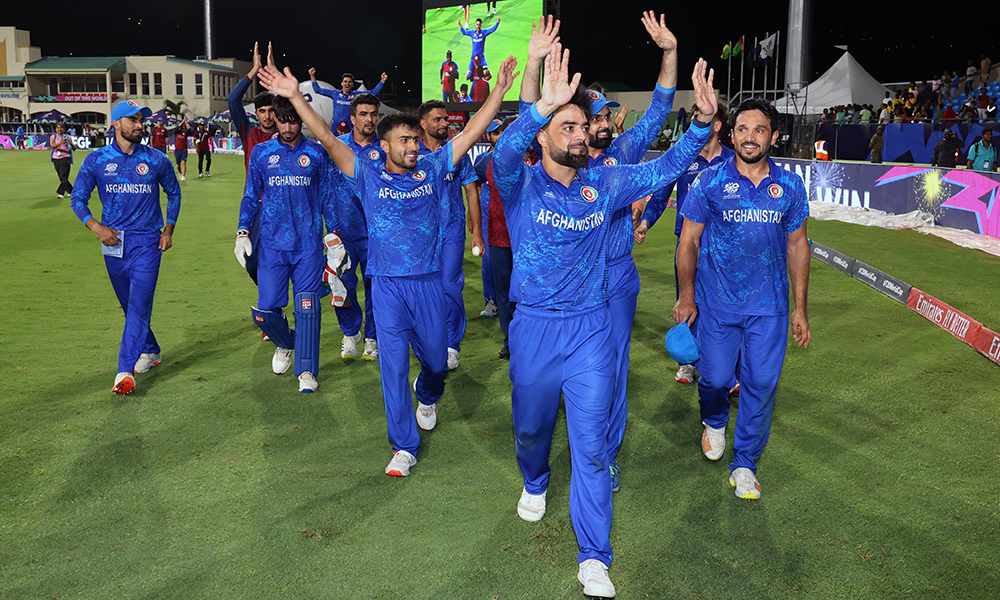
Afghanistan after beating Bangladesh earlier this week
It’s these players who are the role models, the heroes, who have against all odds risen up through the debris of war and taken the cricketing world by storm.
The power of sport as a uniting force was clear after the 1995 Rugby World Cup.
In his biography, Mandela, Martin Meredith wrote: “The whole of South Africa erupted in celebration, Blacks as joyful as the Whites.”
“Never before had Blacks had cause to show such pride in the efforts of their White countrymen. It was a moment of national fusion that Mandela had done much to inspire.”
Following South Africa’s victory, Mandela donned a Springbok rugby shirt and cap and proudly presented the trophy to the South African captain Francois Pienaar.
Years later, when Mandela died, Pienaar said that “when the final whistle blew, this country changed forever.”

South Africa’s former president Nelson Mandela hands Francois Pienaar the 1995 Rugby World Cup trophy
It was this display of unity, through sport, that crossed race, tribal and religious lines, and left instead “One Team, One Country”.
In the spirit of Mandela’s words and wisdom, one can understand what Afghanistan’s team captain Rashid Khan was alluding to in his video message on Wednesday when he called on the country, on Afghans at home and around the world, to support their team, and to keep them in their prayers.
But no matter the outcome of the T20 semi-final match on Thursday, the Afghanistan team are already winners in the eyes of millions of fans after having carved out their slice of history – by proving to be worthy of a nation’s pride and unquestionable support.
Fans across the country can tune in to Ariana Television on Thursday morning from 4.30am for the pre-match show. The match will be broadcast from 5am live and exclusively on Ariana Television.
RELATED STORIES
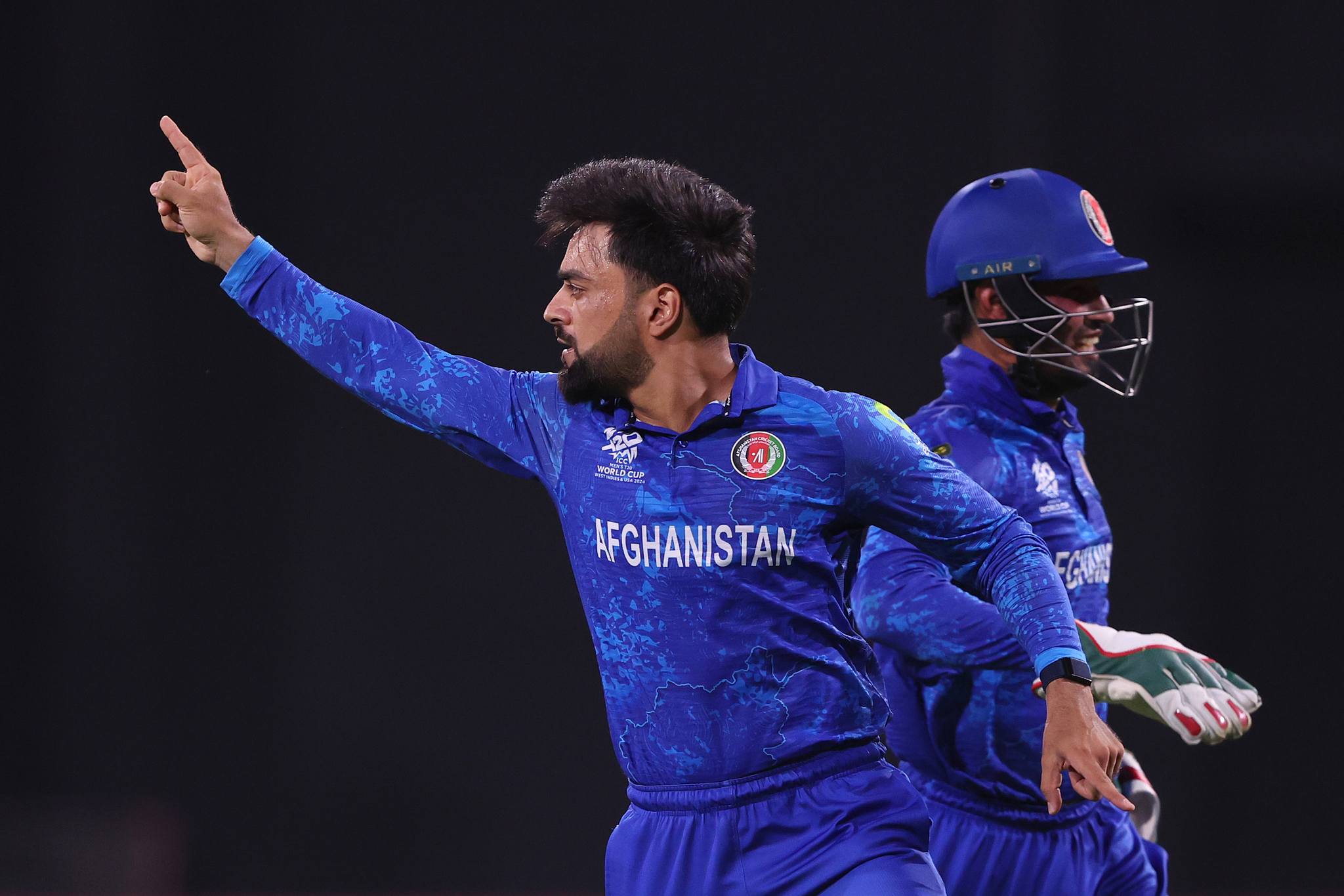
Afghanistan seal dramatic semi-final berth amid heart-stopping run chase
South Africa edge West Indies to reach World Cup semi-finals









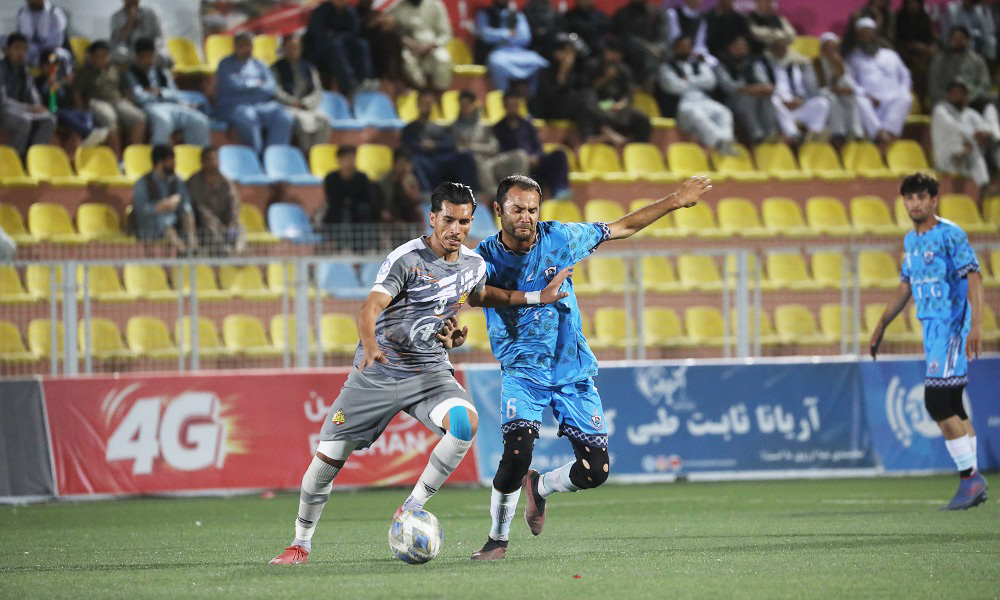
Abu Muslim Farah defeated Khurasan Faryab 2-0 in the 25th match of the sixth season of Afghanistan Champions League Roshan.
The match was played on Saturday at the Afghanistan Football Federation Stadium in Kabul.
Both teams pushed for an opening goal in the first half, but neither side managed to find the net, and the teams went into the break goalless.
Just two minutes into the second half, Abu Muslim Farah broke the deadlock to take a 1-0 lead.
Alireza Panahi later doubled Abu Muslim Farah’s advantage, sealing a 2-0 victory for the Farah side.
Abu Muslim Farah committed 13 fouls and received two yellow cards, while Khorasan Faryab committed seven fouls and received one yellow card.
Matches from the sixth season of the Roshan Afghanistan Champions League are being broadcast live and exclusively on Ariana Television.
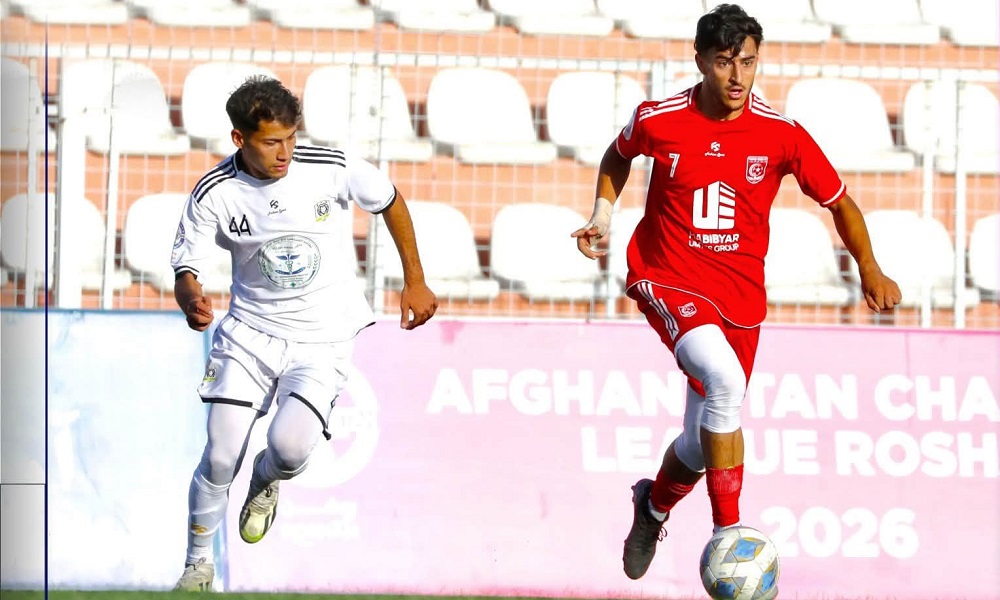
Omar Zawak Herat secured a 1-0 victory over Toofan Herat in the 24th match of the sixth season of Afghanistan Champions League Roshan in Kabul.
The match was played on Saturday at the Afghanistan Football Federation Stadium.
Both sides created scoring opportunities in the first half, but neither team managed to find the net before the break.
Omar Zawak Herat broke the deadlock in the 86th minute when Shadab Malikzadah scored with a fine strike to give his side the lead.
Toofan Herat committed eight fouls and received two yellow cards, while Omar Zawak Herat recorded six fouls and received one yellow card and one red card.
Toofan Herat will face Aino Mina Kandahar on September 29, while Omar Zawak Herat will take on Abu Muslim Farah on September 30.
Matches from the sixth season of the Roshan Afghanistan Champions League are being broadcast live on Ariana Television.
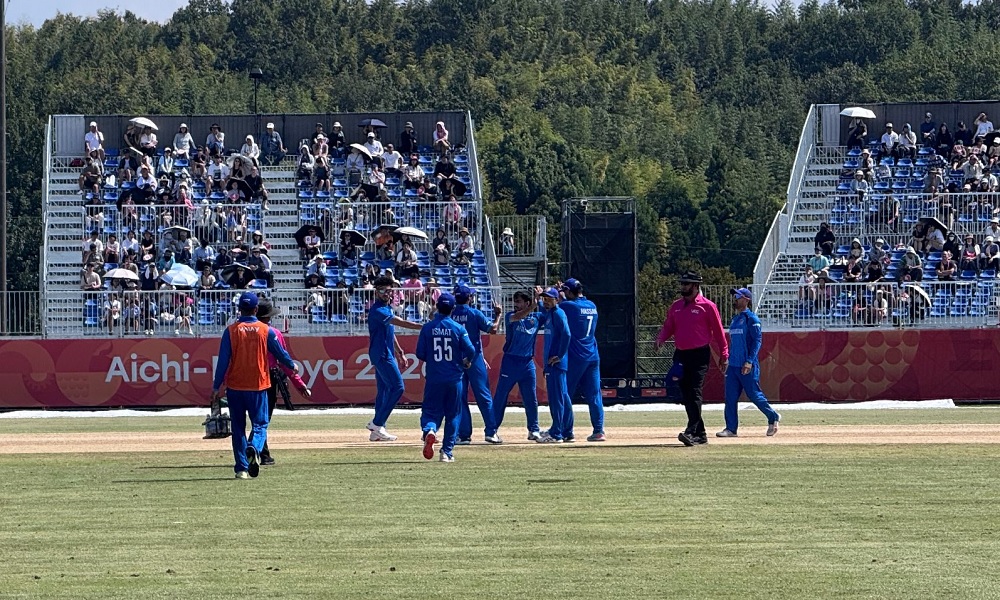
Afghanistan are set to face India in the Asian Games cricket quarter-finals after Saturday’s rain-hit match between Nepal and Japan confirmed the Pool A standings.
The quarter-final between India and Afghanistan is scheduled to take place on September 28 in Nisshin, Japan.
Nepal secured first place in the group after Japan’s chase was washed out. Nepal had scored 149 runs for four wickets in 15 overs after being sent in to bat, but persistent rain prevented Japan from starting its innings.
The result saw Nepal advance as Pool A winners, with Afghanistan joining them in the quarter-finals as the other qualifying team. Nepal will face Sri Lanka in the quarter-finals.
Japan have been eliminated from the tournament.


Abu Muslim Farah defeat Khurasan Faryab 2-0 in ACL season six

Saar: Concerns over Pakistan’s political crisis discussed

Afghanistan Champions League: Omar Zawak Herat beat Toofan Herat 1-0

Blast in Pakistan’s Dera Ismail Khan kills 11, injures 30

Ariana Afghan Airlines increases Kabul-Delhi cargo flights

Saudi energy group signs major Afghanistan deals covering gas exploration and pipeline plans

Trump floats idea of renaming Atlantic or Pacific Ocean

US hits Egyptian bank branches with Iran sanctions as war marks six months

Nepal flood rescue mission enters critical phase as thousands remain missing

Iranian clubs to face Gulf opponents at neutral venues in Asian Champions League Elite
Saar: Concerns over Pakistan’s political crisis discussed

Exclusive interview with Abdul Latif Mansoor, Minister of MRRD

Tawsia: Overview of Afghanistan’s iron mines

Tahawol: Discussion on fresh Pakistani airstrikes on Afghanistan

Saar: Calls for international support for Afghanistan discussed
-

 World5 days ago
CNN, MS NOW and Politico sue Trump, challenging White House ban
-

 Latest News3 days ago
Ariana Afghan Airlines ranks seventh among 45 Central Asian airlines
-

 Latest News4 days ago
UN reiterates call for respect for international law after Kunar airstrikes
-

 Regional3 days ago
US and Iran hold first talks since June after Trump’s ‘annihilation’ threat
-

 Latest News3 days ago
Silk Road highway in Wakhan corridor now reaches the China border
-

 Latest News4 days ago
Afghan Official: Pakistan’s airstrikes will not go unanswered
-

 Sport4 days ago
Afghan boxing referee heads to China for international festival
-
 Regional5 days ago
G7 foreign ministers call on Iran to stop arming Houthis