
Latest News
Media watchdogs call for immediate release of all journalists still in custody

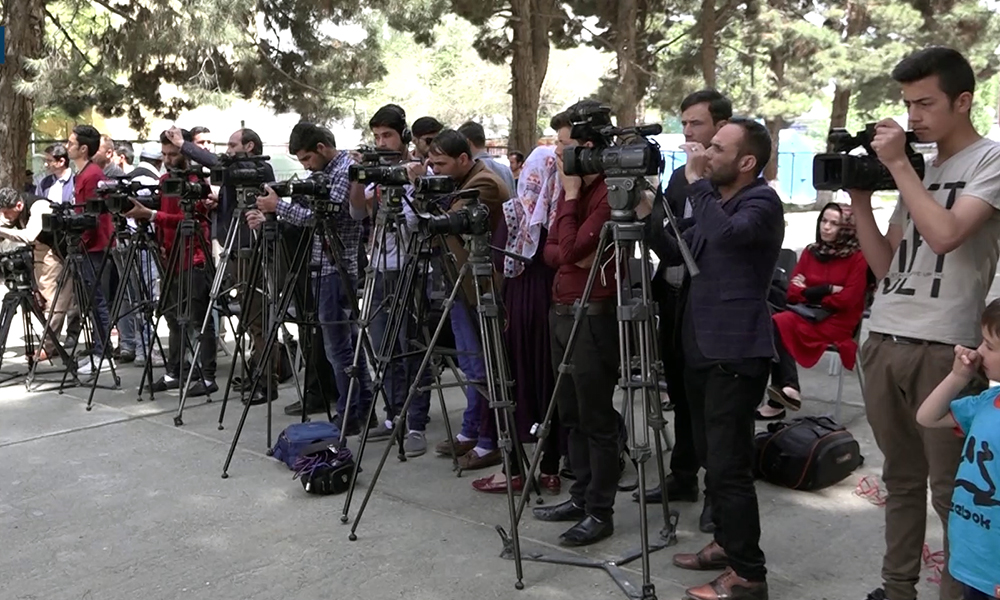
The Islamic Emirate of Afghanistan (IEA) this week released nine journalists who had been in custody following a spate of arrests targeting media workers employed by different outlets.
While welcoming the move to release the nine journalists, media watchdogs have called for all journalists still in custody to be released immediately.
The International Federation of Journalists (IFJ) and its affiliate, the Afghan Independent Journalists Union (AIJU), have condemned the IEA’s crackdown on journalists and called for the immediate release of all media workers still in custody.
The IFJ said in a statement on Tuesday that on September 2, Paktia journalist Habibullah Sarab, and Kunar journalist Parviz Sargand were released from IEA custody. Reports indicated they had been arrested for having worked for media outlets operating in exile.
“The pair had been in detention since August 11. The day before, Zabul journalist and Afghanistan National Journalists Union (ANJU) representative Mehboob Hakimi were also released from prison,” read the statement.
AIJU said that on August 31, four media workers, including TOLONews reporter Attaullah Omar; Killid Radio head Faqir Mohammad Faqirzai and reporter Jan Agha Saleh; and Salam Watandar reporter Hasib Hassas were released after being detained on allegations of working for exiled or foreign news outlets. All of them had been held in custody for a week.
This comes after a dramatic increase in arrests by the IEA of journalists through the month of August.
On August 14, Kandahar-based journalist Waheedur Rahman Afghanmal was detained and questioned about his work, before being released on bail the following day. Freelancer Shamsullah Omari was also detained in a separate incident and released on August 24, AIJU said.
French-Afghan journalist Mortaza Behboudi remains in prison following his arrest in January, shortly after he arrived in Kabul. The IFJ has however been informed that Behboudi will be tried on charges of espionage.
In relation to the nine journalists released this week, the AIJU said: “We welcome the release of all the arrested journalists. We once again ask the officials of the Islamic Emirate to follow up on the cases related to the work of the media through the ‘Commission for Investigation of Complaints and Handling of Media Violations’.”
The IFJ said: “This latest crackdown on Afghan media under the Taliban (IEA) regime has seen the country’s journalists and media workers continue to face increasing incidents of arbitrary arrest, harassment, and attack, despite assurances to the contrary. While the release of nine journalists is a welcome development, the IFJ urges the Taliban (IEA) to immediately free all media workers still in custody and work to protect the safety and security of all journalists in Afghanistan.”
A number of organizations supporting the media and journalists have meanwhile called for the immediate ratification of the media law. According to them, the lack of laws has made dealing with the problems of the media and journalists difficult.
“I hope that according to the promises made regarding the law of public media and the law of access to information, the fate of these two laws will be clarified as soon as possible and will be made available to the media community,” said Masroor Lutfi, a member of (ANJU).
But Zabihullah Mujahid, the spokesman of the Islamic Emirate, denies an increase in arrests and violence against journalists in the country. He says a number of journalists were investigated for issues unrelated to journalism but that they have been released. Others still in prison are being investigated.
Mujahid also said a new media law has been drawn up and sent to the IEA’s supreme leader for approval.




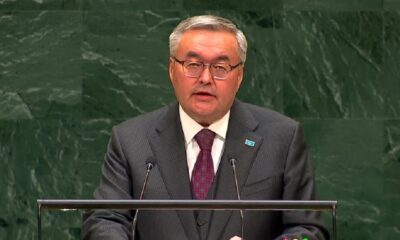




Kazakhstan’s Foreign Minister Mukhtar Tileuberdi has called for pragmatic and coordinated international engagement with Afghanistan, saying the country’s long-term stability is closely linked to the security and sustainable development of Central Asia.
Speaking during the general debate of the 81st session of the United Nations General Assembly in New York on Friday, Tileuberdi said humanitarian assistance to Afghanistan remains essential but alone cannot break the cycle of poverty, displacement and dependency.
He said Kazakhstan supports a “pragmatic, coordinated and step-by-step” approach to international engagement with Afghanistan, with the United Nations playing a central role.
Tileuberdi also said Kazakhstan is working with the UN to operationalize the United Nations Regional Centre for the Sustainable Development Goals for Central Asia and Afghanistan in Almaty.
He said the success of the centre should be measured by the results and assistance it delivers to the region.


Ariana Afghan Airlines increases Kabul-Delhi cargo flights

Khalilzad questions Pakistan’s commitment to Afghan welfare

India, UN envoy discuss Afghanistan’s humanitarian needs

Kazakhstan calls for coordinated international engagement with Afghanistan

Pakistan PM, UN chief discuss Afghanistan amid rising Kabul-Islamabad tensions

Saudi energy group signs major Afghanistan deals covering gas exploration and pipeline plans

Trump floats idea of renaming Atlantic or Pacific Ocean

US hits Egyptian bank branches with Iran sanctions as war marks six months

Nepal flood rescue mission enters critical phase as thousands remain missing

Iranian clubs to face Gulf opponents at neutral venues in Asian Champions League Elite

Exclusive interview with Abdul Latif Mansoor, Minister of MRRD

Tawsia: Overview of Afghanistan’s iron mines

Tahawol: Discussion on fresh Pakistani airstrikes on Afghanistan

Saar: Calls for international support for Afghanistan discussed

Tahawol: Opening of the 81st UN General Assembly Session
-

 World4 days ago
CNN, MS NOW and Politico sue Trump, challenging White House ban
-

 Latest News3 days ago
Ariana Afghan Airlines ranks seventh among 45 Central Asian airlines
-

 Latest News4 days ago
UN reiterates call for respect for international law after Kunar airstrikes
-
 Latest News5 days ago
Khalilzad condemns Pakistan airstrikes, says current strategy is not working
-

 Regional3 days ago
US and Iran hold first talks since June after Trump’s ‘annihilation’ threat
-

 Latest News3 days ago
Silk Road highway in Wakhan corridor now reaches the China border
-

 Latest News4 days ago
Afghan Official: Pakistan’s airstrikes will not go unanswered
-
 Regional4 days ago
G7 foreign ministers call on Iran to stop arming Houthis