
World
North Korea says it launched ICBM to warn US, South Korea over drills

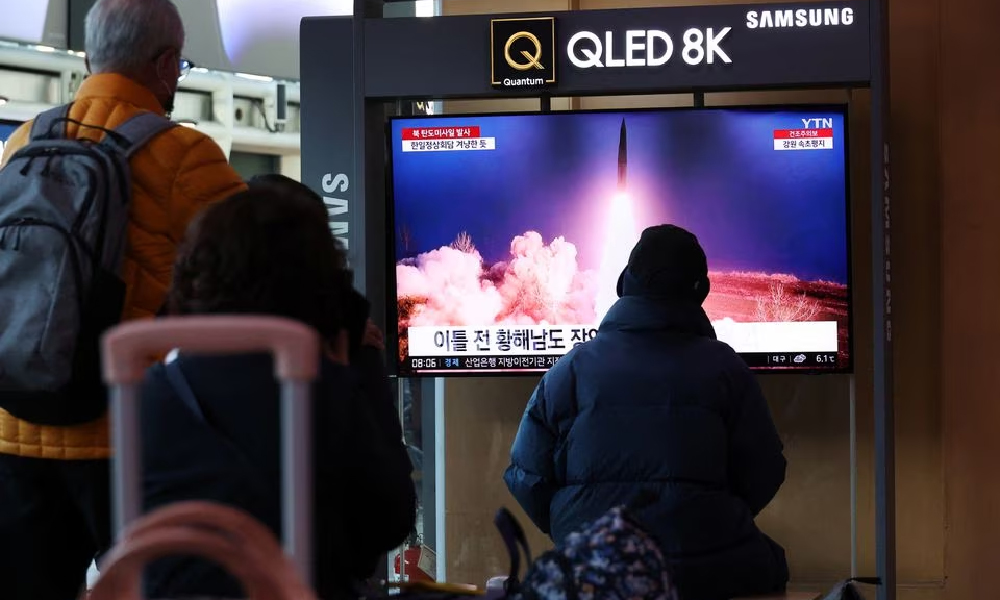
North Korea said that Thursday’s launch was its largest Hwasong-17 intercontinental ballistic missile (ICBM), fired during a drill to demonstrate a “tough response posture” to ongoing U.S.-South Korea military drills, state media reported.
Photos released on Friday by the country’s government media showed Kim Jong Un watching the launch with his daughter, and included pictures from space apparently shot by a camera mounted on the missile, Reuters reported.
North Korea fired the ICBM into the sea between the Korean peninsula and Japan on Thursday, hours before South Korea’s president flew to Tokyo for a summit that discussed ways to counter the nuclear-armed North.
“The launching drill of the strategic weapon serves as an occasion to give a stronger warning to the enemies intentionally escalating the tension in the Korean peninsula while persistently resorting to irresponsible and reckless military threats,” state news agency KCNA said.
The North’s ballistic missiles are banned under United Nations Security Council resolutions and the launch drew condemnation from governments in Seoul, Washington and Tokyo.
South Korean and American forces began 11 days of joint drills, dubbed “Freedom Shield 23,” on Monday, held on a scale not seen since 2017 to counter the North’s growing threats, read the report.
Kim accused the United States and South Korea of increasing tensions with the military drills.
He “stressed the need to strike fear into the enemies, really deter war and reliably guarantee the peaceful life of our people and their struggle for socialist construction by irreversibly bolstering up the nuclear war deterrent,” KCNA reported.
China, which has a defense pact with North Korea, also blamed the United States for the current tensions, saying they are caused by Washington’s efforts to increase pressure on Pyongyang.
The Hwasong-17 is North Korea’s biggest missile yet, and is the largest road-mobile, liquid-fuelled ICBM in the world.
It is believed to have the range to potentially deliver a nuclear warhead to targets anywhere in the United States, Reuters reported.
The missile was launched from Pyongyang’s airport, and KCNA said it traveled up to a maximum altitude of 6,045 km (3,756 mi) and flew a distance of 1,000 km (621 mi) for just over 69 minutes, before falling into the open sea. The launch did not pose a safety threat to any neighbouring countries, the report said.





World
▶️Saudi Arabia, Turkey, Pakistan activate Mecca defense pact
The three countries said the measures would be implemented under approved arrangements and in accordance with the national laws of each country.
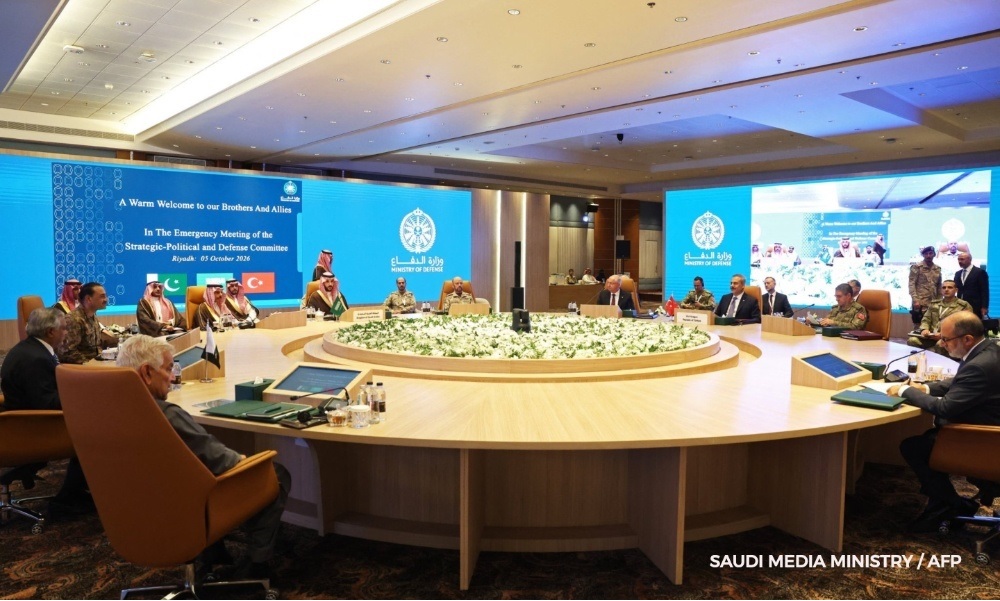
Saudi Arabia, Turkey and Pakistan have agreed to immediately implement their collective defence commitments, including the rapid deployment of agreed military forces and capabilities to Saudi Arabia.
The decision was reached on Monday during an emergency meeting of the Mecca Defence Alliance in Riyadh, according to a joint statement issued by Pakistan’s foreign ministry.
The three countries said the measures would be implemented under approved arrangements and in accordance with the national laws of each country.
Saudi Defence Minister Khalid bin Salman said the meeting reaffirmed the three countries’ “solidarity and unity” in responding to what he described as attacks against Saudi Arabia and Islamic holy sites.
The move follows a reported attack on a power distribution station in Medina. The Saudi-led coalition fighting Yemen’s Iran-aligned Houthi group said the attack targeted a facility supplying electricity to the Prophet’s Mosque, one of Islam’s holiest sites.
Saudi Arabia, Pakistan and Turkey signed the Mecca Joint Defence Agreement in August. Under the pact, an armed attack against one of the three members is considered an attack against all.
The agreement initially provided few details on the specific military commitments or defence obligations of each country.
The latest announcement marks a move from the framework of the agreement towards its practical implementation, with the three countries now agreeing to put arrangements for the deployment of military capabilities into effect.
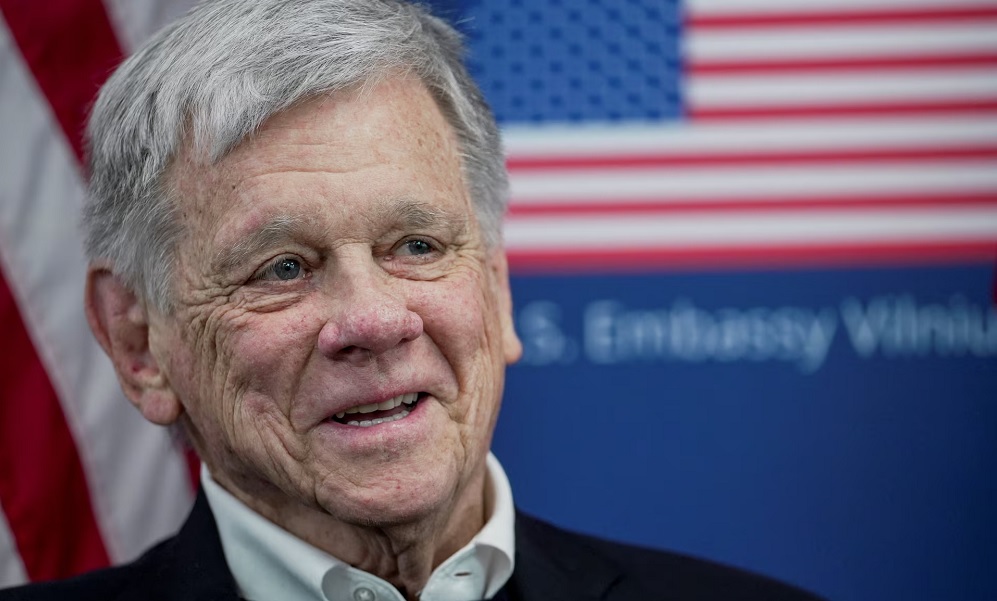
US President Donald Trump said on Sunday that lawyer and current Belarus envoy John Coale, who has been credited with the release of hundreds of prisoners, would be his special presidential envoy for hostage affairs.
Belarusian President Alexander Lukashenko pardoned 15 prisoners last month after talks with Coale, who has been talking to Minsk for more than a year, Reuters reported.
“John has already secured the return of over 65 Americans and Allied Citizens from Belarus over the last year, and negotiated the release of more than 800 political prisoners from multiple countries in Eastern Europe,” Trump wrote in a post on Truth Social.
Coale will replace Adam Boehler, who Trump said had brought back 196 hostages. Boehler, who in August helped to secure the release of a former American marine from Russia, will continue to assist in other matters as a senior adviser, Trump added.
World
Passengers foil bid to crash Dubai-Tel Aviv flight, Israel says, after co-pilot stabs pilot
The incident sharpened concerns about global aviation security in a region scarred by years of conflict, prompting Israel to tighten checks on pilots flying into the country.
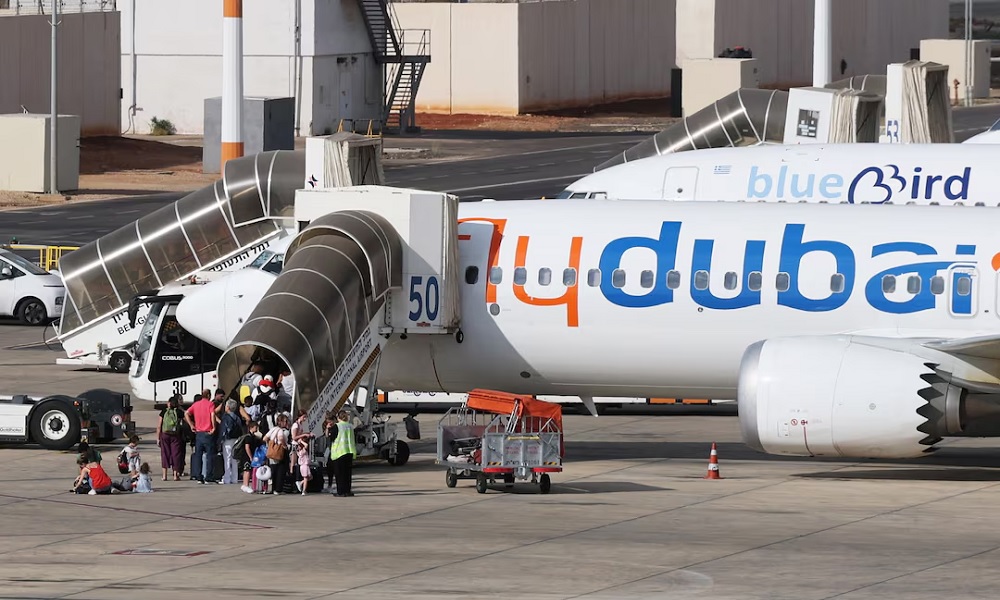
Passengers on a flydubai flight reached Israel safely on Wednesday after customers and crew foiled a co-pilot’s attempt to crash the aircraft, Israeli officials said, in a struggle that began when he stabbed the pilot and sent the jet plunging nearly 14,000 feet in less than 30 seconds.
Passengers and crew entered the cockpit, overpowered the co-pilot and enabled a second pair of flydubai pilots who were aboard the flight to land the jet safely in Tabuk, Saudi Arabia, Israeli officials said, Reuters reported.
More than 10 hours later, the passengers arrived at Tel Aviv’s Ben Gurion Airport aboard a flydubai replacement aircraft, with several describing the episode as a miracle and recounting a frantic struggle to prevent a catastrophe.
Israeli officials said the attacker’s motive aboard flight FZ1073 from Dubai to Tel Aviv remained under investigation. Israel and the United Arab Emirates, which includes Dubai, signed the Abraham Accords normalizing relations in 2020.
The incident sharpened concerns about global aviation security in a region scarred by years of conflict, prompting Israel to tighten checks on pilots flying into the country.
“I just can say that it was a miracle. It was awful, crazy, and we thank God that we survived it, we didn’t think we will make it but thank God we are in Israel. We are back home. And we are happy to see everyone here,” passenger Lital Shachaf said.
Israel’s ambulance service said a 51-year-old man was taken to an Israeli hospital to be treated for injuries to his upper body. The man was in a “mild condition,” it said.
Describing the event as “a serious security incident,” Prime Minister Benjamin Netanyahu said Saudi authorities would interrogate the co-pilot.
Flydubai said in a statement that the underlying reasons for the event remained unknown and warned against “premature speculation.” An Israeli official identified the co-pilot as an Omani national. There was no immediate comment from Oman.
Israeli officials applauded the passengers, who they credited with avoiding a much more serious disaster. Netanyahu said there were 174 people on board the flight from Dubai, most of them Israeli nationals.
US President Donald Trump said he spoke “at length” with Netanyahu on Wednesday about the incident. He proceeded to give reporters in the Oval Office a detailed account of what happened, adding: “This is the story that I heard — I don’t know if it’s true, but that’s the story that I got from Bibi (Netanyahu).”
‘SOMETHING YOU DO WITHOUT THINKING’
A Netanyahu spokesperson told Reuters that the wounded captain, identified by the Israeli leader’s office as Smit Machchhar, an Indian national, was covered with blood on the floor when he managed to click the release to open the cockpit door. Passengers who entered found the co-pilot bashing at the plane’s control panel, the spokesperson said.“This is something you do without thinking, just running to save your daughter’s life, your family’s life,” said Asaf Rajuan, one of the passengers who helped restrain the attacker. He spoke with a forehead still bloodied from the struggle.
Netanyahu’s office released a video showing the prime minister at Ben Gurion Airport giving a hug to another passenger, Yaniv Hayun, who his office said “broke into” the cockpit. “I see you and I see a lion – a big hero,” Netanyahu told the man, who was still wearing the blood-stained shirt he had on during the flight.
Flydubai operates daily return flights between Dubai and Tel Aviv, a route that is popular among Israeli nationals. The flight path normally uses airspace over Saudi Arabia and Jordan.
It is not the first time a flight between Israel and the UAE has landed in Saudi Arabia. A flydubai flight from Dubai to Tel Aviv made an emergency landing in Riyadh in September 2025 due to a medical incident, Israeli media reported at the time.
Saudi Arabia’s Tabuk airport, where the plane landed, said both pilots had been hospitalised after sustaining injuries.
The incident heightened security fears in Israel weeks before Israelis vote in the first election since the Hamas-led October 7, 2023, attacks, with Israel’s security figuring prominently in the campaigning.
Responding to the incident on X, far-right security minister Itamar Ben-Gvir wrote, “Terrorism is a devil with whom no agreement must be reached”.
ISRAEL TO TIGHTEN CHECKS ON PILOTS FLYING TO ISRAEL
Israeli media published conflicting reports on the incident, with some outlets reporting that a pilot had tried to crash the passenger plane in an alleged suicide attempt. Some Israeli media outlets initially identified the pilots as Omani and Emirati nationals, while others said they were Russian and Ukrainian.
“Every pilot that is going to be flying into Israel, we are going to know the pilots’ identities, know who they are, and do some type of security check,” Doron Spielman, a Netanyahu spokesperson, told Reuters.
Netanyahu met on Sunday with UAE President Sheikh Mohamed bin Zayed Al Nahyan during a rare visit to the Gulf country. Israel and the UAE have forged close security, military and economic ties since establishing diplomatic ties.
Israel provided the UAE earlier this year with Iron Dome air-defence systems and Israeli personnel to operate them, helping defend against Iranian attacks launched after Israel and the US began strikes on Iran.
The UAE government had yet to comment on the flydubai incident, while the Dubai state-owned airline said an “altercation” occurred in the cockpit and the flight subsequently diverted to Tabuk, where it landed safely. The UAE’s aviation regulator, the GCAA, said the flight “experienced a security incident that was brought under control”.


Saar: Expansion of relations between Kabul and Moscow discussed

Aino Mina Kandahar defeat Istiqlal Kabul 3–2

Muttaqi and Shoigu discuss regional security and Afghanistan-Russia cooperation

Muttaqi, Russian deputy PM discuss expanding economic ties

Russia investigates suspected pneumonic plague; Trump ready to ‘help’

Saudi energy group signs major Afghanistan deals covering gas exploration and pipeline plans

Khalilzad: Afghanistan ready to attract major investment

UAE firm eyes investment in Salang’s second tunnel and pharmaceutical factories

US Treasury ratchets up pressure on Iran with sweeping new aviation sanctions

AI could pose ‘existential’ risk to humanity, UN rights chief warns
Saar: Expansion of relations between Kabul and Moscow discussed

Tahawol: Afghanistan-Iran: shared opportunities and challenges discussed

Saar: Pakistan’s hostile policy toward Afghanistan discussed

Tahawol: Doha process seeks new cooperation opportunities

Saar: Moscow forum 8th consultative meeting on Afghanistan
-
 Sport4 days ago
ACB announces Afghanistan squads for Bangladesh, Zimbabwe series
-

 Sport1 day ago
Cricket Bonanza: Afghanistan set for packed international schedule
-
 Latest News4 days ago
Russia expects to ease Afghanistan-Pakistan tensions at Moscow Format meeting
-

 International Sports4 days ago
Afghanistan to face Pakistan, India and Australia at 2027 Cricket World Cup
-
 Regional4 days ago
Saudi-led coalition says Houthis attacked power station for Prophet’s Mosque in Medina
-
 Regional4 days ago
Cargo stacks up as Pakistan seizes containers to block capital routes
-
 Latest News3 days ago
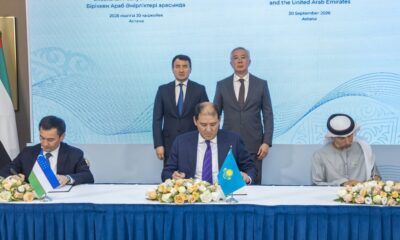
Kazakhstan, Uzbekistan and UAE sign MoU on CASA railway project via Afghanistan
-
 Regional4 days ago
Pakistan says Mecca pact members to hold emergency talks on engaging Houthis