
Latest News
Pakistan ready to be a partner for peace but will not host US bases: Imran Khan

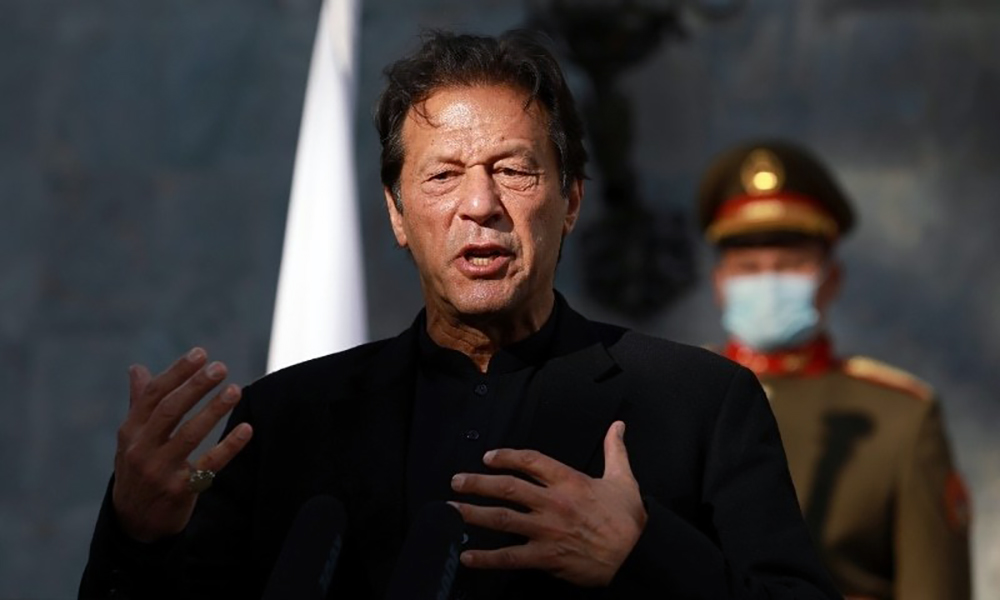
Pakistan’s Prime Minister Imran Khan has said his country is ready to be a partner for peace in Afghanistan with the United States but that it will not host US military bases.
In an opinion article for the Washington Post, Khan said: “Our countries have the same interest in that long-suffering country: a political settlement, stability, economic development and the denial of any haven for terrorists.
“We oppose any military takeover of Afghanistan, which will lead only to decades of civil war, as the Taliban cannot win over the whole of the country, and yet must be included in any government for it to succeed,” he wrote.
He acknowledged that in the past, Pakistan had made a mistake by choosing between warring Afghan parties, “but we have learned from that experience. We have no favorites and will work with any government that enjoys the confidence of the Afghan people. History proves that Afghanistan can never be controlled from the outside”, he said.
Khan also said that after joining the US effort to bring stability to Afghanistan, his country was targeted as a collaborator which in turn led to terrorism attacks against his country.
He also said that US drone attacks did not win the war but instead created hatred for Americans “swelling the ranks of terrorist groups against both our countries.”
Khan also stated that the United States pressured Pakistan to send its troops into the semi autonomous tribal areas bordering Afghanistan, “in the false expectation that it would end the insurgency. It didn’t, but it did internally displace half the population of the tribal areas, 1 million people in North Waziristan alone, with billions of dollars of damage done and whole villages destroyed.”
He said the “collateral” damage to civilians in that incursion led to suicide attacks against the Pakistani army, killing many more soldiers than the United States lost in Afghanistan and Iraq combined, while breeding even more terrorism against Pakistan.
Khan also stated that there are more than three million Afghan refugees in Pakistan and in the event of another civil war, instead of a political settlement, there will be many more refugees, which will further destabilize and impoverish the frontier areas along the border.
He said that if Pakistan were to agree to host US bases, from which to bomb Afghanistan, and an Afghan civil war ensued, Pakistan would be targeted for revenge.
“We simply cannot afford this. We have already paid too heavy a price.”
He also stated that if the United States, “with the most powerful military machine in history”, could not win the war from inside Afghanistan after 20 years, how would America do it from bases in Pakistan?”
Khan said Pakistan and the US share the same interests – they both want a negotiated peace, not civil war.
He said Pakistan supports an agreement that preserves the development gains made in Afghanistan in the past two decades, economic development, and increased trade and connectivity in Central Asia.
“We will all go down the drain if there is further civil war,” he stated.
According to him, Pakistan has worked hard to get the Taliban to the peace talks table, “first with the Americans, and then with the Afghan government.”
He also said however that Pakistan knows if the Taliban tries to declare a military victory, it will lead to endless bloodshed.
But he said Islamabad hopes the Afghan government will show more flexibility in the talks, and stop blaming Pakistan.
In conclusion he said he believes that promoting economic connectivity and regional trade is the key to lasting peace and security in Afghanistan. “Further military action is futile.”







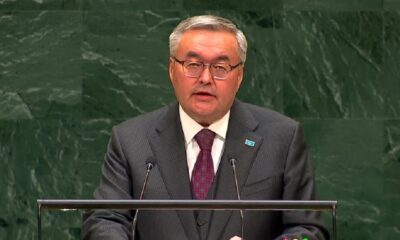




Kazakhstan’s Foreign Minister Mukhtar Tileuberdi has called for pragmatic and coordinated international engagement with Afghanistan, saying the country’s long-term stability is closely linked to the security and sustainable development of Central Asia.
Speaking during the general debate of the 81st session of the United Nations General Assembly in New York on Friday, Tileuberdi said humanitarian assistance to Afghanistan remains essential but alone cannot break the cycle of poverty, displacement and dependency.
He said Kazakhstan supports a “pragmatic, coordinated and step-by-step” approach to international engagement with Afghanistan, with the United Nations playing a central role.
Tileuberdi also said Kazakhstan is working with the UN to operationalize the United Nations Regional Centre for the Sustainable Development Goals for Central Asia and Afghanistan in Almaty.
He said the success of the centre should be measured by the results and assistance it delivers to the region.


Saar: Concerns over Pakistan’s political crisis discussed

Afghanistan Champions League: Omar Zawak Herat beat Toofan Herat 1-0

Blast in Pakistan’s Dera Ismail Khan kills 11, injures 30

Ariana Afghan Airlines increases Kabul-Delhi cargo flights

Khalilzad questions Pakistan’s commitment to Afghan welfare

Saudi energy group signs major Afghanistan deals covering gas exploration and pipeline plans

Trump floats idea of renaming Atlantic or Pacific Ocean

US hits Egyptian bank branches with Iran sanctions as war marks six months

Nepal flood rescue mission enters critical phase as thousands remain missing

Iranian clubs to face Gulf opponents at neutral venues in Asian Champions League Elite
Saar: Concerns over Pakistan’s political crisis discussed

Exclusive interview with Abdul Latif Mansoor, Minister of MRRD

Tawsia: Overview of Afghanistan’s iron mines

Tahawol: Discussion on fresh Pakistani airstrikes on Afghanistan

Saar: Calls for international support for Afghanistan discussed
-

 World5 days ago
CNN, MS NOW and Politico sue Trump, challenging White House ban
-

 Latest News3 days ago
Ariana Afghan Airlines ranks seventh among 45 Central Asian airlines
-

 Latest News4 days ago
UN reiterates call for respect for international law after Kunar airstrikes
-
 Latest News5 days ago
Khalilzad condemns Pakistan airstrikes, says current strategy is not working
-

 Regional3 days ago
US and Iran hold first talks since June after Trump’s ‘annihilation’ threat
-

 Latest News3 days ago
Silk Road highway in Wakhan corridor now reaches the China border
-

 Latest News4 days ago
Afghan Official: Pakistan’s airstrikes will not go unanswered
-

 Sport4 days ago
Afghan boxing referee heads to China for international festival