
Latest News
Poison spread by the enemy still in place, says Haqqani

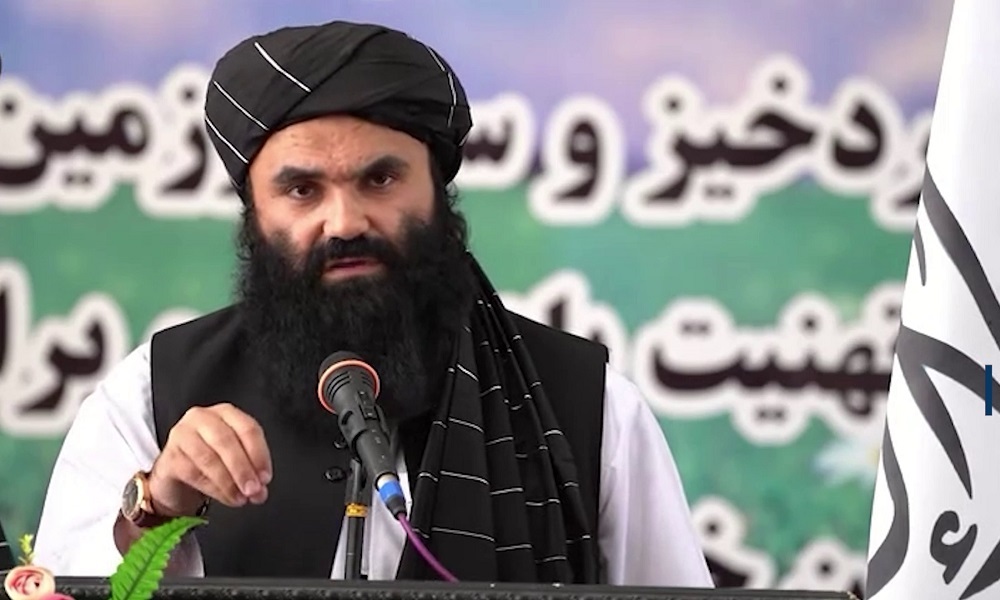
Addressing a gathering of religious scholars, tribal elders and local officials, the Minister of Interior Sirajuddin Haqqani said that the “poison” of the enemies still remains in Afghanistan and a lot of work is needed to build public trust.
Sirajuddin Haqqani’s trip to the north of the country is at the request of the supreme leader of the Islamic Emirate.
Assessing the security situation and addressing the needs of local people are said to be on Haqqani’s agenda.
During his speech in Sar-e Pul, Haqqani emphasized that now pockets of power in the north have been dismantled and the IEA has put an end to oppression and injustice.
“I have traveled here to the north based on the order of the leadership of the Emirate. You share your problems and needs and also your suggestions with me in consultation with each other. I will share it with His Highness Amirul Momineen and we will try to address them,” Haqqani said.
Meanwhile, the deputy governor of Sar-e Pul said that security prevails in the province and people are satisfied with the IEA.
“Thank God, today you and I are hosting such personalities whose honesty, justice and sincerity have been proven to all people,” Mohammad Nader Haqjo said.
In his speech, Haqqani also said that although enemies planted the seeds of discrimination and prejudice and created mistrust among the ethnic groups of Afghanistan in the past twenty years, the Islamic Emirate will eradicate the seeds of prejudice and discrimination among the Afghan ethnic groups and will try to create friendship and trust.
“Allah defeated the great powers of the world, America and NATO, by the poor people of Afghanistan, but a lot of work is needed to build trust due to the poison that the enemy has spread,” Haqqani said.




Latest News
Russia deems US military presence in Afghanistan unacceptable
Kabulov’s remarks came in response to growing concerns regarding the U.S. military’s presence in the Middle East, particularly amid rising tensions with Iran.
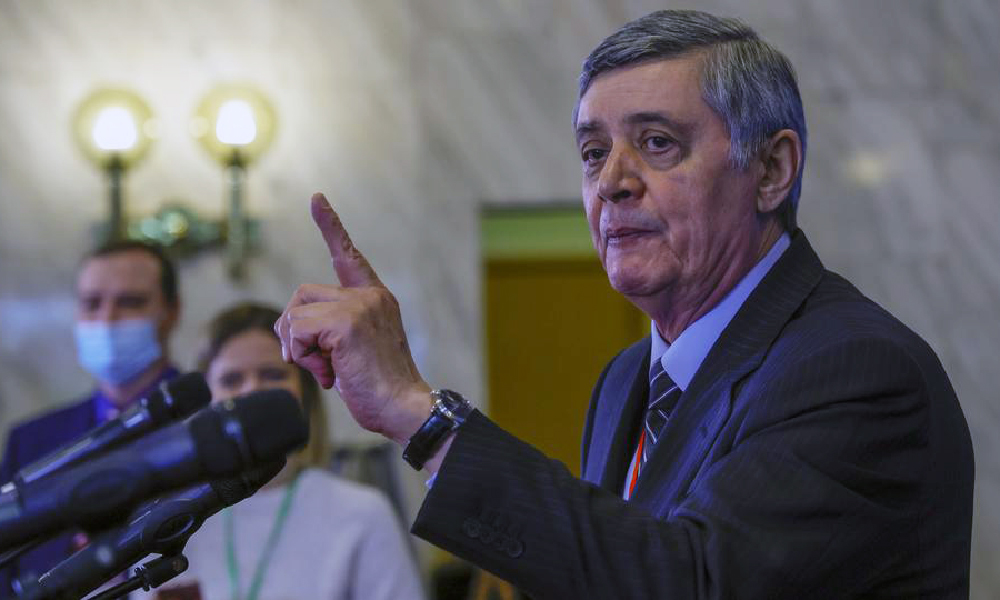
Russia has strongly condemned any potential return of U.S. military forces to Afghanistan, specifically the possibility of reopening Bagram Air Base, calling such moves “categorically unacceptable.” The statement was made by Zamir Kabulov, the Russian President’s special representative for Afghanistan and senior adviser to the Russian Foreign Ministry, in an interview with RIA Novosti.
Kabulov emphasized that Moscow opposes the establishment of any U.S. or NATO military infrastructure on Afghan soil or in neighboring regions, under any pretext. He also expressed hope that the Taliban-led government in Afghanistan, known as the Islamic Emirate of Afghanistan, would share Russia’s stance on the issue.
Kabulov’s remarks came in response to growing concerns regarding the U.S. military’s presence in the Middle East, particularly amid rising tensions with Iran. There have been reports suggesting that the U.S. might seek access to Bagram Air Base again as part of a strategic pivot in the region.
Recalling the previous administration under former U.S. President Donald Trump, Kabulov noted that the U.S. had persistently sought to regain control of Bagram Air Base following its chaotic withdrawal from Afghanistan in August 2021. “There is nothing new in these demands,” Kabulov stated, referring to the ongoing push by the U.S. to re-establish a military foothold in the region.
Russia’s firm stance reflects its broader geopolitical concerns regarding the influence of the U.S. and NATO near its borders, particularly in Central Asia and Afghanistan.
Latest News
Over 2.13 million Afghan refugees repatriated from Pakistan
Officials say over 150,000 individuals were returned from Punjab alone, where enforcement efforts are being led by the Punjab Home Department’s Foreign National Security Cell.

More than 2.13 million Afghan nationals have been repatriated from Pakistan to Afghanistan as part of an ongoing campaign targeting undocumented foreign residents, according to Pakistani authorities cited by local media.
Officials say over 150,000 individuals were returned from Punjab alone, where enforcement efforts are being led by the Punjab Home Department’s Foreign National Security Cell. The campaign includes inspections of thousands of residential areas and hundreds of markets, resulting in numerous detentions and legal cases against Afghan nationals found without valid documentation.
The repatriation process comes amid heightened tensions along key border crossings between the two countries. Hundreds of migrants have recently been sent back via the Chaman crossing, particularly during disruptions at other transit points.
The Torkham crossing—a major gateway for cross-border movement—has faced repeated closures. Although it briefly reopened, local officials in Nangarhar Province report that it was shut again after only a few hours. Authorities in Pakistan have not provided a clear explanation for the latest closure.
According to Sediqullah Quraishi, head of Nangarhar’s Information Department, the crossing was opened temporarily on Thursday before being closed again without official clarification.
Meanwhile, hundreds of Afghan migrants remain in temporary holding centers across Punjab, where they are undergoing registration and processing ahead of their return to Afghanistan. The large-scale repatriation effort continues to raise humanitarian and logistical concerns, particularly as border access remains unpredictable.
Latest News
Human Rights Watch calls Pakistani airstrike on Kabul rehab center ‘unlawful’
Patricia Gossman, senior associate Asia director at Human Rights Watch, said available evidence suggests the strike hit a well-known civilian medical facility.
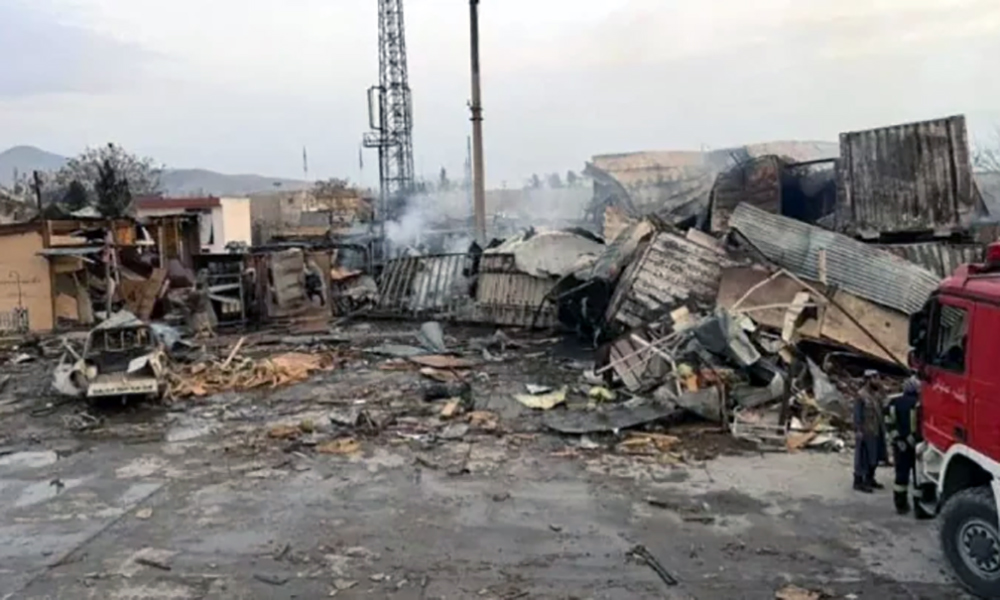
Human Rights Watch has condemned a recent Pakistani airstrike on a rehabilitation facility in Kabul, calling it “unlawful” and warning it could amount to a war crime.
The strike, which reportedly took place on March 16, targeted the Omid Drug Rehabilitation Center, located within the former Camp Phoenix complex in eastern Kabul. According to international agencies, at least 143 people were killed and more than 250 others injured, most of them patients undergoing treatment.
Patricia Gossman, senior associate Asia director at Human Rights Watch, said available evidence suggests the strike hit a well-known civilian medical facility.
“The available evidence indicates that the Pakistani airstrike against a well-known Kabul medical facility killing dozens of patients was unlawful,” she said, adding that authorities must determine why the site was targeted and who should be held accountable.
An employee of the center told the organization that three buildings were struck, including a dining hall, a residential building housing hundreds of patients, and a guard post. At the time of the attack, more than 1,000 patients were reportedly at the facility, many gathered to break their fast during Ramadan.
Human Rights Watch said satellite imagery and visual evidence show extensive destruction across the compound, with multiple structures either destroyed or severely damaged. The organization added that it found no indication the facility was being used for military purposes.
Under international humanitarian law, medical facilities are afforded special protection. The group stressed that attacks failing to distinguish between civilian and military targets, or those causing disproportionate civilian harm, may constitute serious violations of the laws of war.
Human Rights Watch has called on Pakistan to carry out a prompt, impartial investigation and ensure accountability if violations are confirmed.


Russia deems US military presence in Afghanistan unacceptable

Over 2.13 million Afghan refugees repatriated from Pakistan

Human Rights Watch calls Pakistani airstrike on Kabul rehab center ‘unlawful’

Torkham crossing closes again hours after brief reopening

Trump signature to appear on US currency, ending 165-year tradition

Pakistani military jet downed in Afghanistan’s Jalalabad, pilot captured alive

Afghan Air Force conducts airstrikes in Islamabad, other cities

Prominent Muslim scholar issues fatwa calling for Afghanistan-Pakistan ceasefire

Afghan air force strikes key Pakistani military installations in retaliatory operation

IEA: Special circle in Pakistan has launched mission to destabilize region

Tahawol: Discussion on day 27 of Iran–US war

Saar: Islamic Emirate confident of Durand Line control

Tahawol: Efforts to release Mohammad Rahim from Guantanamo Bay Detention Camp

Saar: End of ceasefire between Afghanistan-Pakistan reviewed

Tahawol: Escalating threats between Iran-US discussed
-

 Latest News4 days ago
Pakistan seeks Russian mediation to resolve Afghanistan tensions
-
 Business5 days ago
Afghani strengthens nearly 10% against US dollar amid banking sector reforms
-
 Latest News4 days ago
World must re-engage to prevent all-out Afghanistan-Pakistan war: Financial Times
-
 Latest News3 days ago
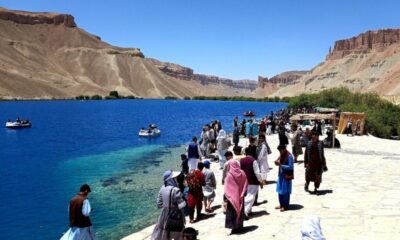
Around 2.3 million tourists visited Afghanistan’s recreational areas during Eid: Ghufran
-

 Sport3 days ago
Afghanistan squad hit by withdrawals ahead of AFC Asian Cup Qualifiers
-
 Latest News3 days ago
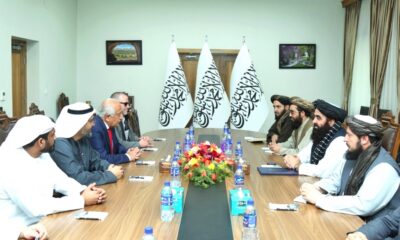
Islamic Emirate releases American prisoner Dennis Coyle
-
 Latest News4 days ago
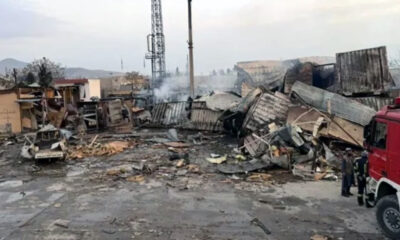
Airstrike on Kabul drug rehabilitation centre sparks legal concerns
-
 Latest News5 days ago
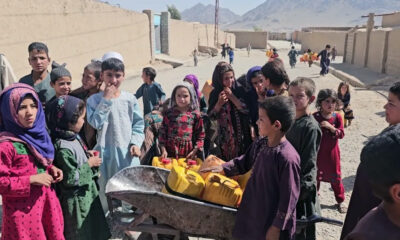
Water crisis deepens in Afghanistan as families struggle for access