
Health
Russian fighting destroys, damages nearly 400 hospitals, medical centres, Zelenskiy says


Russia’s invasion of Ukraine has devastated hundreds of hospitals and other medical institutions and left doctors without drugs to tackle cancer or the ability to perform surgery, President Volodymyr Zelenskiy said.
Zelenskiy said many places lacked even basic antibiotics in eastern and southern Ukraine, the main battlefields.
“If you consider just medical infrastructure, as of today Russian troops have destroyed or damaged nearly 400 healthcare institutions: hospitals, maternity wards, outpatient clinics,” Zelenskiy said in a video address to a medical charity group on Thursday.
In areas occupied by Russian forces the situation was catastrophic, he said.
“This amounts to a complete lack of medication for cancer patients. It means extreme difficulties or a complete lack of insulin for diabetes. It is impossible to carry out surgery. It even means, quite simply, a lack of antibiotics.”
In one of the most widely denounced acts of the war, a maternity hospital was all but destroyed on March 9 in the besieged port city of Mariupol. Russia alleged pictures of the attack were staged and said the site had been used by armed Ukrainian groups.
The Kremlin says it targets only military or strategic sites and does not target civilians. Ukraine daily reports civilian casualties from Russian shelling and fighting, and accuses Russia of war crimes. Russia denies the allegations.
Pavlo Kyrylenko, governor of Donetsk region, said 25 people had been injured in intense shelling in the town of Kramatorsk, site of a railway station bombing last month in which more than 50 died. He said a total of 32 residential buildings had been damaged in the shelling.
Reuters could not immediately verify battlefield reports by Russia and Ukraine.
Russia calls its actions in Ukraine a “special operation” to disarm Ukraine and protect it from fascists. Ukraine and the West say the fascist allegation is baseless and that the war is an unprovoked act of aggression. More than 5 million Ukrainians have fled abroad since the start of the invasion.
Russia has turned its heaviest firepower on Ukraine’s east and south, after failing to take the capital Kyiv. The new front is aimed at limiting Ukraine’s access to the Black Sea, vital for its grain and metal exports, and linking Russian-controlled territory in the east to Crimea, seized by Moscow in 2014.
In the port city of Mariupol an estimated 200 civilians, along with Ukrainian resistance fighters, are trapped undergound in the Azovstal steel plant with little food or water.
The steel works was rocked by heavy explosions on Thursday as Russian forces fought for control of Ukraine’s last stronghold and the United Nations rushed to evacuate civilians.
President Vladimir Putin said Russia was prepared to provide safe passage for the civilians but reiterated calls for Ukrainian forces inside to disarm.
Putin declared victory over Mariupol on April 21 and ordered his forces to seal off the Soviet-era plant but not venture inside its underground tunnel network.
Ukraine’s stubborn defence of Azovstal has underlined Russia’s failure to take major cities in a 10-week-old war that has united Western powers in arming Kyiv and punishing Moscow with sanctions.
Clinging on desperately, Ukrainian fighters have reported fierce battles with Russian troops in Azovstal.
A Ukrainian fighter who said he was holed up in Azovstal accused Russian forces of breaching the plant’s defences for a third day despite an earlier pledge by Moscow to pause military activity to permit civilian evacuations.
“Heavy, bloody fighting is going on,” said Captain Sviatoslav Palamar of Ukraine’s Azov Regiment. “Yet again, the Russians have not kept the promise of a ceasefire.” Reuters could not independently verify his account or location.
The Kremlin denies Ukrainian allegations that Russian troops stormed the plant in recent days.
Aerial footage of the plant, released Thursday by Ukraine’s Azov Regiment, showed three explosions striking different parts of the vast complex, which was engulfed in heavy, dark smoke.
Reuters verified the footage location by matching buildings with satellite imagery, but was unable to determine when the video was filmed.
Russia’s military promised to pause its activity for the next two days to allow civilians to leave. The Kremlin said humanitarian corridors from the plant were in place.
Ukrainian Deputy Prime Minister Iryna Vereshchuk said on Thursday that people would be evacuated from Mariupol on Friday at 1200 local time (0900 GMT).
Sweeping sanctions from Washington and European allies have hobbled Russia’s $1.8 trillion economy, while billions of dollars worth of military aid has helped Ukraine frustrate the invasion.
European Union countries are “almost there” in agreeing the bloc’s proposed new package of sanctions against Russia, including an oil embargo, EU foreign policy chief Josep Borrell said. read more
The Kremlin said Russia was weighing responses to the EU plan.
Ukrainian officials have warned that Russia might step up its offensive before May 9, when Moscow commemorates the Soviet Union’s victory over Nazi Germany in World War Two.


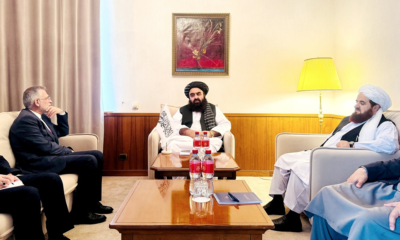






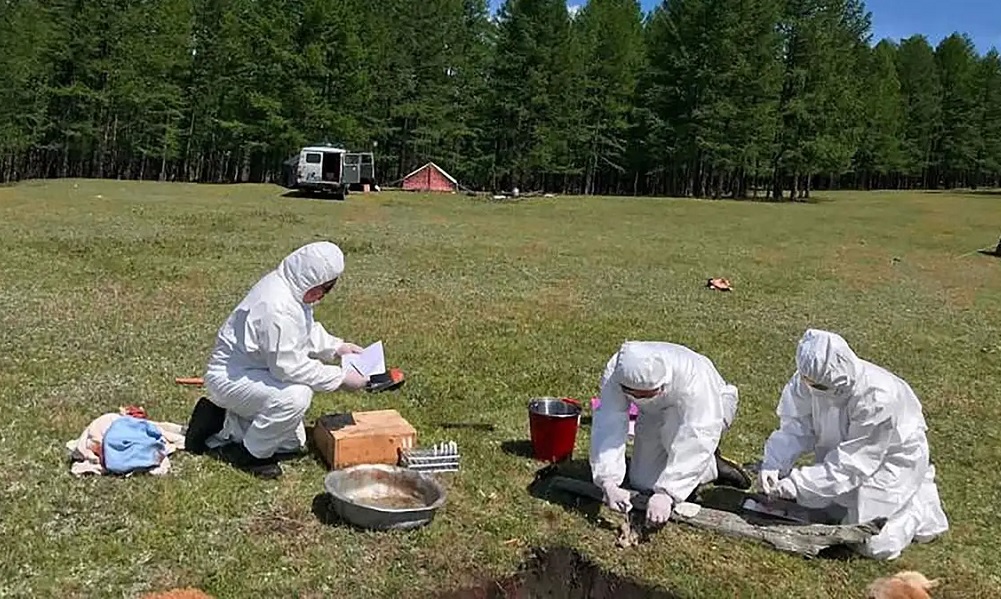
President Donald Trump says the United States is ready to help Russia after reports of a suspected pneumonic plague case in Siberia, as authorities monitor nearly 200 people who may have come into contact with the woman who died.
The woman, a laboratory worker at the Irkutsk Anti-Plague Research Institute, identified in reports as 28-year-old Darya Shipilova, became seriously ill while working at the institute and later died in hospital.
Reports initially suggested she may have been exposed to plague bacteria following an incident at the laboratory. However, Russian health authorities have rejected that account and said she died from pneumonia of unknown origin.
Officials said testing had not detected microorganisms associated with her professional activities and that there was no confirmed laboratory accident involving dangerous pathogens.
As a precaution, authorities have placed people who may have had contact with the woman under medical observation. Five hospitals in the region have also been placed under quarantine measures.
No additional cases of plague have been confirmed, and officials have said those under observation are not showing symptoms associated with the disease.
Pneumonic plague is a severe form of plague that affects the lungs and can spread between people through respiratory droplets. It can, however, be treated with antibiotics when treatment begins promptly.
Trump offers US assistance
The reports have also drawn attention in Washington.
Trump said the United States was closely monitoring the situation and was prepared to assist Russia.
“We’re looking at it very strongly, we just heard about it,” Trump told reporters when asked about the reported risk of pneumonic plague coming from Russia.
“We’ll help them, we’ll help them as much as we can,” he said.
Trump also said he had not spoken with Russian President Vladimir Putin about the reported case.
US Secretary of State Marco Rubio said Washington was monitoring developments but indicated there was no immediate cause for alarm. The US State Department said it was coordinating with the Centers for Disease Control and Prevention and other agencies.
No confirmed outbreak
Despite reports describing the incident as a plague outbreak, Russian authorities have not confirmed a wider outbreak of pneumonic plague.
The cause of the laboratory worker’s illness remains a key point of uncertainty. Russian officials maintain that she died from pneumonia of unknown origin and that tests have not established a connection to plague bacteria.
The monitoring and quarantine measures are precautionary and are intended to identify any potential infections while the investigation continues.
Nearly 200 people are being monitored — but there are currently no confirmed cases of pneumonic plague among them.
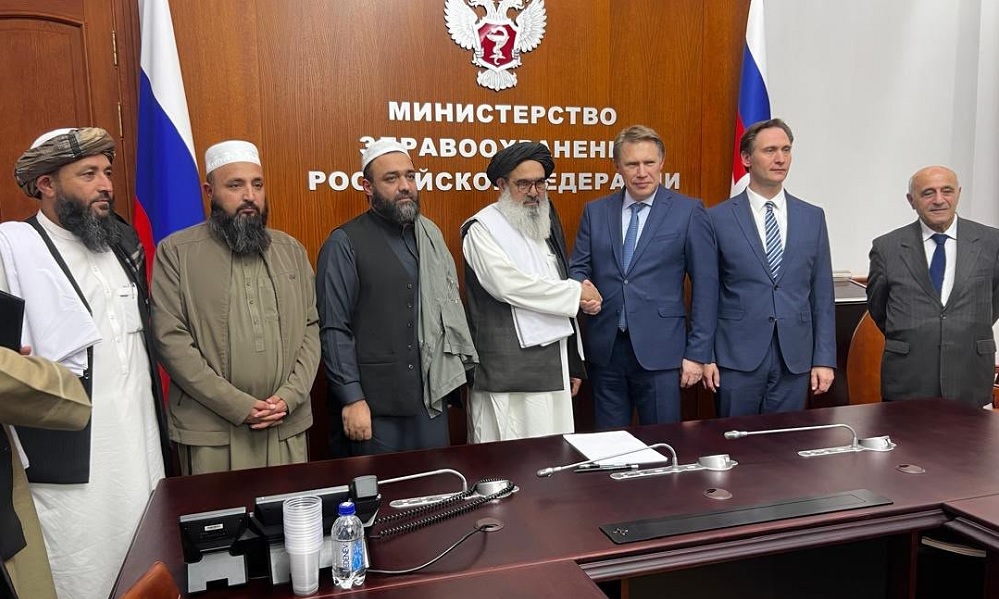
Noor Jalal Jalali, Minister of Public Health of Afghanistan, met with Russian Health Minister Mikhail Albertovich Murashko during his official visit to Russia.
The two sides discussed expanding long-term health cooperation between Afghanistan and Russia, including medicines, vaccines, medical equipment, health-worker training and the transfer of modern medical technologies, Afghanistan’s Public Health Ministry said in a statement.
Jalali briefed his Russian counterpart on the needs and priorities of Afghanistan’s health sector and called for greater Russian cooperation to improve the quality of health services, strengthen the professional capacity of health workers and develop modern medical facilities.
Murashko expressed Russia’s readiness to expand technical cooperation with Afghanistan and support efforts to strengthen the country’s health sector.
Health
Kandahar Red Crescent: More than 3,000 mental health patients treated in five years
Doctors said patients considered a serious danger to society are kept at the center on a permanent basis and receive regular treatment.
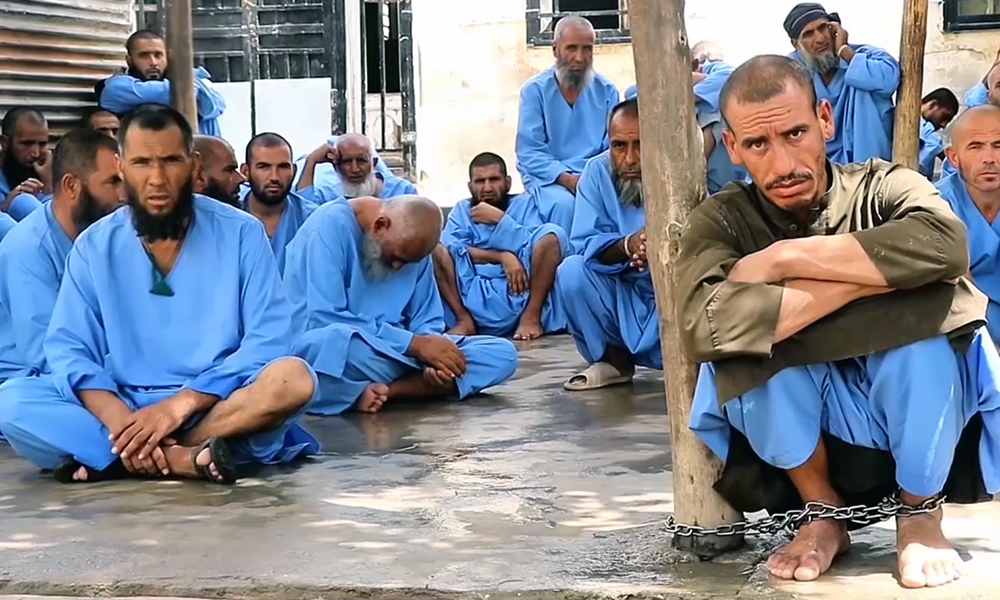
The Kandahar branch of the Afghan Red Crescent Society says more than 3,000 mental health patients, including men and women, have received treatment at home across southern Afghanistan over the past five years.
Officials said 405 patients were also treated at the Afghan Red Crescent’s mental health treatment center in Kandahar and returned to their homes. The center is the only facility in southern Afghanistan providing treatment to mental health patients from the region.
According to officials, during the past five years, 1,936 male and 1,331 female mental health patients received treatment at their homes.
Currently, 158 patients, including men and women who pose a risk to themselves or others, are being kept and treated at the center, while treatment for another 804 patients is continuing at their homes.
Doctors said patients considered a serious danger to society are kept at the center on a permanent basis and receive regular treatment.
Meanwhile, some patients who were previously brought to the center in poor condition are now recovering and have expressed satisfaction with the services they have received.
The development comes as officials from the Red Crescent’s southern regional branch say mental health problems linked to poverty and family difficulties are increasing.
Despite the challenges, they said efforts are underway to expand mental health services so that more patients can receive treatment.


Tahawol: Consequences of US war in Afghanistan reviewed

Saar: Expulsion of Afghan refugees from Pakistan discussed

Kohi shines as Toofan Herat beat Abu Muslim Farah 2–0

Muttaqi and Iranian representative discuss expansion of bilateral relations

Baradar opens Fifth Imam Abu Hanifa International Exhibition in Kabul

UAE firm eyes investment in Salang’s second tunnel and pharmaceutical factories

US Treasury ratchets up pressure on Iran with sweeping new aviation sanctions

AI could pose ‘existential’ risk to humanity, UN rights chief warns

EU and FAO launch €5m programme to strengthen Afghanistan’s agrifood sector

Omar Zawak, Toofan Herat secure victories in Afghanistan Champions League
Tahawol: Consequences of US war in Afghanistan reviewed
Saar: Expulsion of Afghan refugees from Pakistan discussed

Tahawol: Discussion on outcome of Moscow Format meeting

Saar: Expansion of relations between Kabul and Moscow discussed

Tahawol: Afghanistan-Iran: shared opportunities and challenges discussed
-

 Sport3 days ago
Cricket Bonanza: Afghanistan set for packed international schedule
-
 Latest News5 days ago
Kazakhstan, Uzbekistan and UAE sign MoU on CASA railway project via Afghanistan
-
 Regional5 days ago
Pakistan says Mecca pact members to hold emergency talks on engaging Houthis
-

 Regional4 days ago
India, Pakistan summon top diplomats over border incident
-
 Latest News3 days ago
Afghanistan inaugurates 121 km Wakhan road to China border
-

 Sport5 days ago
Rashid Khan plans to build cricket academy and stadium in Nangarhar
-

 Sport3 days ago
ACL: Sorkh Poshan extend perfect run with 1-0 win over Khurasan
-

 Sport3 days ago
Afghanistan U19 to face Bangladesh, Oman in Youth ODIs