
Saar: Discussion on Iran and US negotiations










Latest News
US Department of War says newly found classified documents could shed light on Abbey gate bombing
The attack killed 13 US service members and approximately 170 Afghan civilians.
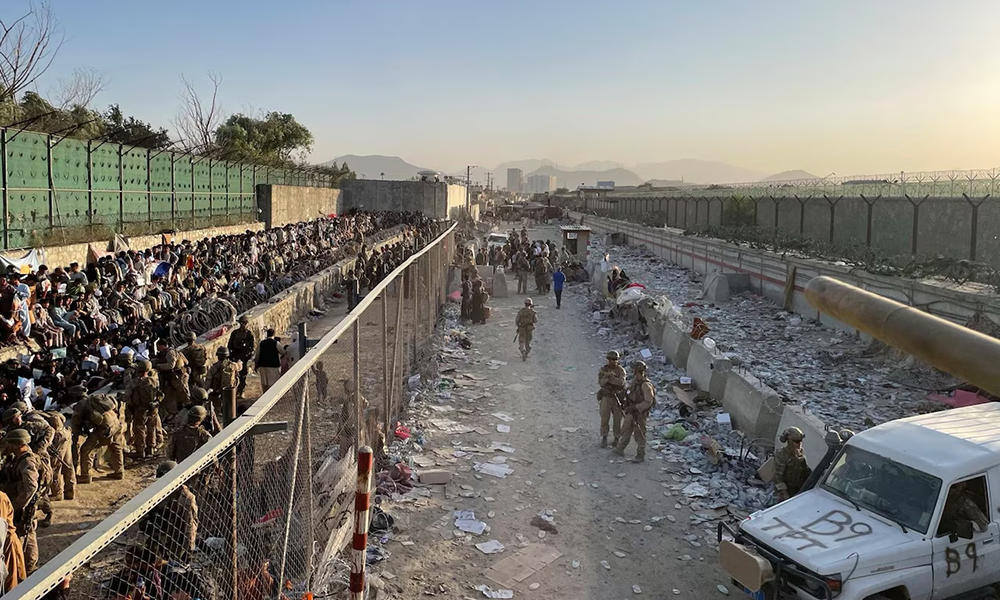
The US Department of War says an ongoing investigation into the deadly 2021 Abbey Gate bombing in Kabul has uncovered previously undiscovered classified documents that are now being examined by a special review panel.
Sean Parnell, Senior Advisor to the Secretary of War, announced the development in a social media post marking the fifth anniversary of the bombing at Abbey Gate of Kabul’s then-Hamid Karzai International Airport.
The attack killed 13 US service members and approximately 170 Afghan civilians.
According to Parnell, his team recently recovered highly relevant classified documents that should have been disclosed but were found stored in safes and hidden in places where they would not be easily discovered.
He said that after the documents were recovered and reviewed by the special panel, it became clear why someone may have attempted to conceal them. However, Parnell said he would not prematurely reveal the contents of the classified material.
“I’m not going to give you a convenient version of the truth, nor will I give you a rushed one,” Parnell said, stressing that investigators would follow the evidence wherever it leads and would not accept incomplete answers.
The special review panel was established last year, when Secretary of War Pete Hegseth appointed Parnell to lead the investigation. Hegseth said the review was being conducted on behalf of the American people and the families of those killed in the attack.
The panel’s work follows a supplemental review by US Central Command in April 2024, which upheld the findings of the military’s original investigation and concluded that the attack could not have been prevented at the tactical level.
While Parnell did not provide a timeline for completing the review, he pledged that the investigation would be thorough and would provide the full picture of how and why decisions surrounding the attack were made.
“The American people and the families who sacrificed everything are owed the full picture,” he said, promising to continue the investigation until it is completed.
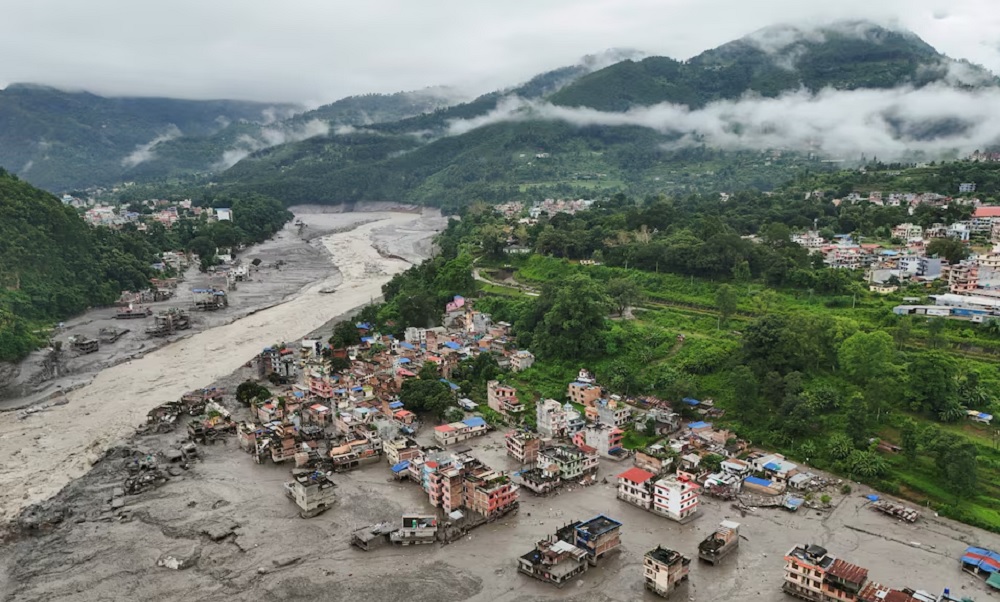
Nearly 1,500 people including at least 800 foreigners are missing across Nepal and China’s Tibet, authorities said on Thursday, after a wall of mud and rock collapsed into a Himalayan river, sending catastrophic floods through towns and valleys.
Rescuers in Nepal used helicopters to search for survivors and drop emergency supplies to thousands cut off after Wednesday’s disaster swept a rugged mountainous region thronged by trekkers and pilgrims linking Lhasa in Tibet with the Nepalese capital of Kathmandu. Police said they expected the death toll to rise beyond 165, Reuters reported.
“This will go up, as we have resumed the search and more bodies are expected to be recovered,” police spokesperson Abi Narayan Kafle told Reuters.
Almost 600 foreigners were among 826 people missing in Nepal, police and tourism officials said.
Among the missing tourists from more than two dozen countries, 177 were from India, 63 were from the United States, 34 from Australia, 33 from Britain and 25 from Canada.
The tally of missing in Tibet’s Gyirong county was 558, Chinese state broadcaster CCTV said on Thursday, including 260 foreign nationals.
Verified videos showed crushing masses of water and debris sweeping away dozens of people at a border crossing in Gyirong, with homes, roads and power projects washed away further downstream in Nepal.
“It was a huge gush of mud coming straight towards us,” said Keshav Prasad Baral, a 68-year-old survivor being treated in hospital.
“As it got closer, it kept rising higher and higher. When I saw it enter our home, I tried to grab my wife’s hand and take her to the terrace. But she was swept away by the mud.”
A helicopter ferried him to safety four hours later. “My wife is still somewhere beneath the mud,” he added. “She’s gone.”
Another survivor said he saved himself by clinging to a mango tree as he watched the house where he had been working disappear.
EMERGENCY DELIVERIES BEGIN
In the hardest-hit districts, helicopters are dropping tents, food and other emergency supplies provided by neighbouring India, said Raja Ram Basnet, a spokesperson for Nepal’s army. More than 5,000 army and police rescue personnel were mobilised to look for survivors and find bodies.
Early reports from Nepali officials suggested an earthquake in the area could have caused the lower part of a glacier to collapse and trigger the floods.
The U.S. Geological Survey said an earthquake with magnitude initially reported as 4.4 was in fact seismic energy generated by the collapse of glacial rock and ice, followed by debris flow.
Chinese authorities have identified risks from a still-dammed lake located in Gyirong, upstream from the mudslide and flood-stricken Tibet-Nepal border crossing that could significantly complicate rescue efforts in the mountainous site, CCTV reported on Thursday.
Many of the victims were making a pilgrimage to Kailash Mansarovar, a high-altitude site in Tibet revered by Hindus and Buddhists among others.
Mount Kailash, which Hindus believe to be the abode of Lord Shiva, lies on the banks of Lake Mansarovar, also held sacred in various religions.
The U.S. State Department said it was sending a disaster response adviser and providing assistance of $500,000.
Canada was also closely following the situation, Prime Minister Mark Carney said on X, describing the floods as “absolutely devastating”.
U.N. teams and partners were sending supplies and personnel to support affected Nepali communities, Secretary-General Antonio Guterres said.
Australian Prime Minister Anthony Albanese said details on the disaster were scant.
“Nepal … is a developing country,” he said. “It doesn’t have the resources that an event like that would have in Australia, so information is difficult.”
Sagar Pandey, the chief executive of a Himalayan tourism operator, said 15 Indian-Australians on a pilgrimage tour with the company were missing.
“There are no human-made things, no human settlement left. Everything is just flat,” he told Reuters after flying over the zone in a helicopter. “So anyone in the hotel, the restaurant, or the car, I believe that everybody is gone.”
VIDEOS SHOW PEOPLE SWEPT AWAY WHILE FLEEING
Security footage captured on the Chinese side of the border showed many people fleeing from a torrent of rock, mud and water that destroyed buildings and vehicles.
People seeking information about family members missing from the affected areas of Nuwakot and Dhading gathered outside a Nepali army training centre that was the base for helicopter rescue operations, the images showed.
In the affected areas, layers of mud metres thick swathed homes, trees and vehicles. Helicopters ferrying survivors hovered overhead all day.
An initial study of Planet Labs satellite imagery showed a landslide of ice and rock unleashed a flood carrying debris in the Lhende River, about 20 km (12 miles) northeast of the Nepal-China Rasuwagadhi border crossing, Nepal disaster management officials said on X.
Television images showed collapsed homes, floating cars and a metal bridge being washed away, while witnesses said the waters engulfed entire villages.
“There is devastation everywhere we look,” said Tula Bahadur BK, a health worker in Rasuwa.
“The settlements next to the river have been completely swept away. Five of my own relatives are missing.
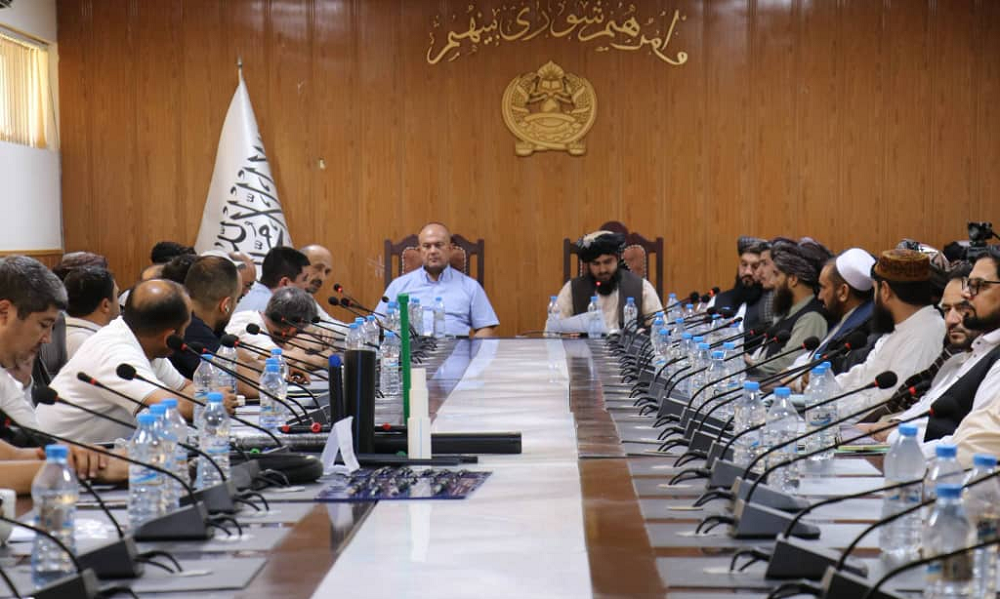
A 16-member delegation from Uzbekistan’s Jizzakh province, led by Deputy Governor Bahrom Yusupov, has visited Afghanistan’s northern Kunduz province to discuss expanding bilateral trade and economic cooperation between the two countries.
The delegation met with Kunduz provincial officials and local business representatives during a meeting at the provincial governor’s office.
Kunduz Deputy Governor Mawlawi Habib Rahman Sohaib welcomed the delegation and discussed ways to strengthen economic ties and expand joint trade between Afghanistan and Uzbekistan.
Sohaib invited Uzbek and other foreign investors to invest in various sectors in Kunduz, assuring them that the provincial authorities are prepared to provide the necessary facilities and support for investors.
He also called on the Uzbek side to make it easier for Afghan traders to obtain visas in order to facilitate and accelerate trade between the two countries.
Bahrom Yusupov thanked Kunduz officials and traders for their warm welcome, saying Uzbekistan is interested in increasing its investment in Afghanistan.
He said the delegation’s visit was aimed at further strengthening trade relations between the two countries and added that Uzbek businesses would seek opportunities to invest jointly with Afghan traders in Kunduz in the future.
The visit comes as Kunduz plays an important economic, agricultural and transit role in northern Afghanistan, with direct and indirect trade routes linking the province to Central Asian countries, particularly Uzbekistan and Tajikistan.


US Department of War says newly found classified documents could shed light on Abbey gate bombing

Nearly 1,500 missing in Nepal and China after devastating Himalaya flood

Uzbekistan delegation visits Kunduz to boost trade and investment

Trial for accused mastermind of 9/11 attacks set for June 2028

Qatar PM to visit Tehran to pursue mediation efforts

Pakistan’s governance system has ‘collapsed’: Mohsin Naqvi

Afghanistan exports first stone shipment to US in $100,000 trade milestone

AFC confirms clubs for 2026/27 competitions; draw set for August 18

Only two days to go before Afghanistan and Ireland begin ODI series

Four mediators struggle to secure lasting Pakistan-Afghanistan ceasefire

Tahawol: Calls for US engagement with the Islamic Emirate discussed

Saar: Call for dialogue to resolve issues with Afghanistan discussed

Tahawol: Aisha Wahab’s emphasis on US ties with IEA

Saar: Guterres’s concern regarding global conflicts discussed

Saar: Afghanistan’s uncertain future in SCO
-
 Latest News4 days ago
Four mediators struggle to secure lasting Pakistan-Afghanistan ceasefire
-
 Latest News5 days ago
US judge strikes down Trump visa suspension for 75 countries, including Afghanistan
-
 Business3 days ago
Afghanistan’s trade diversification challenges Pakistan
-

 Sport5 days ago
Afghanistan-India T20I series could see major schedule change
-
 Latest News5 days ago
Achakzai urges Pakistan to end hostility towards Afghanistan
-
 Latest News4 days ago
AfghanEvac warns US court ruling does not reopen door for Afghans
-
 Latest News3 days ago
SCO summit to be held without confirmed Afghan invitation
-
 Business4 days ago
Afghan, UAE buyers purchase $1.44 million worth of Turkmenistan diesel