
World
Nearly 1,500 missing in Nepal and China after devastating Himalaya flood

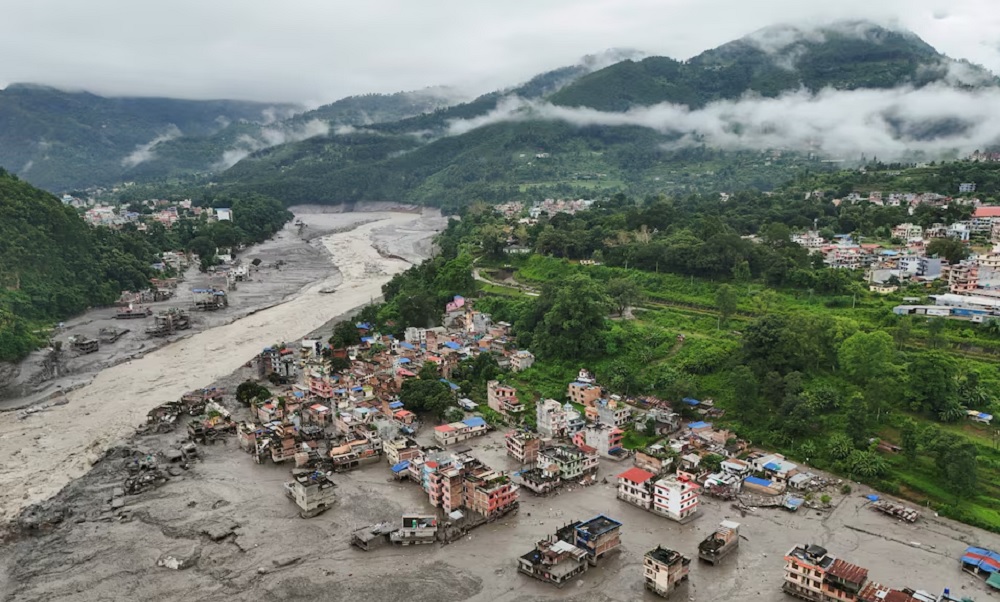
Nearly 1,500 people including at least 800 foreigners are missing across Nepal and China’s Tibet, authorities said on Thursday, after a wall of mud and rock collapsed into a Himalayan river, sending catastrophic floods through towns and valleys.
Rescuers in Nepal used helicopters to search for survivors and drop emergency supplies to thousands cut off after Wednesday’s disaster swept a rugged mountainous region thronged by trekkers and pilgrims linking Lhasa in Tibet with the Nepalese capital of Kathmandu. Police said they expected the death toll to rise beyond 165, Reuters reported.
“This will go up, as we have resumed the search and more bodies are expected to be recovered,” police spokesperson Abi Narayan Kafle told Reuters.
Almost 600 foreigners were among 826 people missing in Nepal, police and tourism officials said.
Among the missing tourists from more than two dozen countries, 177 were from India, 63 were from the United States, 34 from Australia, 33 from Britain and 25 from Canada.
The tally of missing in Tibet’s Gyirong county was 558, Chinese state broadcaster CCTV said on Thursday, including 260 foreign nationals.
Verified videos showed crushing masses of water and debris sweeping away dozens of people at a border crossing in Gyirong, with homes, roads and power projects washed away further downstream in Nepal.
“It was a huge gush of mud coming straight towards us,” said Keshav Prasad Baral, a 68-year-old survivor being treated in hospital.
“As it got closer, it kept rising higher and higher. When I saw it enter our home, I tried to grab my wife’s hand and take her to the terrace. But she was swept away by the mud.”
A helicopter ferried him to safety four hours later. “My wife is still somewhere beneath the mud,” he added. “She’s gone.”
Another survivor said he saved himself by clinging to a mango tree as he watched the house where he had been working disappear.
EMERGENCY DELIVERIES BEGIN
In the hardest-hit districts, helicopters are dropping tents, food and other emergency supplies provided by neighbouring India, said Raja Ram Basnet, a spokesperson for Nepal’s army. More than 5,000 army and police rescue personnel were mobilised to look for survivors and find bodies.
Early reports from Nepali officials suggested an earthquake in the area could have caused the lower part of a glacier to collapse and trigger the floods.
The U.S. Geological Survey said an earthquake with magnitude initially reported as 4.4 was in fact seismic energy generated by the collapse of glacial rock and ice, followed by debris flow.
Chinese authorities have identified risks from a still-dammed lake located in Gyirong, upstream from the mudslide and flood-stricken Tibet-Nepal border crossing that could significantly complicate rescue efforts in the mountainous site, CCTV reported on Thursday.
Many of the victims were making a pilgrimage to Kailash Mansarovar, a high-altitude site in Tibet revered by Hindus and Buddhists among others.
Mount Kailash, which Hindus believe to be the abode of Lord Shiva, lies on the banks of Lake Mansarovar, also held sacred in various religions.
The U.S. State Department said it was sending a disaster response adviser and providing assistance of $500,000.
Canada was also closely following the situation, Prime Minister Mark Carney said on X, describing the floods as “absolutely devastating”.
U.N. teams and partners were sending supplies and personnel to support affected Nepali communities, Secretary-General Antonio Guterres said.
Australian Prime Minister Anthony Albanese said details on the disaster were scant.
“Nepal … is a developing country,” he said. “It doesn’t have the resources that an event like that would have in Australia, so information is difficult.”
Sagar Pandey, the chief executive of a Himalayan tourism operator, said 15 Indian-Australians on a pilgrimage tour with the company were missing.
“There are no human-made things, no human settlement left. Everything is just flat,” he told Reuters after flying over the zone in a helicopter. “So anyone in the hotel, the restaurant, or the car, I believe that everybody is gone.”
VIDEOS SHOW PEOPLE SWEPT AWAY WHILE FLEEING
Security footage captured on the Chinese side of the border showed many people fleeing from a torrent of rock, mud and water that destroyed buildings and vehicles.
People seeking information about family members missing from the affected areas of Nuwakot and Dhading gathered outside a Nepali army training centre that was the base for helicopter rescue operations, the images showed.
In the affected areas, layers of mud metres thick swathed homes, trees and vehicles. Helicopters ferrying survivors hovered overhead all day.
An initial study of Planet Labs satellite imagery showed a landslide of ice and rock unleashed a flood carrying debris in the Lhende River, about 20 km (12 miles) northeast of the Nepal-China Rasuwagadhi border crossing, Nepal disaster management officials said on X.
Television images showed collapsed homes, floating cars and a metal bridge being washed away, while witnesses said the waters engulfed entire villages.
“There is devastation everywhere we look,” said Tula Bahadur BK, a health worker in Rasuwa.
“The settlements next to the river have been completely swept away. Five of my own relatives are missing.









World
14 killed in two separate mass shootings across the United States
Pennsylvania Governor Josh Shapiro expressed his support for the affected community, describing the incident as a tragic loss of life.

At least 14 people have been killed in two separate mass shootings in the United States within hours of each other, according to local authorities.
Five people were shot dead at a home in Douglas, Georgia, on Friday evening, police said.
In a separate incident in Erie, Pennsylvania, nine people were killed, including two children and a pregnant woman. Authorities confirmed that the suspected assailant was also among the dead.
Erie Police Chief Rick Lorah described the scene as one of the most devastating incidents of his career, saying the motive for the shooting had not yet been established.
Pennsylvania Governor Josh Shapiro expressed his support for the affected community, describing the incident as a tragic loss of life.
Authorities are continuing to investigate the circumstances surrounding both shootings.
World
Zelenskiy says letting Russia sell diesel to US is ‘investment in war’
“Gifts to Putin will not bring peace or any benefit to the civilised world,” Zelenskiy wrote on the X social media platform.
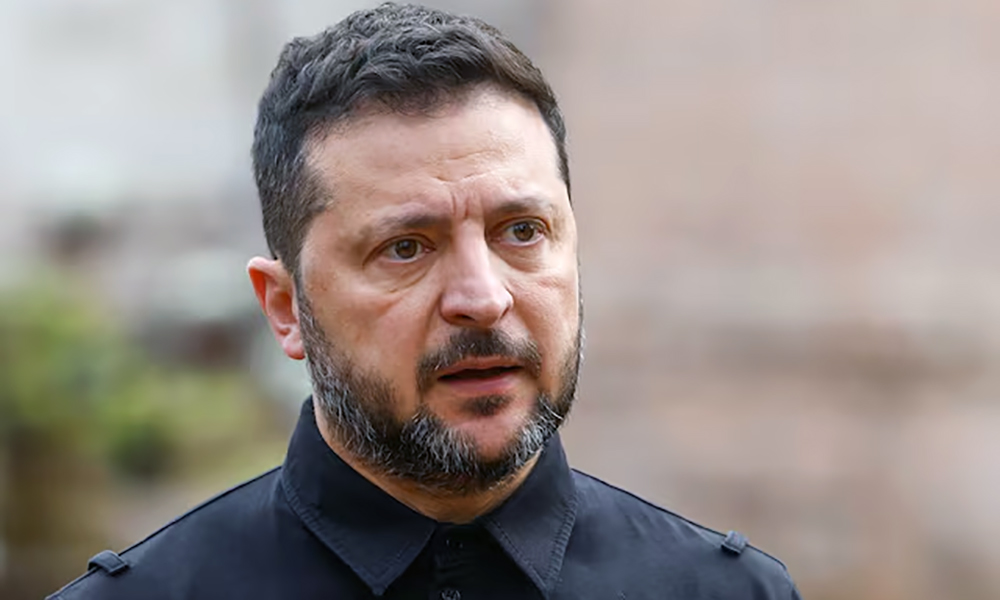
Ukrainian President Volodymyr Zelenskiy criticised an accord on Friday between the US and Russia allowing Moscow to provide the US with diesel, calling it “an investment in a war that must be ended.”
He dismissed the accord, which was announced while a Ukrainian delegation was in the US to discuss how to seek a resolution of the war with Russia, as “a weak decision on the part of strong partners”.
“Gifts to Putin will not bring peace or any benefit to the civilised world,” Zelenskiy wrote on the X social media platform.
“Russia will ‘repay’ the diesel with further terror and perfidy. Allowing Russia to sell petroleum products is an investment in a war that must be ended, not prolonged. What is needed is real de-escalation with Russia on a reciprocal basis,” Zelenskiy said.
Trump said in a post on social media that he had agreed in a call with Russian President Vladimir Putin that Russia would immediately supply diesel to the US and global marketplace. Trump said lower prices for Americans “is my Greatest Priority”.
Zelenskiy, speaking to reporters later on WhatsApp, said the accord would provide Moscow with additional funds to wage war and undermine any attempts to work towards a settlement.
“I believe our team is simply being used as a front. And that is certainly not fair, nor is it how partners should treat each other,” he said. “In my view, it is a weak decision on the part of strong partners.”
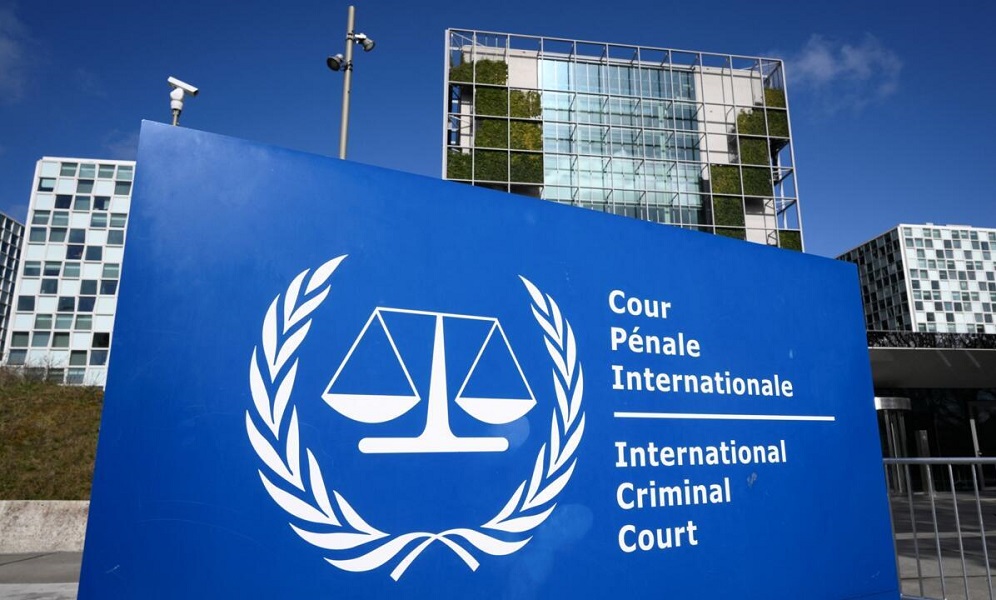
The administration of US President Donald Trump imposed sanctions on the International Criminal Court (ICC) on Friday, escalating tensions with the international judicial body and potentially straining relations with European allies.
US Secretary of State Marco Rubio said the measures aim to prevent the ICC from prosecuting American citizens and restrict the court’s resources and operations.
Washington has criticised the ICC over arrest warrants issued for Israeli Prime Minister Benjamin Netanyahu and other Israeli officials, as well as its past investigation into alleged crimes by US personnel in Afghanistan.
The ICC condemned the sanctions as an “assault on the rule of law” and vowed to continue its investigations and prosecutions. It also urged its 125 member states to defend the court’s independence.
The announcement came hours after former ICC judge Navi Pillay was awarded the Nobel Peace Prize, with the Nobel committee highlighting the importance of international justice amid political pressure on legal institutions.
The sanctions threaten to deepen the dispute between Washington and the ICC, raising concerns about international judicial cooperation and the court’s ability to carry out its work.


Afghanistan Champions League second half to kick off on October 16

Karzai calls for reopening schools and universities to Afghan girls on International Day of the Girl

Muttaqi meets OIC deputy secretary-general to discuss expanding cooperation with Afghanistan

Afghanistan signs nearly $400 million in regional trade and investment deals

Afghanistan ranks third globally in deaths from unexploded ordnance, UNAMA warns

EU and FAO launch €5m programme to strengthen Afghanistan’s agrifood sector

Omar Zawak, Toofan Herat secure victories in Afghanistan Champions League

Cricket Bonanza: Afghanistan set for packed international schedule

Houthi advance in Yemen puts U.S. in a new bind

New warnings reignite debate over AI threat to humanity

Saar: Ongoing expulsion of Afghan refugees from Iran and Pakistan discussed

Tahawol: CSTO meeting on Afghanistan reviewed

Saar: Guterres’s talks with Pakistani officials on Afghanistan discussed

Tahawol: Consequences of US war in Afghanistan reviewed

Saar: Expulsion of Afghan refugees from Pakistan discussed
-
 Regional2 days ago
Trump says US will not attack Iran before midterm elections in November
-
 Business4 days ago
Baradar opens Fifth Imam Abu Hanifa International Exhibition in Kabul
-

 International Sports4 days ago
Lionel Messi bids tearful farewell to Argentina after 3-0 win over Benin
-
 Business3 days ago
Russia-Afghanistan trade surges 150% in first seven months of 2026
-

 World3 days ago
Denmark says Russia has conducted sabotage attacks against its defense firms
-

 World4 days ago
Vance says Iran must cut enrichment to end war
-
 World2 days ago
Witkoff, Kushner to meet Ukrainians for talks on the war, says US source
-

 Sport3 days ago
Arman FC defeat Istiqlal Kabul 3-2 in thrilling comeback