
Latest News
Taliban would roll back Afghan women’s rights -U.S. intelligence report

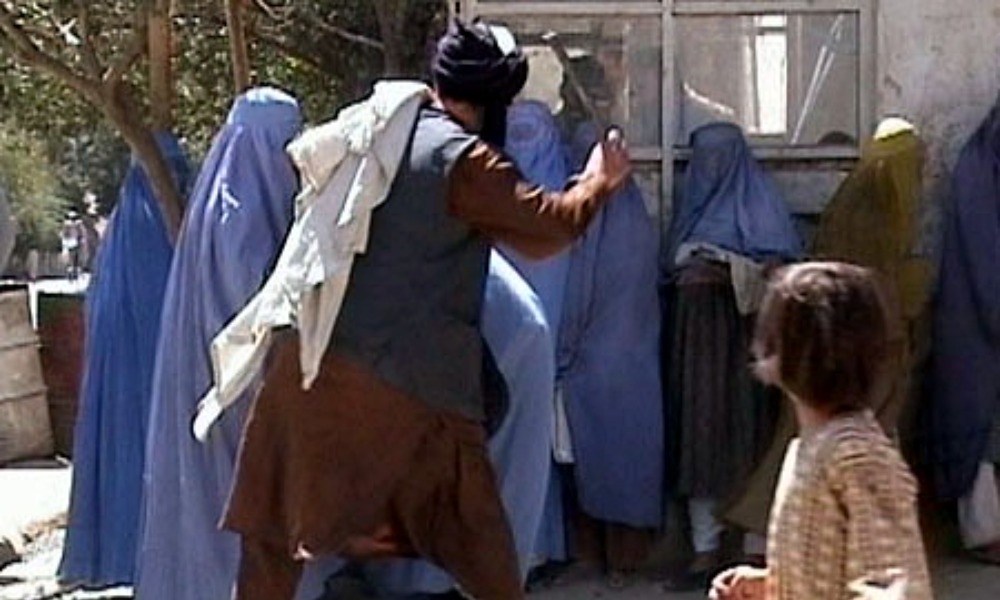
The Taliban “would roll back much” of the progress made in Afghan women’s rights if the Islamist extremists regain national power, according to an assessment released on Tuesday by top U.S. intelligence analysts.
The U.S. National Intelligence Council report likely will reinforce fears that the Taliban will resume the harsh treatment that women and girls suffered under their 1996-2001 rule should the insurgents prevail in a full-blown civil war.
“The Taliban remains broadly consistent in its restrictive approach to women’s rights and would roll back much of the past two decades of progress if the group regains national power,” said the U.S. intelligence community’s top analytical body.
At the same time, the council’s “Sense of the Community Memorandum” said women’s rights likely would be threatened after the U.S.-led military coalition withdraws, a finding reflecting the conservative nature of Afghanistan’s male-dominated society.
“Progress (in women’s rights) probably owes more to external pressure than domestic support, suggesting it would be at risk after coalition withdrawal, even without Taliban efforts to reverse it,” the assessment said.
U.S. President Joe Biden’s decision last month to withdraw the last 2,500 U.S. troops – triggering a pullout of other foreign forces – is fueling fears Afghanistan could plunge into an all-out civil war that could return the Taliban to power.
Those concerns have been stoked by a deadlock in U.S.-backed peace talks, while the Taliban have intensified attacks on government forces after a missed May 1 deadline for the U.S. troop departure.
Before being ousted by the 2001 U.S.-led invasion, the Taliban imposed a harsh version of Islamic rule that included barring girls from school and women from working outside their homes and prohibiting them from being in public without a male relative.
Women who violated those rules often suffered humiliation and public beatings by the Taliban’s religious police.
The new report, however, noted that many of those practices have continued in government-controlled areas and “years of war have left millions of women maimed, widowed, impoverished and displaced.”
Gains made in women’s right have been touted as a major accomplishment during the 20 years that U.S.-led forces have been deployed, although mostly in urban centers.
The Biden administration has pledged to continue civilian assistance after U.S. troops depart, including to women’s programs. But it has warned that Afghanistan would suffer isolation and sanctions if it backslides on human rights.
A February 2020, U.S.-Taliban accord struck by the Trump administration specified a May 1 deadline for completion of a U.S. troop withdrawal from America’s longest war.
Biden, however, decided to complete the withdrawal before the anniversary of the Sept. 11, 2001, al Qaeda attacks on the United States that triggered the U.S.-led invasion.












Kazakhstan’s Foreign Minister Mukhtar Tileuberdi has called for pragmatic and coordinated international engagement with Afghanistan, saying the country’s long-term stability is closely linked to the security and sustainable development of Central Asia.
Speaking during the general debate of the 81st session of the United Nations General Assembly in New York on Friday, Tileuberdi said humanitarian assistance to Afghanistan remains essential but alone cannot break the cycle of poverty, displacement and dependency.
He said Kazakhstan supports a “pragmatic, coordinated and step-by-step” approach to international engagement with Afghanistan, with the United Nations playing a central role.
Tileuberdi also said Kazakhstan is working with the UN to operationalize the United Nations Regional Centre for the Sustainable Development Goals for Central Asia and Afghanistan in Almaty.
He said the success of the centre should be measured by the results and assistance it delivers to the region.


Abu Muslim Farah defeat Khurasan Faryab 2-0 in ACL season six

Saar: Concerns over Pakistan’s political crisis discussed

Afghanistan Champions League: Omar Zawak Herat beat Toofan Herat 1-0

Blast in Pakistan’s Dera Ismail Khan kills 11, injures 30

Ariana Afghan Airlines increases Kabul-Delhi cargo flights

Saudi energy group signs major Afghanistan deals covering gas exploration and pipeline plans

Trump floats idea of renaming Atlantic or Pacific Ocean

US hits Egyptian bank branches with Iran sanctions as war marks six months

Nepal flood rescue mission enters critical phase as thousands remain missing

Iranian clubs to face Gulf opponents at neutral venues in Asian Champions League Elite
Saar: Concerns over Pakistan’s political crisis discussed

Exclusive interview with Abdul Latif Mansoor, Minister of MRRD

Tawsia: Overview of Afghanistan’s iron mines

Tahawol: Discussion on fresh Pakistani airstrikes on Afghanistan

Saar: Calls for international support for Afghanistan discussed
-

 World5 days ago
CNN, MS NOW and Politico sue Trump, challenging White House ban
-

 Latest News3 days ago
Ariana Afghan Airlines ranks seventh among 45 Central Asian airlines
-

 Latest News5 days ago
UN reiterates call for respect for international law after Kunar airstrikes
-

 Regional4 days ago
US and Iran hold first talks since June after Trump’s ‘annihilation’ threat
-

 Latest News3 days ago
Silk Road highway in Wakhan corridor now reaches the China border
-

 Latest News5 days ago
Afghan Official: Pakistan’s airstrikes will not go unanswered
-

 Regional3 days ago
Iran airlines cancel flights as US sanctions hit
-

 Regional5 days ago
G7 foreign ministers call on Iran to stop arming Houthis