
Latest News
UN Security Council hears how IEA bans on women are ‘obscuring’ positive achievements

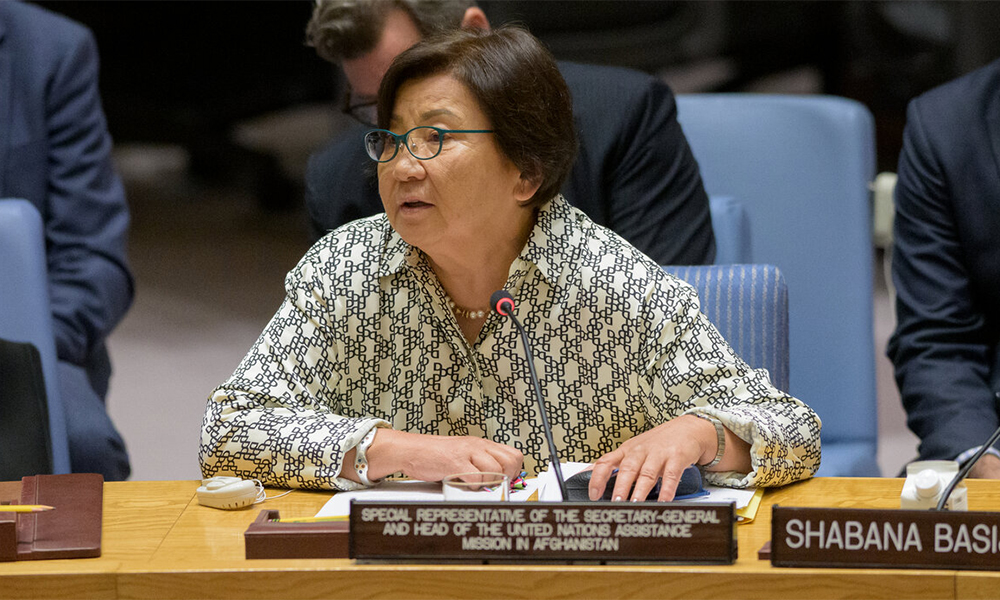
The UN Secretary-General’s Special Representative for Afghanistan, Roza Otunbayeva said on Wednesday that the bans affecting women and girls in the country were “obscuring” some of the other more positive achievements that have taken place under the Islamic Emirate of Afghanistan (IEA).
She said UNAMA continues to face a “complicated situation in Afghanistan,” and that restrictions against Afghan women working for the United Nations places a question mark over the organization’s activities across the country.
Briefing the UN Security Council, Otunbayeva said: “We have been given no explanations by the de facto authorities for this ban and no assurances that it will be lifted.”
She stated UNAMA will not put their national female staff in danger, and therefore have stopped them from reporting to work since the ban was imposed in April. All male national staff performing non-essential tasks are also still at home.
Otunbayeva went on to say, the UN in Afghanistan is “steadfast” over their decision that “female national staff will not be replaced by male national staff as some de facto authorities have suggested.”
She said: “The Taliban (Islamic Emirate) ask to be recognized by the United Nations and its members, but at the same time they act against the key values expressed in the United Nations Charter.”
On positive changes identified, she said: “One of these is the growing evidence that the Taliban’s ban on opium cultivation, announced in April last year, has been effectively enforced in many parts of the country. According to initial media reports, cultivation of opium has significantly decreased.”
She added however that at the same time, the opium economy has helped sustain parts of the rural economy in Afghanistan. “Donors should consider allocating funding to alternative livelihood programmes that address the specific needs of farmers affected by the ban,” she said.
Otunbayeva also pointed out that the Afghan economy remains stable, albeit at a low equilibrium and that according to the World,
inflation is declining and the exchange rate remains steady.
“In part this is due to the welcome reduction of high-level corruption. The de facto authorities continue to report the collection of sufficient revenues to finance government operations, including paying civil service salaries,” she said.
However, this macro-economic stability, coexists with severe household poverty. She said 58 percent of households struggle to satisfy basic needs and that humanitarian efforts continue to address the needs of the nearly 20 million people.
She warned that given the drop in donor funding, United Nations cash shipments, required for humanitarian operations, are expected to decrease.
She went on to say that the IEA is making concerted counter-terrorism efforts, particularly with Daesh. Despite this, attacks have taken place, she said.
Otunbayeva also stated that while the end of the armed conflict has greatly reduced the number of civilian casualties since the IEA came to power, the United Nations Mine Action Service in Afghanistan estimates around 100 casualties per month from unexploded ordnance.
According to her, UNAMA is “greatly concerned by Afghanistan’s vulnerability to climate change. Years of drought have compounded the effects of conflict and poverty. Climate change is fostering population displacements inside Afghanistan that could be destabilizing,” she said adding that in order to address Afghanistan’s lack of water and consequent food insecurity, the IEA has begun digging a canal that will divert waters from the northern Amu Darya river, raising the concerns of neighboring countries.
“Overall the need to mitigate the effects of climate change requires a more specific dialogue between the de facto authorities and the international community,” she said.


Latest News
Mansour: Unjustified bloodshed is forbidden, whether Afghan or Pakistani
At the same time, Mansour stressed that the situation should not escalate into indiscriminate bloodshed.
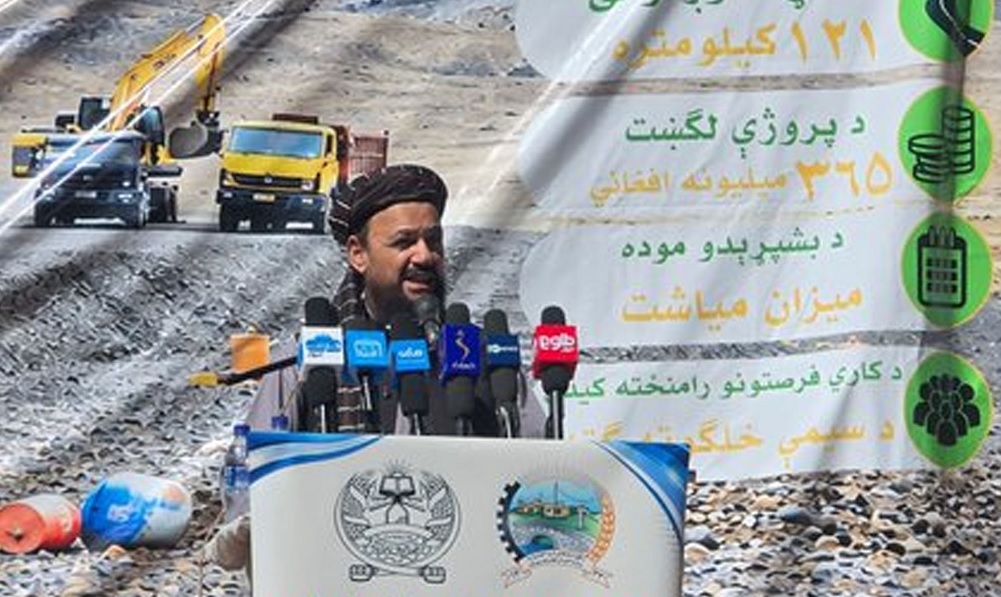
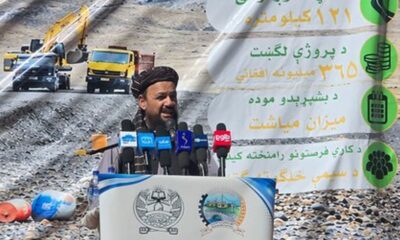
Abdul Latif Mansour, Afghanistan’s Minister of Rural Rehabilitation and Development, says the Islamic Emirate considers the unjustified shedding of Afghan and Pakistani blood forbidden, as both sides are Muslims.
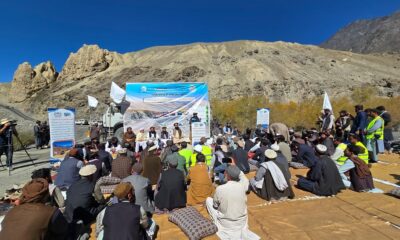
Mansour made the remarks at the inauguration of the Wakhan road in Badakhshan on Sunday, while responding to Pakistan’s recent attacks on Afghanistan.
He said some people become emotional over Pakistani bombings, but stressed that Afghanistan needs to become self-reliant enough to defend its citizens.
“We must build this system to the point where we become self-reliant and can defend every Afghan in such a way that we can neutralize the person causing harm in his own country,” Mansour said.
He acknowledged that the current system has not yet achieved full self-reliance, but said efforts are underway to strengthen Afghanistan’s ability to defend its people.
At the same time, Mansour stressed that the situation should not escalate into indiscriminate bloodshed.
“We consider the unjustified shedding of our own people’s blood forbidden, and we also consider the shedding of Pakistani blood forbidden because they are Muslims,” he said.
Pakistani military officials have repeatedly accused Afghanistan of allowing militant attacks on Pakistan to be planned or carried out from Afghan territory.
The Islamic Emirate has rejected the allegations, saying Afghanistan is not responsible for Pakistan’s security problems.
Latest News
Afghanistan inaugurates 121 km Wakhan road to China border
Mansour described the project as politically, strategically and economically important.
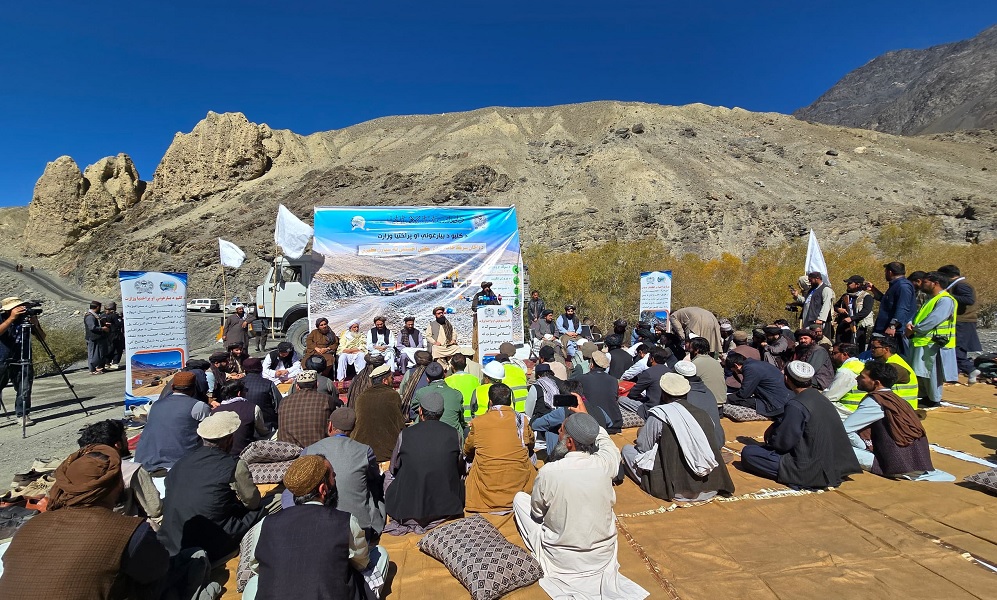
A 121-kilometer gravel road from the Sarhad-e Broghil in Wakhan district of Badakhshan to the Chinese border was officially opened today, Sunday, October 4.
Abdul Latif Mansour, Minister of Rural Rehabilitation and Development, said at the inauguration ceremony that the road includes 66 culverts and four major bridges, while a total of 3,100 meters of retaining walls have been built along parts of the route.
According to Mansour, 365 million afghanis from the Islamic Emirate’s development budget were spent on the construction and graveling of the road.
Mansour described the project as politically, strategically and economically important.
Rahmatullah Najib, governor of Badakhshan, also said at the ceremony that security has been ensured across the province and that there are no security problems in any part of Badakhshan.
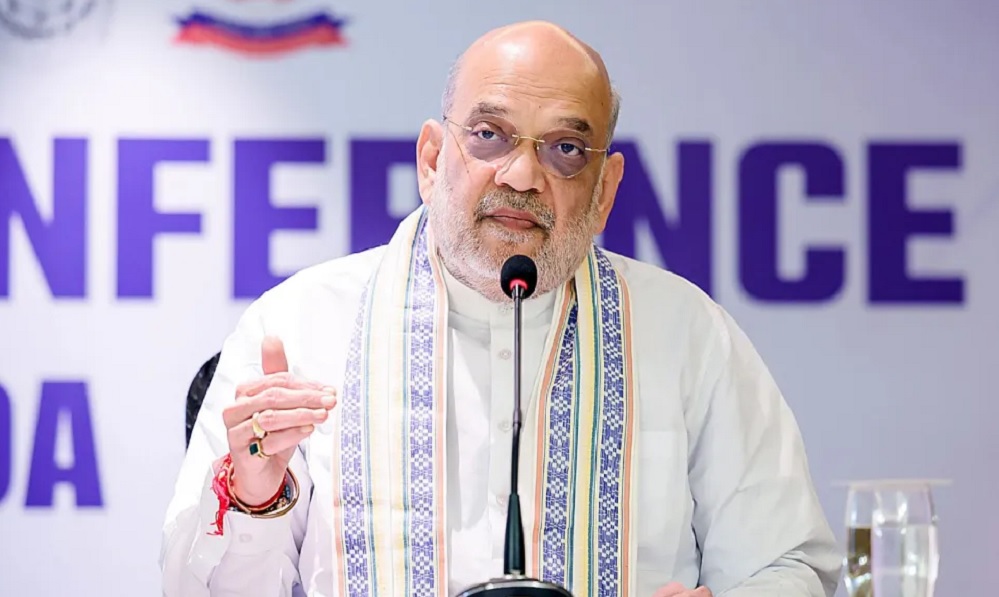
India says a fugitive drug-trafficking kingpin accused of smuggling heroin and methamphetamine from Afghanistan into India has been deported from Turkey and brought back to the country.
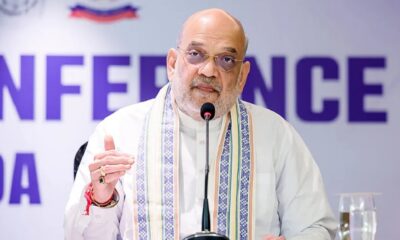
Indian Home Minister Amit Shah said on Saturday that Navpreet Singh, also known as “Nav,” was deported from Turkey after Indian authorities tracked him down.
Shah said Singh had obtained Turkish citizenship using the fake identity “Navab Virk” and continued to smuggle heroin and methamphetamine from Afghanistan to India.
The 34-year-old, a native of Punjab, had been wanted in several narcotics cases and was on the run for more than two years. Indian authorities allege that he headed an international narcotics syndicate whose operations in India were managed by his cousin, Prabhdeep Singh.
Prabhdeep Singh, also known as “Harry,” was extradited from Azerbaijan to India in May in connection with a case involving the seizure of 358 kilograms of heroin in 2021.
India submitted its request for Navpreet Singh’s extradition to Turkish authorities in 2023-24, according to officials familiar with the case.
Shah described Singh’s deportation as a “historic milestone” and said the Indian government was committed to dismantling drug-trafficking networks.
The Indian Home Ministry says 288 fugitives from 36 countries have been brought back to India between 2019 and August 2026 as part of efforts to pursue wanted criminals abroad.


Mansour: Unjustified bloodshed is forbidden, whether Afghan or Pakistani

Afghanistan inaugurates 121 km Wakhan road to China border

India clinch Asian Games cricket gold after beating Pakistan

India says drug kingpin linked to Afghan heroin, meth deported from Turkey

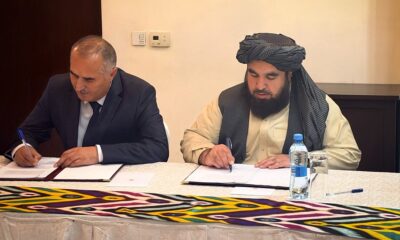
DABS, Tajikistan’s Pamir Energy sign agreement on electricity supply to Badakhshan

Saudi energy group signs major Afghanistan deals covering gas exploration and pipeline plans

Khalilzad: Afghanistan ready to attract major investment

Messi returns to Inter Miami after Argentina retirement

Imam Abu Hanifa exhibition to draw exhibitors from more than 20 countries

Maryam Nawaz says Punjab faces greater security threats from neighbouring provinces

Tahawol: Escalation of internal political crisis in Pakistan discussed

Saar: Continuation of crisis in the Middle East discussed

Tawsia: Review of three key economic developments in Afghanistan

Tahawol: Pakistan’s airstrikes on civilians in Afghanistan discussed

Tahawol: Improvement in Afghanistan-China relations discussed
-
 Latest News3 days ago
Four members of one family killed in Helmand in Pakistan airstrike
-
 Regional4 days ago
US imposes sanctions on 13 tied to Iran weapons procurement
-

 Sport5 days ago
Istiqlal Kabul beat Khurasan Faryab 2-0 with late goals
-

 Sport5 days ago
Afghanistan Champions League: Toofan Herat and Aino Mina Kandahar draw 1-1
-
 Sport2 days ago
ACB announces Afghanistan squads for Bangladesh, Zimbabwe series
-
 Business4 days ago
Afghanistan, Tajikistan seek stronger trade and investment ties
-
 Latest News3 days ago
Moscow to host 8th meeting of Afghanistan consultations on October 5
-
 Latest News4 days ago
WATCH: Woman rescued after 14 years of alleged confinement in Helmand