
Latest News
UN warns of ‘colossal’ collapse of Afghan banking system

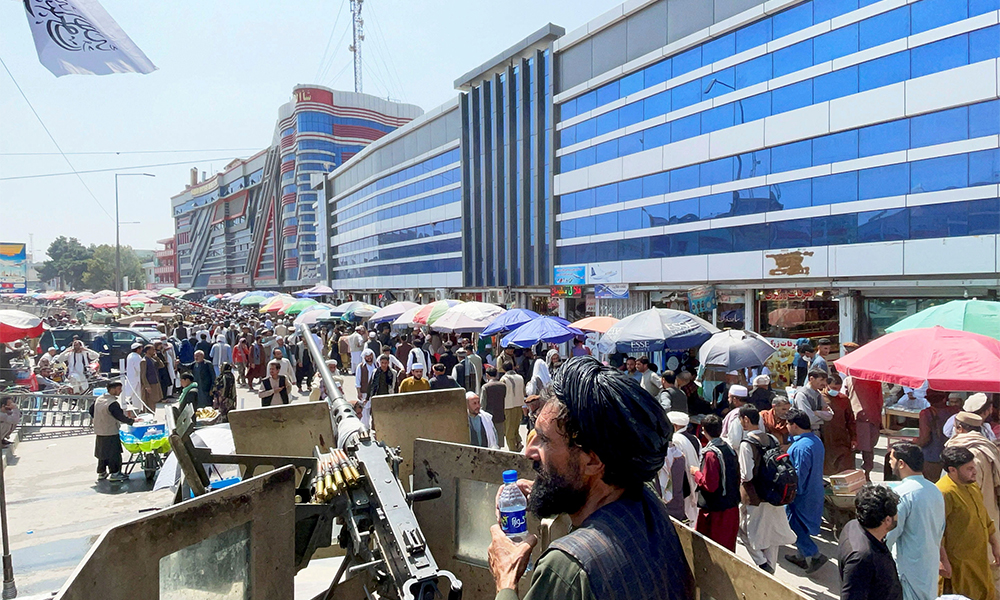
The United Nations on Monday pushed for urgent action to prop up Afghanistan’s banks, warning that a spike in people unable to repay loans, lower deposits and a cash liquidity crunch could cause the financial system to collapse within months.
In a three-page report on Afghanistan’s banking and financial system seen by Reuters, the U.N. Development Programme (UNDP) said the economic cost of a banking system collapse – and consequent negative social impact – “would be colossal.”
An abrupt withdrawal of most foreign development support after the Islamic Emirate of Afghanistan (IEA) seized power on August 15 from Afghanistan’s Western-backed government has sent the economy into freefall, putting a severe strain on the banking system which set weekly withdrawal limits to stop a run on deposits.
“Afghanistan’s financial and bank payment systems are in disarray. The bank-run problem must be resolved quickly to improve Afghanistan’s limited production capacity and prevent the banking system from collapsing,” the UNDP report said.
Finding a way to avert a collapse is complicated by international and unilateral sanctions on IEA leaders, Reuters reported.
“We need to find a way to make sure that if we support the banking sector, we are not supporting Taliban (IEA),” Abdallah al Dardari, head of UNDP in Afghanistan, told Reuters.
“We are in such a dire situation that we need to think of all possible options and we have to think outside the box,” he said. “What used to be three months ago unthinkable has to become thinkable now.”
Afghanistan’s banking system was already vulnerable before the IEA came to power. But since then development aid has dried up, billions of dollars in Afghan assets have been frozen abroad, and the United Nations and aid groups are now struggling to get enough cash into the country.
The UNDP’s proposals to save the banking system include a deposit insurance scheme, measures to ensure adequate liquidity for short- and medium-term needs, as well as credit guarantees and loan repayment delay options.
“Coordination with the International Financial Institutions, with their extensive experience of the Afghan financial system, would be critical to this process,” UNDP said in its report, referring to the World Bank and International Monetary Fund.
The United Nations has repeatedly warned since the IEA took over that Afghanistan’s economy is on the brink of a collapse that would likely further fuel a refugee crisis. UNDP said that if the banking system fails, it could take decades to rebuild.











Kazakhstan’s Foreign Minister Mukhtar Tileuberdi has called for pragmatic and coordinated international engagement with Afghanistan, saying the country’s long-term stability is closely linked to the security and sustainable development of Central Asia.
Speaking during the general debate of the 81st session of the United Nations General Assembly in New York on Friday, Tileuberdi said humanitarian assistance to Afghanistan remains essential but alone cannot break the cycle of poverty, displacement and dependency.
He said Kazakhstan supports a “pragmatic, coordinated and step-by-step” approach to international engagement with Afghanistan, with the United Nations playing a central role.
Tileuberdi also said Kazakhstan is working with the UN to operationalize the United Nations Regional Centre for the Sustainable Development Goals for Central Asia and Afghanistan in Almaty.
He said the success of the centre should be measured by the results and assistance it delivers to the region.


Trump rejects Iranian proposal to open Hormuz and end fighting

Abu Muslim Farah defeat Khurasan Faryab 2-0 in ACL season six

Saar: Concerns over Pakistan’s political crisis discussed

Afghanistan Champions League: Omar Zawak Herat beat Toofan Herat 1-0

Blast in Pakistan’s Dera Ismail Khan kills 11, injures 30

Saudi energy group signs major Afghanistan deals covering gas exploration and pipeline plans

Trump floats idea of renaming Atlantic or Pacific Ocean

US hits Egyptian bank branches with Iran sanctions as war marks six months

Nepal flood rescue mission enters critical phase as thousands remain missing

Iranian clubs to face Gulf opponents at neutral venues in Asian Champions League Elite
Saar: Concerns over Pakistan’s political crisis discussed

Exclusive interview with Abdul Latif Mansoor, Minister of MRRD

Tawsia: Overview of Afghanistan’s iron mines

Tahawol: Discussion on fresh Pakistani airstrikes on Afghanistan

Saar: Calls for international support for Afghanistan discussed
-

 Latest News4 days ago
Ariana Afghan Airlines ranks seventh among 45 Central Asian airlines
-

 Latest News5 days ago
UN reiterates call for respect for international law after Kunar airstrikes
-

 Regional4 days ago
US and Iran hold first talks since June after Trump’s ‘annihilation’ threat
-

 Latest News4 days ago
Silk Road highway in Wakhan corridor now reaches the China border
-

 Regional3 days ago
Iran airlines cancel flights as US sanctions hit
-

 Latest News5 days ago
Afghan Official: Pakistan’s airstrikes will not go unanswered
-
 Regional5 days ago
G7 foreign ministers call on Iran to stop arming Houthis
-

 Sport5 days ago
Afghan boxing referee heads to China for international festival