
Business
UNDP warns Afghan economy to contract by 6% due to COVID-19

United Nations Development Program (UNDP) Afghanistan launched its latest COVID-19 impact assessment report on Wednesday and said the pandemic has set back Afghanistan’s economic growth by several years.
The report, the 4th since the coronavirus outbreak, exposed structural and resource gaps in responding to unforeseen events such as pandemics. The country had to reallocate resources from long-term development priorities to fighting this health crisis.
In a statement issued by the UNDP, the organization said the report, titled “Fiscal Options in Response to Coronavirus Crisis”, focused on the fiscal implications of COVID-19.
The UNDP stated it estimates that due to a combination of external and internal shocks, the Afghan economy will contract by around six percent in 2020.
“Assuming the recovery starts in 2021 and growth performance to be positive between 2021 and 2024, it will be moderate, and well below the pre-pandemic level.
“Without well thought-out recovery-oriented policies, this amounts to a cumulative loss of around 12.5 percent in real GDP by 2024,” read the statement.
UNDP said Afghanistan witnessed a sharp decline in revenues in 2020 due to low economic activity, trade disruption and weaker compliance brought on by the pandemic.
“The government had to adjust the revenue estimates downwards from Afs 209 billion (US$2.71 billion) in 2019 to Afs 144 billion (US$1.87 billion) during the mid-year budget review.”
UNDP stated it estimated an average of 17 percent decline in corporate tax revenue and 18 percent decline in personal income tax revenue.
“Tax on international trade will be the worst hit and revenues may decline to as low as 19 percent due to the decrease in imports, while tax revenue on goods and services might decline by 10 percent,” the statement read.
Meanwhile, UNDP stated the fiscal deficit is expected to increase to around four percent of GDP in 2020.
“The Government of Afghanistan needs to opt for policies and programmes to generate more revenue to address the fiscal deficit.
“Given the economic slowdown, a second wave of the pandemic, continued conflict, and an uncertain peace process and political environment, the country will continue to need grant support from the international community to address the fiscal deficit and maintain its current level of expenditure on basic services,” read the UNDP’s statement.
The organization also stated that additional grants need to be directed at driving and implementing reforms to improve the business regulatory environment, improve governance, encourage investment and strengthen the private sector.
According to the statement, the UNDP and other stated along with other international development partners, it would continue to support Afghanistan in the run up to the donor pledging conference later this month.
However they urged the Afghan government to address the immediate fiscal impact of the pandemic and help reverse its negative effects.






Business
Afghanistan, Tajikistan seek stronger trade and investment ties
The two sides discussed increasing trade exchanges, establishing direct links between traders and investors, and organizing joint economic programs.
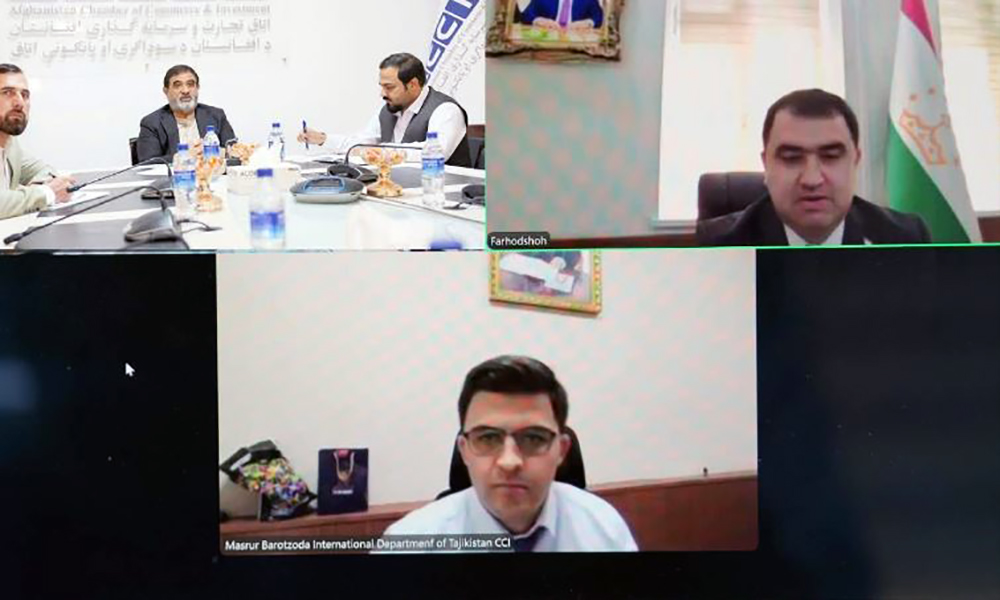
The heads of the chambers of commerce and industry of Afghanistan and Tajikistan have agreed to strengthen bilateral trade, promote investment and expand cooperation between the private sectors of the two countries.
Sayed Karim Hashemi, head of the Afghanistan Chamber of Commerce and Investment (ACCI), held an online meeting with Farhad Shah Rahman Alizoda, head of the Chamber of Commerce and Industry of Tajikistan, to discuss ways to expand economic ties.
The two sides discussed increasing trade exchanges, establishing direct links between traders and investors, and organizing joint economic programs.
Hashemi invited Tajik traders and investors to participate in the fifth Imam Abu Hanifa International Exhibition in Kabul.
Alizoda, meanwhile, invited an Afghan business delegation to attend a major trade and industrial exhibition in Dushanbe.
The two sides also stressed the importance of exchanging business delegations and developing long-term cooperation between the private sectors of Afghanistan and Tajikistan.
Business
Kazakhstan grain shipments to Afghanistan rise over 4-fold
Of the total, 7.2 million tons were transported for export, while 2.1 million tons were supplied to the domestic market.
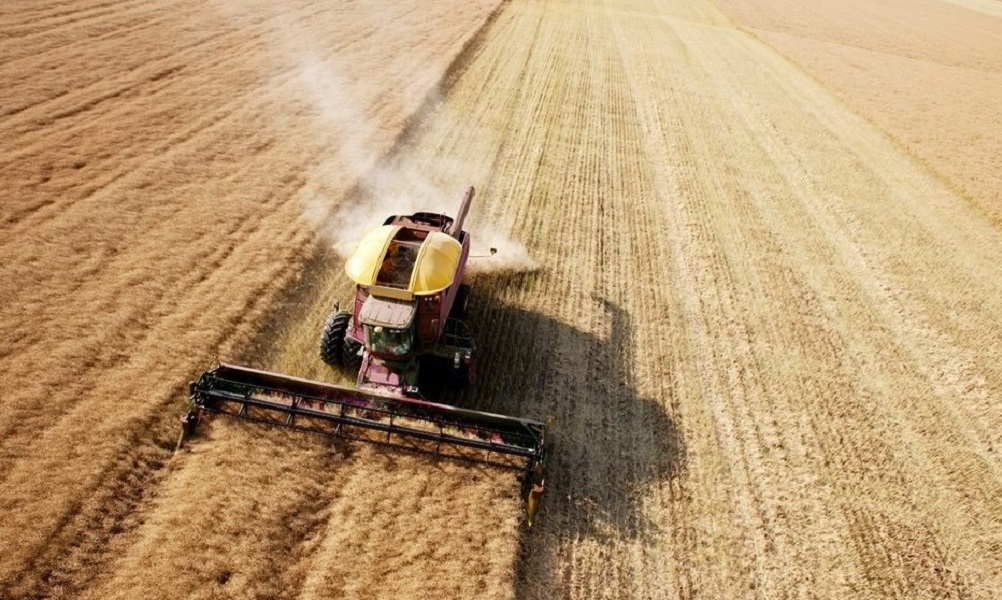
Grain shipments from Kazakhstan to Afghanistan increased 4.4 times in the first eight months of the year, reaching 655,000 tons, according to Kazakhstan’s Transport Vice Minister Zhanibek Taizhanov.
Speaking at a government meeting, Taizhanov said Kazakhstan transported 9.3 million tons of grain by rail during the period, a 13% increase compared with the same period in 2025.
Of the total, 7.2 million tons were transported for export, while 2.1 million tons were supplied to the domestic market.
Taizhanov said grain shipments to Central Asia increased by 37%, while shipments to China rose by 34%. Grain exports through Russian ports also increased by 9%.
Meanwhile, combined fodder exports rose by 38% to 2.6 million tons.
Earlier, Kazakhstan’s Vice Minister of Agriculture Azat Sultanov said the country plans to commission 15 additional vegetable storage facilities by the end of 2026, with a combined capacity of 129,000 tons.
Business
Russia accuses West of double standards over deportation of Afghans
She said the process of removing Afghan refugees who were once considered partners by Western countries had accelerated.
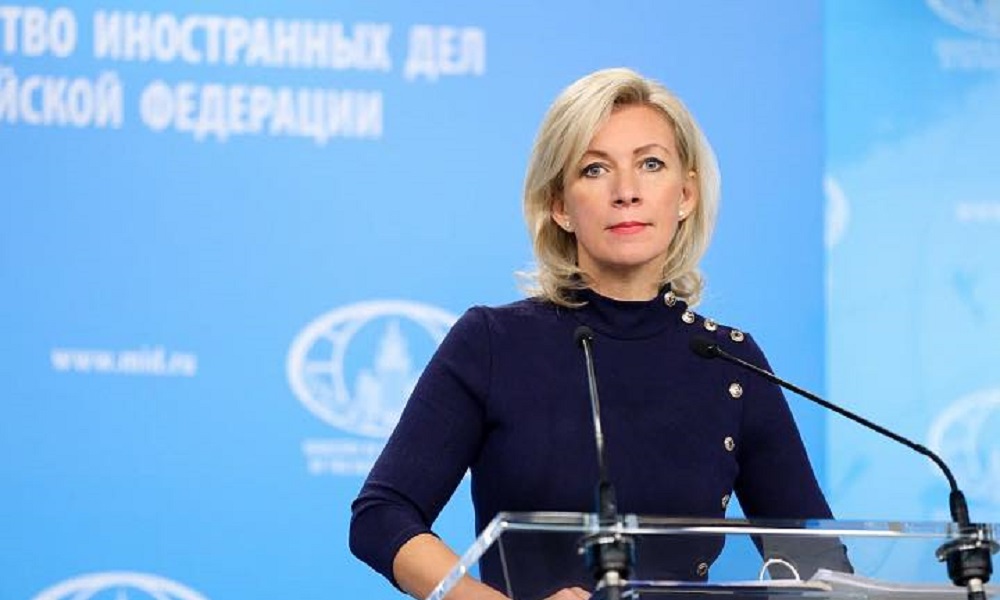
Russia has criticized Western countries over their policies toward Afghans who left the country following the withdrawal of foreign forces in August 2021, accusing them of tightening asylum rules while increasing deportations.
Maria Zakharova, spokesperson for Russia’s Foreign Ministry, made the remarks in response to questions about the policies of the United States, Britain and Germany toward Afghan nationals.
Zakharova said Western countries had tightened rules on issuing documents and granting asylum after facing difficulties in accommodating Afghans, while simultaneously stepping up deportations.
She said the policy particularly affected former officials and military personnel of the previous Afghan government, who could face forced returns to Afghanistan.
Zakharova also referred to reports that some European Union countries had allowed diplomats of the Islamic Emirate of Afghanistan (IEA) to issue documents for Afghan nationals subject to readmission.
She said the process of removing Afghan refugees who were once considered partners by Western countries had accelerated.
Zakharova also raised concerns about the planned closure of Qatar’s Al-Sailiya camp, where more than 1,000 Afghans who worked with US forces are reportedly housed at a former US military base.
She said the United States had been unwilling to accept some of its former Afghan partners and was instead negotiating their resettlement in African countries.
Zakharova accused Western governments of adopting an inconsistent approach by criticizing IEA officials over alleged human rights violations while at the same time deporting Afghan nationals to Afghanistan.
Her comments come amid continuing debate in Western countries over the status of Afghan asylum seekers, former government officials and people who worked with foreign forces following the 2021 withdrawal.


Passengers foil bid to crash Dubai-Tel Aviv flight, Israel says, after co-pilot stabs pilot

Tahawol: Improvement in Afghanistan-China relations discussed

Saar: Expanding ties with regional and global countries discussed

Abu Muslim Farah beat Omar Zawak Herat 4-0 in Afghanistan Champions League

ACB launches nationwide fast-bowling talent hunt

Saudi energy group signs major Afghanistan deals covering gas exploration and pipeline plans

Iranian clubs to face Gulf opponents at neutral venues in Asian Champions League Elite

Khalilzad: Afghanistan ready to attract major investment

Ariana Television Network secures exclusive rights to Afghanistan’s 2026/27 cricket series

El Niño likely to intensify, may become strongest ever recorded, WMO says
Tahawol: Improvement in Afghanistan-China relations discussed
Saar: Expanding ties with regional and global countries discussed

Tahawol: Absence of Afghanistan’s envoy at UNGA discussed

Saar: Assessment of war between Afghanistan and US discussed

Saar: Afghanistan’s image at UNGA
-

 Sport4 days ago
Afghan bodybuilder Ali Bilal finishes runner-up at Mr Olympia for third straight year
-

 Latest News4 days ago
Afghanistan says 28 killed, 32 captured in Nuristan operation
-
 World4 days ago
Trump rejects Iranian proposal to open Hormuz and end fighting
-
 Sport5 days ago
Afghanistan to face India in Asian Games cricket quarter-final
-

 Sport5 days ago
Afghanistan Champions League: Omar Zawak Herat beat Toofan Herat 1-0
-

 Latest News5 days ago
Khalilzad questions Pakistan’s commitment to Afghan welfare
-
 Latest News4 days ago
UNDP, UN Women launch financing initiative for Afghan women entrepreneurs
-

 Sport3 days ago
Afghanistan vs India Asian Games quarter-final abandoned without a toss