
Latest News
UNSC meets behind closed doors to discuss Sinirlioglu’s report on Afghanistan

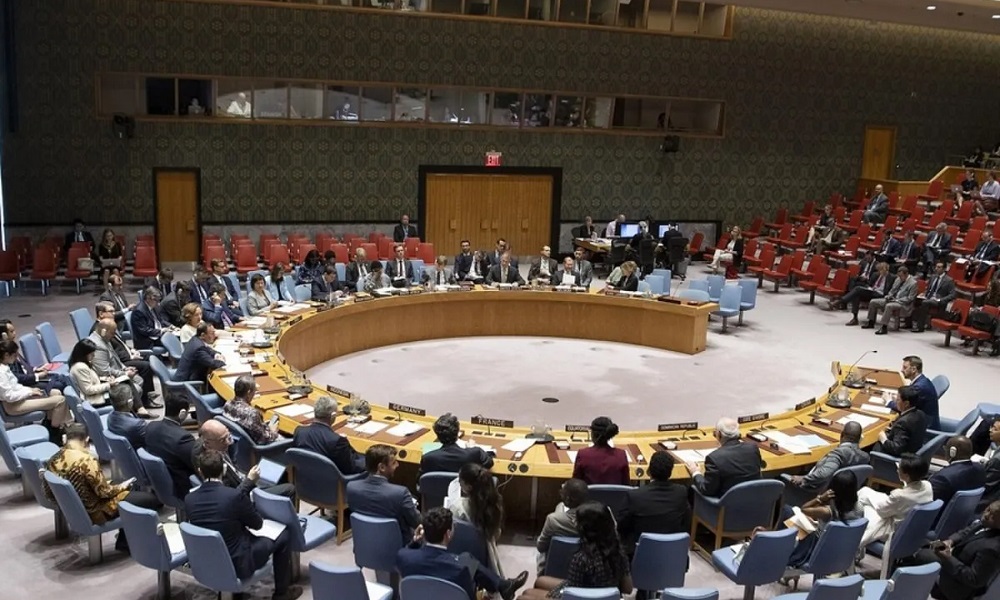
The United Nations Security Council held a closed door session on Tuesday to assess the report on how the UN should address Afghanistan’s issues that was submitted by Feridun Sinirlioglu, the United Nations Special Coordinator for Afghanistan.
According to the assessment, the Islamic Emirate of Afghanistan’s (IEA) desire for recognition could prove crucial to creating an inclusive government and ensuring respect for women’s rights.
The report outlines a strategy for political engagement to reintegrate Afghanistan after the Taliban’s takeover in August 2021.
After having spent “extensive time” in Afghanistan, Sinirlioglu said the situation of women and girls – and the restrictions on education in particular – “was the single most common issue” raised in consultations.
Sinirlioglu said the IEA has tried to justify these restrictions as being part of Islam and Afghan tradition, though no similar restrictions exist in any other member state of the Organisation of Islamic Cooperation.
“The basic rights of women and girls, including the right to education and to work, and representation in public and political life, are not only fundamental obligations of a state but also critical to build state capacity for long-term development and economic growth and peace and security,” read the assessment.
“Any formal reintegration of Afghanistan into global institutions and systems will require the participation and leadership of Afghan women.”
The IEA has however repeatedly said the decrees issued have been to protect women’s basic rights.
In a statement issued last week in response to the UN’s assessment, the IEA said that hundreds of thousands of women continue to work in the public sector, specifically in education, health, security and other ministries. “Approximately 23.4% of all civil servants are women,” the document read.
The IEA also stated that a major initiative to promote women entrepreneurs has been launched; that it has rounded up thousands of street beggars – majority of which were women. These women now receive a regular stipend.
The IEA also said it has a strong central government, which extends to all corners of the country, and has unified Afghanistan politically and socially.
The assessment recommended that the UN pursue an inclusive form of governance and engage with all Afghans.
It said that pursuing “intra-Afghan dialogue” would enable progress towards the complete normalization and integration of Afghanistan into the international system.
“Afghanistan is a diverse, multi-ethnic, multi-sectarian, multi-linguistic and multicultural society,” the report said.
“The inclusion of all Afghan communities in the nation’s governance structures is central to the social and political stability of Afghanistan.”
Reports meanwhile indicate that in the meeting behind closed doors at the UN Security Council on Tuesday, Malta’s ambassador to the UN, Vanessa Frazier, highlighted concerns over the political, humanitarian, security and human rights situation in Afghanistan.
“This was in response to the independent assessment, produced by Feridun Sinirlioglu, which was tasked to consider the current challenges faced by Afghanistan,” Ms Frazier said.
Amongst these concerns, Malta said, were the lack of inclusive governance, the humanitarian crisis, the continued security risk posed by terrorist groups, and the deeply concerning human rights situation, including of women and girls.
However, the UAE’s National reported that in an open letter to the UN, 71 Afghan civil society organizations, networks and coalitions in Afghanistan and in exile, expressed “deep reservations” about the report.
They found the assessment to be “influenced by the security and geopolitical interests of the member states and regional powers, rather than the need and plight of the Afghanistan people”.
They believe the report is developed based on a “pre-assumed policy of appeasement and engagement” with the IEA without considering recommendations of women, civil society and other groups, the National reported.










Kazakhstan’s Foreign Minister Mukhtar Tileuberdi has called for pragmatic and coordinated international engagement with Afghanistan, saying the country’s long-term stability is closely linked to the security and sustainable development of Central Asia.
Speaking during the general debate of the 81st session of the United Nations General Assembly in New York on Friday, Tileuberdi said humanitarian assistance to Afghanistan remains essential but alone cannot break the cycle of poverty, displacement and dependency.
He said Kazakhstan supports a “pragmatic, coordinated and step-by-step” approach to international engagement with Afghanistan, with the United Nations playing a central role.
Tileuberdi also said Kazakhstan is working with the UN to operationalize the United Nations Regional Centre for the Sustainable Development Goals for Central Asia and Afghanistan in Almaty.
He said the success of the centre should be measured by the results and assistance it delivers to the region.


Abu Muslim Farah defeat Khurasan Faryab 2-0 in ACL season six

Saar: Concerns over Pakistan’s political crisis discussed

Afghanistan Champions League: Omar Zawak Herat beat Toofan Herat 1-0

Blast in Pakistan’s Dera Ismail Khan kills 11, injures 30

Ariana Afghan Airlines increases Kabul-Delhi cargo flights

Saudi energy group signs major Afghanistan deals covering gas exploration and pipeline plans

Trump floats idea of renaming Atlantic or Pacific Ocean

US hits Egyptian bank branches with Iran sanctions as war marks six months

Nepal flood rescue mission enters critical phase as thousands remain missing

Iranian clubs to face Gulf opponents at neutral venues in Asian Champions League Elite
Saar: Concerns over Pakistan’s political crisis discussed

Exclusive interview with Abdul Latif Mansoor, Minister of MRRD

Tawsia: Overview of Afghanistan’s iron mines

Tahawol: Discussion on fresh Pakistani airstrikes on Afghanistan

Saar: Calls for international support for Afghanistan discussed
-

 World5 days ago
CNN, MS NOW and Politico sue Trump, challenging White House ban
-

 Latest News3 days ago
Ariana Afghan Airlines ranks seventh among 45 Central Asian airlines
-

 Latest News5 days ago
UN reiterates call for respect for international law after Kunar airstrikes
-

 Regional4 days ago
US and Iran hold first talks since June after Trump’s ‘annihilation’ threat
-

 Latest News4 days ago
Silk Road highway in Wakhan corridor now reaches the China border
-

 Regional3 days ago
Iran airlines cancel flights as US sanctions hit
-

 Latest News5 days ago
Afghan Official: Pakistan’s airstrikes will not go unanswered
-

 Sport5 days ago
Afghan boxing referee heads to China for international festival