
Regional
US and Iran conclude high-level talks in Switzerland, mediators say
The parties agreed to a mechanism to end the fighting in Lebanon and opened a communications line to help ensure safe passages for commercial ships through the contested strait, the statement said.


The first round of talks between high-ranking U.S. and Iranian officials in Switzerland ended Monday, mediators said, after a tense opening marked by Tehran’s announcement it had again closed the Strait of Hormuz and U.S. President Donald Trump repeating his threats to resume attacks on Iran.
A joint statement from mediating nations Qatar and Pakistan said the U.S. and Iran agreed to a roadmap toward a final deal within 60 days. Technical talks will continue for the rest of the week in the Qatari-owned Swiss mountain resort of Buergenstock, according to the statement, which was released by the Qatari foreign ministry, Reuters reported.
The parties agreed to a mechanism to end the fighting in Lebanon and opened a communications line to help ensure safe passages for commercial ships through the contested strait, the statement said.
U.S. Vice President JD Vance had opened talks with Iranian officials on Sunday under the terms of a memorandum of understanding reached last week to extend a tenuous ceasefire from April for at least another 60 days. The discussions continued until the early hours of Monday.
In a post on social media, Iranian Foreign Minister Abbas Araqchi said his country had secured waivers for oil and petrochemical exports, the release of some frozen assets and the launch of a reconstruction and development plan for Iran.
The White House had no immediate comment when asked if talks had wrapped for now.
Just before talks officially began on Sunday, Fox News reported that Trump said he told Iranian officials “you won’t have a country” if they tried to close the strait again. Trump also reiterated an earlier threat that the U.S. would take over the waterway and possibly charge a toll of its own, Fox News said.
U.S. and Iranian sources provided separate accounts of the discussions in Switzerland.
Iran’s semi-official Tasnim news agency, citing an informed source, said that after Trump’s threats became public, the Iranian delegation refused to return to the room where talks were held, though messages were still being traded via Pakistani and Qatari mediators.
According to Tasnim’s source, Iranians said that the start of negotiations on nuclear matters required the delivery of other parts of the MOU, including the release of frozen assets and U.S. waivers authorizing Iranian oil exports.
“The Iranians never left and are still here meeting and negotiating deep into the night,” a U.S. diplomat involved in the talks told Reuters. “We’ve talked about the Strait, Lebanon, nuclear issues, and details of implementing the MOU, among other topics.”
High-level discussions are expected to wrap up on Monday, with technical staff remaining to conduct further talks, according to a U.S. official.
The agreement called for reopening the Strait of Hormuz, a choke point for global energy shipments, and ending all hostilities, including in Lebanon, where Israel has continued to launch deadly strikes as Iranian ally Hezbollah fires at Israeli targets.
Iran, arguing that the U.S. had failed to meet its commitment to halt fighting in Lebanon, said on the weekend that it had again stopped maritime traffic through the strait and that Sunday’s talks would not cover substantive issues such as Iran’s nuclear programme.
At the talks in Switzerland, where U.S. and Iranian officials met in the presence of Qatari mediators, Vance played down the impact of violence in Lebanon, saying progress had been made towards ending hostilities there.
“These things are always a little bit messy,” he said.
Back in the United States, Trump threatened to resume attacks on Iran if it did not rein in its allies.
“Iran must immediately stop their highly paid PROXIES in Lebanon from causing trouble,” Trump wrote on social media, apparently referring to Hezbollah. “If they don’t, we’ll hit Iran very hard again, just like we did last week, only harder!!!”
Even as Trump was threatening Iran, Vance told reporters the U.S. president had “asked us to turn over a new leaf to transform our relationship with the people of Iran.”
A U.S. diplomat late Sunday said discussions included “clarifying some of the confusing messaging from Iran on the Strait and building deconfliction mechanisms to ensure the Strait will remain fully open.”
IRAN CITES LEBANON AS REASON TO CLOSE STRAIT
Despite the announcement of a new ceasefire in Lebanon on Friday, there has been scant sign of an end to fighting there. Iran said on Saturday that as a result, it had again shut the strait, whose closure for nearly four months caused the biggest disruption of global energy supplies in history.
U.S. officials disputed that the strait was closed, but commercially available shipping data showed an immediate impact.
Five vessels passed the strait on Sunday, a sharp drop from the 26 ships spotted a day earlier, data from analytics firm Kpler showed. The data may exclude vessels that switch off their transponders while travelling in the Gulf.
Iran’s Fars news agency cited a military source as saying on Sunday that no new permits were being issued for ships to cross until further notice.
Trump said he agreed to last week’s memorandum of understanding to avert a global economic depression from high oil prices caused by the strait’s closure. Oil prices had tumbled over the past week to levels unseen since the war started on February 28 with U.S.-Israeli attacks on Iran.
Brent crude futures rose more than $1 to $81.66 a barrel in early Monday trading, following the rocky start to the peace talks.
Sunday appeared to be the quietest day in Lebanon for some time, with no reports of major violence by nightfall, after two days of heavy Israeli strikes and fire from Hezbollah fighters on Israeli positions.
More than 1 million people have fled their homes in Lebanon since Israel invaded in March to pursue Hezbollah fighters who fired across the border in support of Tehran.
Reuters journalists in southern Lebanon on Sunday saw some of the heaviest traffic since the memorandum was signed, with residents returning to their homes. Some stood beside cars backed up on the highway and waved Hezbollah flags.







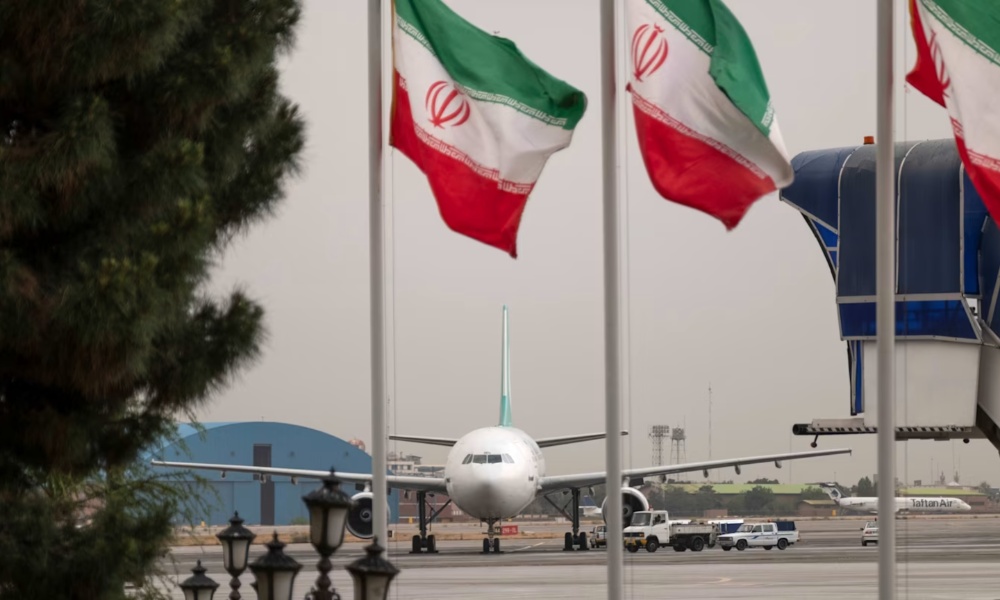
Iranian airlines cancelled some international flights on Wednesday after the United States imposed new sanctions targeting Iran’s aviation sector.
Georgia and Azerbaijan confirmed the suspension of flights to Iran, while a travel agent in Tehran told AFP that flights to Baghdad, Muscat and Qatar had also been halted. Flights to several other destinations, including China, continued.
The new US measures were announced by Treasury Secretary Scott Bessent on Monday as Washington seeks to increase economic pressure on Tehran amid the ongoing conflict.
“We are squeezing the Iranians like they’ve never seen,” Bessent told Fox News on Wednesday, claiming that more than 80% to 90% of Iran’s international flights had been affected.
Iranian President Masoud Pezeshkian, who is attending the United Nations General Assembly in New York, rejected the pressure.
“The resistance of the Iranian people will only intensify in the face of sanctions, mounting pressure and growing intimidation” from the United States, Pezeshkian said.
Iran’s aviation industry has faced US sanctions for years, but the latest measures could further restrict international connections.
Despite the new sanctions, flight-tracking data showed a Mahan Air flight from Tehran arriving in Guangzhou, China, on Wednesday. A flight to Shanghai was also scheduled to depart from Tehran’s international airport.
China has opposed the new US sanctions, describing them as illegal.
Some flights to Istanbul also continued, although others were cancelled, according to the Tehran-based travel agent, who said the situation remained uncertain.
“The situation is unstable and we are no longer selling tickets for the time being for fear of cancellations,” the agent told AFP.
Flights connecting Iran with Turkey and Armenia were also still possible on some smaller Iranian airlines, while flights to Najaf in Iraq and Dubai in the United Arab Emirates were listed as scheduled.
Mohsen Rezaei, head of Iran’s Supreme National Security Council, warned neighbouring countries against complying with the US measures.
“If a country cooperates with or embarks on adventures with the United States, its airports will no longer be able to operate flights” to Iran, he told Iranian state television.
The possible suspension of flights between Iran and Iraq has raised particular concerns because of the large number of Iranian religious pilgrims who travel to Iraq.
Iranian media reported that authorities were considering rerouting flights from Baghdad to Najaf. AFP also reported that several sources in Iraq said Baghdad would comply with the US sanctions, although the Iraqi government had not publicly announced a flight ban.
Travel agents in Najaf said passengers were seeking information about possible cancellations and considering travelling by land instead.
Regional
US and Iran hold first talks since June after Trump’s ‘annihilation’ threat
WATCH Donald Trump’s speech to UNGA on Iran, including his ‘annihilation’ threat
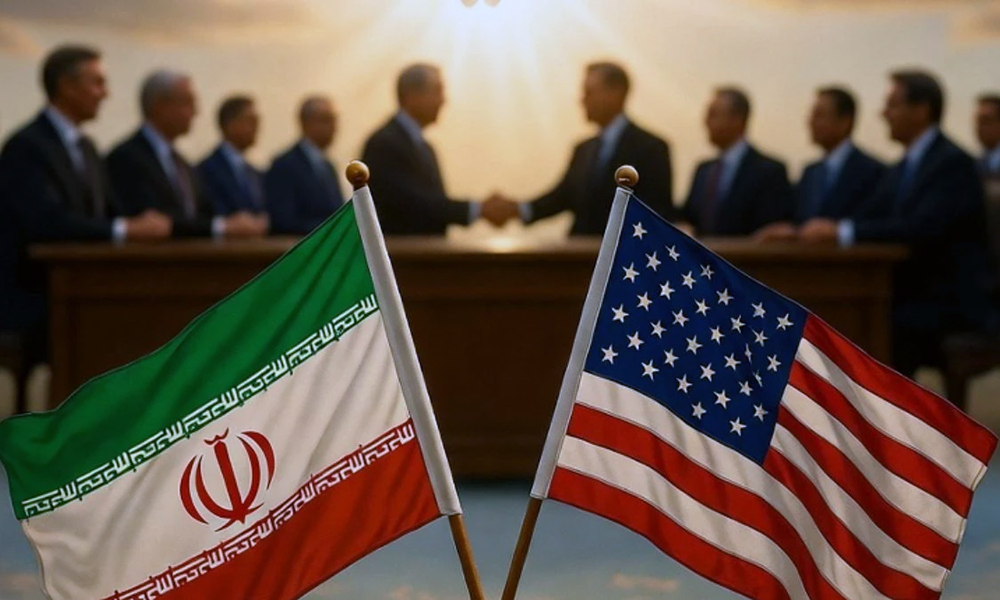
The United States and Iran have held their first high-level talks since June, with discussions taking place on the sidelines of the United Nations General Assembly in New York amid continued fighting and growing international pressure to end the conflict.
Iranian Foreign Minister Abbas Araghchi and US special envoy Steve Witkoff took part in the talks, which were mediated by Qatar. US envoy Jared Kushner also participated on the American side, according to reports.
No breakthrough was immediately reported. Witkoff said the two sides had completed a round of discussions that he hoped would prove “constructive and promising”, adding that mediators would continue their efforts.
Iranian officials said Araghchi conveyed Tehran’s conditions, including an end to what Iran describes as US acts of aggression and the lifting of measures affecting Iranian shipping and assets.
The talks came just hours after US President Donald Trump warned in his address to the UN General Assembly that he could “annihilate” Iran if no agreement was reached.
Trump said Iran faced a choice between reaching a deal and what he described as destruction, while also saying he believed an agreement could be reached after the US midterm elections in November.
Trump later described the three-hour discussions as very productive. Witkoff, however, clarified that the two sides communicated through mediators who shuttled between the delegations rather than holding direct face-to-face negotiations.
The latest contact follows months of conflict between Iran, Israel and the United States. The fighting has also disrupted shipping through the Strait of Hormuz, one of the world’s most important energy routes.
Iran has indicated that it could reopen the strategic waterway if Washington takes steps to ease military and economic pressure on Tehran. Iranian officials have linked the issue to demands including the lifting of the US naval blockade and the release of frozen Iranian assets.
The Strait of Hormuz is a key route for global energy supplies, and its closure has contributed to volatility in international oil markets.
Despite the renewed diplomatic contact, significant differences remain between Washington and Tehran over the war, Iran’s nuclear programme, sanctions, shipping through the Strait of Hormuz and US military operations in the region.
Iranian President Masoud Pezeshkian is due to address the UN General Assembly on Wednesday, with further diplomatic efforts expected to continue in New York.
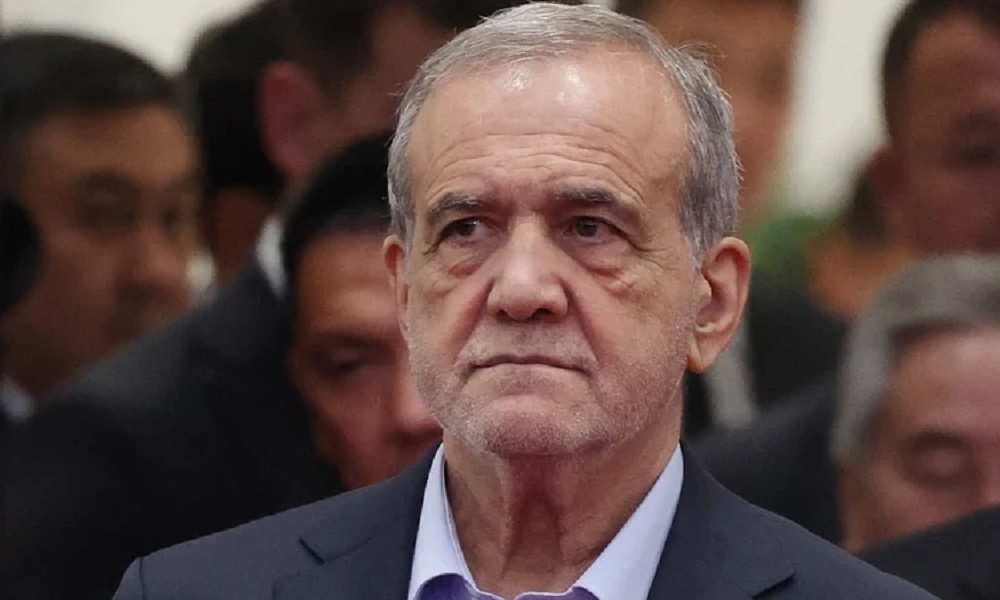
Iranian President Masoud Pezeshkian left Tehran for New York on Tuesday to attend the 81st United Nations General Assembly, where he says he will defend Iran’s positions and highlight what Tehran describes as the hardships facing its people and the wider region.
Speaking at a press conference before his departure on Tuesday, Pezeshkian said the UN gathering provides Iran with an opportunity to present its views to the international community.
“We will defend our positions with strength at international forums,” he said.
Pezeshkian said he would meet politicians, cultural figures and media representatives during his visit and discuss issues including regional conflicts, international law and what he described as violations of commitments made to Iran during previous negotiations.
Iranian Foreign Minister Abbas Araghchi is already in New York. He arrived on Monday ahead of the General Assembly and is expected to hold talks and consultations with foreign officials during the UN gathering.
Araghchi has said Iran’s main objective at the UN is to defend the rights and interests of the Iranian people and use the gathering as a platform for diplomacy.
The Iranian delegation’s presence comes amid ongoing tensions between Tehran and Washington.
A senior Iranian official told Reuters on Tuesday that Iran was prepared to reopen the Strait of Hormuz within seven days if the United States eased military pressure and lifted its blockade of Iranian ports. The official said the Iranian delegation in New York had full authority to pursue diplomatic discussions.
Pezeshkian meanwhile said Iran had repeatedly entered negotiations and agreements only to see the other side fail to honour its commitments. He argued that lasting peace and security required respect for the rights of nations and individuals.
He also criticised military actions and developments in Gaza and other parts of the Middle East, saying attacks on civilians and public facilities could not simply be justified as counter-terrorism measures.
Pezeshkian is expected to address the UN General Assembly on Wednesday. His visit comes as the United States and Iran remain at odds over the conflict and the possibility of renewed diplomacy.
The Iranian president has said his trip will be aimed at presenting Iran’s position, explaining developments in the region and conveying what he called the message of the Iranian people to the international community.


Toofan Herat beat Khurasan Faryab 2–1 in Afghanistan Champions League

Tahawol: Discussion on fresh Pakistani airstrikes on Afghanistan

Afghanistan Champions League: Ariana Khost beat Sarsabz Yashlar 2–1

Khalilzad warns Pakistan-Afghanistan tensions likely to worsen after fresh airstrikes

Saar: Calls for international support for Afghanistan discussed

Saudi energy group signs major Afghanistan deals covering gas exploration and pipeline plans

ATN secures exclusive rights to broadcast T20I series in India across Afghanistan

Trump floats idea of renaming Atlantic or Pacific Ocean

US hits Egyptian bank branches with Iran sanctions as war marks six months

Nepal flood rescue mission enters critical phase as thousands remain missing
Tahawol: Discussion on fresh Pakistani airstrikes on Afghanistan
Saar: Calls for international support for Afghanistan discussed

Tahawol: Opening of the 81st UN General Assembly Session

Saar: OIC Assessment of Afghanistan’s humanitarian and development situation discussed

Tahawol: Reactions to Pakistan’s attacks on Afghanistan discussed
-

 Sport3 days ago
Afghanistan to face Japan and Nepal in Asian Games cricket group stage
-
 Latest News4 days ago
Pakistan says Kohat attackers had roots in Afghanistan
-
 Latest News5 days ago
OIC to hold Afghanistan Contact Group meeting on sidelines of UN General Assembly
-
 Regional5 days ago
Flames, smoke seen near Riyadh airport; Houthis claim attacks on Saudi capital
-
 Regional4 days ago
Iran and US trade threats after Houthi attacks escalate regional conflict
-
 Business4 days ago
Dogharoun handles 60% of Iran’s exports to Afghanistan
-

 World3 days ago
CNN, MS NOW and Politico sue Trump, challenging White House ban
-
 World4 days ago
World leaders return to UN amid wars in Middle East and Ukraine