
Latest News
US reviewing possibility to reopen its consulate in Afghanistan

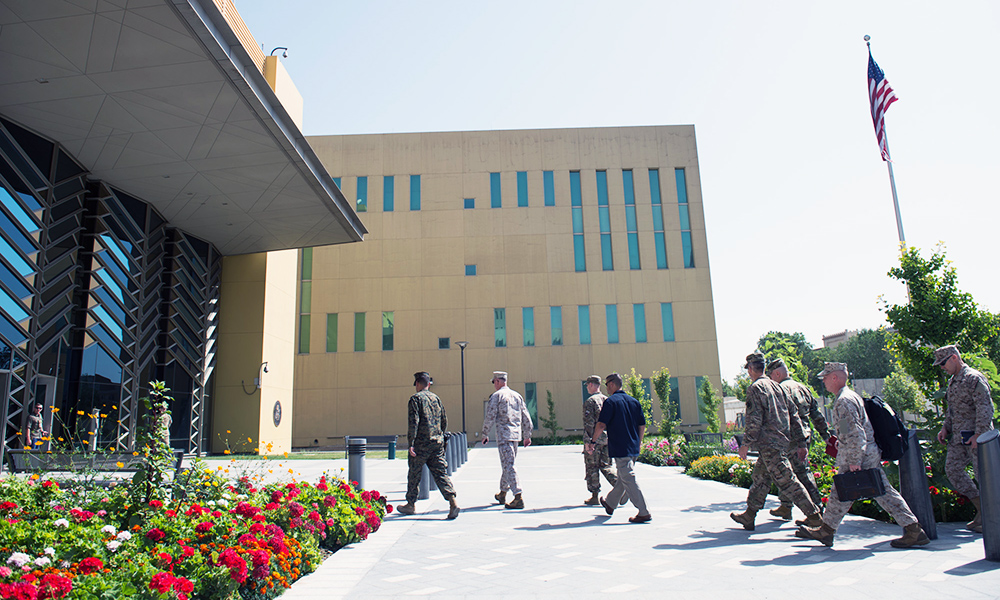
The United States is reviewing the possibility of reopening its consulate in Afghanistan under the Islamic Emirate of Afghanistan (IEA) rule without formally recognizing the acting government, according to a report.
According to a newly released strategy document from the State Department, the US is “cautiously” and without officially recognizing the Islamic Emirate, reviewing the possibility of reopening its consulate in Afghanistan under the IEA’s control, as reported by the Voice of America on Thursday.
This move indicates a possible change in U.S. policy, moving towards limited engagement with the isolated IEA government to achieve various security, political, and economic objectives.
According to Voice of America, the State Department’s guidance in this report states: “We support transparency and accountability, along with access for American citizens to consular services, in coordination with the Taliban [Islamic Emirate of Afghanistan].”
In this State Department report, it is stated: “Even as the United States does not officially recognize the Taliban [Islamic Emirate of Afghanistan] as the legitimate government of Afghanistan, we must establish effective working relationships with them to advance our goals and increase our understanding of the Taliban’s readiness and ability to fulfil their commitments to [Washington].”
According to the report, the US’s new strategy encompasses four areas, including counterterrorism efforts, economic assistance, local engagement, and the provision of consular services to American citizens, as well as aiding Afghan migration to the United States.
The document also emphasizes support for the work of the U.S. Special Envoy for Hostage Affairs in securing the release of American hostages detained in Afghanistan.
Voice of America also reports that the document underscores the United States’ commitment to discussing the fundamental rights of the Afghan people, particularly the rights of women and girls.
Following the fall of the Republic and the IEA’s takeover, the United States closed its embassy in Afghanistan, and this institution currently operates under its staff in Doha.
At the same time, the spokesperson of the US Foreign Secretary said in a press conference in Washington that whenever the rulers of Afghanistan want to achieve global legitimacy, they must stop the violence and fulfill their international obligations.
“As we have said on behalf of the United States to the Taliban [Islamic Emirate of Afghanistan] in public and in private, their relationship with the international community depends entirely on their actions, and we will be looking to see them take a different course of action than they have to date,” said Matthew Miller, spokesman for the US State Department.
Meanwhile, IEA’s spokesman Zabihullah Mujahid said that any country, including America, who wants to resume its diplomatic activities in Afghanistan, welcomes it and is ready to cooperate in this direction.
“If we are contacted, we will take our measures, security is ensured, every country that activates its embassy and consulate in Afghanistan has a favorable environment for it, and we do not have any problems, and it is still getting better that both countries have a close understanding and contact through diplomatic channels, and it will end in the benefit of both countries,” said Zabihullah Mujahid, the spokesman of the Islamic Emirate.
This strategic document of the US Ministry of Foreign Affairs reveals the reopening of that country’s consulate in Afghanistan, while no country has recognized the current government of Afghanistan.
However, the Islamic Emirate has repeatedly emphasized that it has completed all the conditions for recognition, but countries and the international community are looking for excuses.












Kazakhstan’s Foreign Minister Mukhtar Tileuberdi has called for pragmatic and coordinated international engagement with Afghanistan, saying the country’s long-term stability is closely linked to the security and sustainable development of Central Asia.
Speaking during the general debate of the 81st session of the United Nations General Assembly in New York on Friday, Tileuberdi said humanitarian assistance to Afghanistan remains essential but alone cannot break the cycle of poverty, displacement and dependency.
He said Kazakhstan supports a “pragmatic, coordinated and step-by-step” approach to international engagement with Afghanistan, with the United Nations playing a central role.
Tileuberdi also said Kazakhstan is working with the UN to operationalize the United Nations Regional Centre for the Sustainable Development Goals for Central Asia and Afghanistan in Almaty.
He said the success of the centre should be measured by the results and assistance it delivers to the region.


Abu Muslim Farah defeat Khurasan Faryab 2-0 in ACL season six

Saar: Concerns over Pakistan’s political crisis discussed

Afghanistan Champions League: Omar Zawak Herat beat Toofan Herat 1-0

Blast in Pakistan’s Dera Ismail Khan kills 11, injures 30

Ariana Afghan Airlines increases Kabul-Delhi cargo flights

Saudi energy group signs major Afghanistan deals covering gas exploration and pipeline plans

Trump floats idea of renaming Atlantic or Pacific Ocean

US hits Egyptian bank branches with Iran sanctions as war marks six months

Nepal flood rescue mission enters critical phase as thousands remain missing

Iranian clubs to face Gulf opponents at neutral venues in Asian Champions League Elite
Saar: Concerns over Pakistan’s political crisis discussed

Exclusive interview with Abdul Latif Mansoor, Minister of MRRD

Tawsia: Overview of Afghanistan’s iron mines

Tahawol: Discussion on fresh Pakistani airstrikes on Afghanistan

Saar: Calls for international support for Afghanistan discussed
-

 World5 days ago
CNN, MS NOW and Politico sue Trump, challenging White House ban
-

 Latest News3 days ago
Ariana Afghan Airlines ranks seventh among 45 Central Asian airlines
-

 Latest News4 days ago
UN reiterates call for respect for international law after Kunar airstrikes
-

 Regional3 days ago
US and Iran hold first talks since June after Trump’s ‘annihilation’ threat
-

 Latest News3 days ago
Silk Road highway in Wakhan corridor now reaches the China border
-

 Latest News4 days ago
Afghan Official: Pakistan’s airstrikes will not go unanswered
-

 Sport4 days ago
Afghan boxing referee heads to China for international festival
-

 Regional5 days ago
G7 foreign ministers call on Iran to stop arming Houthis