
Latest News
US slips out of Bagram silently without notifying new commander

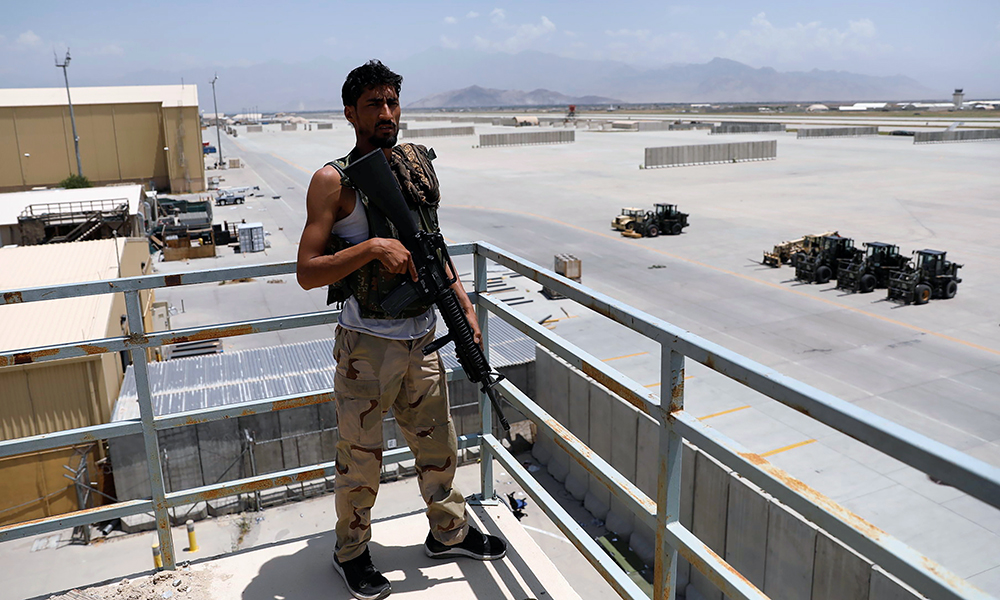
The U.S. left Afghanistan’s Bagram Airfield after nearly 20 years by shutting off the electricity and slipping away in the night without notifying the base’s new Afghan commander, who discovered the Americans’ departure more than two hours after they left, Afghan military officials said, the Associated Press reported.
The U.S. announced Friday it had completely vacated its biggest airfield in the country in advance of a final withdrawal the Pentagon says will be completed by the end of August.
“We (heard) some rumor that the Americans had left Bagram … and finally by seven o’clock in the morning, we understood that it was confirmed that they had already left Bagram,” Gen. Mir Asadullah Kohistani, Bagram’s new commander said.
U.S. military spokesman Col. Sonny Leggett did not address the specific complaints of many Afghan soldiers who inherited the abandoned airfield, instead referring to a statement last week, AP reported.
The statement said the handover of the many bases had been in the process soon after President Joe Biden’s mid-April announcement that America was withdrawing the last of its forces. Leggett said in the statement that they had coordinated their departures with Afghanistan’s leaders.
Before the Afghan army could take control of the airfield about an hour’s drive from the Afghan capital Kabul, it was invaded by a small army of looters, who ransacked barrack after barrack and rummaged through giant storage tents before being evicted, according to Afghan military officials.
“At first we thought maybe they were Taliban,” said Abdul Raouf, a soldier of 10 years. He said the the U.S. called from the Kabul airport and said “we are here at the airport in Kabul.”
As of last week, most NATO soldiers had already quietly left. The last U.S. soldiers are likely to remain until an agreement to protect the Kabul Hamid Karzai International Airport, which is expected to be done by Turkey, is completed, AP reported.
Bagram was a massive facility, the size of a small city, that had been exclusively used by the U.S. and NATO. AP reported that the sheer size is extraordinary, with roadways weaving through barracks and past hangar-like buildings. There are two runways and over 100 parking spots for fighter jets known as revetments because of the blast walls that protect each aircraft. One of the two runways is 3,660 meters long and was built in 2006. There’s a passenger lounge, a 50-bed hospital and giant hangar-size tents filled with supplies such as furniture.
Kohistani said the U.S. left behind 3.5 million items, all itemized by the departing U.S. military. They include tens of thousands of bottles of water, energy drinks and military ready-made meals, known as MRE’s.
“When you say 3.5 million items, it is every small item, like every phone, every door knob, every window in every barracks, every door in every barracks,” he said.
The big ticket items left behind include thousands of civilian vehicles, many of them without keys to start them, and hundreds of armored vehicles. Kohistani said the U.S. also left behind small weapons and the ammunition for them, but the departing troops took heavy weapons with them. Ammunition for weapons not being left behind for the Afghan military was blown up before they left.
Afghan soldiers who wandered Monday throughout the base that had once seen as many as 100,000 U.S. troops were deeply critical of how the U.S. left Bagram, leaving in the night without telling the Afghan soldiers tasked with patrolling the perimeter.
“In one night, they lost all the goodwill of 20 years by leaving the way they did, in the night, without telling the Afghan soldiers who were outside patrolling the area,” said Afghan soldier Naematullah, who asked that only his one name be used, AP reported.
Within 20 minutes of the U.S.’s silent departure on Friday, the electricity was shut down and the base was plunged into darkness, said Raouf, the soldier of 10 years who has also served in Taliban strongholds of Helmand and Kandahar provinces.
The sudden darkness was like a signal to the looters, he said. They entered from the north, smashing through the first barrier, ransacking buildings, loading anything that was not nailed down into trucks.
On Monday, three days after the U.S. departure, Afghan soldiers were still collecting piles of garbage that included empty water bottles, cans and empty energy drinks left behind by the looters.
Kohistani, meanwhile, said the nearly 20 years of U.S. and NATO involvement in Afghanistan was appreciated but now it was time for Afghans to step up, AP reported.
“We have to solve our problem. We have to secure our country and once again build our country with our own hands,” he said.





Latest News
Pakistan says Kohat attackers had roots in Afghanistan
The Islamic Emirate has repeatedly rejected Pakistan’s allegations that Afghan territory is being used to launch attacks against Pakistan.
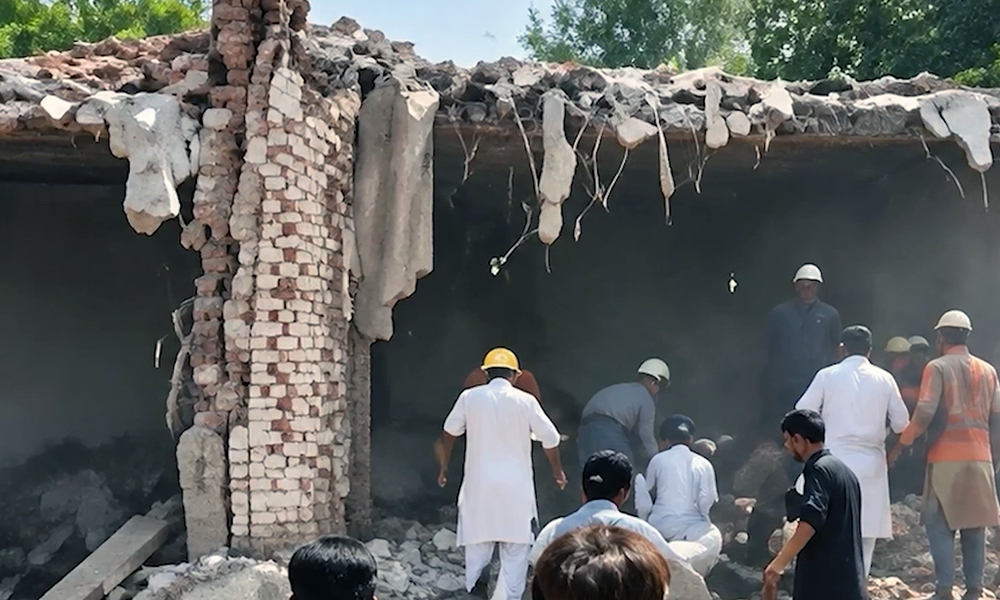
Pakistan has accused militant groups with links to Afghanistan of carrying out Friday’s deadly attack at a mosque inside the Kohat Police Lines in Khyber Pakhtunkhwa, and has called on the Islamic Emirate to take concrete action against armed groups operating from Afghan territory.
Pakistan’s Ministry of Information and Broadcasting said the attackers had “roots in Afghanistan” and urged the Islamic Emirate to dismantle what it described as terrorist networks and sanctuaries operating inside Afghanistan.
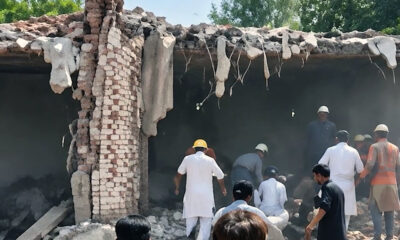
The attack took place during Friday prayers when an explosives-laden vehicle was rammed into the police compound near the mosque. Gunmen then attempted to enter the facility, triggering a gun battle with security forces.
The initial death toll was reported at 16, with 57 people injured. Pakistani authorities later said at least 21 people had been killed and more than 100 injured as the rescue and clearance operations continued.
Pakistan has not provided independent evidence establishing that the attack was planned from Afghanistan, but its information ministry said the presence of militant sanctuaries and support networks in Afghanistan posed a direct security threat to Pakistan. It called for “concrete and verifiable” measures against groups it accuses of planning and carrying out attacks inside Pakistan.
The Afghan Ministry of Foreign Affairs condemned the Kohat attack and expressed sympathy with the victims and their families.
The Islamic Emirate has repeatedly rejected Pakistan’s allegations that Afghan territory is being used to launch attacks against Pakistan. Afghan officials have maintained that the issue of the Tehreek-e-Taliban Pakistan (TTP) is an internal security matter for Pakistan.
The attack has further highlighted tensions between Kabul and Islamabad, particularly over the TTP. Pakistan accuses the group of operating from bases in Afghanistan and carrying out attacks inside Pakistan, while Afghan authorities deny providing sanctuary for attacks against neighbouring countries.
The TTP, meanwhile, has denied responsibility for the Kohat attack, although a faction of the group, identified as Ittehadul Mujahideen, later claimed responsibility, according to Al Jazeera.
The latest dispute comes amid continued cross-border tensions and a rise in militant violence in Pakistan’s northwestern regions bordering Afghanistan.
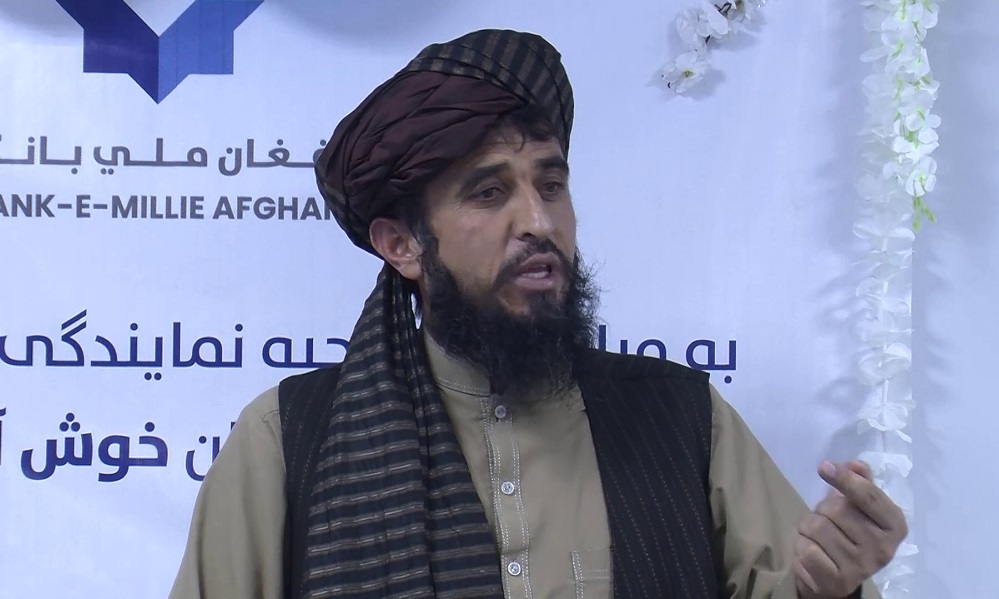
Local officials in Afghanistan’s northeastern Badakhshan province have called on traders to help prevent drug trafficking and invest their capital in legal and productive sectors.
Jamaluddin Haqjo, deputy governor of Badakhshan, made the remarks during the opening of the first branch of the Bank-e-Millie Afghan in Fayzabad, the provincial capital.
Haqjo said thousands of people across Afghanistan are currently addicted to drugs and urged traders not to invest in drug trafficking.
Meanwhile, other local officials attending the ceremony called on people to contribute to the country’s economic development rather than oppose the government.
They said expanding economic activities could help reduce poverty and other challenges affecting thousands of families.
Officials also urged banks and traders to conduct their activities in accordance with Islamic principles.
The newly opened Bank-e-Millie Afghan branch is expected to provide banking services to residents of Badakhshan. Bank officials said government employees receiving their salaries through the bank would also be eligible for loan services in accordance with the bank’s policies.
Residents welcomed the opening of the branch, saying it would make banking services more accessible. They also called for banks to establish branches in remote districts of Badakhshan.
Officials urged traders and government institutions to support the bank by investing and using its services.
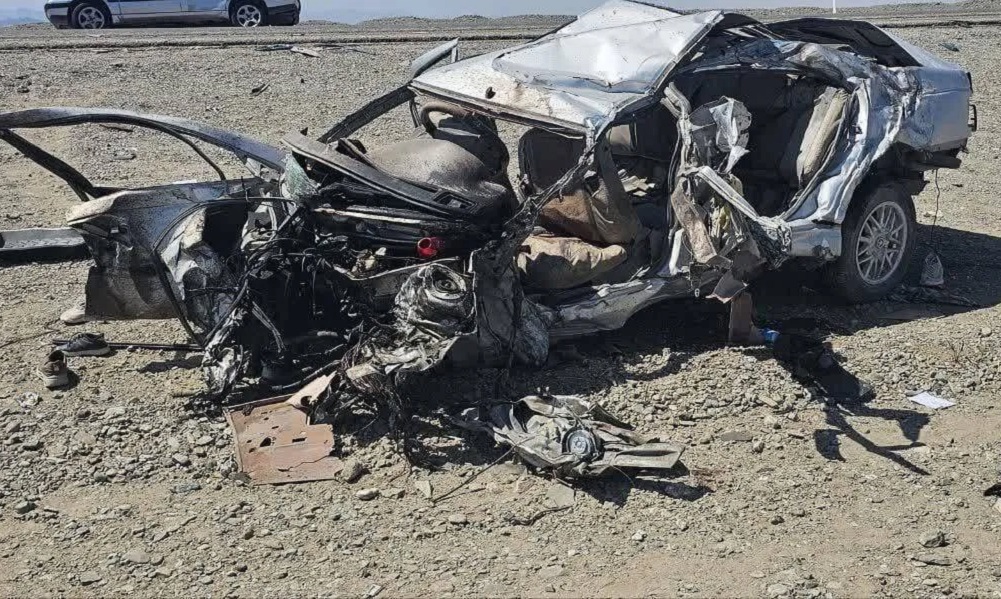
Seven Afghan migrants have been killed after a vehicle carrying Afghan migrants collided with a fuel-carrying vehicle in Iran’s Sistan and Baluchestan province.
According to the human rights organization HalVash, the accident occurred on Friday in the Sarbaz area of Sistan and Baluchestan.
Siyavash Mohbi, the head of Iran’s traffic police in Sistan and Baluchestan, said the Afghan nationals had entered Iran illegally.
He added that nine other people were injured in the incident.
Mohbi attributed the accident to the negligence of the driver of the vehicle carrying the migrants.


Sorkh Poshan Khafi beat Toofan Herat 3-1 in Afghanistan Champions League

ACL: Arman FC fight back to beat Khurasan Faryab 2-1

Tahawol: Impact of middle East war on Afghanistan

Pakistan says Kohat attackers had roots in Afghanistan

Saar: Pakistan blames Afghanistan for deadly attack

Four mediators struggle to secure lasting Pakistan-Afghanistan ceasefire

Syria and Saudi Arabia condemn Kabul bombing, express solidarity with Afghanistan

Afghanistan’s trade diversification challenges Pakistan

Saudi energy group signs major Afghanistan deals covering gas exploration and pipeline plans

ATN secures exclusive rights to broadcast T20I series in India across Afghanistan
Tahawol: Impact of middle East war on Afghanistan
Saar: Pakistan blames Afghanistan for deadly attack

Tahawol: Kabul’s warning over any threat from Pakistan discussed

Debate on Afghanistan and New Investment Opportunities

Tahawol: Reasons behind Qatari, Turkish security officials’ Kabul visit discussed
-
 Latest News5 days ago
UN warns of mounting humanitarian and human rights pressures in Afghanistan
-
 Regional5 days ago
Saudi Arabia calls alleged Mecca attack a ‘red line’ as Houthis deny involvement
-
 Latest News5 days ago
Five Years On: IEA touts economic growth despite international isolation
-
 Sport5 days ago
India take 2-0 lead in 3-match series against Afghanistan
-
 Latest News4 days ago
Five years out of school: Amnesty raises alarm over Afghan girls’ education
-
 Latest News4 days ago
Russia urges dialogue and economic support for Afghanistan, warns against excessive pressure
-
 Sport4 days ago
ACL: Ariana Khost win, Aino Mina and Khurasan Faryab draw
-
 Latest News3 days ago
Afghanistan seeks stronger ties with Saudi Arabia, dialogue with Pakistan: Mujahid