
Latest News
US tells Kabul to ‘prioritize a meaningful’ fight against corruption

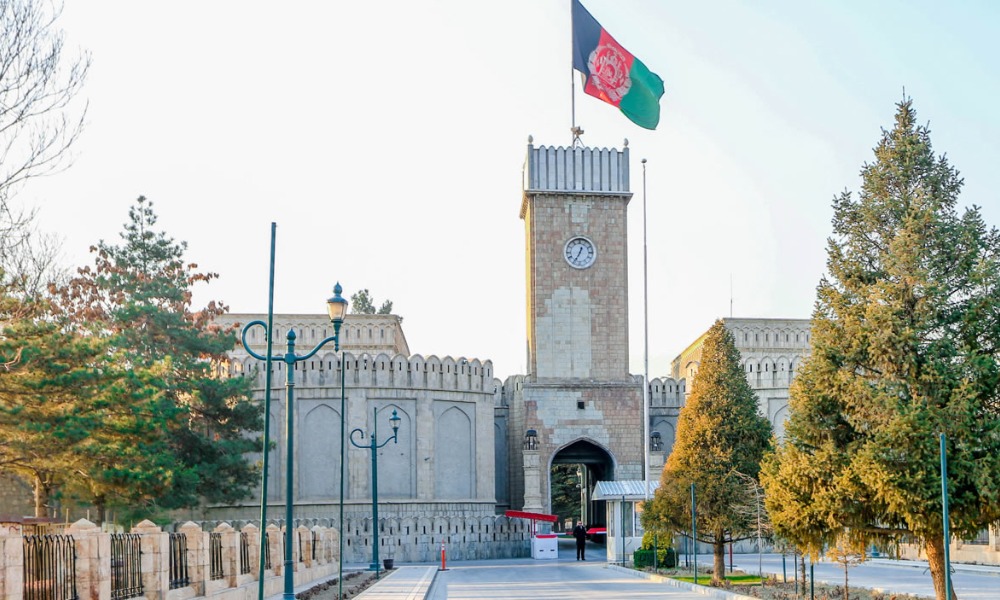
US Chargé d’Affaires Ross Wilson said Wednesday that Washington expects the Afghan government to strengthen its commitment to fight corruption and to address the issue of impunity against powerful people in this regard.
Marking International Anti-Corruption Day, Wilson said in a series of tweets: “I want to emphasize that the US expects that the Afghan government will strengthen its commitment to transparency and accountability by prioritizing a meaningful, demonstrable fight against corruption.”
Wilson also said that government must address the impunity of powerful Afghans.
“The Afghan government must send the signal to powerful actors that their crimes will be punished,” Wilson tweeted.
He also said that progress on corruption means demonstrable results which will command widespread public support, strengthen Afghanistan, and ensure continued strong backing by the international donor community.
Afghanistan is listed among the top ten most corrupt countries in the world and continues to battle the scourge.
Just last week, Etilaatroz newspaper looked into government’s spending of funds in it’s emergency fund named Code 91 – a fund that only President Ashraf Ghani can access.
Etilaatroz stated that over AFN2 billion ($25.9 million) of Code 91 had been used for personal expenses for more than a dozen government officials in the year 1398 (April 2019 to March 2020).
Last month the EU Delegation to Afghanistan held its sixth annual Anti-Corruption Conference in Kabul and EU Ambassador Andreas Von Brandt emphasized the importance of strengthening anti-corruption efforts as a measure to build trust between the Afghan people and their government as well as with the international donor community.
Despite measures to fight corruption, and Ghani’s establishment of the Anti-Corruption Commission, reports of graft are ongoing.







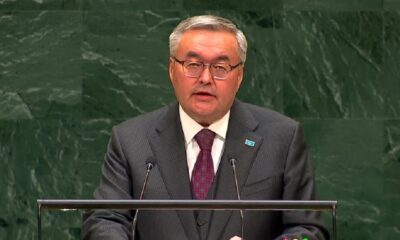




Kazakhstan’s Foreign Minister Mukhtar Tileuberdi has called for pragmatic and coordinated international engagement with Afghanistan, saying the country’s long-term stability is closely linked to the security and sustainable development of Central Asia.
Speaking during the general debate of the 81st session of the United Nations General Assembly in New York on Friday, Tileuberdi said humanitarian assistance to Afghanistan remains essential but alone cannot break the cycle of poverty, displacement and dependency.
He said Kazakhstan supports a “pragmatic, coordinated and step-by-step” approach to international engagement with Afghanistan, with the United Nations playing a central role.
Tileuberdi also said Kazakhstan is working with the UN to operationalize the United Nations Regional Centre for the Sustainable Development Goals for Central Asia and Afghanistan in Almaty.
He said the success of the centre should be measured by the results and assistance it delivers to the region.


Saar: Concerns over Pakistan’s political crisis discussed

Afghanistan Champions League: Omar Zawak Herat beat Toofan Herat 1-0

Blast in Pakistan’s Dera Ismail Khan kills 11, injures 30

Ariana Afghan Airlines increases Kabul-Delhi cargo flights

Khalilzad questions Pakistan’s commitment to Afghan welfare

Saudi energy group signs major Afghanistan deals covering gas exploration and pipeline plans

Trump floats idea of renaming Atlantic or Pacific Ocean

US hits Egyptian bank branches with Iran sanctions as war marks six months

Nepal flood rescue mission enters critical phase as thousands remain missing

Iranian clubs to face Gulf opponents at neutral venues in Asian Champions League Elite
Saar: Concerns over Pakistan’s political crisis discussed

Exclusive interview with Abdul Latif Mansoor, Minister of MRRD

Tawsia: Overview of Afghanistan’s iron mines

Tahawol: Discussion on fresh Pakistani airstrikes on Afghanistan

Saar: Calls for international support for Afghanistan discussed
-

 World5 days ago
CNN, MS NOW and Politico sue Trump, challenging White House ban
-

 Latest News3 days ago
Ariana Afghan Airlines ranks seventh among 45 Central Asian airlines
-

 Latest News4 days ago
UN reiterates call for respect for international law after Kunar airstrikes
-
 Latest News5 days ago
Khalilzad condemns Pakistan airstrikes, says current strategy is not working
-

 Regional3 days ago
US and Iran hold first talks since June after Trump’s ‘annihilation’ threat
-

 Latest News3 days ago
Silk Road highway in Wakhan corridor now reaches the China border
-

 Latest News4 days ago
Afghan Official: Pakistan’s airstrikes will not go unanswered
-

 Sport4 days ago
Afghan boxing referee heads to China for international festival