
Latest News
WFP delivers emergency aid to families displaced by conflict in Afghanistan
WFP said it will also distribute specialized nutrition products for children as well as pregnant and breastfeeding women to help address rising malnutrition.

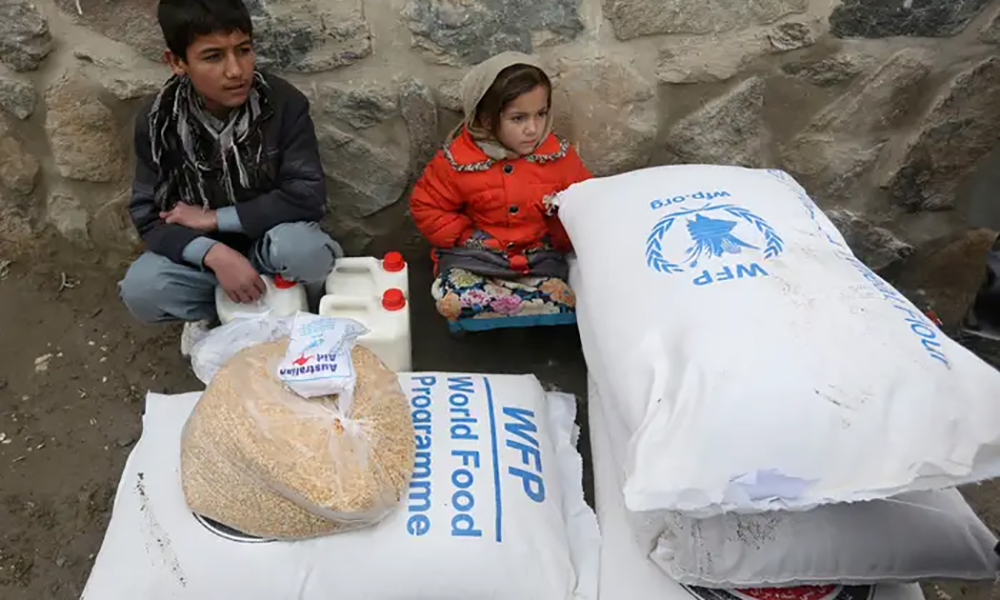
The World Food Programme (WFP) says it has launched a large-scale emergency response to assist communities in Afghanistan affected by the recent conflict along the disputed Durand Line with Pakistan, delivering life-saving food aid to thousands of displaced families.
According to the UN agency, more than 20,000 families forced from their homes by the fighting are receiving immediate food assistance. The initial response includes fortified biscuits to meet urgent nutritional needs, followed by two months of food or cash assistance for the most vulnerable households.
WFP said it will also distribute specialized nutrition products for children as well as pregnant and breastfeeding women to help address rising malnutrition.
Despite ongoing security risks, WFP has resumed operations in most border areas and is expanding assistance across eight provinces. The response begins in eastern Afghanistan in Nuristan, Kunar, and Nangarhar, before extending south to Paktia, Khost, and Paktika, and continuing to Zabul and Kandahar along the country’s southern border, WFP noted in a statement.
“This is crisis upon crisis: after enduring shocks like job losses and earthquakes, families already struggling with hunger—many with malnourished mothers and children—now find themselves on the frontlines of conflict,” said John Aylieff, WFP country director in Afghanistan. He warned that further instability could push millions deeper into hunger while increasing pressure across the region.
The humanitarian response is also facing major logistical challenges. WFP says the closure of the Afghanistan–Pakistan crossing since October and the wider conflict in the Middle East have disrupted supply routes and complicated aid delivery.
To keep food assistance moving, the agency is working to activate the Lapis Lazuli Corridor, a trade route linking Turkey, Georgia, Azerbaijan, the Caspian Sea, and Turkmenistan to Afghanistan. While the corridor provides an alternative supply line, WFP said it involves longer delivery times and significantly higher costs.
Additional pressure on Afghanistan’s markets is coming from a recent ban on food and agricultural exports from Iran, which WFP says is already driving up prices.
If the restrictions continue, shortages of essential goods could emerge first in border regions before spreading nationwide as supplies decline.
Humanitarian officials warn that Afghanistan is now facing three overlapping crises: escalating tensions along the Durand Line, the regional impact of the conflict involving Iran, and a worsening hunger emergency.
WFP estimates that one in three Afghans—around 17.4 million people—currently require urgent food assistance, while 3.7 million children are expected to need treatment for malnutrition in 2026.
The agency says Afghanistan remains one of the world’s most severe hunger hotspots and is appealing for urgent international support to sustain life-saving operations.
The World Food Programme is the world’s largest humanitarian organization, providing emergency food assistance and supporting communities recovering from conflict, disasters, and climate-related shocks.






Latest News
UNICEF expands aid to millions of Afghan children after flash floods
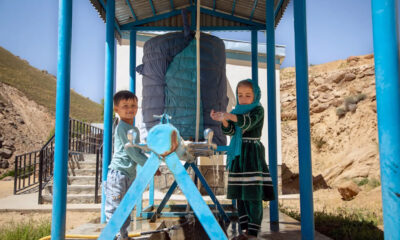
In Parun, the capital of Nuristan province, 23 people were killed in flooding, while water services for around 1,000 families were disrupted.
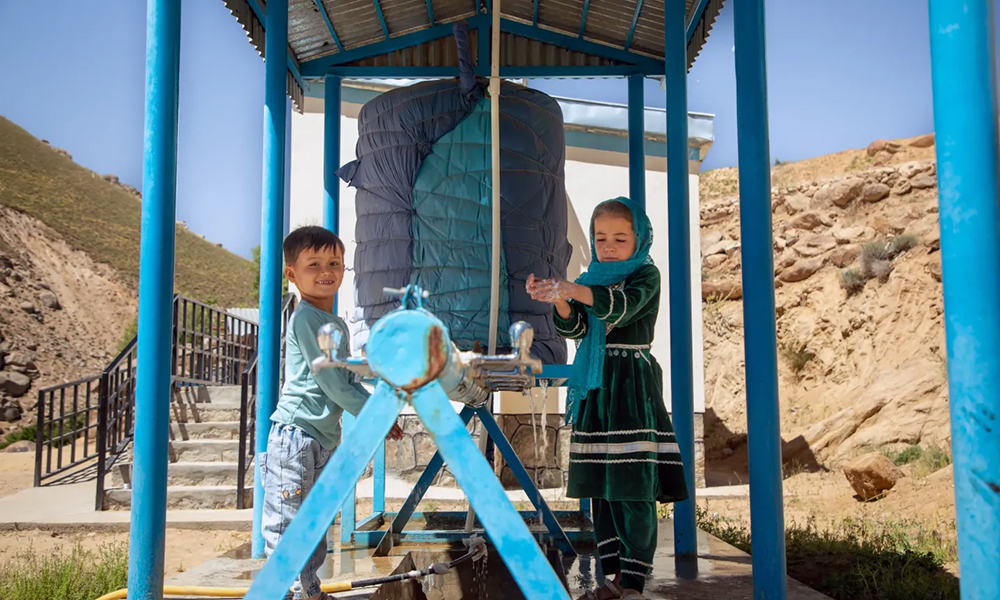
Flash floods affected more than 1,100 families across 14 provinces of Afghanistan in July, damaging or destroying over 1,100 homes, according to UNICEF’s latest humanitarian situation report covering July 1–31.
UNICEF said 1,168 families were affected by the floods, while 1,164 homes were damaged or destroyed.
In Parun, the capital of Nuristan province, 23 people were killed in flooding, while water services for around 1,000 families were disrupted.
Despite the ongoing humanitarian challenges, UNICEF said it continued supporting essential health services across the country through 2,393 static health facilities and 16 mobile facilities.
The UN agency also responded to 245 disease outbreaks during July, while approximately 183,000 children under the age of five received measles vaccinations.
Access to clean water and sanitation also remained a key focus. During the month, around 96,300 people gained access to safe drinking water, while 89,061 people received basic sanitation services. Essential WASH supplies were also provided to 180,814 people.
Child malnutrition remained another major concern. UNICEF and its partners screened approximately 1.1 million children for wasting during July, with 104,602 children admitted for treatment.
In addition, 10.3 million children aged 6–59 months received vitamin A supplementation as part of efforts to prevent malnutrition and protect child health.
UNICEF said its humanitarian response remains focused on ensuring vulnerable children and families across Afghanistan can access essential health, nutrition, water and sanitation services amid continued humanitarian needs.
Latest News
Kyrgyz, Afghan foreign ministers discuss expanding trade and investment ties
The two foreign ministers discussed current issues of bilateral cooperation, with particular emphasis on expanding trade, economic and investment ties, the ministry said.
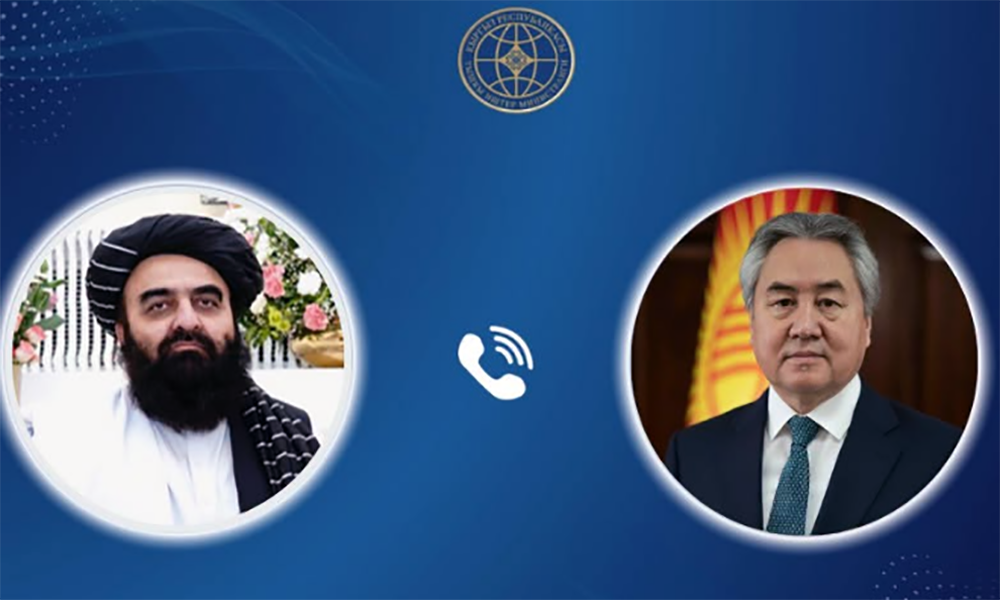
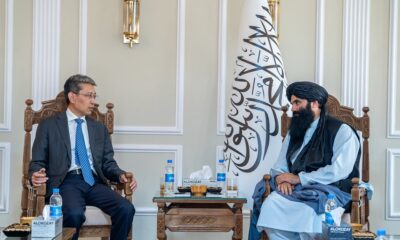
Kyrgyzstan’s Foreign Minister Zheenbek Kulubaev held a telephone conversation with Afghanistan’s Foreign Minister Amir Khan Muttaqi on September 14, focusing on strengthening practical cooperation between the two countries, according to the Ministry of Foreign Affairs of the Kyrgyz Republic.
The two foreign ministers discussed current issues of bilateral cooperation, with particular emphasis on expanding trade, economic and investment ties, the ministry said.
“Particular attention was paid to enhancing further trade, economic and investment cooperation,” the Kyrgyz Foreign Ministry said in a statement.
During the call, the Afghan side also congratulated Kyrgyzstan on the successful organization of the Shanghai Cooperation Organization (SCO) Summit and the 6th World Nomad Games.
Afghanistan further congratulated Kyrgyzstan on its election as a non-permanent member of the United Nations Security Council, according to the statement.
The conversation comes as Kabul and Bishkek seek to expand economic and diplomatic engagement, with trade and investment emerging as key areas of potential cooperation.
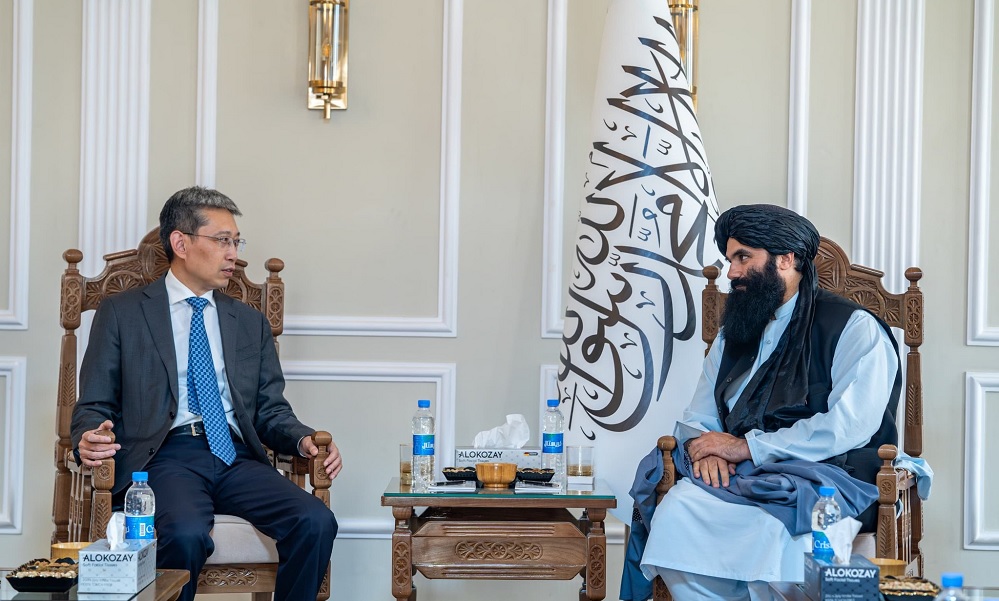
During the meeting, Minister Haqqani described Ambassador Zhao Xing’s tenure in Afghanistan as effective and praised his positive contribution to strengthening relations between Afghanistan and China.
Ambassador Zhao Xing, in turn, expressed his appreciation to the leadership of the Ministry of Interior Affairs for their cooperation and support throughout his tenure in Afghanistan.
The Chinese ambassador underscored the importance of the historic relations between Afghanistan and China and expressed hope that bilateral relations and cooperation between the two countries would continue to expand in the future.


UNICEF expands aid to millions of Afghan children after flash floods

Kyrgyz, Afghan foreign ministers discuss expanding trade and investment ties

North Korea’s Kim vows to expand ties with Russia, backs victory in ‘sacred war’

Tahawol: Houthis’ return to regional power dynamics

ACL: Abu Muslim Farah 4-0 Istiqlal Kabul; Omar Zawak 3-1 Sarsabz Yashlar

Four mediators struggle to secure lasting Pakistan-Afghanistan ceasefire

Juma Khan Fateh surrenders to IEA forces in Badakhshan

Afghanistan’s trade diversification challenges Pakistan

Syria and Saudi Arabia condemn Kabul bombing, express solidarity with Afghanistan

Saudi energy group signs major Afghanistan deals covering gas exploration and pipeline plans
Tahawol: Houthis’ return to regional power dynamics

Tahawol: Calls for U.S. engagement with Afghanistan

Saar: End of Chinese ambassador’s mission in Kabul

Tahawol: Norwegian delegation’s call for engagement with Afghanistan discussed

Saar: Pakistan’s dual policy towards Afghanistan reviewed
-

 Sport4 days ago
Omar Zawak, Toofan Herat secure victories in Afghanistan Champions League
-
 Latest News2 days ago
Khalilzad warns US risks losing influence in Afghanistan to China and Russia
-

 Sport2 days ago
Zadran calls on Afghan fans to rally behind team against India
-

 Regional3 days ago
Saudis shut down oil pipeline as Houthis tighten grip on Red Sea shipping
-

 Latest News4 days ago
Kabul to host tripartite meeting on Afghan migrants’ problems
-

 Latest News4 days ago
Pakistan court blocks expulsion of Afghan medical students
-
 Business2 days ago
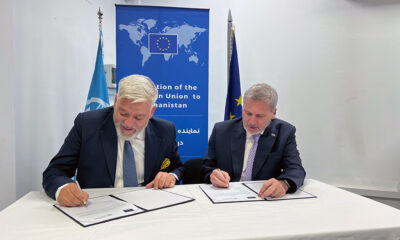
EU and FAO launch €5m programme to strengthen Afghanistan’s agrifood sector
-
 World2 days ago
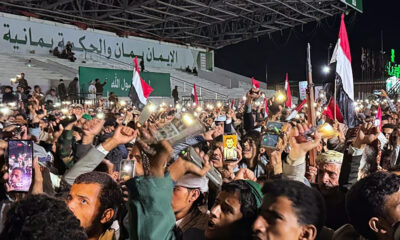
Houthi advance in Yemen puts U.S. in a new bind