
Latest News
World Bank approves $97 million grant to increase food security

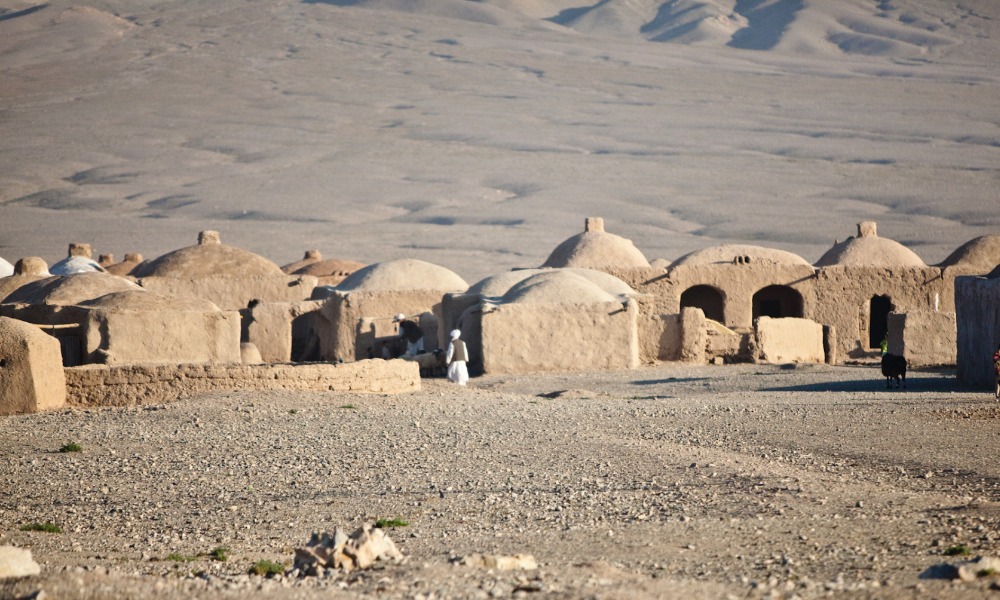
The World Bank has approved a grant of $97.50 million, from the International Development Association (IDA), to provide regular and predictable cash support to Afghans affected by drought and COVID-19 and improve food and nutrition security.
In a statement issued on Tuesday, the World Bank stated that the grant will also help build Afghanistan’s drought early warning and response systems.
“The grant will help finance the Drought Early Warning, Early Finance, and Early Action Project (ENETAWF),” the statement said.
According to the statement, the project will complement regular humanitarian relief efforts and provide unconditional cash support and cash-for-work benefits to about 2.2 million Afghans in the 78 districts most affected by food insecurity and drought.
“The project will provide regular targeted financial assistance to households to build resilience and scale-up support across the country before and during droughts. It will also support the Government of Afghanistan to deliver critical weather, water, and climate information services, disseminate early warnings, and strengthen disaster preparedness within communities,” the statement read.
“The IDA grant complements grants of $115 million from the Afghanistan Reconstruction Trust Fund, a multi-donor trust fund managed by the World Bank on behalf of 34 donors, plus $8 million from the Global Risk Financing Facility, and $2 million from the program for Asia Resilience to Climate Change Multi-donor Trust Fund.”
“Afghanistan is one of the countries most affected and vulnerable to climate change and natural disasters, and its weak response system has further contributed to this vulnerability,” said Henry Kerali, World Bank Country Director for Afghanistan.
“This new financial assistance will help the Government of Afghanistan lessen drought impacts that have displaced millions of Afghans and pushed them into poverty. The project’s support to Afghan rural households will contribute to overall poverty reduction and economic recovery,” Kerali added.
The organization stated that Afghanistan is highly vulnerable to intense and recurring droughts, which further undermine its growth and stability.
“Natural disasters have spurred displacement, poverty, and food insecurity among rural Afghans, which the COVID-19 pandemic has exacerbated. Rural households, dependent on subsistence agriculture in drought-prone, rainfed areas, are especially vulnerable to food and nutrition insecurity,” the World Bank said.
The World Bank noted that the project will be implemented by the Minister of Rural Rehabilitation and Development, under which the National Emergency Operations Center in the disaster management agency will be strengthened.
“In addition, a Disaster Risk Management Resource Center will be established at the ministry.”
“In line with the World Bank Group’s institutional strategy on Fragility, Conflict, and Violence, the investments outlined in this project will seek to mitigate drivers of fragility by addressing some of its root causes and it will seek to strengthen the institutions necessary to transition the country out of fragility,” the statement concluded.












Kazakhstan’s Foreign Minister Mukhtar Tileuberdi has called for pragmatic and coordinated international engagement with Afghanistan, saying the country’s long-term stability is closely linked to the security and sustainable development of Central Asia.
Speaking during the general debate of the 81st session of the United Nations General Assembly in New York on Friday, Tileuberdi said humanitarian assistance to Afghanistan remains essential but alone cannot break the cycle of poverty, displacement and dependency.
He said Kazakhstan supports a “pragmatic, coordinated and step-by-step” approach to international engagement with Afghanistan, with the United Nations playing a central role.
Tileuberdi also said Kazakhstan is working with the UN to operationalize the United Nations Regional Centre for the Sustainable Development Goals for Central Asia and Afghanistan in Almaty.
He said the success of the centre should be measured by the results and assistance it delivers to the region.


Abu Muslim Farah defeat Khurasan Faryab 2-0 in ACL season six

Saar: Concerns over Pakistan’s political crisis discussed

Afghanistan Champions League: Omar Zawak Herat beat Toofan Herat 1-0

Blast in Pakistan’s Dera Ismail Khan kills 11, injures 30

Ariana Afghan Airlines increases Kabul-Delhi cargo flights

Saudi energy group signs major Afghanistan deals covering gas exploration and pipeline plans

Trump floats idea of renaming Atlantic or Pacific Ocean

US hits Egyptian bank branches with Iran sanctions as war marks six months

Nepal flood rescue mission enters critical phase as thousands remain missing

Iranian clubs to face Gulf opponents at neutral venues in Asian Champions League Elite
Saar: Concerns over Pakistan’s political crisis discussed

Exclusive interview with Abdul Latif Mansoor, Minister of MRRD

Tawsia: Overview of Afghanistan’s iron mines

Tahawol: Discussion on fresh Pakistani airstrikes on Afghanistan

Saar: Calls for international support for Afghanistan discussed
-

 World5 days ago
CNN, MS NOW and Politico sue Trump, challenging White House ban
-

 Latest News4 days ago
Ariana Afghan Airlines ranks seventh among 45 Central Asian airlines
-

 Latest News5 days ago
UN reiterates call for respect for international law after Kunar airstrikes
-

 Regional4 days ago
US and Iran hold first talks since June after Trump’s ‘annihilation’ threat
-

 Latest News4 days ago
Silk Road highway in Wakhan corridor now reaches the China border
-

 Regional3 days ago
Iran airlines cancel flights as US sanctions hit
-

 Latest News5 days ago
Afghan Official: Pakistan’s airstrikes will not go unanswered
-

 Sport5 days ago
Afghan boxing referee heads to China for international festival