
Latest News
Dissident commanders of Taliban leader to announce new rival

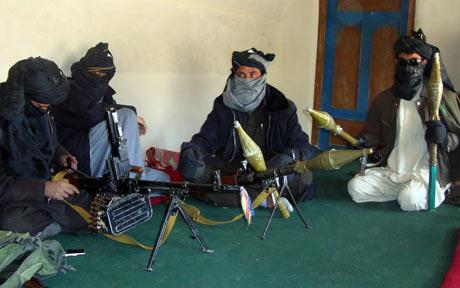

The opposed commander of Taliban leader unanimously and away from part of Mullah Mansour, Taliban current leader will announce a new leader up to the next few days, spokesman of opposition group of Mullah Mansour said.
The Taliban group had been in disagreement over who should succeed former supremo Mullah Omar, whose death was announced in July.
Mansoor, the Taliban’s former aviation minister, told his commanders that Omar had died two years ago and declared himself the new Taliban leader.
He said Taliban’s supreme decision-making body “Rahbari Shura,” or Supreme Council, had appointed him as the new leader. Others didn’t believe it and opposed his ascension.
It triggered widespread differences within the militant network and many senior Taliban commanders refused to accept Mansoor as leader or work under his command.
The Taliban later formed a council of prominent religious scholars, the Ulema Council, to resolve differences between the two rival factions.
“There is one agenda, and that’s to choose the new emir (leader) unanimously and get rid of Mullah Mansour,” Mullah Abdul Manan Niazi, a spokesman for the anti-Mansour faction told Reuters.
Niazi said the dissident commanders would not accept Mansour despite the Taliban’s brief occupation of Kunduz earlier this month, their most important military success since the U.S.-led invasion toppled the Taliban government in 2001.
In the meantime, Taliban’s former leader of Jehishul Muslimin group says that Afghanistan will face further challenges with the existence of two leaders in Taliban group and the Peace Talks process will face a deadlock.
Analysts say the recent brief occupation of the northern city of Kunduz has cemented Mansour’s power, boosting his reputation among foot soldiers and causing the U.S. government and NATO to slow plans for withdrawing their troops.
But in the opaque manoeuvring around the Taliban leadership, it is unclear whether the anti-Mansour faction will seek to challenge him on the battlefield, how many fighters they control or how much money they have.
A leadership battle within the Taliban could create space for militants loyal to Islamic State to expand their foothold in the region, and could discourage Mansour from resuming Pakistan-backed peace talks with the Afghan government.
The dissident Taliban faction includes Niazi, a former Taliban provincial governor close to Mullah Omar; Zakir; Mullah Hasan Rahmani and Mohammad Rasool, two Taliban leaders with substantial power bases; and Mullah Abdul Razaq, a former Taliban interior minister.
The dissidents say they also have the support of Tayyab Agha, the former head of the political office in Qatar.
Source: Reuters

Latest News
IEA accuses Pakistan of war crimes amid heavy civilian losses
The attacks also left a trail of widespread destruction. Over 1,100 homes were completely destroyed.
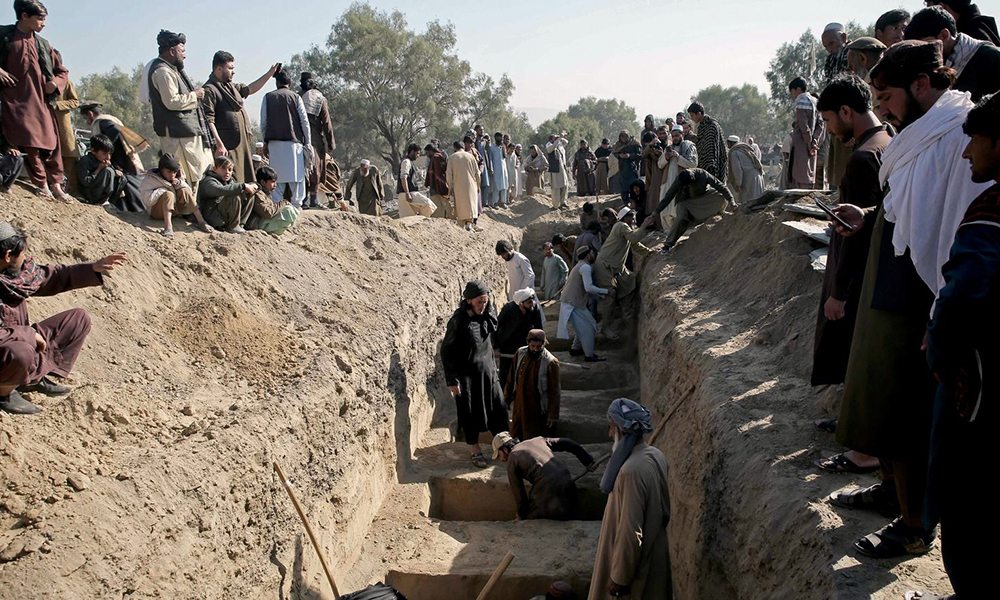
In a grave accusation, the deputy spokesperson of the Islamic Emirate of Afghanistan, Hamdullah Fitrat, has condemned Pakistan’s military actions, accusing it of carrying out attacks that led to significant civilian casualties and widespread destruction across several Afghan provinces. The allegations focus on a period between February 22 and April 4, 2026, during which Pakistani military strikes are said to have targeted various regions of Afghanistan.
According to Fitrat, the attacks primarily impacted the provinces of Paktika, Paktia, Kandahar, Nangarhar, Kunar, Kabul, Khost, Nuristan, and Laghman. The toll on civilians has been devastating: 761 people were killed, 626 others injured, and 27,407 families displaced from their homes.
The attacks also left a trail of widespread destruction. Over 1,100 homes were completely destroyed, along with 256 shops, while 34 mosques, 13 schools, 13 Madrasas, 3 health facilities, and 42 vehicles were all reduced to rubble. The destruction has had a severe economic impact, with 661 livestock animals reported as killed.
The scale of the strikes has been particularly alarming. A total of 14,973 missiles, mortars, and artillery shells were fired during the period in question, inflicting immense physical and psychological damage on civilian populations.
Fitrat has called these actions “war crimes” against Afghan civilians, highlighting not only the tragic loss of life but also the deep humanitarian crisis that has resulted from the attacks. The international community is now being urged to take action to address the devastating impact of the bombardments on Afghanistan’s civilian infrastructure and economy.
Pakistan has not yet publicly responded to the accusations. However, these developments are likely to escalate tensions between the two neighboring countries as both sides continue to grapple with a volatile and complex geopolitical situation.
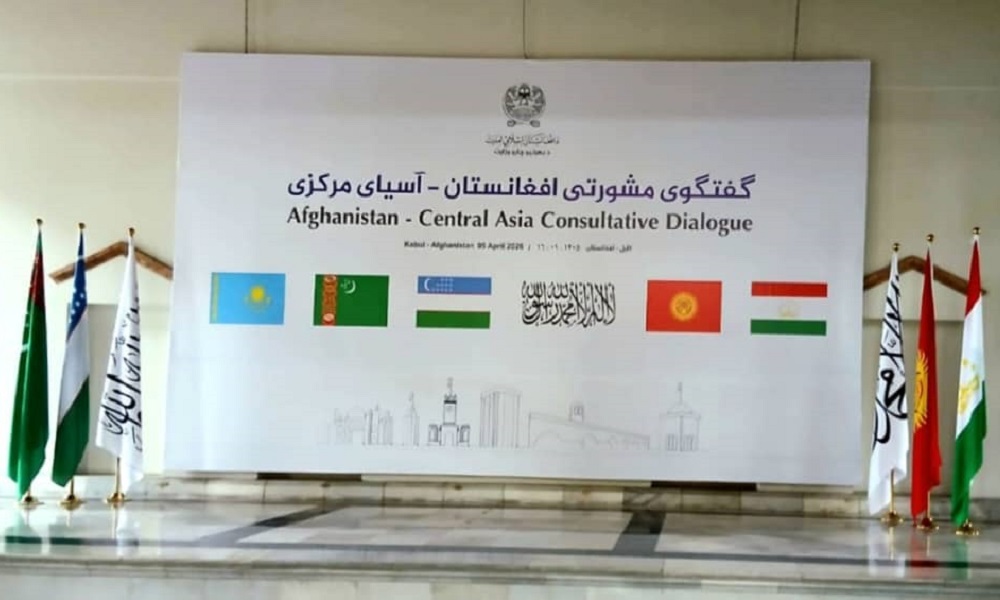
At the initiative of the Ministry of Foreign Affairs of the Islamic Emirate of Afghanistan, the “Afghanistan–Central Asia Consultative Dialogue” will be held in Kabul tomorrow (Sunday).
The meeting will be chaired by Amir Khan Muttaqi, Minister of Foreign Affairs, and attended by senior representatives from Afghanistan and Central Asian countries.
The discussions will cover political, economic, and security issues, as well as the development of regional cooperation, trade, and transit.
The Directorate of Child Protection at the Ministry of Labor and Social Affairs announced on Saturday that in the solar year 1404, through the implementation of extensive support programs and the handling of thousands of protective cases, it has achieved significant accomplishments in securing rights, raising awareness, and improving the situation of children across Afghanistan.
According to the directorate, the registered cases have been organized into 23 different categories, allowing for targeted and specialized handling of each type of case. In the area of awareness-raising, extensive programs have also been implemented to improve the general knowledge of children and their families, resulting in 404,207 children and family members being informed about child rights, explosive hazards, environmental protection, and other important topics.
To strengthen local structures and accelerate case management, the Directorate of Child Protection, within the framework of its 1404 work plan, established 20 new committees at the district level in provincial centers. These committees play a key role in coordinating between government offices, rapidly identifying cases, and providing support services. Currently, child protection committees are active in 204 districts and regularly review and resolve children’s issues.


IEA accuses Pakistan of war crimes amid heavy civilian losses

US rescues 2nd F-15 pilot hit above Iran: Trump

Kabul to host ‘Afghanistan–Central Asia Consultative Dialogue’ tomorrow

Tahawol: Continuation of Middle East crisis discussed

Saar: Ongoing Kabul-Islamabad talks in China discussed

Prominent Muslim scholar issues fatwa calling for Afghanistan-Pakistan ceasefire

IEA Supreme Leader issues Eid-ul-Fitr message urging unity and support for Islamic system

14 Pakistani soldiers killed after military post falls along Durand line: MoD

Afghanistan steps in to replace Iran in supplying fruits and vegetables to Russia

Afghan airstrikes target Pakistani military sites in retaliation for air attacks
Tahawol: Continuation of Middle East crisis discussed
Saar: Ongoing Kabul-Islamabad talks in China discussed

Tawsia: This week’s key economic developments in Afghanistan discussed

Tahawol: Start of talks between Kabul-Islamabad in China discussed

Saar: Ongoing US and Israeli attacks on Iran discussed
-
 Latest News4 days ago
Baradar approves 17 projects worth over one billion AFN
-

 Sport4 days ago
ATN to broadcast second season of Ariana Snooker Championship
-

 Latest News4 days ago
Afghan delegation heads to China for talks with Pakistan
-
 Business2 days ago
Tripartite agreement to launch new Russia–Turkmenistan–Afghanistan transit corridor
-
 Latest News5 days ago
Trump tells allies to ‘get your own oil’ from Strait Of Hormuz or buy from US
-

 Sport4 days ago
Punjab Kings edge Gujarat Titans in thrilling IPL clash as tournament gathers pace
-
 Regional4 days ago
Emirates airline says Iranian nationals barred from entering or transiting UAE
-
 Latest News2 days ago
China says Afghanistan–Pakistan peace talks show progress