
Latest News
Survey Finds Afghans More Pessimistic on Security, Future

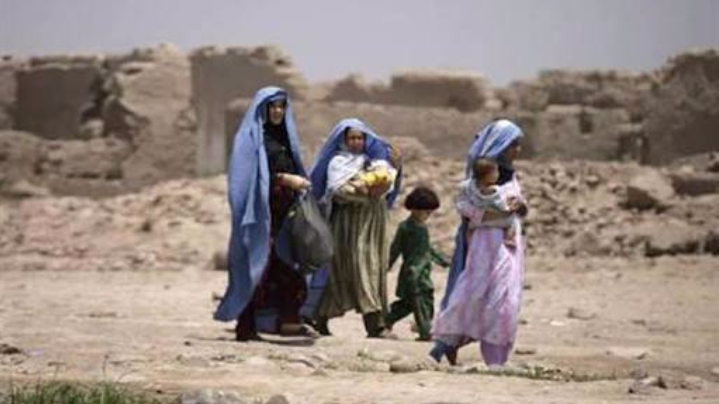
 Growing insecurity, corruption, rising unemployment and slow job growth have caused more pessimism among Afghans about their future, damaging public confidence in the government, says the Asia Foundation.
Released in Kabul on Wednesday, the latest annual survey of Afghan attitudes and opinions covers more than 87,000 men and women. It provides a unique portrait of evolving public perceptions on a variety of issues touching the masses.
Importantly, more rural men now support women’s right to vote and work outside their homes. The 2016 survey polled 12,658 respondents from 16 ethnic groups across all 34 provinces, including insecure environments.
The falling sense of optimism largely stems from the failure of peace talks with the Taliban earlier this year, new incursions and record civilian casualties. The withdrawal of foreign troops in 2014 can still be felt in the economy.
Abdullah Ahmadzai, the Asia Foundation’s country representative, said: “Afghanistan is emerging from decades of war and conflict. For the moment, a sense of personal safety and empowerment remains elusive.”
The findings illustrated Afghans’ dissatisfaction with their government, job growth and household finances, he said, adding the nation’s security, political and economic transitions were still unfolding and more time was required for progress in these areas.
Only 29.3% of Afghans say the country is moving in the right direction, the lowest level of optimism since 2004. A marked rise in civilian casualties and increasing violence has contributed to the highest recorded level of fear in over a decade: 69.8% of Afghans are afraid for their personal safety.
According to the study, fear is still the most pronounced in the southwest at 82%, and in Helmand, 92.3% say they are afraid sometimes, often or always, a 7% increase since 2015 and a 25% increase since 2014.
At the same time, although general awareness of ISIS/Daesh has increased from 74.3% in 2015 to 81.3% in 2016, the perception that the group is a threat to security actually fell from 54.2% in 2015 to 47.9% this year.
The percentage of Afghans interested in migration has decreased significantly from 39.9% in 2015 to 29.6% this year, the largest drop on record in the survey which occurred even though unemployment rates remain high.
Afghans say the biggest problem facing youth is unemployment, 71.2%, and more than half (51.5%) cite unemployment as a reason they would leave the country if given the opportunity. Factors that might explain a decreased desire to migrate include the destination’s reception and resettlement policies.
Asked about their household financial position, 36.6% say their financial situation has worsened, compared to 29.7% in 2015. The most affected areas include provinces that once housed foreign military camps, notably near Bagram Air Base.
“Confidence in public institutions and NGOs is at an historical low. By comparison, Afghans say they are most confident in, first, their religious leaders (66.1%), and second, the media (64.5%),” the survey says.
Radio remains the most popular source of information, with 70.5% of respondents receiving news and information from it, followed by television at 66.4%. Nearly two-thirds of Afghans (64.5%) report watching TV.
As many as 74.0% say women should be allowed to work, a record high that appears related to the depressed economy and need for dual-earner households. Afghan support for women in leadership positions remains mixed.
Support for women in local leadership such as community development councils, is significantly higher than support for women in cabinet slots. Education/illiteracy is cited as the biggest problem facing women (36.1%), followed by unemployment (22.9%).
“The survey is a map of social change over time, presenting a body of crucial knowledge for policy making and development programming in a rapidly transforming nation,” remarked David D. Arnold, president of the Asia Foundation. “
Since 2007, insecurity has been the most commonly given reason for why the country is moving in the wrong direction, followed by unemployment, corruption, bad economy and bad government.

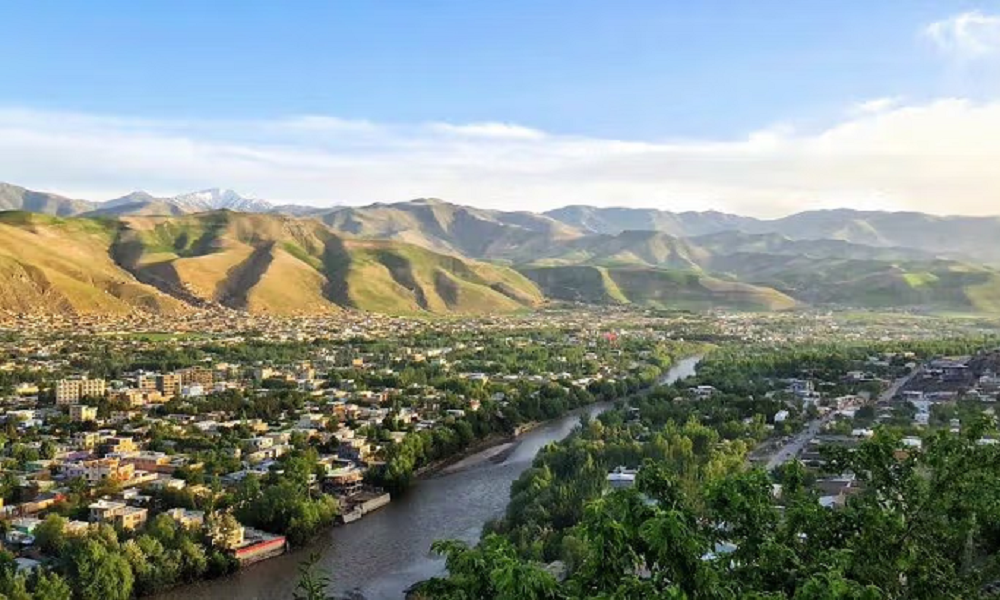
A strong earthquake measuring 5.8 on the Richter scale struck parts of Afghanistan on Friday night, according to the United States Geological Survey (USGS).
The epicenter was reported in Jurm district of Badakhshan province, with a depth of 186 kilometers.
There have been no immediate reports of casualties or damage.
Latest News
China says Afghanistan–Pakistan peace talks show progress
China has positioned itself as a facilitator, aiming to create conditions for dialogue and provide a platform for negotiations.
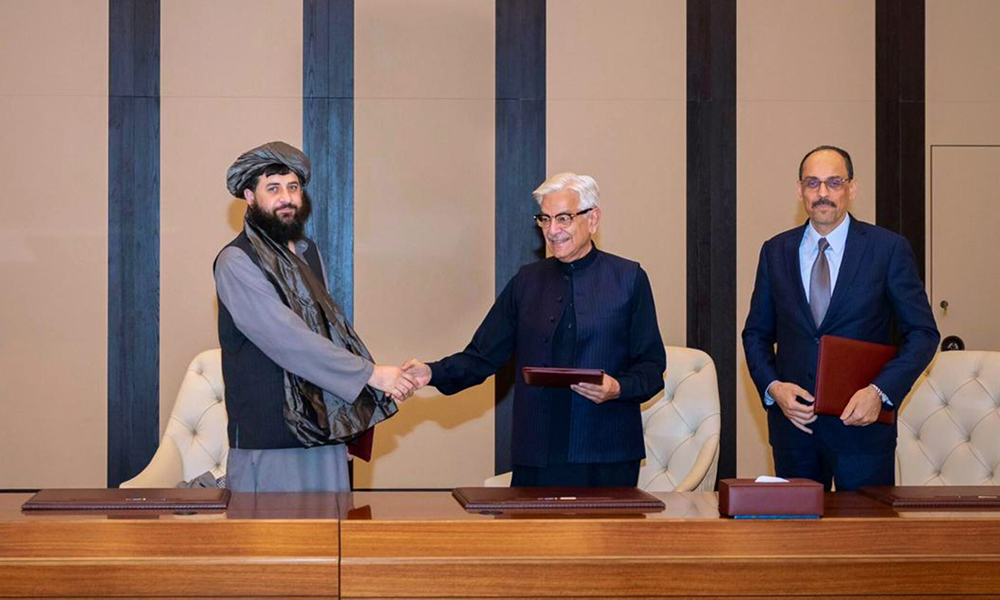
Negotiations between Afghanistan and Pakistan are making steady progress, China said on Friday, as efforts continue to ease tensions in their most serious conflict since the return of the Islamic Emirate of Afghanistan in 2021.
Speaking at a regular press briefing, Chinese foreign ministry spokesperson Mao Ning said both sides had welcomed Beijing’s mediation and were willing to resume dialogue. “This is a positive development,” she said, noting that China remains in close communication with both governments.
Beijing— which shares a border with both countries—has stepped up diplomatic engagement in recent months, including calls with foreign ministers and a visit by a special envoy in March. Previous rounds of talks have reportedly taken place in Urumqi, though officials did not confirm the latest venue.
China has positioned itself as a facilitator, aiming to create conditions for dialogue and provide a platform for negotiations. Mao said further details would be released jointly by the three countries “in due course.”
Clashes between Afghan and Pakistani forces since October have killed dozens on both sides, with Afghan civilians bearing the brunt of the violence. Islamabad has accused Kabul of harboring militants responsible for cross-border attacks—an allegation Afghan authorities deny, calling militancy a domestic issue for Pakistan.
The renewed diplomatic push signals cautious optimism that tensions between the neighbors could ease through sustained dialogue under Chinese mediation.
Latest News
Afghan doctors urged to support Iranian health institutions amid US and Israeli attacks
This appeal aims to emphasize the protection of healthcare facilities and the safeguarding of human health during times of war and crisis.
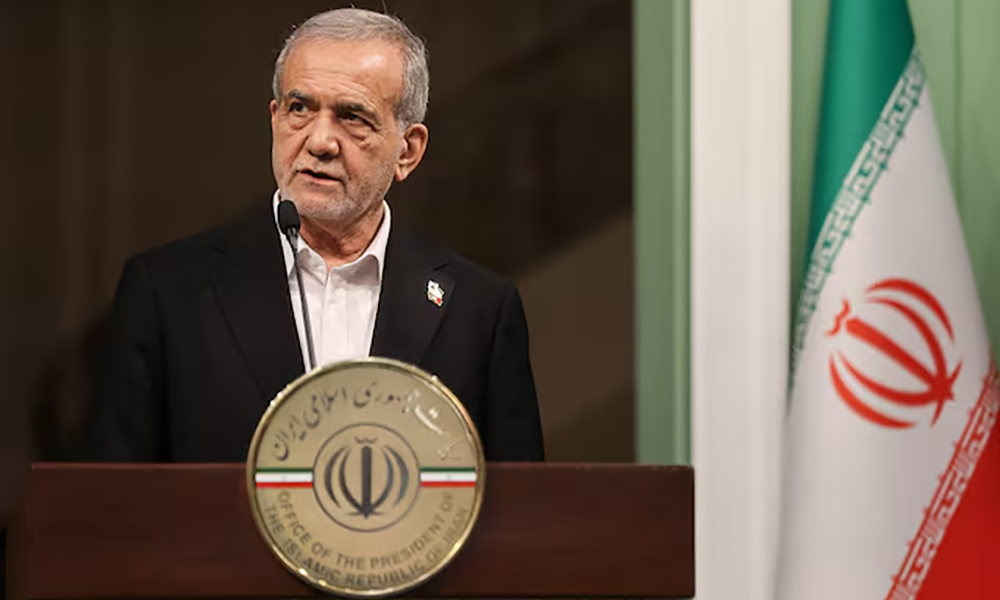
The Embassy of Iran in Afghanistan, citing Masoud Pezeshkian, President of Iran, has called on doctors worldwide to respond to recent attacks on hospitals, pharmaceutical companies, and medical research institutions in Iran by U.S. and Israeli forces.
The embassy specifically urged Afghan doctors and healthcare staff to support Pezeshkian’s appeal and, in coordination with international organizations, raise the voice of the medical community against what has been described as a blatant attack on humanity.
This appeal aims to emphasize the protection of healthcare facilities and the safeguarding of human health during times of war and crisis.
So far, the Islamic Emirate of Afghanistan has not issued any official response regarding this appeal.


5.8-magnitude earthquake shakes parts of Afghanistan

Tawsia: This week’s key economic developments in Afghanistan discussed

Iran claims it shot down US F-35 jet

Tripartite agreement to launch new Russia–Turkmenistan–Afghanistan transit corridor

China says Afghanistan–Pakistan peace talks show progress

Prominent Muslim scholar issues fatwa calling for Afghanistan-Pakistan ceasefire

IEA Supreme Leader issues Eid-ul-Fitr message urging unity and support for Islamic system

14 Pakistani soldiers killed after military post falls along Durand line: MoD

Afghanistan steps in to replace Iran in supplying fruits and vegetables to Russia

Afghan airstrikes target Pakistani military sites in retaliation for air attacks
Tawsia: This week’s key economic developments in Afghanistan discussed

Tahawol: Start of talks between Kabul-Islamabad in China discussed

Saar: Ongoing US and Israeli attacks on Iran discussed

Tahawol: Ongoing US–Israeli war with Iran discussed

Saar: Afghanistan-Pakistan talks in China discussed
-
 Latest News5 days ago
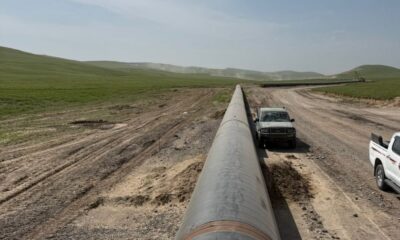
TAPI gas pipeline advances 25 km in Afghanistan
-
 Business5 days ago
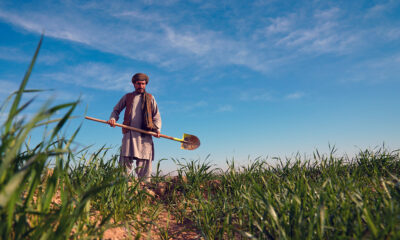
Afghanistan opens doors to agribusiness investments amid rising opportunities
-
 Latest News3 days ago
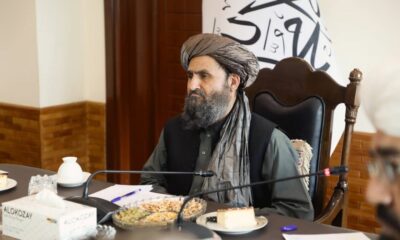
Baradar approves 17 projects worth over one billion AFN
-

 Latest News5 days ago
Afghan diaspora protests in London and Oslo over Pakistan strikes
-
 Latest News5 days ago
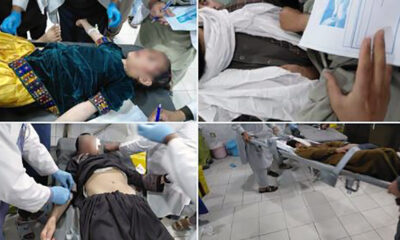
Pakistan shelling in Afghanistan’s Kunar leaves civilian casualties, says IEA
-
 Business4 days ago
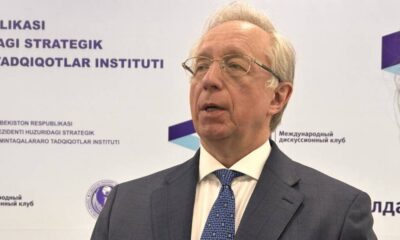
Russia backs Uzbekistan–Afghanistan trade hub, praises regional economic cooperation
-

 Sport4 days ago
ATN secures broadcast rights for inaugural Afghanistan Wrestling Premier League
-
 Regional5 days ago
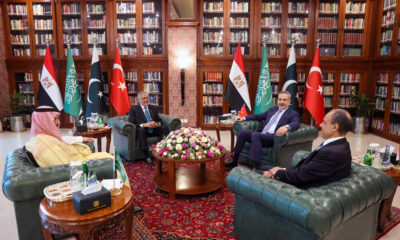
Pakistan hosts regional powers for Iran talks, with focus on Hormuz proposals