
Latest News
World Food Programme wins Nobel Peace Prize

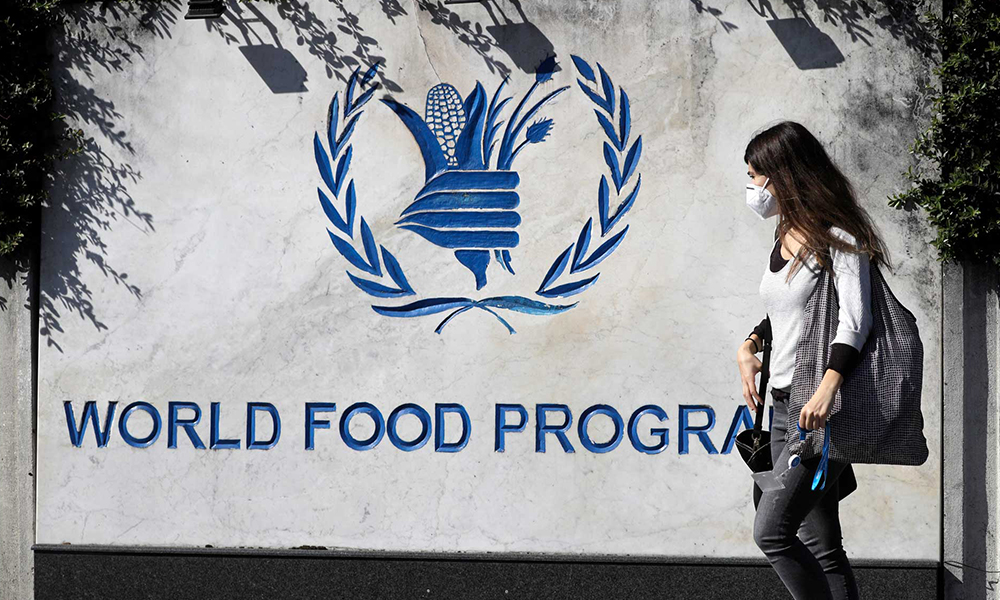
The UN World Food Programme (WFP), which provides lifesaving food assistance to millions across the world has been awarded the 2020 Nobel Peace Prize.
The announcement was made by Berit Reiss-Andersen, the chairman of the Nobel Committee Friday in Oslo, the capital of Norway.
Berit stated that the WFP was awarded the prize “for its efforts to combat hunger, for its contribution to bettering conditions for peace in conflict-affected areas and for acting as a driving force in efforts to prevent the use of hunger as a weapon of war and conflict.”
“We are deeply humbled to receive the Nobel Peace Prize. This is an incredible recognition of the dedication of the WFP family, working to end hunger every day in 80+ countries,” the WFP’s executive director, David Beasley, wrote on Twitter following the announcement.
We are deeply humbled to receive the #NobelPeacePrize. This is an incredible recognition of the dedication of the @WFP family, working to end hunger everyday in 80+ countries.
Thank you @NobelPrize for this incredible honor! pic.twitter.com/bHcS0usWQa
— David Beasley (@WFPChief) October 9, 2020
“It’s because of the WFP family…They’re out there in the most difficult, complex places in the world. Whether it’s war, conflict, climate extremes — it doesn’t matter. They’re out there, and they deserve this award,” Beasley said in a video to the organization and its staff.
“Wow. Wow. Wow. Wow. I can’t believe it!” Beasley added.
WFP is the largest humanitarian organization in the world. The UN stated that last year, the organization has assisted 97 million people in 88 countries.
The UN said Friday the WFP’s efforts focus on emergency assistance, relief and rehabilitation, development aid, and special operations. Two-thirds of the work is in conflict-affected countries where people are three times more likely to be undernourished than those living in countries without conflict.
Meanwhile, the WFP said in a statement on Friday that the awarding of the Nobel Peace Prize to the World Food Programme (WFP) is a humbling, moving recognition of the work of WFP staff who lay their lives on the line every day to bring food and assistance for close to 100 million hungry children, women and men across the world. People whose lives are often brutally torn apart by instability, insecurity, and conflict.
“The Nobel Peace Prize is not WFP’s alone. We work closely with government, organizations, and private sector partners whose passion for helping the hungry and vulnerable equals ours,” the statement read.
The Nobel Prize is awarded to ‘those who, during the preceding year, shall have conferred the greatest benefit on mankind’.
Prizes in physics, chemistry, physiology or medicine, literature, and peace have been awarded since 1901 – and economic sciences since 1968.
The 2020 Nobel Prize winners are:
- The 2020 Nobel Prize in Physiology or Medicine has been awarded jointly to Harvey J. Alter, Michael Houghton and Charles M. Rice “for the discovery of Hepatitis C virus.”
- The 2020 Nobel Prize in Physics was awarded with one half to Roger Penrose and the other half jointly to Reinhard Genzel and Andrea Ghez. The Nobel Committee said, “Roger Penrose has been awarded the #NobelPrize in Physics “for the discovery that black hole formation is a robust prediction of the general theory of relativity.” “Reinhard Genzel and Andrea Ghez have been awarded the #NobelPrize in Physics “for the discovery of a supermassive compact object at the centre of our galaxy,” the committee noted.
- The 2020 Nobel Prize in Chemistry has been awarded to Emmanuelle Charpentier and Jennifer A. Doudna “for the development of a method for genome editing.”
- The 2020 Nobel Prize in Literature is awarded to the American poet Louise Glück “for her unmistakable poetic voice that with austere beauty makes individual existence universal.”
- The 2020 Nobel Prize in Literature is awarded to the American poet Louise Glück “for her unmistakable poetic voice that with austere beauty makes individual existence universal.”
- The WFP has been awarded the 2020 #NobelPeacePrize for its efforts to combat hunger, for its contribution to bettering conditions for peace in conflict-affected areas and for acting as a driving force in efforts to prevent the use of hunger as a weapon of war and conflict.












Kazakhstan’s Foreign Minister Mukhtar Tileuberdi has called for pragmatic and coordinated international engagement with Afghanistan, saying the country’s long-term stability is closely linked to the security and sustainable development of Central Asia.
Speaking during the general debate of the 81st session of the United Nations General Assembly in New York on Friday, Tileuberdi said humanitarian assistance to Afghanistan remains essential but alone cannot break the cycle of poverty, displacement and dependency.
He said Kazakhstan supports a “pragmatic, coordinated and step-by-step” approach to international engagement with Afghanistan, with the United Nations playing a central role.
Tileuberdi also said Kazakhstan is working with the UN to operationalize the United Nations Regional Centre for the Sustainable Development Goals for Central Asia and Afghanistan in Almaty.
He said the success of the centre should be measured by the results and assistance it delivers to the region.


Abu Muslim Farah defeat Khurasan Faryab 2-0 in ACL season six

Saar: Concerns over Pakistan’s political crisis discussed

Afghanistan Champions League: Omar Zawak Herat beat Toofan Herat 1-0

Blast in Pakistan’s Dera Ismail Khan kills 11, injures 30

Ariana Afghan Airlines increases Kabul-Delhi cargo flights

Saudi energy group signs major Afghanistan deals covering gas exploration and pipeline plans

Trump floats idea of renaming Atlantic or Pacific Ocean

US hits Egyptian bank branches with Iran sanctions as war marks six months

Nepal flood rescue mission enters critical phase as thousands remain missing

Iranian clubs to face Gulf opponents at neutral venues in Asian Champions League Elite
Saar: Concerns over Pakistan’s political crisis discussed

Exclusive interview with Abdul Latif Mansoor, Minister of MRRD

Tawsia: Overview of Afghanistan’s iron mines

Tahawol: Discussion on fresh Pakistani airstrikes on Afghanistan

Saar: Calls for international support for Afghanistan discussed
-

 World5 days ago
CNN, MS NOW and Politico sue Trump, challenging White House ban
-

 Latest News4 days ago
Ariana Afghan Airlines ranks seventh among 45 Central Asian airlines
-

 Latest News5 days ago
UN reiterates call for respect for international law after Kunar airstrikes
-

 Regional4 days ago
US and Iran hold first talks since June after Trump’s ‘annihilation’ threat
-

 Latest News4 days ago
Silk Road highway in Wakhan corridor now reaches the China border
-

 Regional3 days ago
Iran airlines cancel flights as US sanctions hit
-

 Latest News5 days ago
Afghan Official: Pakistan’s airstrikes will not go unanswered
-

 Regional5 days ago
G7 foreign ministers call on Iran to stop arming Houthis