
Latest News
Australia agrees on increased US air deployments in Australia

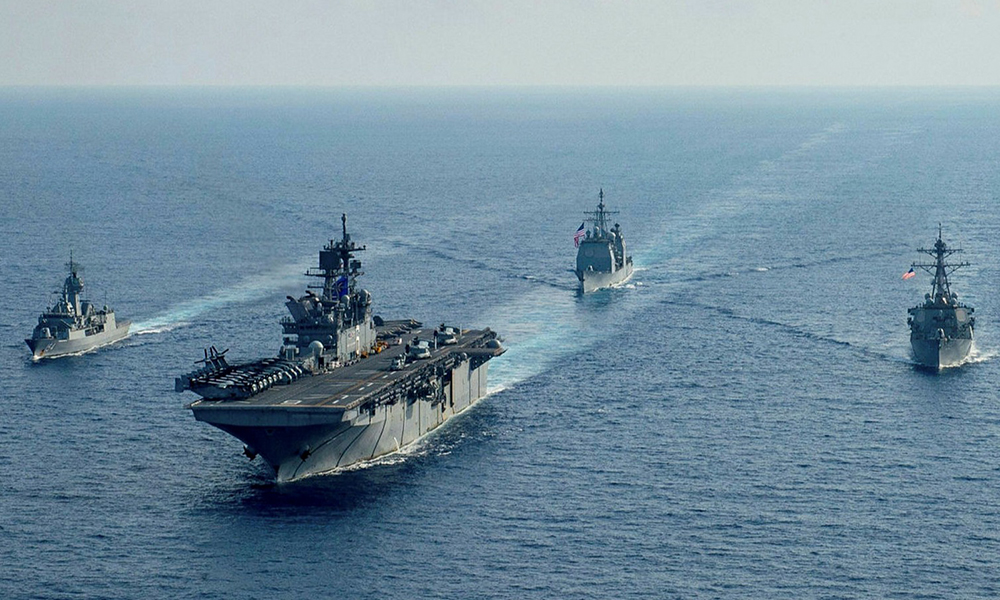
Australia and the United States have reached new force posture agreements that will see greater air cooperation through rotational deployments of all types of U.S. military aircraft to Australia, Australian Defense Minister Peter Dutton said on Thursday.
Speaking at a joint news conference after meetings between the U.S. and Australian foreign and defense ministers in Washington, Dutton said the two sides would be “significantly enhancing our force posture cooperation, increasing interoperability and deepening alliance activities in the Indo-Pacific.”
“This will include greater air cooperation through rotational deployments of all types of U.S. military aircraft to Australia,” he said.
“We’ve also established combined logistics sustainment and capability for maintenance to support our enhanced activities, including logistics and sustainment capability for our submarines and surface combatants in Australia.”
U.S. Secretary of Defense Lloyd Austin said the meeting had endorsed “major force posture initiatives that will expand our access and presence in Australia.”
Dutton and Austin spoke a day after the United States and Britain said they would provide Australia with the technology and capability to deploy nuclear-powered submarines.
China on Thursday denounced the new Indo-Pacific security alliance between the United States, Britain, and Australia, saying such partnerships should not target third countries and warning of an intensified arms race in the region.
U.S. Secretary of State Antony Blinken on Thursday said France was a “vital partner” in the Indo-Pacific region and that Washington would continue to cooperate with Paris, comments that appeared aimed at calming French anger after the United States, Australia, and the United Kingdom clinched the historic defense export contract to supply Australia with submarines.
The three countries announced on Wednesday they would establish a security partnership for the Indo-Pacific that will help Australia acquire U.S. nuclear-powered submarines and scrap the $40 billion French-designed submarine deal.
France has reacted angrily to the loss of the deal, calling it a “stab in the back.”
Speaking at a news conference after meetings between the U.S. and Australian foreign and defense ministers in Washington, Blinken said Washington had been in touch with its French counterparts before the announcement of the submarine deal.
In 2016 Australia had selected French shipbuilder Naval Group to build a new submarine fleet worth $40 billion to replace its more than two-decades-old Collins submarines.
The United States and its allies are looking for ways to push back against China’s growing power and influence, particularly its military buildup, pressure on Taiwan and deployments in the contested South China Sea.











Kazakhstan’s Foreign Minister Mukhtar Tileuberdi has called for pragmatic and coordinated international engagement with Afghanistan, saying the country’s long-term stability is closely linked to the security and sustainable development of Central Asia.
Speaking during the general debate of the 81st session of the United Nations General Assembly in New York on Friday, Tileuberdi said humanitarian assistance to Afghanistan remains essential but alone cannot break the cycle of poverty, displacement and dependency.
He said Kazakhstan supports a “pragmatic, coordinated and step-by-step” approach to international engagement with Afghanistan, with the United Nations playing a central role.
Tileuberdi also said Kazakhstan is working with the UN to operationalize the United Nations Regional Centre for the Sustainable Development Goals for Central Asia and Afghanistan in Almaty.
He said the success of the centre should be measured by the results and assistance it delivers to the region.


Trump rejects Iranian proposal to open Hormuz and end fighting

Abu Muslim Farah defeat Khurasan Faryab 2-0 in ACL season six

Saar: Concerns over Pakistan’s political crisis discussed

Afghanistan Champions League: Omar Zawak Herat beat Toofan Herat 1-0

Blast in Pakistan’s Dera Ismail Khan kills 11, injures 30

Saudi energy group signs major Afghanistan deals covering gas exploration and pipeline plans

Trump floats idea of renaming Atlantic or Pacific Ocean

US hits Egyptian bank branches with Iran sanctions as war marks six months

Nepal flood rescue mission enters critical phase as thousands remain missing

Iranian clubs to face Gulf opponents at neutral venues in Asian Champions League Elite
Saar: Concerns over Pakistan’s political crisis discussed

Exclusive interview with Abdul Latif Mansoor, Minister of MRRD

Tawsia: Overview of Afghanistan’s iron mines

Tahawol: Discussion on fresh Pakistani airstrikes on Afghanistan

Saar: Calls for international support for Afghanistan discussed
-

 Latest News4 days ago
Ariana Afghan Airlines ranks seventh among 45 Central Asian airlines
-

 Latest News5 days ago
UN reiterates call for respect for international law after Kunar airstrikes
-

 Regional4 days ago
US and Iran hold first talks since June after Trump’s ‘annihilation’ threat
-

 Latest News4 days ago
Silk Road highway in Wakhan corridor now reaches the China border
-

 Regional3 days ago
Iran airlines cancel flights as US sanctions hit
-

 Latest News5 days ago
Afghan Official: Pakistan’s airstrikes will not go unanswered
-

 Regional5 days ago
G7 foreign ministers call on Iran to stop arming Houthis
-

 Sport5 days ago
Afghan boxing referee heads to China for international festival