
World
Kazakh president gives shoot-to-kill order to quell protests

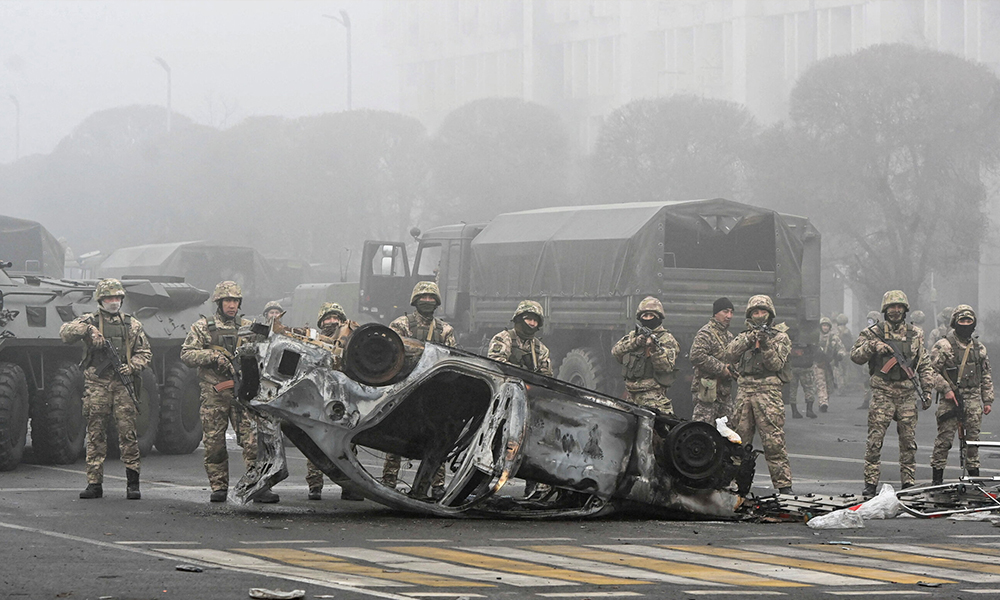
Security forces appeared to have reclaimed the streets of Kazakhstan‘s main city on Friday after days of violence, and the Russian-backed president said he had ordered his troops to shoot to kill to put down a countrywide uprising.
A day after Moscow sent paratroopers to help crush the insurrection, police were patrolling the debris-strewn streets of Almaty, although some gunfire could still be heard.
Dozens have died and public buildings across Kazakhstan have been ransacked and torched in the worst violence the former Soviet republic has experienced in 30 years of independence.
Moscow said more than 70 planes were ferrying Russian troops into Kazakhstan, and that these were now helping control Almaty’s main airport, recaptured on Thursday from protesters.
The uprising has prompted a military intervention by Moscow at a time of high tension in East-West relations as Russia and the United States gear up for talks next week on the Ukraine crisis.
Kazakh President Kassym-Jomart Tokayev blamed foreign-trained terrorists for the unrest, without providing evidence.
“The militants have not laid down their arms, they continue to commit crimes or are preparing for them,” Tokayev, 68, said in a televised address.
“Whoever does not surrender will be destroyed. I have given the order to law enforcement agencies and the army to shoot to kill, without warning.”
The demonstrations began as a response to a fuel price hike but swelled into a broad movement against the government and former President Nursultan Nazarbayev.
Nazarbayev, 81, was the longest-serving ruler of any ex-Soviet state until he turned over the presidency to Tokayev in 2019. His family is widely believed to have retained influence in Nur-Sultan, the purpose-built capital that bears his name.
Russian President Vladimir Putin has discussed the situation with Tokayev in several phone calls during the crisis, the Kremlin said on Friday.
SCARED
The protesters in Almaty appear mainly to come from the city’s poor outskirts or surrounding towns and villages. The violence has come as a shock to urban Kazakhs, used to comparing their country favourably to more repressive and volatile ex-Soviet Central Asian neighbours.
“At night when we hear explosions, I am scared,” a woman named Kuralai told Reuters. “It hurts to know that young people are dying. This has clearly been planned … probably our government has relaxed somewhat.”
In a state where scant political opposition is tolerated, no high-profile leaders of the protest movement have emerged to issue any formal demands.
One man who attended the first night of protests and who did not want to be identified said most of those who initially turned up wanted to “express solidarity spontaneously”, before 100-200 “aggressive youths” started hurling rocks at police.
The Interior Ministry said 26 “armed criminals” had been “liquidated”, while 18 police and national guard members had been killed. Those figures appeared not to have been updated since Thursday.
State TV reported more than 3,800 arrests.
Fresh gunfire could be heard on Friday near the main square in Almaty, where troops had fought protesters on Thursday. Armoured personnel carriers and troops occupied the square.
TRAITORS
Pro-government politician Yermukhamet Yertysbayev, speaking on state television, suggested there were traitors within the ranks of Kazakhstan‘s security forces.
He said the security forces had been ordered to leave the Almaty airport before militants seized it, and that the National Security Committee building had been left undefended, allowing protesters to gain access to weapons.
Unrest has been reported in other cities, but the internet has been shut off since Wednesday, making it difficult to determine the extent of the violence.
In Aktau, a city on the Caspian Sea in western Kazakhstan, some 500 protesters gathered peacefully on Friday in front of a government building to call for Tokayev’s resignation, a witness told Reuters.
State television said more than 60 people, including civilians, police and military, had been injured in the southern city of Shymkent since the unrest began, adding that the situation there was calm on Friday.
RUSSIAN INFLUENCE
Moscow’s swift deployment demonstrated Putin’s readiness to use force to maintain influence in the former Soviet Union, at a time when he has also alarmed the West by massing troops near Ukraine, whose Crimean peninsula Russia seized in 2014.
The mission falls under the umbrella of the Collective Security Treaty Organization, comprising Russia and five ex-Soviet allies. Moscow said its force would number about 2,500.
White House spokeswoman Jen Psaki said Washington was watching Russia’s troops for any “actions that may lay the predicate for the seizure of Kazakh institutions”.
Tokayev’s administration said the Russians had not been engaged in combat or the “elimination of militants”.
Mukhtar Ablyazov, an exiled ex-banker and cabinet minister turned opponent of the government, told Reuters the West must counter Russia’s moves, or watch Putin “methodically impose his programme – the recreation of a structure like the Soviet Union”.
Kazakhstan‘s other major neighbour, China, has backed Tokayev. State television said President Xi Jinping had told him Beijing opposed any use of force to destabilise Kazakhstan.
Nazarbayev has not been seen or heard since the protests began. Tokayev removed Nazarbayev and his nephew from security posts on Wednesday.
Kazakhstan is a major oil producer and the world’s top miner of uranium. Global oil prices rose on Friday, fuelled by supply worries.



World
US military operations killed 153 civilians in 2025, Pentagon assessment shows
A Pentagon report submitted to the U.S. Congress and published by U.S. media said all civilian deaths and injuries recorded in 2025 resulted from three U.S. strikes in Yemen.
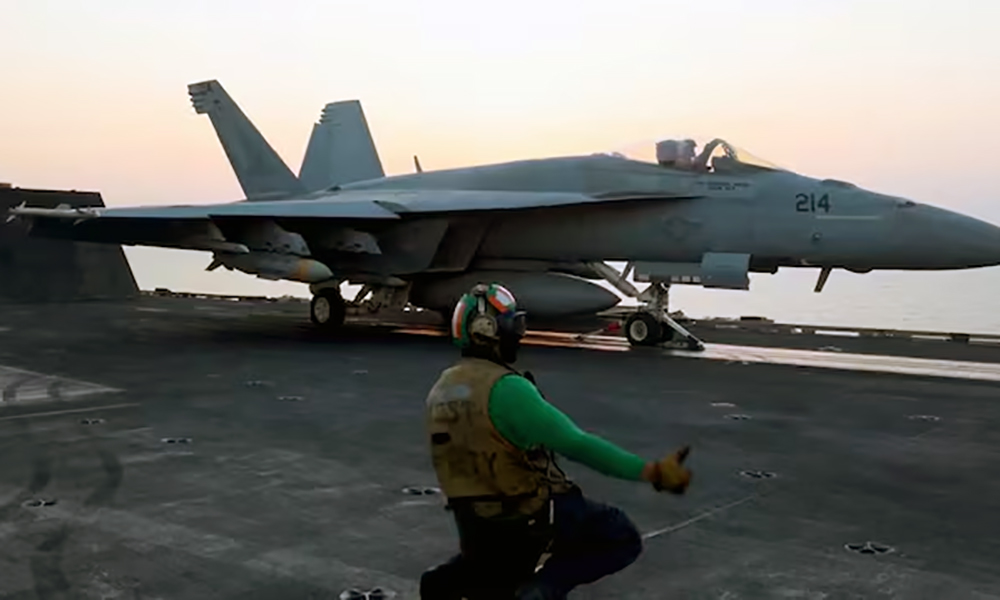
U.S. military operations killed 153 civilians and wounded 243 others in 2025, a U.S. official said on Tuesday, citing Pentagon assessments.
According to Reuters, the figures represent a sharp increase from 2024, when Pentagon assessments recorded two civilian deaths and two injuries linked to U.S. military operations.
A Pentagon report submitted to the U.S. Congress and published by U.S. media said all civilian deaths and injuries recorded in 2025 resulted from three U.S. strikes in Yemen.
The report said the U.S. Central Command assessed that the three strikes carried out in April 2025 in Yemen “more likely than not” resulted in civilian harm.
As of February 2026, the report said, 15 other incidents in Yemen were still being assessed by U.S. Central Command following reports received through non-governmental organizations.
The U.S. military says its operations in Yemen aim to degrade the capabilities of Iran-backed Houthi militants.
The Pentagon report did not include casualties from U.S. strikes in the Caribbean and Eastern Pacific. It said that as of February 1, 2026, the U.S. Southern Command had assessed that no incidents in its area of responsibility in 2025 “more likely than not” resulted in civilian casualties.
The Trump administration has also carried out strikes on vessels it accuses of transporting narcotics in the Eastern Pacific, describing the targets as “narco-terrorists.” According to a Reuters tally based on death tolls published after each strike, more than 200 people have been killed in such operations since September 2025.
Human Rights Watch and Amnesty International have described the strikes as unlawful extrajudicial killings, while the American Civil Liberties Union has called the Trump administration’s claims about those targeted “unsubstantiated, fear-mongering claims.”
World
Trump took secret flight out of Turkey due to Iran threat, the Washington Post reports
The trip to NATO was the first international travel for the new plane, whose speedy upgrades triggered questions over its cost and security, and took place as hostilities escalated with Iran, which borders Turkey.
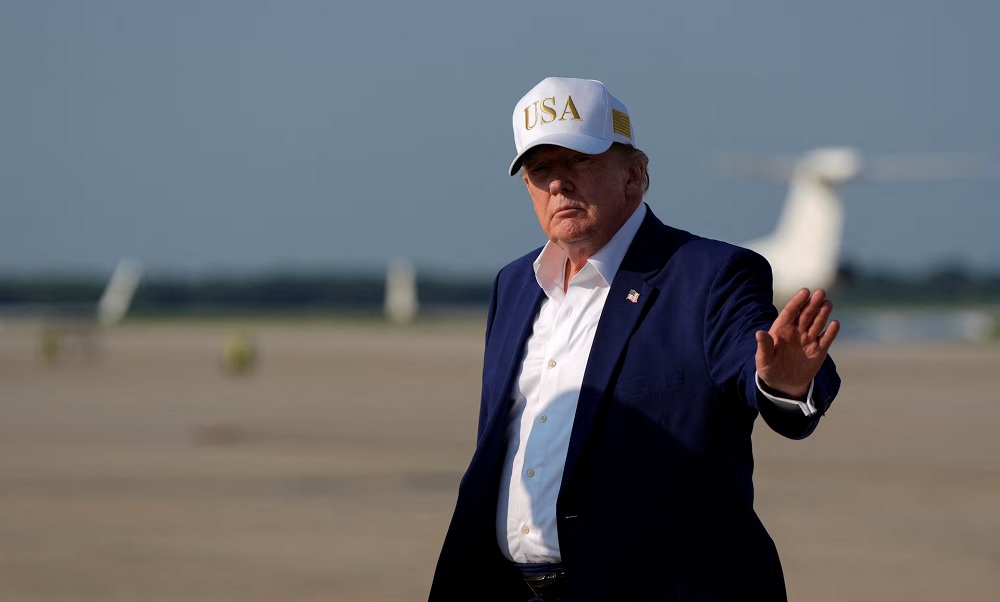
U.S. President Donald Trump departed on a secret military flight from Turkey last month when the White House said he was flying aboard Air Force One, an extraordinary move prompted by an Iranian assassination threat, the Washington Post reported Monday.
Trump had taken the newly renovated Qatari-donated jet to Ankara for the NATO summit but he unexpectedly used an older Air Force One when departing the country, a move that prompted questions about the newer plane’s security, Reuters reported.
The trip to NATO was the first international travel for the new plane, whose speedy upgrades triggered questions over its cost and security, and took place as hostilities escalated with Iran, which borders Turkey.
Before departing Ankara, Trump said on Truth Social that he would use an older baby blue Air Force One plane “for old time’s sake” to RAF Mildenhall in Britain while the new plane stopped at the same base so U.S. service members stationed there could tour the aircraft.
After Trump boarded the old Air Force One in front of cameras in Ankara, he was secretly shuttled by an airport catering truck to a smaller plane, an Air Force C-32A, the Post reported citing a U.S. official familiar with the operation and corroborating material it reviewed.
The deception operation was triggered by a credible threat to Trump, the Post reported. A similar operation had taken place in 2000, when President Bill Clinton used an unmarked executive jet to fly into Pakistan while sending his formal Air Force One as decoy.
On this occasion, the journalists who thought they were traveling with Trump on the older Air Force One, which was effectively used as a decoy, reported being advised to keep their window shades in the press cabin closed. The Post said aside from reporters, some White House staff also believed that the president was on board.
When asked later by reporters why they had to keep their shades shut during the flight, Trump said it was because they were “probably on a dangerous flight.” He went onto say: “But if I go, you go. Right?”
The C-32A carrying Trump flew to Britain and arrived at around 10:20 p.m. while the older Air Force One and media, arriving minutes later, the Post reported. It was not clear, the paper said, how Trump was moved from the C-32A back to the older Air Force One.
Trump’s traveling press pool reported he climbed down the stairs of the older Air Force One at 10:56 p.m. UK local time.
He gave press a peace sign but didn’t walk over to talk to them. He then spent some time greeting service members before walking to the new, Qatar-donated plane.
When asked for comment on the revelation of a secret flight on a third plane, the White House provided a statement from Communications Director Steve Cheung saying the Qatari-donated jet has been fitted with high-level security protocols that ensure the safety of the president and his staff.
“As the President has said recently, there are many enemies of America who have their sights on him, and we use every tool at our disposal to address those threats,” Cheung said. It was the same statement provided to the Post.
The Pentagon did not immediately respond to a request for comment.
The new plane, with red, white, dark blue and gold livery chosen by Trump, is a Boeing 747 gifted to the United States by Qatar last year and refitted by defense contractor L3Harris Technologies. It was intended to serve as a temporary placement while Boeing (BA.N) struggled to deliver long-delayed next-generation Air Force One planes.
World
More than 100 killed after strongest quake this century hits western Colombia
The U.S. Geological Survey said the 7.4-magnitude quake struck at a depth of 107 km (66 miles). Colombia’s Geological Service said it was the strongest earthquake recorded in the country in the 21st century.
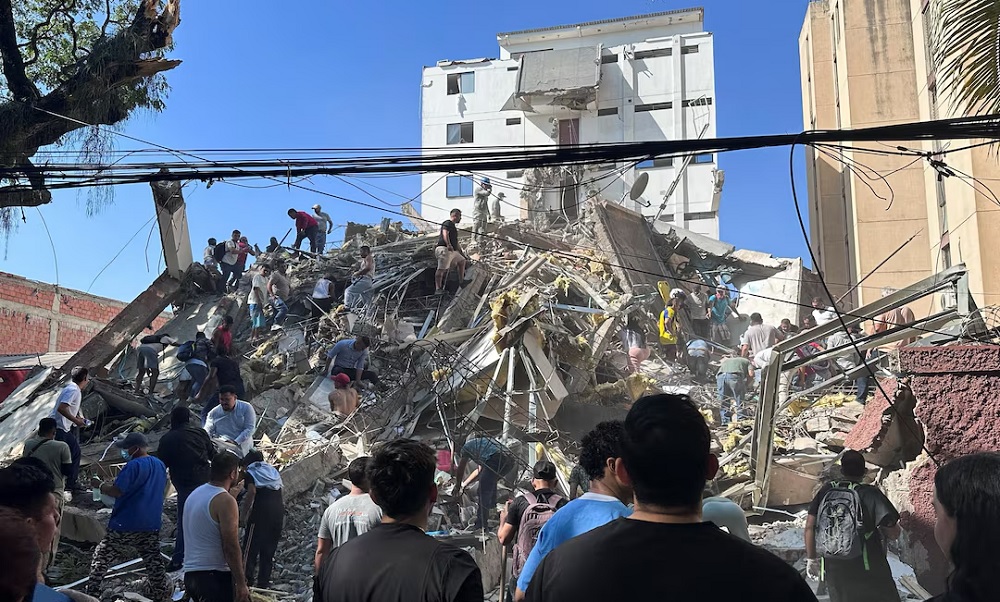
More than 100 people were killed after a powerful earthquake struck western Colombia on Monday, toppling buildings, damaging hospitals and infrastructure and trapping people beneath the rubble in the country’s strongest earthquake this century.
The quake struck just days after Abelardo De La Espriella was sworn in as president, thrusting the new administration into its first major crisis, with memories still fresh of devastating twin earthquakes in neighboring Venezuela in June, Reuters reported.
“The national government has all of its capabilities deployed to protect lives, assist affected communities and deliver aid wherever it is needed,” he said in a national address around 1 p.m. local time, upon declaring a national state of emergency and giving a death toll of 111. “The first priority is rescuing the people trapped under the rubble.”
De La Espriella visited Quibdo, the capital of coastal Choco province, where he promised rent subsidies for those who have lost homes, and then traveled to Cali, western Colombia’s largest city.
Though he had been expected to give an updated national death toll on Monday evening, De La Espriella offered only figures for Valle del Cauca province, where Cali is located, saying 35 people had died there, while 700 had been injured. Some local media have cited a national total of 132 deaths, though the origin of the figure is unclear.
The U.S. Geological Survey said the 7.4-magnitude quake struck at a depth of 107 km (66 miles). Colombia’s Geological Service said it was the strongest earthquake recorded in the country in the 21st century.
As night fell, rescue workers and volunteers with headlamps hurried to find people still trapped under rubble.
Authorities in Cali, Armenia and Manizales announced curfews, with Cali’s mayor saying threats of looting had forced him to deploy police and military personnel to the streets. De La Espriella promised 1,000 additional security personnel for the city.
Cali authorities said the Petronio Alvarez festival, an annual celebration of Pacific music which was due to start on Wednesday, has been postponed.
Video broadcast by Caracol Television showed a group of people pulling a small baby covered in dust from under a pile of rubble. Caracol reported the six-month-old girl and her mother were rescued from under a five-story building in Cali.
Video from Cali also showed rescue workers rappelling people out from the windows of a local hospital.
BUILDINGS CRUMBLE, AIRPORTS CLOSED
In the hard-hit city of Pereira, rescue workers told local television they were in contact with a young boy trapped under a bakery, and crane operators were working to remove badly damaged parts of buildings.
A four-story building crumbled in Pereira during the quake, according to Reuters-verified video, while footage from Manizales showed one of the side towers of the city’s landmark neo-Gothic cathedral collapsing and scattering debris onto nearby streets.
Reuters video showed rescue workers, police and volunteers shoveling debris by hand and loading rubble into trucks as they searched for survivors trapped beneath collapsed buildings. Other footage showed damage to residential towers and emergency-service facilities, with debris crashing onto ambulances parked below.
Mauricio Andrade, a firefighter in Cali, said his team had rescued two adult women and two children from a collapsed building. As he spoke to Reuters, his team was preparing to rescue more people from the rubble.
“They are alive,” he said. “We are making space so we can free them and get them out.”
Carmen Yasmin Garcia, 43, a Cali resident and rescue volunteer, said her group had helped seven people out of a fallen building but there were still four people and a dog trapped underneath.
“A moment ago there was scratching but now we can’t hear anything, we still have faith that the dog is alive and we can get these people out,” she said. “The more people lending a hand the better.”
Saul Paz, 69, a resident of a Cali residential complex that partially collapsed, told Reuters he had been in the dining room with his son and wife when the shaking began.
“I think if it had lasted five seconds more there would be nothing left,” he said. “There are people who went to bed last night with a house and a car and today they won’t have anything.”
Colombia’s civil aviation authority suspended operations at several airports in the region, including Pereira, Manizales, Quibdo, Armenia, Cartago and Buenaventura, while engineers carried out structural inspections.
RING OF FIRE
Colombia sits along the seismically active Pacific Ring of Fire and records thousands of mostly minor earthquakes each month.
Northwestern University seismologist Suzan van der Lee said the quake’s powerful magnitude, inland location and strike-slip motion may have amplified damage in populated valleys despite its considerable depth.
“This one was far below the crust, and in theory it shouldn’t cause as much shaking. At this magnitude, it did actually cause a lot of shaking,” she said, adding Colombia is particularly difficult for seismologists to analyze due to the interaction of several major tectonic plates.
The Colombian Geological Service said it had recorded 21 aftershocks by late Monday and warned that additional tremors were likely.
Colombia’s coffee region was devastated by a magnitude 6.2 earthquake in 1999 that killed more than 1,000 people, particularly around Armenia and Pereira.


FAO warns water shortages and heat put Afghanistan’s agriculture under pressure

US military operations killed 153 civilians in 2025, Pentagon assessment shows

Hana raises concerns over Afghan women and children amid Iran’s expulsion policy

Afghanistan face Ireland with series win in sight

Afghanistan to host India for three-match T20I series in Delhi

Pakistan’s governance system has ‘collapsed’: Mohsin Naqvi

Spain sweep FIFA World Cup player awards after historic triumph

Iran, Afghanistan and Tajikistan discuss expanding regional transit cooperation

Afghan health minister, Gavi discuss expanding routine immunization

Afghanistan temporarily eases fuel import standards to help curb rising prices

Tahawol: Hamid Karzai’s call for Afghan reconciliation discussed

Saar: Preparations for IEA’s fifth anniversary discussed

Tahawol: Iran’s acknowledgment of Afghanistan’s cooperation discussed

Saar: Five years of Islamic Emirate rule in Afghanistan reviewed

Tahawol: Afghanistan: An Alternative to the Strait of Hormuz?
-

 Sport3 days ago
Afghanistan secure direct qualification for 2027 Men’s ODI World Cup
-
 Regional4 days ago
Goods transporters to go on strike from Saturday after talks with Pakistan govt fail
-

 Sport4 days ago
Rashid Khan takes six as Afghanistan thrash Ireland by 92 runs
-
 Latest News3 days ago
Pakistan-backed armed groups in Balochistan using former Afghan government forces: report
-
 World4 days ago
US Senate passes Russia sanctions championed by Graham; US House next
-
 Sport2 days ago
Abasin Defenders stun Kabul Zalmi in Kabul Premier League
-

 Latest News4 days ago
Moldova president criticizes visa approval for IEA delegation
-
 Regional3 days ago
Turkey, Pakistan, Saudi Arabia defence pact technically same as NATO’s Article 5, Turkish minister says