
Business
DABS has ‘settled most outstanding bills’ with its neighbors

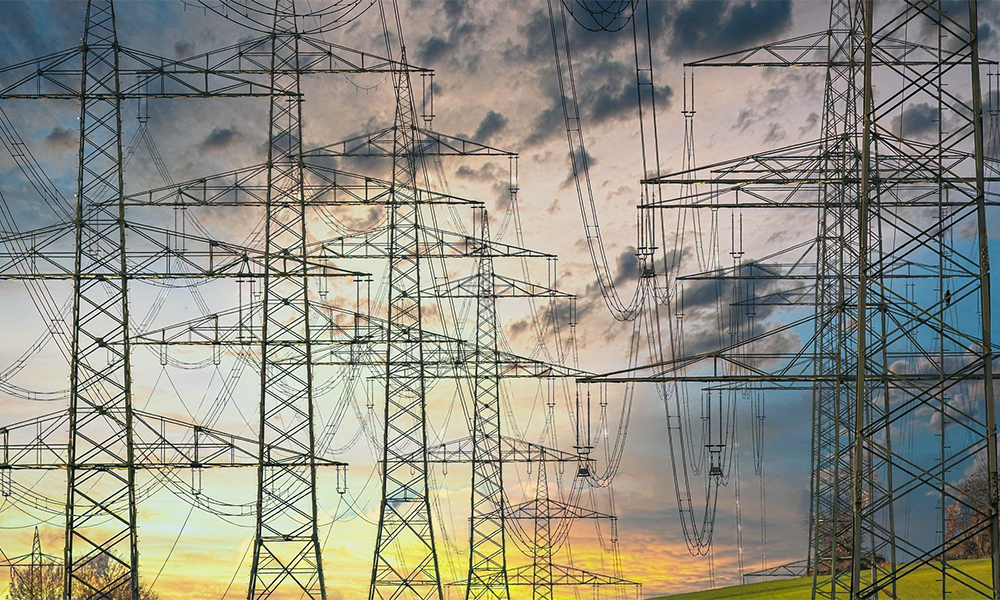
Da Afghanistan Breshna Sherkat, the country’s national power utility company, said on Sunday that last year it paid most of its electricity bills to exporting countries.
According to the company, $94 million was paid to Uzbekistan, $96 million to Tajikistan and $62 million to Iran.
DABS’ chief operating officer Safiullah Ahmadzai said that a five-year strategic plan for renewable energy has been drawn up to provide reliable and sustainable electricity, which includes 710 megawatts of solar and wind power.
Ahmadzai said preliminary work has been done in the area of electricity production from coal, and a contract will be signed in the near future.
“The technical team of Breshna Company was able to properly manage the domestic power plants of Naghlu, Mahiper and Surubi, and last year we had 390 million kilowatt hours of domestically produced electricity from water resources,” Ahmadzai said.
Officials also said that in the fiscal year 1401, the company registered about 35,000 electric meters that were distributed during the republic period and payment of electricity bills was made online.
The company officials emphasized that they have not increased the price of electricity, but meter reading has become more accurate.






Business
Uzbekistan, Kazakhstan target Afghanistan in push to expand regional trade
According to Uzbek media, the initiative was discussed during the Uzbek-Kazakh Business Forum in Tashkent.
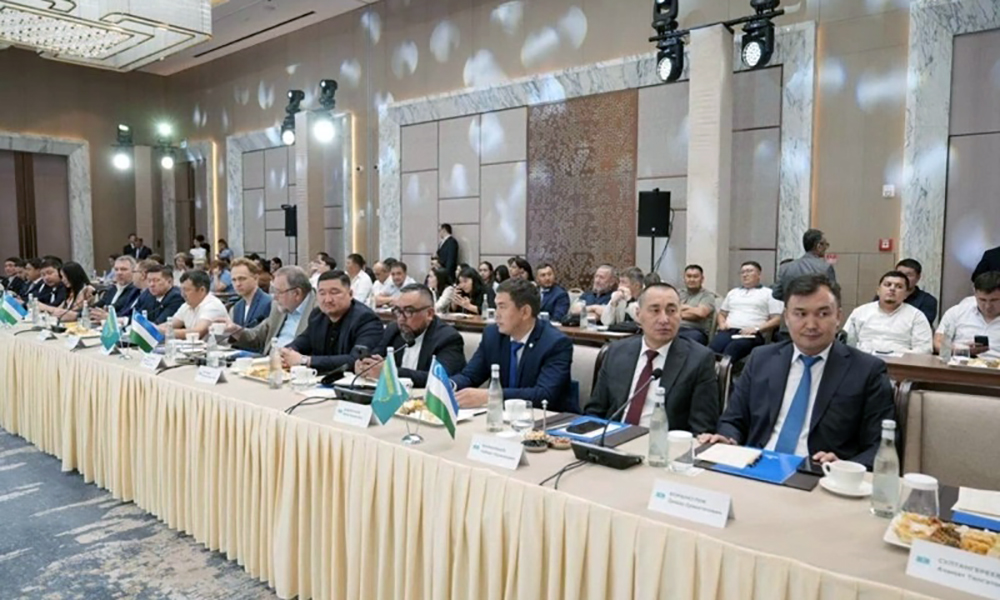
Uzbekistan and Kazakhstan are seeking to deepen economic cooperation and jointly expand into new regional markets, including Afghanistan, as part of broader efforts to strengthen trade and investment across Central Asia and the Middle East.
According to Uzbek media, the initiative was discussed during the Uzbek-Kazakh Business Forum in Tashkent, where business leaders and trade associations from both countries explored opportunities to promote their products in third-country markets, particularly Afghanistan, Syria and Iraq.
Afghanistan featured prominently in the discussions, with participants noting that Kazakhstan’s exports to Afghanistan reached nearly $500 million during the first seven months of 2025—almost matching the country’s total exports to Afghanistan for all of 2024. Officials said the long-term goal is to increase exports to $3 billion.
The forum also highlighted growing imports of mineral raw materials from Afghanistan. Participants discussed a proposed agreement to supply Afghan zinc ore to the Almalyk Mining and Metallurgical Complex in Uzbekistan.
Beyond Afghanistan, delegates examined emerging business opportunities in Syria and Iraq, where reconstruction efforts are expected to drive demand for food products, construction materials and industrial goods.
The forum also focused on improving regional logistics. Officials discussed using available capacity on Turkish freight trucks transiting Uzbekistan, a move expected to reduce transport costs and improve access to regional markets.
At the conclusion of the forum, both sides agreed to organise joint business missions to third-country markets, including Aleppo, Syria, in late September and Erbil, Iraq, in early October, with the aim of strengthening commercial partnerships and identifying new investment opportunities.
The discussions reflect growing economic cooperation between Uzbekistan and Kazakhstan as both countries seek to expand regional connectivity, diversify exports and strengthen trade links with neighbouring markets, including Afghanistan.
Business
Uzbekistan’s Fergana region strengthens economic ties with Afghanistan
The meeting followed a Fergana delegation’s visit to Afghanistan on July 26-27, during which officials and business representatives held talks in Kabul and Mazar-i-Sharif.
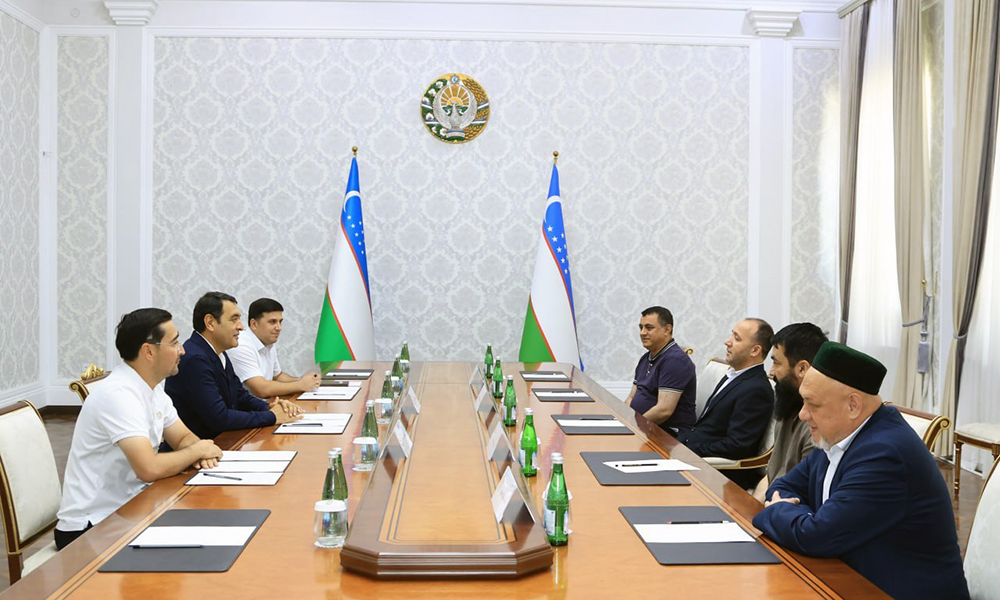
Uzbekistan’s Fergana region is moving to deepen economic cooperation with Afghanistan after officials and business leaders agreed to fast-track joint investment projects and expand bilateral trade.
According to a statement from the Fergana Regional Administration, Governor Khayrullo Bozorov met with leading Afghan business figures, including Emerald Diamond Trading Director Abdul Hamid Anyuri, Kam Air Director Atilla Azimi, Tojmahal Petroleum Director Abdul Latif Nawruzi, and their regional partners to discuss practical measures for strengthening economic ties.
The meeting followed a Fergana delegation’s visit to Afghanistan on July 26-27, during which officials and business representatives held talks in Kabul and Mazar-i-Sharif. The delegation also inaugurated Fergana Trade Houses in both cities to promote trade and commercial cooperation.
“The parties agreed to accelerate the implementation of joint investment projects, increase bilateral trade and elevate cooperation to a new level,” the regional administration said.
Discussions focused on turning agreements reached during the Afghanistan visit into practical projects, identifying new investment opportunities, and expanding trade between the two sides. Afghan business representatives expressed interest in working with Fergana companies in key sectors including trade, agriculture, aviation, energy and logistics, while presenting several new investment initiatives.
Bozorov reaffirmed Fergana’s commitment to strengthening economic relations with Afghanistan, saying the regional administration stands ready to support joint projects and create favourable conditions for closer business cooperation.
The regional administration said the meeting reflects growing momentum in economic engagement between Uzbekistan and Afghanistan, with both sides seeking to expand cross-border trade, attract investment and develop new commercial partnerships as part of broader efforts to strengthen regional economic connectivity.
Business
Afghanistan invites Iranian investors to expand economic cooperation
Discussions focused on expanding private-sector cooperation, increasing joint investment, and boosting bilateral trade between the two countries.
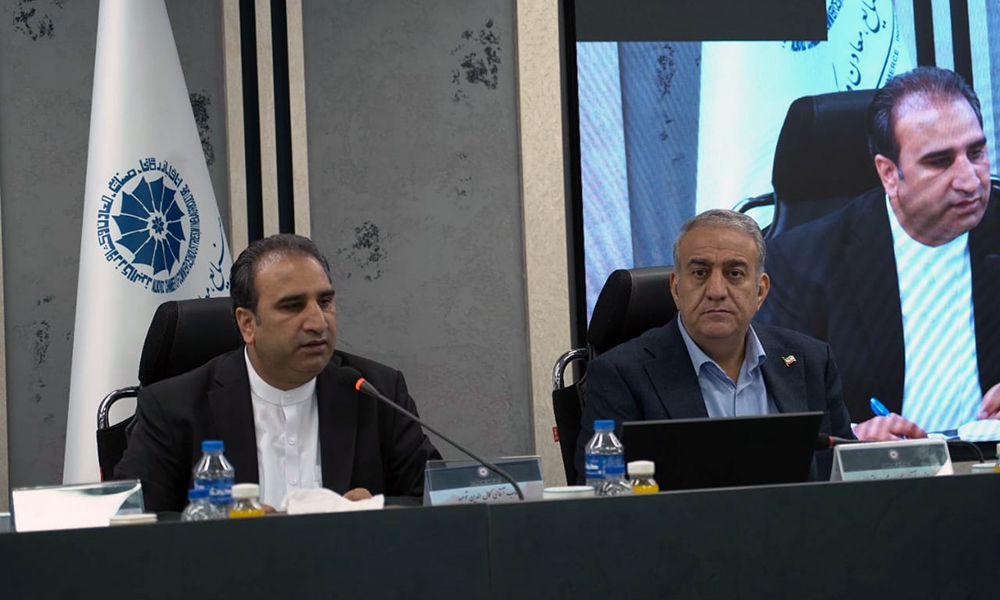
Afghanistan has invited Iranian investors to explore business opportunities and participate in joint economic projects as the country seeks to strengthen investment and trade ties with its western neighbor.
Kamaluddin Tawhidi, head of the Afghanistan-Iran Joint Chamber of Commerce, made the appeal during a visit to Iran, where he attended the “Economic Cooperation Opportunities with Afghanistan” conference in Alborz Province, according to Iran’s state broadcaster.
Speaking at the event, Tawhidi highlighted Afghanistan’s investment potential and encouraged Iranian businesses to take advantage of opportunities across a range of economic sectors.
Discussions focused on expanding private-sector cooperation, increasing joint investment, and boosting bilateral trade between the two countries.
Tawhidi said stronger economic partnerships could create new business opportunities and support broader regional economic growth.
The meeting comes as Afghanistan continues efforts to attract foreign investment and deepen economic cooperation with neighboring countries.


Iran expels over 200,000 undocumented Afghan migrants in past five months

Pezeshkian says Afghanistan, Pakistan helped Iran prevent infiltration into Iran

Abasin Defenders stun Kabul Zalmi in Kabul Premier League

Fire at Saudi factory kills 16 Bangladeshi migrant workers

Kabul Premier League gets underway with high-scoring opener

Pakistan’s governance system has ‘collapsed’: Mohsin Naqvi

India offers 1,000 online scholarships for Afghan students for 2026-27 academic year

FIFA’s inaugural YouTube Creator Cup to stream live on Ariana Television and Ariana Sport YouTube channels

FIFA World Cup semi-final line-up confirmed

ATN secures exclusive rights to broadcast Afghanistan vs Ireland cricket tour

Tahawol: Afghanistan: An Alternative to the Strait of Hormuz?

Saar: Pakistan-Saudi-Turkey Pact: Regional Impact

Tahawol: Escalating disputes over Iran war discussed

Saar: Turkey, Saudi Arabia and Pakistan defense pact reviewed

Tahawol: End of US sanctions waiver for Chabahar Port discussed
-

 Latest News5 days ago
First Afghanistan-Ireland ODI abandoned without a ball bowled
-

 Sport4 days ago
Afghanistan holds Russia to 3-3 draw, earns first point at Continental Futsal Championship
-

 Latest News5 days ago
Afghan boxer appears in Greek court over death of Scottish woman
-
 Business4 days ago
Uzbekistan’s Fergana region strengthens economic ties with Afghanistan
-
 Regional4 days ago
Iran threatens to hit Gulf states if US launches new strikes
-
 Regional2 days ago
Goods transporters to go on strike from Saturday after talks with Pakistan govt fail
-
 World2 days ago
US Senate passes Russia sanctions championed by Graham; US House next
-

 Sport2 days ago
Rashid Khan takes six as Afghanistan thrash Ireland by 92 runs