
Regional
Hamas names Oct 7 mastermind Sinwar as leader after Haniyeh assassination
Israel’s chief military spokesman, Rear Admiral Daniel Hagari, blamed Sinwar for the Oct 7 attack and said Israel would continue to pursue him.

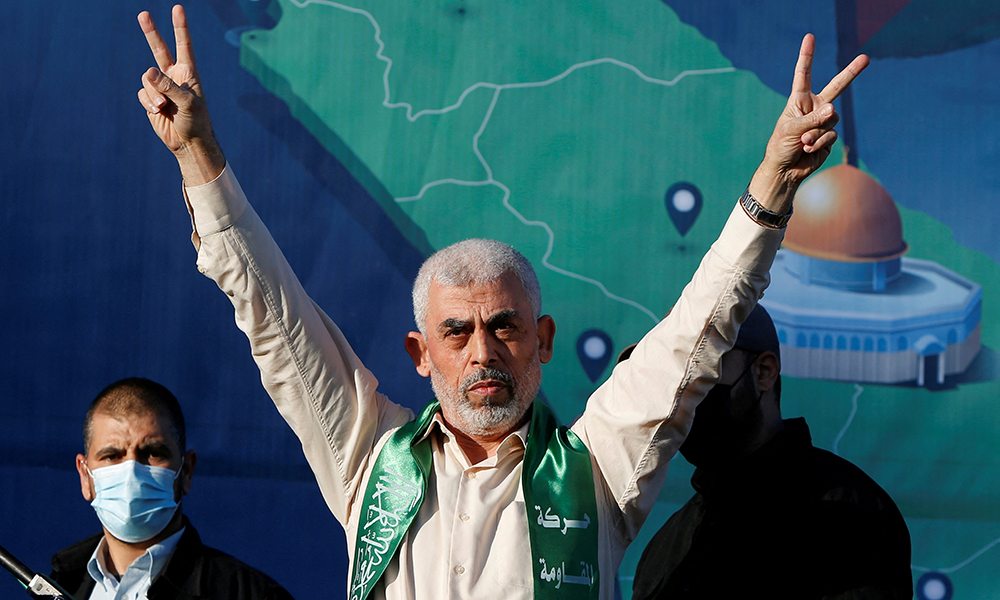
Hamas named its Gaza leader Yahya Sinwar as successor to former political chief Ismail Haniyeh, who was assassinated in Tehran last week, the group said on Tuesday, in a move that reinforces the radical path pursued since the Oct. 7 attack on Israel, Reuters reported.
Sinwar, the architect of the most devastating attack on Israel in decades, has been in hiding in Gaza, defying Israeli attempts to kill him since the start of the war.
“The Islamic Resistance Movement Hamas announces the selection of Commander Yahya Sinwar as the head of the political bureau of the movement, succeeding the martyr Commander Ismail Haniyeh, may Allah have mercy on him,” the movement said in a brief statement.
News of the appointment, which came as Israel braces for a likely attack from Iran following the killing of Haniyeh in Tehran, was greeted with a salvo of rockets from Gaza from the bands of militants still fighting Israeli troops in the besieged enclave.
“The appointment means that Israel needs to face Sinwar over a solution to Gaza war,” said a regional diplomat familiar with the talks brokered by Egypt and Qatar, which are aimed at bringing a halt to the fighting in Gaza and a return of 115 Israeli and foreign hostages still held in the enclave.
“It is a message of toughness and it is uncompromising.”
Sinwar, who spent half his adult life in Israeli prisons, was the most powerful Hamas leader left alive following the assassination of Haniyeh, which has left the region on the brink of a wider regional conflict after Iran vowed harsh retaliation, read the report.
Israel has not claimed responsibility for the assassination but it has said it killed other senior leaders, including Hamas deputy leader Saleh al-Arouri, who was killed in Beirut, and Mohammed Deif, the movement’s military commander.
Born in a refugee camp in the southern Gaza city of Khan Younis, Sinwar, 61, was elected as Hamas’ leader in Gaza in 2017 after gaining a reputation as a ruthless enforcer among Palestinians and an implacable enemy of Israel.
Israel’s chief military spokesman, Rear Admiral Daniel Hagari, blamed Sinwar for the Oct 7 attack and said Israel would continue to pursue him.
“There is only one place for Yahya Sinwar, and it is beside Mohammed Deif and the rest of the Oct 7th terrorists,” he told Al-Arabiya television, according to a statement released by the military. “That is the only place we’re preparing and intending for him.”
In a sign that the movement had united around the choice of Sinwar, Khaled Meshaal, a former leader who had been seen as a potential successor to Haniyeh, was said by senior sources in the movement to have backed Sinwar “in loyalty to Gaza and its people, who are waging the battle of the Flood of Al-Aqsa”.
For Israel, the appointment confirms Hamas as a foe dedicated to its destruction and is likely to reinforce Prime Minister Benjamin Netanyahu’s insistence that Israel must pursue its campaign in Gaza to the end.
The White House declined to comment on Sinwar’s appointment. But a person familiar with Washington’s thinking said the selection suggested that Hamas could toughen its position in ceasefire negotiations and make it harder to reach a deal, Reuters reported.
They added, however, that Israel was already aware that even before his formal appointment Sinwar would have the final word on any agreement to halt the fighting, and the announcement merely set the seal on that.
Ten months since the surprise attack by thousands of Hamas-led fighters who swarmed into Israeli communities around the Gaza Strip in the early hours of the morning of Oct. 7, the war has turned the Middle East on its head and threatened to spiral into a wider regional conflict.
Some 1,200 Israelis and foreigners were killed and more than 250 taken hostage into Gaza. In response, Israel launched a relentless campaign that has so far killed almost 40,000 Palestinians and left the densely populated enclave in ruins, read the report.
Attempts at reaching a ceasefire that would give the exhausted population a respite and enable the hostages remaining in captivity to be brought home have foundered amid mutual recriminations from Hamas and Israel.
Hamas official Osama Hamdan told Al Jazeera that the movement remained committed to reaching a deal and the team that handled the negotiations under Haniyeh would continue under Sinwar, who he said was following the talks closely.
But Hani Al-Masri, a political analyst in Ramallah, said Sinwar’s appointment to lead the movement overall was a direct challenge to Israel, and sent a message about Hamas’ adherence to his “extremist and resistant approach”.
“As Sinwar manages the negotiations, he will manage the movement,” he said.






Regional
US and Iran hold first talks since June after Trump’s ‘annihilation’ threat
WATCH Donald Trump’s speech to UNGA on Iran, including his ‘annihilation’ threat
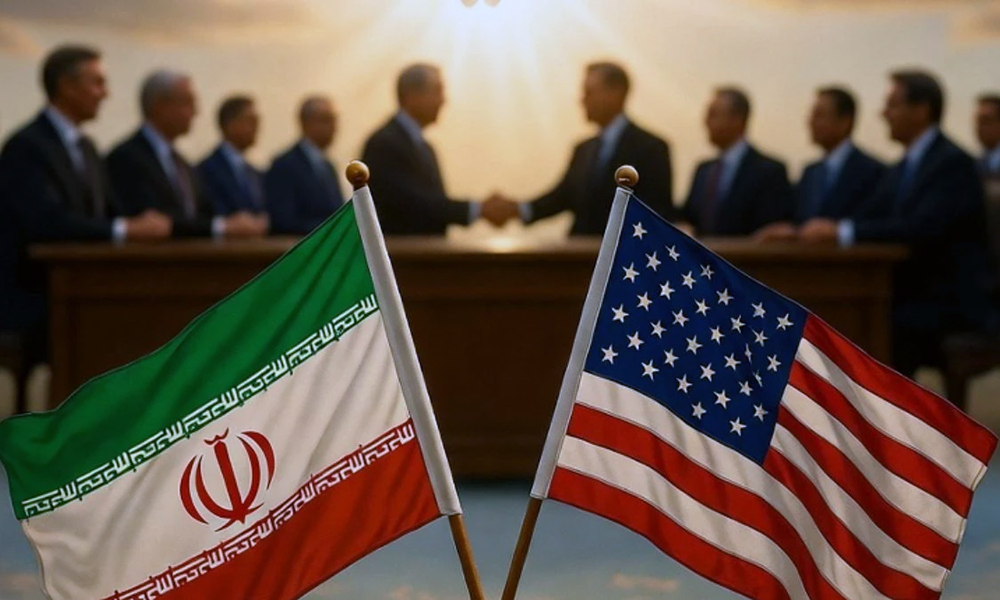
The United States and Iran have held their first high-level talks since June, with discussions taking place on the sidelines of the United Nations General Assembly in New York amid continued fighting and growing international pressure to end the conflict.
Iranian Foreign Minister Abbas Araghchi and US special envoy Steve Witkoff took part in the talks, which were mediated by Qatar. US envoy Jared Kushner also participated on the American side, according to reports.
No breakthrough was immediately reported. Witkoff said the two sides had completed a round of discussions that he hoped would prove “constructive and promising”, adding that mediators would continue their efforts.
Iranian officials said Araghchi conveyed Tehran’s conditions, including an end to what Iran describes as US acts of aggression and the lifting of measures affecting Iranian shipping and assets.
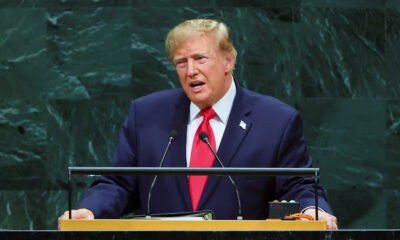
The talks came just hours after US President Donald Trump warned in his address to the UN General Assembly that he could “annihilate” Iran if no agreement was reached.
Trump said Iran faced a choice between reaching a deal and what he described as destruction, while also saying he believed an agreement could be reached after the US midterm elections in November.
Trump later described the three-hour discussions as very productive. Witkoff, however, clarified that the two sides communicated through mediators who shuttled between the delegations rather than holding direct face-to-face negotiations.
The latest contact follows months of conflict between Iran, Israel and the United States. The fighting has also disrupted shipping through the Strait of Hormuz, one of the world’s most important energy routes.
Iran has indicated that it could reopen the strategic waterway if Washington takes steps to ease military and economic pressure on Tehran. Iranian officials have linked the issue to demands including the lifting of the US naval blockade and the release of frozen Iranian assets.
The Strait of Hormuz is a key route for global energy supplies, and its closure has contributed to volatility in international oil markets.
Despite the renewed diplomatic contact, significant differences remain between Washington and Tehran over the war, Iran’s nuclear programme, sanctions, shipping through the Strait of Hormuz and US military operations in the region.
Iranian President Masoud Pezeshkian is due to address the UN General Assembly on Wednesday, with further diplomatic efforts expected to continue in New York.
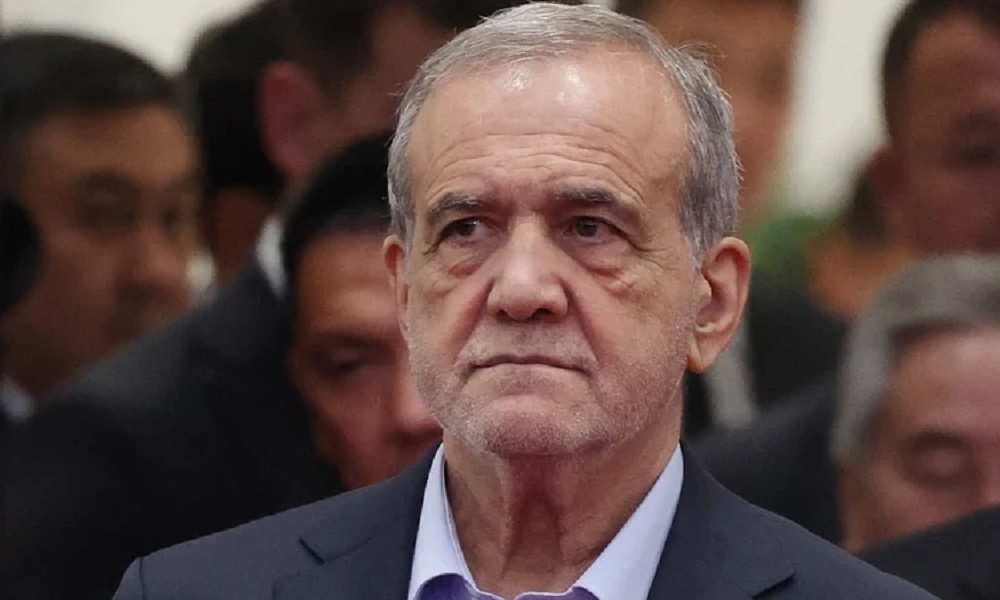
Iranian President Masoud Pezeshkian left Tehran for New York on Tuesday to attend the 81st United Nations General Assembly, where he says he will defend Iran’s positions and highlight what Tehran describes as the hardships facing its people and the wider region.
Speaking at a press conference before his departure on Tuesday, Pezeshkian said the UN gathering provides Iran with an opportunity to present its views to the international community.
“We will defend our positions with strength at international forums,” he said.
Pezeshkian said he would meet politicians, cultural figures and media representatives during his visit and discuss issues including regional conflicts, international law and what he described as violations of commitments made to Iran during previous negotiations.
Iranian Foreign Minister Abbas Araghchi is already in New York. He arrived on Monday ahead of the General Assembly and is expected to hold talks and consultations with foreign officials during the UN gathering.
Araghchi has said Iran’s main objective at the UN is to defend the rights and interests of the Iranian people and use the gathering as a platform for diplomacy.
The Iranian delegation’s presence comes amid ongoing tensions between Tehran and Washington.
A senior Iranian official told Reuters on Tuesday that Iran was prepared to reopen the Strait of Hormuz within seven days if the United States eased military pressure and lifted its blockade of Iranian ports. The official said the Iranian delegation in New York had full authority to pursue diplomatic discussions.
Pezeshkian meanwhile said Iran had repeatedly entered negotiations and agreements only to see the other side fail to honour its commitments. He argued that lasting peace and security required respect for the rights of nations and individuals.
He also criticised military actions and developments in Gaza and other parts of the Middle East, saying attacks on civilians and public facilities could not simply be justified as counter-terrorism measures.
Pezeshkian is expected to address the UN General Assembly on Wednesday. His visit comes as the United States and Iran remain at odds over the conflict and the possibility of renewed diplomacy.
The Iranian president has said his trip will be aimed at presenting Iran’s position, explaining developments in the region and conveying what he called the message of the Iranian people to the international community.
Regional
G7 foreign ministers call on Iran to stop arming Houthis
The ministers of Britain, Canada, France, Germany, Italy, Japan and the United States said in a statement after a meeting on the sidelines of the United Nations General Assembly
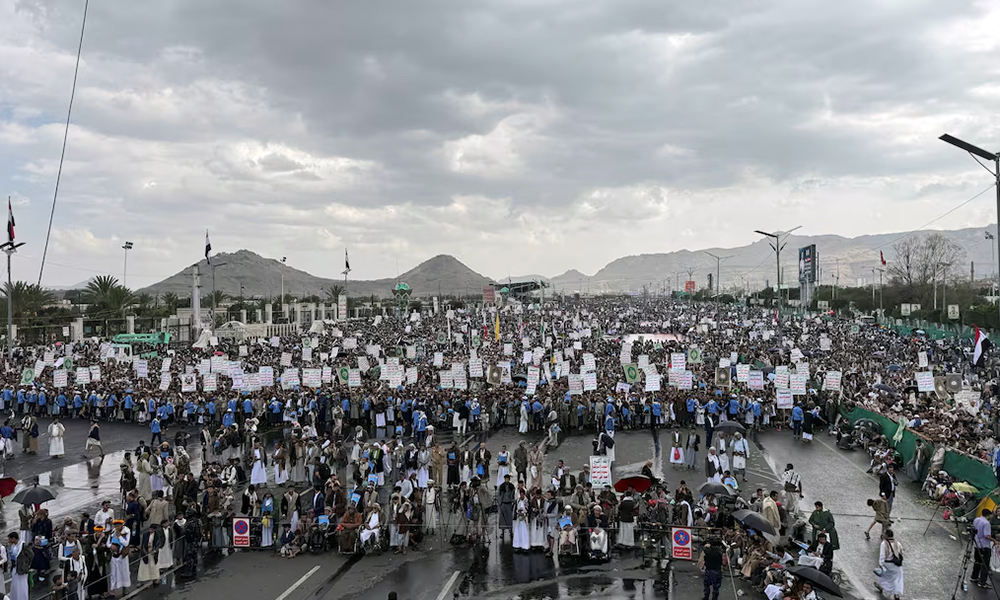
G7 foreign ministers on Monday called on Iran to end its arming and support of Houthis in Yemen, which they said constituted a dangerous pattern of escalation that risked undermining international trade and creating global instability, Reuters reported.
“We condemn in the strongest terms the unacceptable continued strikes carried out by the Houthis in Yemen and against the Kingdom of Saudi Arabia,” the ministers of Britain, Canada, France, Germany, Italy, Japan and the United States said in a statement after a meeting on the sidelines of the United Nations General Assembly, read the report.
“We call on the Houthis to immediately cease all military actions, all threats and attacks against civilian shipping, and to return to the political process in good faith.”


US and Iran hold first talks since June after Trump’s ‘annihilation’ threat

Trump warns in UN speech he could ‘annihilate’ Iran without peace deal

Afghanistan, Turkmenistan agree to establish joint road transport commission

India condemns Pakistani airstrikes on Afghanistan

ACL: Sorkh Poshan Khafi maintain top spot after fourth straight win

Saudi energy group signs major Afghanistan deals covering gas exploration and pipeline plans

ATN secures exclusive rights to broadcast T20I series in India across Afghanistan

Afghanistan squad announced for three-match T20I series against India

China evacuates thousands as Typhoon Narra brings torrential rain

Trump floats idea of renaming Atlantic or Pacific Ocean

Tahawol: Reactions to Pakistan’s attacks on Afghanistan discussed

Saar: Uncertain fate of Afghanistan’s seat at UN discussed

Tahawol: Uncertain future of Afghanistan’s permanent UN seat

Saar: Pakistan military strikes Afghan provinces discussed

Tahawol: Impact of middle East war on Afghanistan
-
 Latest News5 days ago
Afghanistan seeks stronger ties with Saudi Arabia, dialogue with Pakistan: Mujahid
-

 World4 days ago
US and Denmark reach deal on Greenland, Trump says
-
 Latest News3 days ago
Pakistan says Kohat attackers had roots in Afghanistan
-

 Latest News4 days ago
Afghanistan condemns mosque attack in Khyber Pakhtunkhwa
-
 Latest News3 days ago
OIC to hold Afghanistan Contact Group meeting on sidelines of UN General Assembly
-
 Latest News4 days ago
Afghan official meets Iranian oil minister to discuss energy cooperation
-

 Sport2 days ago
Afghanistan to face Japan and Nepal in Asian Games cricket group stage
-
 Regional3 days ago
Flames, smoke seen near Riyadh airport; Houthis claim attacks on Saudi capital