
Latest News
China calls for more humanitarian aid, economic cooperation in Afghanistan
On the issue of guaranteeing the fundamental rights and interests of all Afghan people, Fu said: “The morality law promulgated by Afghanistan has been widely scrutinized.

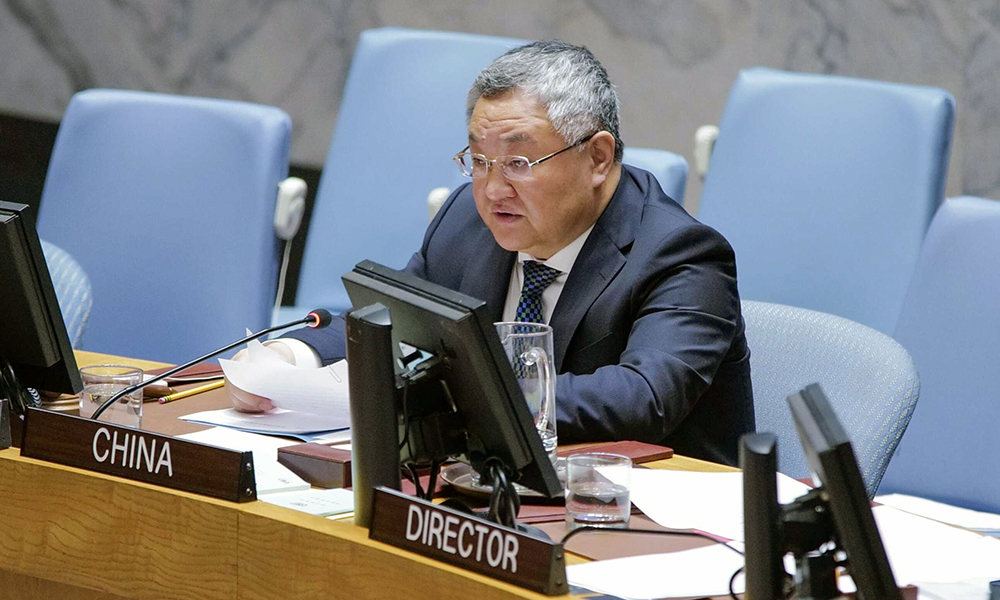
China on Monday called on the international community to maintain engagement with the Islamic Emirate government of Afghanistan and to expand economic cooperation and humanitarian assistance with the country.
Addressing the United Nations Security Council meeting on Afghanistan on Monday, China’s envoy to the UN Fu Cong said that while Afghanistan remains largely stable, with a steadily improving economy and dynamic external relations, the country also faces multiple challenges in humanitarian areas, development, terrorist threats, and women’s rights and interests.
He said maintaining the engagement momentum with the Afghan government was important.
“Last year saw an increasing number of countries conducting dialogue and cooperation with the interim government, lending strong support to the reconstruction and development of Afghanistan.
“China supports the international community in cementing mutual trust with the interim government and addressing each other’s concerns through dialogue. China reiterates that the Council should reinstate its package of exemptions to the travel ban imposed on the relevant personnel of the Afghan interim government, and timely adjust the 1988 sanctions regime, so as to facilitate the external engagement of the interim government.”
He stated that major traditional donors have abruptly paused or reduced their aid to Afghanistan, which has had a serious impact on the country’s healthcare, education, and food and agriculture systems. This had made “the already difficult life of the Afghan people even more precarious.
“We call on traditional donors, especially those historically responsible for the problems of the country, to resume and increase their aid to Afghanistan and desist from using humanitarian aid as a bargaining chip to exert political pressure.”
Fu pointed out that while the country’s economy grew by 2.7% last year, the economic foundation remained shaky and that “potential for development is yet to be unlocked.
“It is necessary that all parties continue bilateral, multilateral, and regional cooperation in support of Afghanistan’s economic recovery, including rebuilding its banking system and provide more resources for its development.”
Fu also called for Afghanistan’s foreign reserves to be unfrozen and returned immediately.
On the issue of guaranteeing the fundamental rights and interests of all Afghan people, Fu said: “The morality law promulgated by Afghanistan has been widely scrutinized.
“We hope that the Afghan side will take the legitimate international concerns seriously and effectively respect women’s equal rights to education, employment, and public life. Having said that, it is important to note that women’s rights and interests are not the only problem facing the country, still less a root cause of its current challenges.
“There is a need to support its economic and social development as a way to create favorable conditions for women’s rights and interests, while guiding Afghanistan to shift its policies through dialogue.”
On countering terrorism, he said: “China calls on the interim government to continue countering all terrorist forces, including Daesh, Al-Qaida, and ETIM/TIP, to eradicate the breeding ground for terrorism.
“All countries should abandon their geopolitical calculation and ideological biases and reject double standards and selectivity to safeguard the greater good of international counter-terrorism cooperation,” he said.
In conclusion, he said that China remains committed to respecting the independence, sovereignty, and territorial integrity of Afghanistan, respecting the independent choice of the Afghan people, and respecting the religious beliefs and national customs of the country.
“China never interferes in Afghanistan’s internal affairs, never pursues any selfish gains in Afghanistan, and never seeks to build a so-called sphere of influence.
“China has always been action-oriented in supporting the country’s peace, stability, development, and prosperity. We stand ready to work with all sides to strengthen Council unity and consensus to make greater contributions to addressing the Afghan issue.”












Kazakhstan’s Foreign Minister Mukhtar Tileuberdi has called for pragmatic and coordinated international engagement with Afghanistan, saying the country’s long-term stability is closely linked to the security and sustainable development of Central Asia.
Speaking during the general debate of the 81st session of the United Nations General Assembly in New York on Friday, Tileuberdi said humanitarian assistance to Afghanistan remains essential but alone cannot break the cycle of poverty, displacement and dependency.
He said Kazakhstan supports a “pragmatic, coordinated and step-by-step” approach to international engagement with Afghanistan, with the United Nations playing a central role.
Tileuberdi also said Kazakhstan is working with the UN to operationalize the United Nations Regional Centre for the Sustainable Development Goals for Central Asia and Afghanistan in Almaty.
He said the success of the centre should be measured by the results and assistance it delivers to the region.


Abu Muslim Farah defeat Khurasan Faryab 2-0 in ACL season six

Saar: Concerns over Pakistan’s political crisis discussed

Afghanistan Champions League: Omar Zawak Herat beat Toofan Herat 1-0

Blast in Pakistan’s Dera Ismail Khan kills 11, injures 30

Ariana Afghan Airlines increases Kabul-Delhi cargo flights

Saudi energy group signs major Afghanistan deals covering gas exploration and pipeline plans

Trump floats idea of renaming Atlantic or Pacific Ocean

US hits Egyptian bank branches with Iran sanctions as war marks six months

Nepal flood rescue mission enters critical phase as thousands remain missing

Iranian clubs to face Gulf opponents at neutral venues in Asian Champions League Elite
Saar: Concerns over Pakistan’s political crisis discussed

Exclusive interview with Abdul Latif Mansoor, Minister of MRRD

Tawsia: Overview of Afghanistan’s iron mines

Tahawol: Discussion on fresh Pakistani airstrikes on Afghanistan

Saar: Calls for international support for Afghanistan discussed
-

 World5 days ago
CNN, MS NOW and Politico sue Trump, challenging White House ban
-

 Latest News3 days ago
Ariana Afghan Airlines ranks seventh among 45 Central Asian airlines
-

 Latest News5 days ago
UN reiterates call for respect for international law after Kunar airstrikes
-

 Regional4 days ago
US and Iran hold first talks since June after Trump’s ‘annihilation’ threat
-

 Latest News4 days ago
Silk Road highway in Wakhan corridor now reaches the China border
-

 Regional3 days ago
Iran airlines cancel flights as US sanctions hit
-

 Latest News5 days ago
Afghan Official: Pakistan’s airstrikes will not go unanswered
-

 Sport5 days ago
Afghan boxing referee heads to China for international festival