
Latest News
Facebook faces growing criticism after Australia news ban

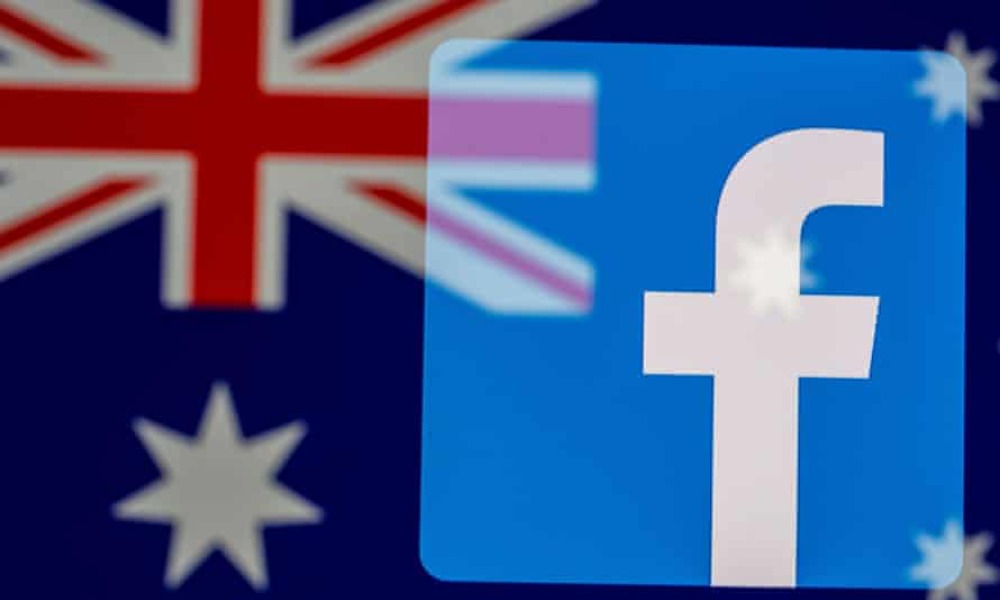
Facebook is facing mounting criticism after it blocked news content in Australia amid a dispute with the government over a planned law which will reportedly force tech giants to pay for news content on their platforms.
According to BBC, Facebook says the legislation “fundamentally misunderstands” its relationship with publishers.
But politicians, publishers and rights groups in several countries have accused it of bullying, and raised concerns over access to information.
BBC states that under Facebook’s new rules, Australian users are blocked from viewing and sharing local and international news, while local publishers are restricted from sharing or posting any links on their pages.
However, reports soon emerged that several Australian government health and emergency pages were also blocked. BBC reported that Facebook later said this was a mistake and many of these pages are now back online.
But Australian Prime Minister Scott Morrison said the social media company’s actions to “unfriend Australia” were “as arrogant as they were disappointing”.
He said he was in “regular contact with the leaders of other nations” over the issue and would not be “intimidated”.
BBC reported that Morrison has raised the issue with Indian Prime Minister Narendra Modi, as he sought to gain international support, according to the Sydney Morning Herald.
Other Australian officials have also criticised the move. Treasurer Josh Frydenberg said the ban on news information had a “huge community impact”. About 17 million Australians visit the social media site every month. It is the most important social platform for news in the country.
Western Australia Premier Mark McGowan accused Facebook of “behaving like a North Korean dictator”, BBC reported.
Meanwhile, Human Rights Watch’s Australia director said Facebook was censoring the flow of information, calling it a “dangerous turn of events”.
A local campaigner with rights group Amnesty International said it was “extremely concerning that a private company is willing to control access to information that people rely on”.
The move also faced criticism outside Australia.
BBC reported that Julian Knight, the head of the British parliamentary committee overseeing the media industry, called Facebook’s action “bullying”.
“I think it’s staggeringly irresponsible – at a time when we are facing a plethora of fake news and disinformation in relation to the Covid vaccine,” he told the BBC.
“This is not just about Australia. This is Facebook putting a marker down, saying to the world that ‘if you do wish to limit our powers… we can remove what is for many people a utility’.”
Global publishers also reacted, with the company behind the Guardian newspaper saying it was “deeply concerned”.
The head of Germany’s BDZV news publishers’ association said it was “high time that governments all over the world limit the market power of the gatekeeper platforms”, BBC reported.
Many Australian users are also angry about their sudden loss of access to trusted and authoritative sources.
“It feels obviously very restrictive in what Facebook is going to allow people to do in the future, not only in Australia but around the world,” Peter Firth, in Sydney, told the BBC.













Kazakhstan’s Foreign Minister Mukhtar Tileuberdi has called for pragmatic and coordinated international engagement with Afghanistan, saying the country’s long-term stability is closely linked to the security and sustainable development of Central Asia.
Speaking during the general debate of the 81st session of the United Nations General Assembly in New York on Friday, Tileuberdi said humanitarian assistance to Afghanistan remains essential but alone cannot break the cycle of poverty, displacement and dependency.
He said Kazakhstan supports a “pragmatic, coordinated and step-by-step” approach to international engagement with Afghanistan, with the United Nations playing a central role.
Tileuberdi also said Kazakhstan is working with the UN to operationalize the United Nations Regional Centre for the Sustainable Development Goals for Central Asia and Afghanistan in Almaty.
He said the success of the centre should be measured by the results and assistance it delivers to the region.


Abu Muslim Farah defeat Khurasan Faryab 2-0 in ACL season six

Saar: Concerns over Pakistan’s political crisis discussed

Afghanistan Champions League: Omar Zawak Herat beat Toofan Herat 1-0

Blast in Pakistan’s Dera Ismail Khan kills 11, injures 30

Ariana Afghan Airlines increases Kabul-Delhi cargo flights

Saudi energy group signs major Afghanistan deals covering gas exploration and pipeline plans

Trump floats idea of renaming Atlantic or Pacific Ocean

US hits Egyptian bank branches with Iran sanctions as war marks six months

Nepal flood rescue mission enters critical phase as thousands remain missing

Iranian clubs to face Gulf opponents at neutral venues in Asian Champions League Elite
Saar: Concerns over Pakistan’s political crisis discussed

Exclusive interview with Abdul Latif Mansoor, Minister of MRRD

Tawsia: Overview of Afghanistan’s iron mines

Tahawol: Discussion on fresh Pakistani airstrikes on Afghanistan

Saar: Calls for international support for Afghanistan discussed
-

 World5 days ago
CNN, MS NOW and Politico sue Trump, challenging White House ban
-

 Latest News3 days ago
Ariana Afghan Airlines ranks seventh among 45 Central Asian airlines
-

 Latest News4 days ago
UN reiterates call for respect for international law after Kunar airstrikes
-

 Regional3 days ago
US and Iran hold first talks since June after Trump’s ‘annihilation’ threat
-

 Latest News3 days ago
Silk Road highway in Wakhan corridor now reaches the China border
-

 Latest News4 days ago
Afghan Official: Pakistan’s airstrikes will not go unanswered
-

 Sport4 days ago
Afghan boxing referee heads to China for international festival
-
 Regional4 days ago
G7 foreign ministers call on Iran to stop arming Houthis