
Business
Finance ministry reports 37% rise in revenues

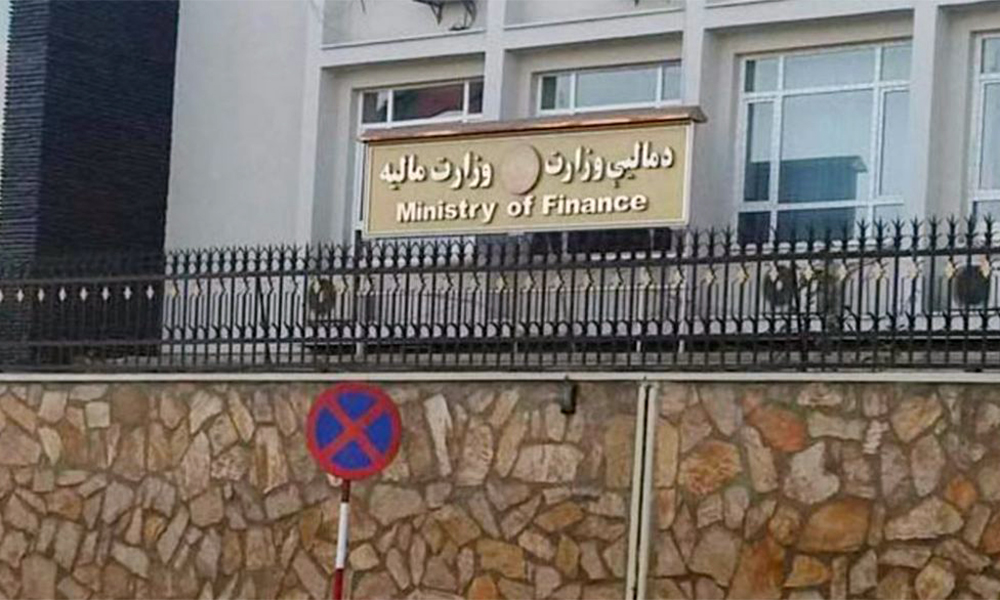
The Finance Ministry of the Islamic Emirate of Afghanistan (IEA) announced Sunday it had collected around 194 billion Afghanis in the last solar year, 1401, which shows an increase of 37 percent compared to the year 1400.
Meraj Mohammad Meraj, deputy director of revenues department of the Ministry of Finance said in a press conference that revenues in the year 1400 was 141.8 billion Afghanis but in 1401, it stood at 194.4 billion Afghanis.
Officials in this ministry also said that the draft budget for 1401 is expected to be approved by the leader of the Islamic Emirate within a week. In the budget of the current fiscal year, 150 development projects have also been included.
Exemption from tax penalties, extension of working hours in customs from 16 to 24 hours, the fight against corruption, electronic revenue collection, installation of digital scales in customs, increase in transit through Afghanistan are among the other achievements officials highlighted.
“Last year, we promised that we would serve the Islamic system and the people. Now we also say that your assets are really spent. There will be no corruption. We will eliminate corruption,” Abdul Mateen Saeed, General Director of Customs of the Ministry of Finance, said.
Ahmad Wali Haqmal, the spokesman of the Ministry of Finance, said: “Last year was a very good year from the financial point of view. The Ministry of Finance with an aim to strengthen the economic pillars of the country, injected 8 to 10 billion Afghanis to the markets every month through salaries etc.”
According to the officials, during the last year, the total value of exports was more than 170 billion Afghanis and imports were more than 599 billion Afghanis. They added that there has been 50 to 70 percent reduction in customs duties on 326 items of basic and food materials.




Business
Tripartite agreement to launch new Russia–Turkmenistan–Afghanistan transit corridor
The agreement is scheduled to be finalized on the sidelines of the Kazan Forum 2026, according to Russian media reports.
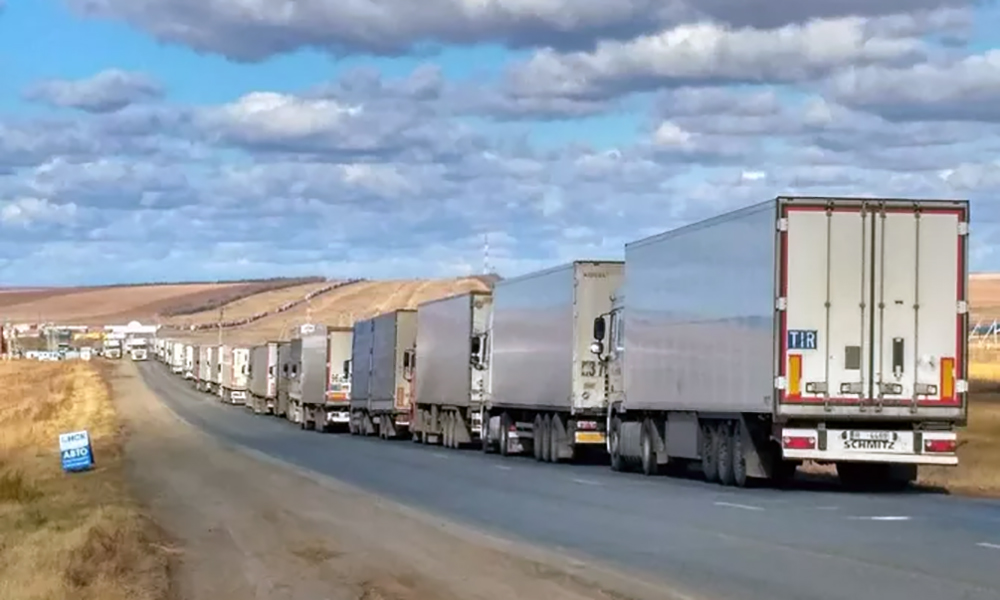
A tripartite agreement to establish a new trade and transit corridor linking Russia’s Republic of Tatarstan, Turkmenistan, and Afghanistan is expected to be signed in May, opening a fresh route for the movement of goods between Russia and Afghanistan.
The agreement is scheduled to be finalized on the sidelines of the Kazan Forum 2026, according to Russian media reports. The proposed corridor is seen as a strategic alternative to existing routes, particularly the North–South Corridor, which has faced disruptions due to ongoing tensions in Iran.
Rustam Khabibullin, head of the Russian Business Center in Afghanistan, said the new route could significantly streamline cargo transport between Russia and Afghanistan. He added that the corridor may also attract companies from Europe and Asia seeking more stable and reliable logistics options.
Afghanistan is considered a key supporter of the initiative. Once operational, the corridor is expected to facilitate direct shipments from Tatarstan to Afghanistan, reducing reliance on indirect transit routes through Central Asia.
The development has been welcomed by members of Afghanistan’s private sector, who say that expanding transit infrastructure and logistics networks could boost trade and contribute to economic growth.
In recent years, Afghanistan has emerged as an important market for Tatarstan’s halal products. According to reports, Afghan imports of halal goods from Tatarstan reached $51.7 million in 2025, marking a notable increase compared to the previous year. However, much of this trade has so far been conducted indirectly via third countries.
The planned corridor is expected to enhance direct trade links and improve efficiency in regional commerce.
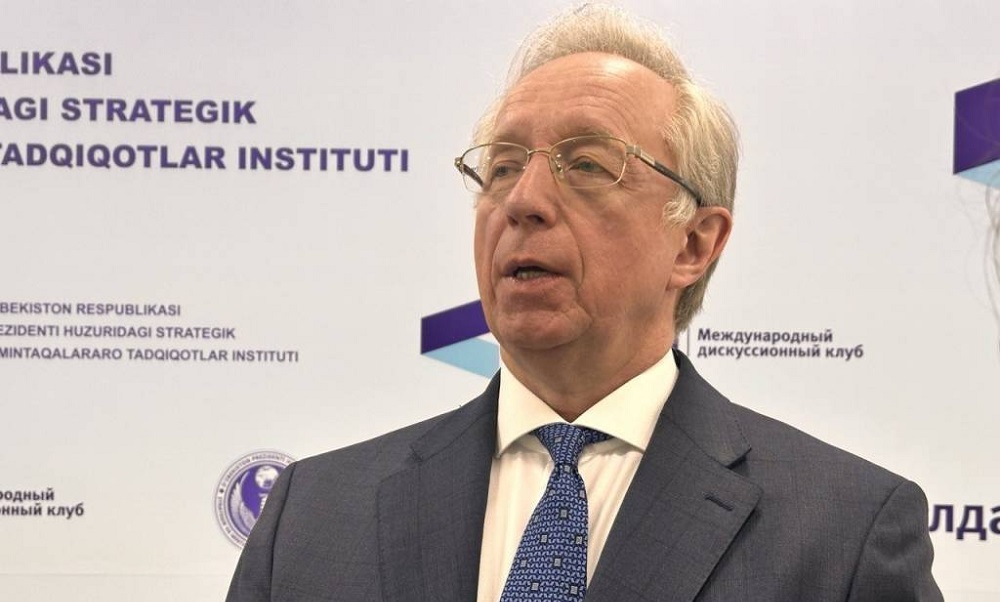
A senior Russian diplomat has praised Uzbekistan’s efforts to boost regional trade and economic cooperation, highlighting the strategic importance of a new international trade hub near the Afghan border.
Mikhail Galuzin, Deputy Minister of Foreign Affairs of the Russia, made the remarks to media representative covering an international conference titled “Uzbekistan – Russia: Strategic Partnership in the Eurasian Space,” at the Termez International Trade Center in southern Uzbekistan.
Speaking to media representatives, Galuzin commended the development of the Surkhandarya region, describing it as a “unique oasis” with significant economic potential. He said the Termez International Trade Center—located in a free trade zone—represents a major step forward in strengthening trade links, particularly between Uzbekistan and Afghanistan.
“The project deserves the highest praise,” Galuzin said, adding that the center is expected to play a key role in expanding trade and economic ties and advancing broader strategic partnerships across the Eurasian region.
The trade center was established under a resolution by Shavkat Mirziyoyev and is designed to facilitate commerce by providing a platform for Uzbek and Afghan entrepreneurs to showcase goods and investment projects. According to Galuzin, such initiatives are already contributing to increased trade turnover, with Afghanistan currently ranking among Uzbekistan’s top trading partners.
He also noted growing interest from Russian regions and businesses in participating in the project, calling for further expansion of cooperation among the countries involved.
Galuzin emphasized that platforms like the Termez trade hub and international conferences play a vital role in building direct economic connections, which in turn help create stable supply chains and open new opportunities for trade and investment across the region.
Business
Afghanistan opens doors to agribusiness investments amid rising opportunities
They urge MAIL to introduce incentive packages that would make the sector more attractive for investors.
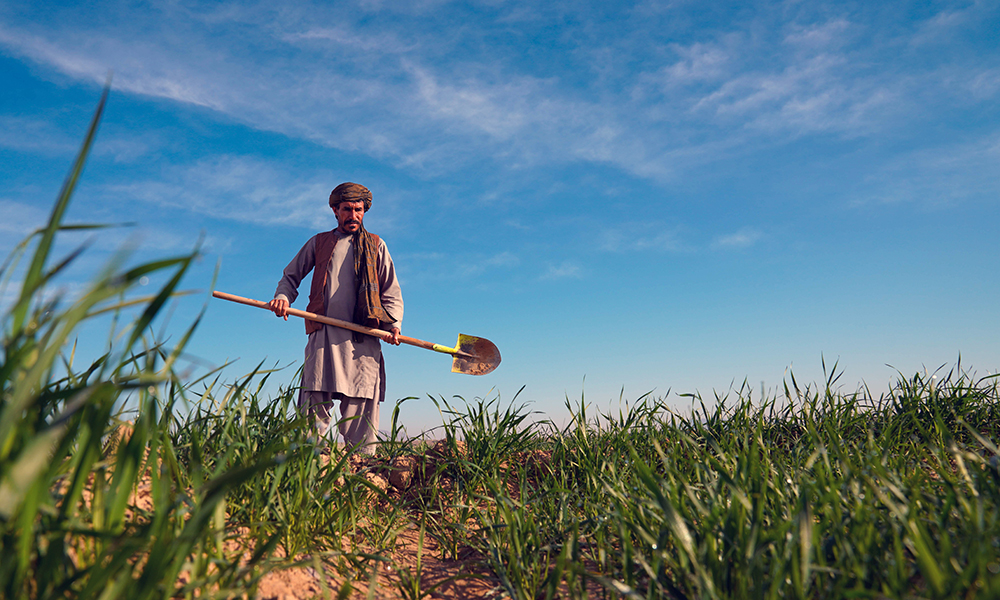
Officials from the Ministry of Agriculture, Irrigation, and Livestock (MAIL) have reiterated their commitment to expanding investment opportunities in Afghanistan’s agricultural sector, aiming to attract both domestic and international investors.
According to Sher Mohammad Khatami, spokesperson for the ministry, technical cooperation and land access are key priorities for supporting investors. “Around 72,000 jeribs of land have been allocated for agricultural and livestock projects across the country,” Khatami said.
The ministry highlights Afghanistan’s vast potential in agriculture, livestock, horticulture, irrigation, product packaging, storage, transport, and cold chain facilities. Private sector representatives note that with the proper technical support and land allocation, local investors would be more willing to participate in the sector.
However, some private investors have voiced concerns over the ministry’s performance, saying that despite Afghanistan’s high agricultural capacity, sufficient steps have not been taken to standardize products or achieve self-sufficiency.
Economic experts stress that well-targeted development of agriculture and livestock could unlock multi-billion-dollar investment opportunities.
They urge MAIL to introduce incentive packages that would make the sector more attractive for investors.


5.8-magnitude earthquake shakes parts of Afghanistan

Tawsia: This week’s key economic developments in Afghanistan discussed

Iran claims it shot down US F-35 jet

Tripartite agreement to launch new Russia–Turkmenistan–Afghanistan transit corridor

China says Afghanistan–Pakistan peace talks show progress

Prominent Muslim scholar issues fatwa calling for Afghanistan-Pakistan ceasefire

IEA Supreme Leader issues Eid-ul-Fitr message urging unity and support for Islamic system

14 Pakistani soldiers killed after military post falls along Durand line: MoD

Afghanistan steps in to replace Iran in supplying fruits and vegetables to Russia

Afghan airstrikes target Pakistani military sites in retaliation for air attacks
Tawsia: This week’s key economic developments in Afghanistan discussed

Tahawol: Start of talks between Kabul-Islamabad in China discussed

Saar: Ongoing US and Israeli attacks on Iran discussed

Tahawol: Ongoing US–Israeli war with Iran discussed

Saar: Afghanistan-Pakistan talks in China discussed
-
 Latest News5 days ago
TAPI gas pipeline advances 25 km in Afghanistan
-
 Business5 days ago
Afghanistan opens doors to agribusiness investments amid rising opportunities
-
 Latest News3 days ago
Baradar approves 17 projects worth over one billion AFN
-
 Latest News5 days ago
Afghan diaspora protests in London and Oslo over Pakistan strikes
-
 Latest News5 days ago
Pakistan shelling in Afghanistan’s Kunar leaves civilian casualties, says IEA
-
 Business4 days ago
Russia backs Uzbekistan–Afghanistan trade hub, praises regional economic cooperation
-
 Sport4 days ago
ATN secures broadcast rights for inaugural Afghanistan Wrestling Premier League
-

 International Sports5 days ago
Amnesty International raises alarm over deportations, protests ahead of FIFA World Cup