
Latest News
Govt says US forces spared from attacks, but Afghans paying the price

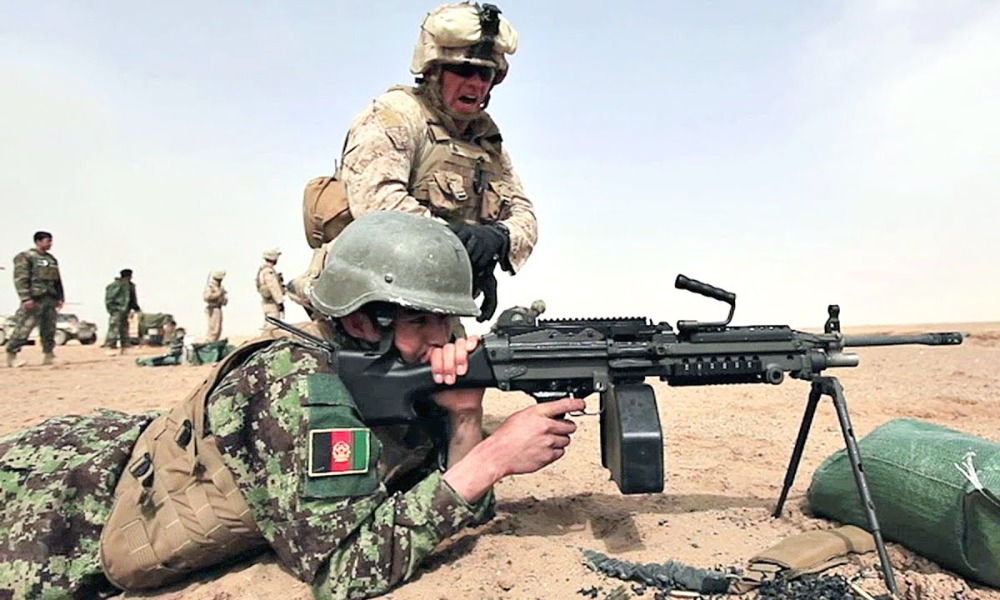
The deputy spokesman for Afghan President Ashraf Ghani said on Sunday that the reason why the US has not suffered casualties among its forces in the past 10 months is because the foreign forces are no longer fighting in Afghanistan.
Reacting to US Secretary of State Mike Pompeo’s earlier statement about the Taliban not targeting American soldiers in Afghanistan in the past year, Meenapal said this was not because of the US-Taliban deal as Pompeo stated but because the US was no longer actively involved in the war on the ground.
Meenapal said the casualties are being sustained by the Afghan security forces and that the Taliban is now at war with the Afghan people and with the country’s own security forces.
On Sunday morning Pompeo put the lack of casualties among US troops down to the Taliban adhering to the Doha deal signed in February.
In a series of tweets Pompeo said: “Our mission in Afghanistan is to eliminate Al-Qaeda and threats to the American homeland. Don’t need 10s of 1,000s of U.S. troops on the ground to do that. We have partners: brave Afghans, NATO forces. We also have the ability to project power from afar”.
He said no US servicemen had been killed in Afghanistan in almost a year, and Afghans are finally discussing peace and reconciliation among themselves.
“Logged a lot of air miles to Qatar and Afghanistan and back for talks,” he said.
Meshrano Jirga head Fazl Hadi Muslimyar meanwhile noted his dismay at the high levels of violence being meted out by insurgents against the Afghan people.
Sarcastically he said: “I want to congratulate the Taliban that no Americans have been killed in the past year, but dozens of Afghan soldiers have been killed.”
The Taliban has not commented on government’s reaction to Pompeo’s remarks.
This comes just two days ahead of the resumption of intra-Afghan peace talks in the Qatari capital, Doha.
It also comes amid a serious spike in targeted attacks and attempted assassinations of public figures including journalists, civil society activists and government employees.
However, no group has yet to take responsibility for all these attacks.
Meanwhile, in response to Pompeo’s comments, the Taliban said in a series of tweets Sunday that no attacks against US forces since the Doha deal shows that the Islamic Emirate is fulfilling its obligations as a committed entity.
The Islamic Emirate wants the hoped for peace agreement to be implemented in the same way, the group tweeted.
“We will fulfill the same obligations when we reach an agreement with the internal” actors, the group stated.












Kazakhstan’s Foreign Minister Mukhtar Tileuberdi has called for pragmatic and coordinated international engagement with Afghanistan, saying the country’s long-term stability is closely linked to the security and sustainable development of Central Asia.
Speaking during the general debate of the 81st session of the United Nations General Assembly in New York on Friday, Tileuberdi said humanitarian assistance to Afghanistan remains essential but alone cannot break the cycle of poverty, displacement and dependency.
He said Kazakhstan supports a “pragmatic, coordinated and step-by-step” approach to international engagement with Afghanistan, with the United Nations playing a central role.
Tileuberdi also said Kazakhstan is working with the UN to operationalize the United Nations Regional Centre for the Sustainable Development Goals for Central Asia and Afghanistan in Almaty.
He said the success of the centre should be measured by the results and assistance it delivers to the region.


Abu Muslim Farah defeat Khurasan Faryab 2-0 in ACL season six

Saar: Concerns over Pakistan’s political crisis discussed

Afghanistan Champions League: Omar Zawak Herat beat Toofan Herat 1-0

Blast in Pakistan’s Dera Ismail Khan kills 11, injures 30

Ariana Afghan Airlines increases Kabul-Delhi cargo flights

Saudi energy group signs major Afghanistan deals covering gas exploration and pipeline plans

Trump floats idea of renaming Atlantic or Pacific Ocean

US hits Egyptian bank branches with Iran sanctions as war marks six months

Nepal flood rescue mission enters critical phase as thousands remain missing

Iranian clubs to face Gulf opponents at neutral venues in Asian Champions League Elite
Saar: Concerns over Pakistan’s political crisis discussed

Exclusive interview with Abdul Latif Mansoor, Minister of MRRD

Tawsia: Overview of Afghanistan’s iron mines

Tahawol: Discussion on fresh Pakistani airstrikes on Afghanistan

Saar: Calls for international support for Afghanistan discussed
-

 World5 days ago
CNN, MS NOW and Politico sue Trump, challenging White House ban
-

 Latest News3 days ago
Ariana Afghan Airlines ranks seventh among 45 Central Asian airlines
-

 Latest News5 days ago
UN reiterates call for respect for international law after Kunar airstrikes
-

 Regional4 days ago
US and Iran hold first talks since June after Trump’s ‘annihilation’ threat
-

 Latest News3 days ago
Silk Road highway in Wakhan corridor now reaches the China border
-

 Latest News5 days ago
Afghan Official: Pakistan’s airstrikes will not go unanswered
-
 Regional5 days ago
G7 foreign ministers call on Iran to stop arming Houthis
-

 Regional3 days ago
Iran airlines cancel flights as US sanctions hit