
Latest News
IEA aim to boost Afghan security forces, anti-aircraft capacity: army chief

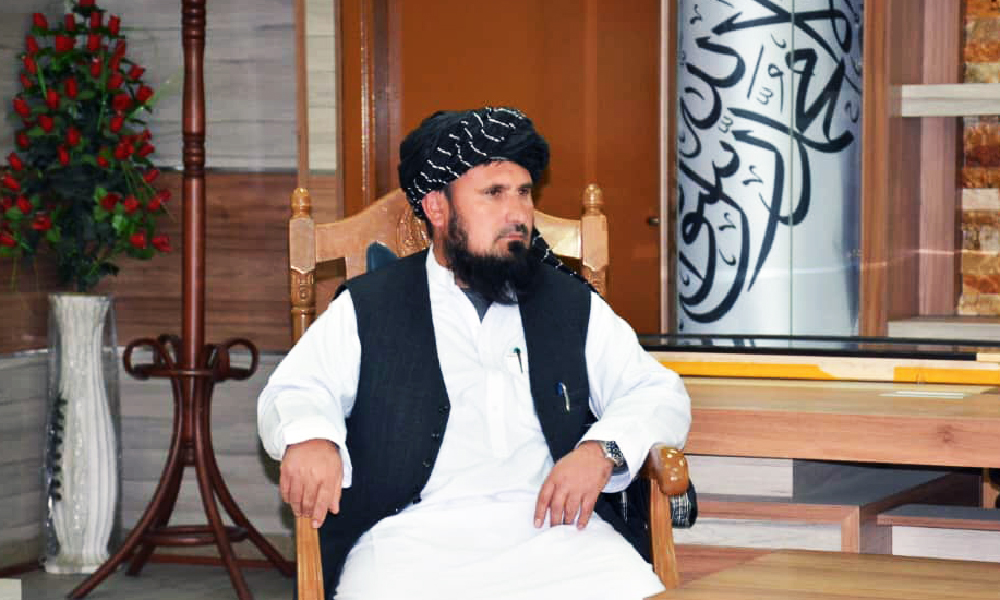
Defence has received the largest share of funds in Afghanistan’s budget as the Islamic Emirate of Afghanistan (IEA) government aims to boost forces by a third and build anti-aircraft missile capacity, the army chief told Reuters in a rare interview to foreign media.
The defence ambitions of the IEA, which took over in 2021, come in the face of strong international criticism of its policies, such as restrictions on work and education for women, that have hampered steps towards diplomatic recognition.
In his remarks on Tuesday, Qari Fasihuddin Fitrat, a commander from the northern region of Badakhshan and the chief of army staff, condemned incursions by foreign drones into Afghan airspace, read the report.
Defence forces now numbering 150,000 are targeted to be increased by 50,000, he said, speaking in his office in the highly fortified defence ministry in Kabul, the capital, although he did not reveal the precise figure of the funds.
“The ministry of defence is the top-ranked in the budget,” he said, adding that it received a significantly higher sum than other ministries, as it was a priority in the budget, which is largely funded by boosted tax and customs revenue.
Since their takeover, the IEA have spent 1-1/2 years building a civilian administration and a national military out of an insurgent force that fought a 20-year war against foreign forces and the previous U.S.-backed Afghan government, Reuters reported.
No foreign nation has formally recognised the government, which is battling economic headwinds following sanctions on the banking sector and the cutoff of all development aid.
Fitrat said a major defence focus was securing Afghan airspace against drones and other incursions.
“Anti-aircraft missiles are the need of countries,” he said, adding that all nations sought developed weapons to ensure the integrity of their territory and airspace, a problem Afghanistan also faced.
“There is no doubt that Afghanistan is trying, and doing its best, to have it.”
But Fitrat declined to elaborate on where authorities were looking to procure anti-aircraft missiles from, Reuters reported.
He also stopped short of naming Pakistan, against which the IEA administration has regularly protested, accusing its neighbour of allowing drones to enter Afghanistan.
“We are doing our best to find a solution for protection of our airspace. We will work on it by using all our capability,” Fitrat added.
“From where we will obtain it is confidential, but we should have it.”
Pakistan’s foreign ministry did not immediately respond to a request for comment, read the report.
Pakistan officials have not confirmed whether its airspace is used for drone access to Afghanistan.
“We have always tried, and will try, to solve the issue using diplomatic ways, and we have done our best to be patient regarding these cases,” Fitrat said, but sounded a note of caution.
“Neighbouring countries should not let our patience be exhausted.”
Ties between the neighbours have occasionally been tense as as Pakistan has accused the Islamic Emirate of Afghanistan (IEA) administration of allowing Afghan territory to be used as a haven for militant groups, Reuters reported.
Among these is the Pakistani Taliban (TTP), which has stepped up attacks in Pakistan in recent months.
The IEA administration denies allowing its territory to be used for attacks on others, however.
There have been border clashes between the forces of both, and analysts say that in the event of conflict escalating, Pakistan’s airforce would give it a strong edge.
Fitrat said former security personnel, who form a significant share of Afghanistan’s forces, were being paid and treated in the same way as IEA fighters.
The comments follow concern voiced by international rights groups and the United Nations that some former members of Afghan security forces members were targeted or killed.
While the IEA have declared a general amnesty for former combatants, saying they would investigate cases of wrongdoing, they have not detailed legal action regarding alleged extrajudicial targeting.












Kazakhstan’s Foreign Minister Mukhtar Tileuberdi has called for pragmatic and coordinated international engagement with Afghanistan, saying the country’s long-term stability is closely linked to the security and sustainable development of Central Asia.
Speaking during the general debate of the 81st session of the United Nations General Assembly in New York on Friday, Tileuberdi said humanitarian assistance to Afghanistan remains essential but alone cannot break the cycle of poverty, displacement and dependency.
He said Kazakhstan supports a “pragmatic, coordinated and step-by-step” approach to international engagement with Afghanistan, with the United Nations playing a central role.
Tileuberdi also said Kazakhstan is working with the UN to operationalize the United Nations Regional Centre for the Sustainable Development Goals for Central Asia and Afghanistan in Almaty.
He said the success of the centre should be measured by the results and assistance it delivers to the region.


Abu Muslim Farah defeat Khurasan Faryab 2-0 in ACL season six

Saar: Concerns over Pakistan’s political crisis discussed

Afghanistan Champions League: Omar Zawak Herat beat Toofan Herat 1-0

Blast in Pakistan’s Dera Ismail Khan kills 11, injures 30

Ariana Afghan Airlines increases Kabul-Delhi cargo flights

Saudi energy group signs major Afghanistan deals covering gas exploration and pipeline plans

Trump floats idea of renaming Atlantic or Pacific Ocean

US hits Egyptian bank branches with Iran sanctions as war marks six months

Nepal flood rescue mission enters critical phase as thousands remain missing

Iranian clubs to face Gulf opponents at neutral venues in Asian Champions League Elite
Saar: Concerns over Pakistan’s political crisis discussed

Exclusive interview with Abdul Latif Mansoor, Minister of MRRD

Tawsia: Overview of Afghanistan’s iron mines

Tahawol: Discussion on fresh Pakistani airstrikes on Afghanistan

Saar: Calls for international support for Afghanistan discussed
-

 World5 days ago
CNN, MS NOW and Politico sue Trump, challenging White House ban
-

 Latest News4 days ago
Ariana Afghan Airlines ranks seventh among 45 Central Asian airlines
-

 Latest News5 days ago
UN reiterates call for respect for international law after Kunar airstrikes
-

 Regional4 days ago
US and Iran hold first talks since June after Trump’s ‘annihilation’ threat
-

 Latest News4 days ago
Silk Road highway in Wakhan corridor now reaches the China border
-

 Regional3 days ago
Iran airlines cancel flights as US sanctions hit
-
 Regional5 days ago
G7 foreign ministers call on Iran to stop arming Houthis
-

 Latest News5 days ago
Afghan Official: Pakistan’s airstrikes will not go unanswered