
Latest News
IEA announces additional appointments to key positions

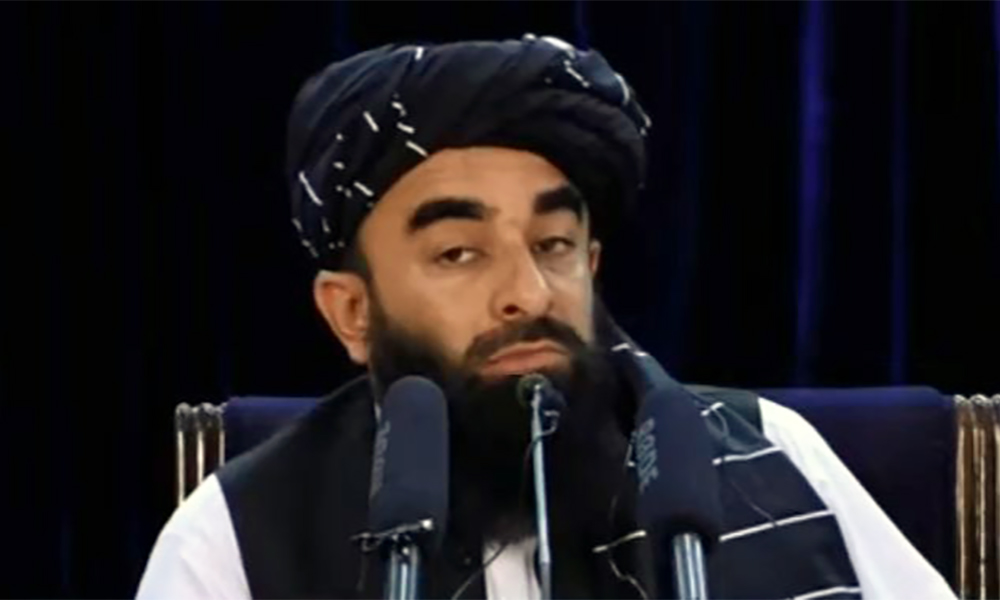
The Islamic Emirate of Afghanistan’s (IEA) deputy minister of culture and information on Tuesday announced the rest of the interim government’s key appointments including cabinet members.
Addressing a press conference in Kabul, Zabihullah Mujahid said expertise in the respective fields had been taken into account in appointing the acting ministers and other officials.
He said in doing this, the ministries will be strengthened and standardized.
Mujahid said that the following appointments have been made in the Ministries by the order of Ameerul Momineen Sheikh Hibatullah Akhundzada, the supreme leader of the IEA:
• Haji Nooruddin Azizi has been appointed as acting Minister of Commerce.
• Haji Mohammad Bashir has been appointed as First Deputy Minister of Commerce and Haji Mohammad Azim Sultanzada as Second Deputy Minister
• Qalandar Ibad as acting Minister of Public Health, Abdul Bari Omar and Mohammad Hassan Gheyasi as his acting deputies
• Sadar Mullah Mohammad Ibrahim has been appointed as the Deputy Security Minister for the Ministry of Interior
• Mullah Abdul Qayyum Zakir acting deputy defence minister
• Engineer Nazar Mohammad Motmaen has been appointed as the acting-head of the National Olympic Committee.
• Engineer Mujeeb-ur-Rehman Omar as the acting Deputy Minister of Power and Energy
• Haji Ghulam Ghaos as the acting Deputy Minister of Counter-Disaster
• Dr. Mohammad Faqir as the acting Head of the Central Statistics Office
• Haji Gul Mohammad as the acting Deputy Minister of Borders
• Gul Zarin Kochi as the second acting Deputy Minister of Borders
• Arsala Khoroti as the acting Deputy Minister of Refugees
• Dr. Lutfullah Khairkhwa as the acting Deputy Minister of Higher Education
• And Engineer Najibullah as the Director of Afghanistan’s Atomic Energy Agency
Mujahid said the government’s planned inauguration ceremony has been canceled as the IEA wants to get ministries and directorates back to work as soon as possible.
Meanwhile, asked by reporters if the cabinet is now inclusive, Mujaid said that representatives of minorities, including Hazaras, have been appointed to official positions.
Citing an example, Mujahid said Mohammad Hassan Gheyasi, the new acting deputy minister for public health is a Hazara.
“Minorities are considered in the cabinet and we are working to make it more inclusive,” Mujahid said.
Mujahid also said that the current cabinet will continue as an interim government for now until the IEA leaders have made their final decision.
On the topic of girls returning to school, Mujahid said: “We are working to complete the procedures so that girls can resume their education.”
On issues involving the health sector, Mujahid said that the visit to Kabul by the World Health Organization’s Director General Tedros Adhanom on Monday had raised hopes that a number of issues in this sector would be addressed and resolved soon.
On the issue of media, Mujahid said: “The media is important and we support the media. There have been some problems in provinces, but these are being addressed.”
In response to a question on the scrapping of the Ministry of Women’s Affairs, he said the interim government needs time to address issues around education and work relating to women and that the IEA first needs to ensure the safety of women and girls.
Discussing a number of other issues, he said the IEA was using all diplomatic channels available to have Afghanistan’s frozen assets released. He also said commercial flights into Kabul will resume as soon as the airport’s main radar system has been repaired.
According to him, the radar system was badly damaged when foreign troops withdrew.
On Daesh (ISIS-K) activities, Mujahid said that the group has no physical presence in any part of the country.
“The Daesh (ISIS) that exists in Iraq and Syria does not exist here. Still, some people who may be our own Afghans have adopted the Daesh mentality, which is a phenomenon that the people do not support,” he said but added the IEA would stop “cowardly” attacks.
This comes after Daesh claimed responsibility for a series of bomb blasts that rocked the city of Jalalabad in eastern Afghanistan over the weekend.




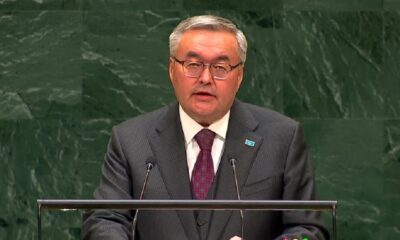




Kazakhstan’s Foreign Minister Mukhtar Tileuberdi has called for pragmatic and coordinated international engagement with Afghanistan, saying the country’s long-term stability is closely linked to the security and sustainable development of Central Asia.
Speaking during the general debate of the 81st session of the United Nations General Assembly in New York on Friday, Tileuberdi said humanitarian assistance to Afghanistan remains essential but alone cannot break the cycle of poverty, displacement and dependency.
He said Kazakhstan supports a “pragmatic, coordinated and step-by-step” approach to international engagement with Afghanistan, with the United Nations playing a central role.
Tileuberdi also said Kazakhstan is working with the UN to operationalize the United Nations Regional Centre for the Sustainable Development Goals for Central Asia and Afghanistan in Almaty.
He said the success of the centre should be measured by the results and assistance it delivers to the region.


Ariana Afghan Airlines increases Kabul-Delhi cargo flights

Khalilzad questions Pakistan’s commitment to Afghan welfare

India, UN envoy discuss Afghanistan’s humanitarian needs

Kazakhstan calls for coordinated international engagement with Afghanistan

Pakistan PM, UN chief discuss Afghanistan amid rising Kabul-Islamabad tensions

Saudi energy group signs major Afghanistan deals covering gas exploration and pipeline plans

Trump floats idea of renaming Atlantic or Pacific Ocean

US hits Egyptian bank branches with Iran sanctions as war marks six months

Nepal flood rescue mission enters critical phase as thousands remain missing

Iranian clubs to face Gulf opponents at neutral venues in Asian Champions League Elite

Exclusive interview with Abdul Latif Mansoor, Minister of MRRD

Tawsia: Overview of Afghanistan’s iron mines

Tahawol: Discussion on fresh Pakistani airstrikes on Afghanistan

Saar: Calls for international support for Afghanistan discussed

Tahawol: Opening of the 81st UN General Assembly Session
-

 World4 days ago
CNN, MS NOW and Politico sue Trump, challenging White House ban
-

 Latest News3 days ago
Ariana Afghan Airlines ranks seventh among 45 Central Asian airlines
-

 Latest News4 days ago
UN reiterates call for respect for international law after Kunar airstrikes
-
 Latest News5 days ago
Khalilzad condemns Pakistan airstrikes, says current strategy is not working
-

 Regional3 days ago
US and Iran hold first talks since June after Trump’s ‘annihilation’ threat
-

 Latest News3 days ago
Silk Road highway in Wakhan corridor now reaches the China border
-

 Latest News4 days ago
Afghan Official: Pakistan’s airstrikes will not go unanswered
-

 Sport4 days ago
Afghan boxing referee heads to China for international festival