
Latest News
Myanmar activists plan new protests after weekend bloodshed

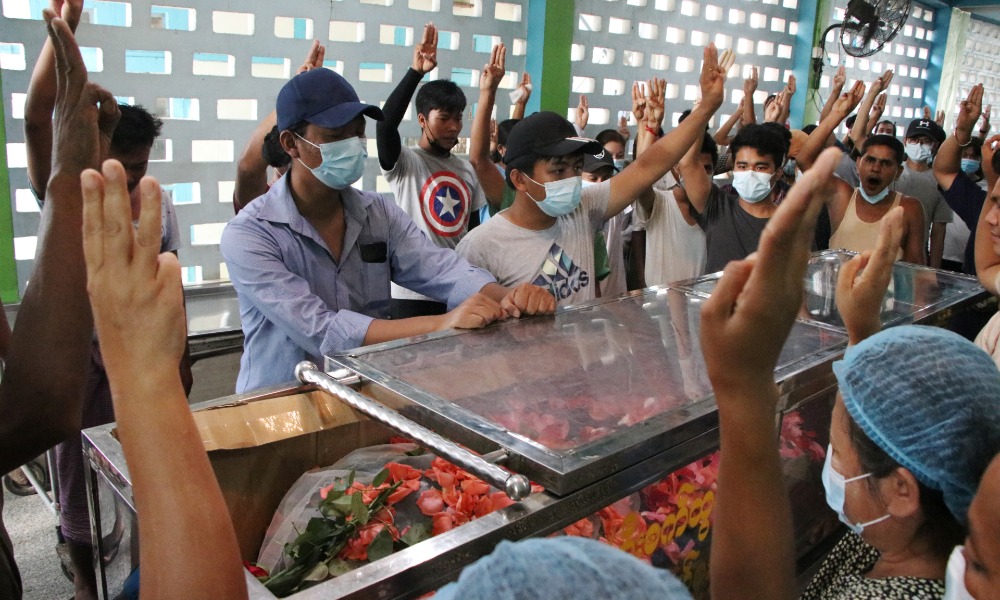
Myanmar activists plan fresh protests on Monday including a call for vehicle convoys to drive through intersections honking horns with occupants raising three-finger anti-coup salutes despite reports of security forces killing more people at the weekend.
Media reported dawn protests in at least two parts of the commercial hub of Yangon on Monday after hundreds of people in Mandalay, including many medical staff in white coats, marched before sunrise on Sunday.
The Southeast Asian nation has been locked in crisis since the elected government led by Nobel peace laureate Aung San Suu Kyi on Feb. 1 was overthrown by the military, bringing an end to 10 years of tentative democratic reform.
One man was shot dead and several were wounded when police opened fire on a group setting up a barricade in the central town of Monywa, a doctor there said on Sunday as a community group issued a call on Facebook for blood donors.
Later, one person was killed and another wounded in the country’s second city of Mandalay when security forces opened fire after residents tried to resist efforts by the military to set up a base in a school, the Myanmar Now news portal reported.
At least 250 people have now been killed since the coup, according to figures from the Assistance Association for Political Prisoners activist group.
The violence has forced many citizens to think up novel ways to express their rejection of a return to army rule.
To mark the one-month anniversary of the launch of one of the biggest demonstrations since the coup and a national strike, activists in posts on social media urged people on Monday to join a car convoy protest.
Protesters across the country staged candle-lit, nighttime protests over the weekend.
Protesters in some places were joined by Buddhist monks holding candles at the weekend and others came out later on Sunday, including in Monywa, where police opened fire.
“Sniper, sniper,” people can be heard shouting in a video clip shortly after the man was shot in the head and more shots rang out.
The spokesman for the junta was not available for comment but has previously said security forces have used force only when necessary.
State media said on Sunday that men on motorbikes attacked a member of the security forces who later died. The military said two policemen were killed in earlier protests.
SOUTHEAST ASIAN DIPLOMATIC PUSH
The junta says a Nov. 8 election won by Suu Kyi’s party was fraudulent, an accusation rejected by the electoral commission. Military leaders have promised a new election but have not set a date.
Western countries have repeatedly condemned the coup and the violence. Asian neighbors, who have for years avoided criticizing each other, have also begun speaking out.
In a sign of a new diplomatic push in Southeast Asia, Singapore Foreign Minister Vivian Balakrishnan will visit Brunei Darussalam on Monday before going to Malaysia and Indonesia.
The trip comes as Indonesia and Malaysia seek an urgent high-level meeting of Southeast Asia’s regional grouping, of which Myanmar is a member, on the crisis.
Brunei is currently chair of the 10-member Association of Southeast Asian Nations (ASEAN). A meeting of ASEAN foreign ministers on March 2 failed to make a breakthrough.
The military, which sees itself as the sole guardian of national unity and ruled for nearly 50 years after a 1962 coup, has shown no sign of even considering back-tracking on its seizure of power.
Coup leader General Min Aung Hlaing visited the Coco islands, one of Myanmar’s most strategically important outposts, 400 km (250 miles) south of Yangon, on Saturday and reminded members of the armed force there that their main duty was to defend the country against external threats.
Suu Kyi, 75, faces accusations of bribery and other crimes that could see her banned from politics and jailed if convicted. Her lawyer says the charges are trumped up.
Australian media reported that two Australian business consultants were detained as they tried to leave Myanmar, but it was not clear why. An Australian foreign ministry spokesperson said it was providing consular assistance but declined to comment further for privacy reasons.









Afghanistan’s Ministry of Defense says a Pakistani military post near Spin Boldak was targeted and destroyed after Pakistani forces opened fire toward Afghanistan.
Ministry spokesperson Enayatullah Khwarazmi said in a post on X that Afghan forces suffered no casualties or damage in the clash.
Khwarazmi also rejected claims made by the Pakistani side about the incident, describing them as “propaganda.”
Latest News
Mujahid: Pakistan attacking Afghanistan to evade Mecca Pact responsibilities
He warned that the Islamic Emirate would give an “appropriate response” to what he called the Pakistani military regime’s “bullying.”
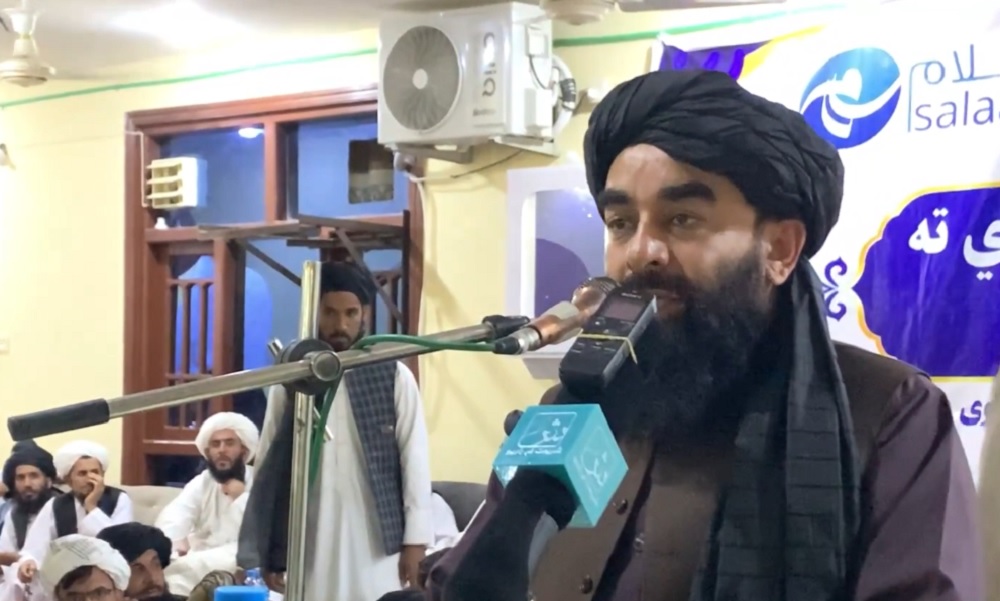
Islamic Emirate spokesperson Zabihullah Mujahid has accused Pakistan of carrying out attacks on Afghanistan to divert attention from its domestic problems and to evade responsibilities under the “Mecca Pact.”
Speaking at a religious seminary in Kandahar, Mujahid said Pakistan was facing political and economic challenges at home and was using attacks on Afghanistan to shift public attention away from protests and its internal problems.
“Pakistan, by violating the territory of its neighboring Islamic country, wants to divert attention from its failures,” he said.
Mujahid also criticized Pakistan’s political situation, claiming that political space had been restricted and that freedoms guaranteed under the country’s laws were not being allowed.
He said Pakistan’s economic problems had also increased significantly and accused the country of seeking to distract the public from those problems by engaging in conflict with Afghanistan.
Mujahid further accused Pakistan’s military leadership of putting the Pakistani people at risk through what he described as its “false position.”
He warned that the Islamic Emirate would give an “appropriate response” to what he called the Pakistani military regime’s “bullying.”
His remarks followed Pakistani airstrikes on Kandahar, Paktia and Khost provinces on Thursday, which Afghan authorities said killed four civilians.
The strikes came three days after attacks on Kunar and Paktika provinces, in which Afghan authorities said three civilians were killed.
Latest News
Kabul rejects U.S. claim that meth seized in Pakistan was of Afghan origin
Balkhi said the Islamic Emirate of Afghanistan (IEA) has imposed an absolute ban on the production, trafficking and use of all types of narcotics in Afghanistan.
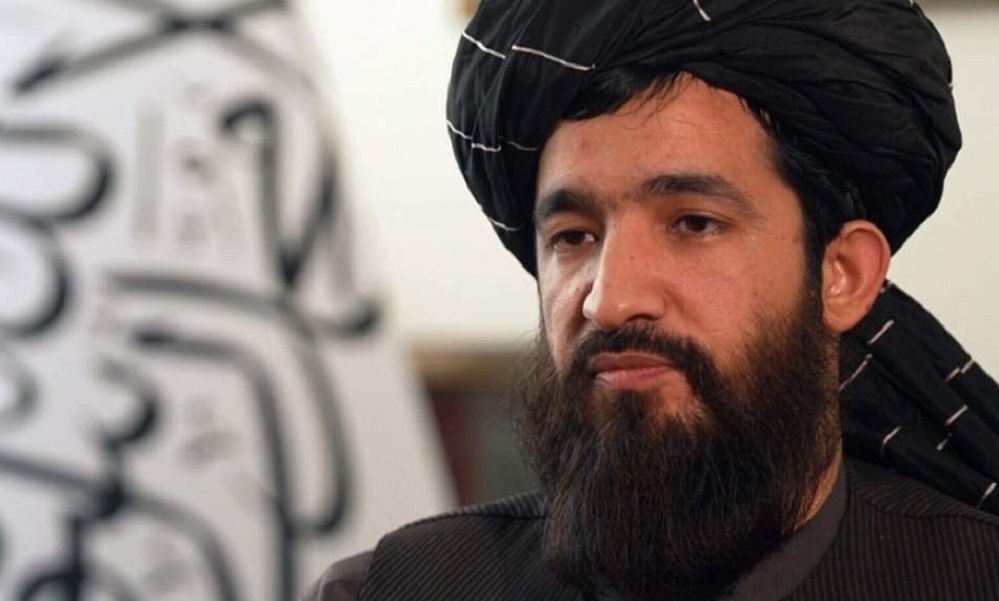
Afghanistan’s Foreign Ministry spokesperson Abdul Qahar Balkhi has rejected a U.S. claim that 463 kilograms of synthetic drugs seized in Pakistan were of Afghan origin, calling the attribution “unfounded and politically motivated.”
Balkhi said the U.S. Embassy in Islamabad should investigate the origin of the seized drugs in Pakistan rather than attributing them to Afghanistan.
“The attribution by the U.S. Embassy in Islamabad of the synthetic drugs bound for Sri Lanka and intercepted in Pakistan through joint U.S.-Pakistani efforts as ‘Afghan-origin’ is an unfounded and politically motivated allegation,” Balkhi said.
He said the Islamic Emirate of Afghanistan (IEA) has imposed an absolute ban on the production, trafficking and use of all types of narcotics in Afghanistan.
Balkhi also claimed that following the ban in Afghanistan, the cultivation, production and trafficking of narcotics have increased “on the other side of the Durand Line.”
He further argued that Afghanistan does not have the capacity to produce synthetic drugs and said crossing points along the Durand Line have been completely closed to all movement for nearly a year.
His remarks came after the U.S. Embassy in Islamabad said U.S. and Pakistani anti-narcotics authorities had seized 463 kilograms of crystal methamphetamine worth an estimated $21 million and bound for Sri Lanka.
The embassy said the operation led to multiple arrests and highlighted ongoing U.S. cooperation and training with Pakistani authorities to disrupt international drug-trafficking networks.


Exclusive interview with Abdul Latif Mansoor, Minister of MRRD

Sorkh Poshan Khafi rout Istiqlal Kabul 6-0 in ACL season six

Tawsia: Overview of Afghanistan’s iron mines

Afghanistan Champions League: Arman FC and Aino Mina play out goalless draw

Afghanistan says Pakistani military post destroyed near Spin Boldak

Saudi energy group signs major Afghanistan deals covering gas exploration and pipeline plans

ATN secures exclusive rights to broadcast T20I series in India across Afghanistan

Trump floats idea of renaming Atlantic or Pacific Ocean

US hits Egyptian bank branches with Iran sanctions as war marks six months

Nepal flood rescue mission enters critical phase as thousands remain missing
Exclusive interview with Abdul Latif Mansoor, Minister of MRRD
Tawsia: Overview of Afghanistan’s iron mines

Tahawol: Discussion on fresh Pakistani airstrikes on Afghanistan

Saar: Calls for international support for Afghanistan discussed

Tahawol: Opening of the 81st UN General Assembly Session
-

 Sport5 days ago
Afghanistan to face Japan and Nepal in Asian Games cricket group stage
-
 Regional5 days ago
Iran and US trade threats after Houthi attacks escalate regional conflict
-

 World4 days ago
CNN, MS NOW and Politico sue Trump, challenging White House ban
-

 Health5 days ago
Four-day polio vaccination campaign begins across Afghanistan
-

 Latest News4 days ago
UN reiterates call for respect for international law after Kunar airstrikes
-
 Latest News4 days ago
Khalilzad condemns Pakistan airstrikes, says current strategy is not working
-

 Latest News2 days ago
Ariana Afghan Airlines ranks seventh among 45 Central Asian airlines
-

 Regional3 days ago
US and Iran hold first talks since June after Trump’s ‘annihilation’ threat