
Latest News
Pakistan to continue supporting Afghanistan amid growing humanitarian crisis

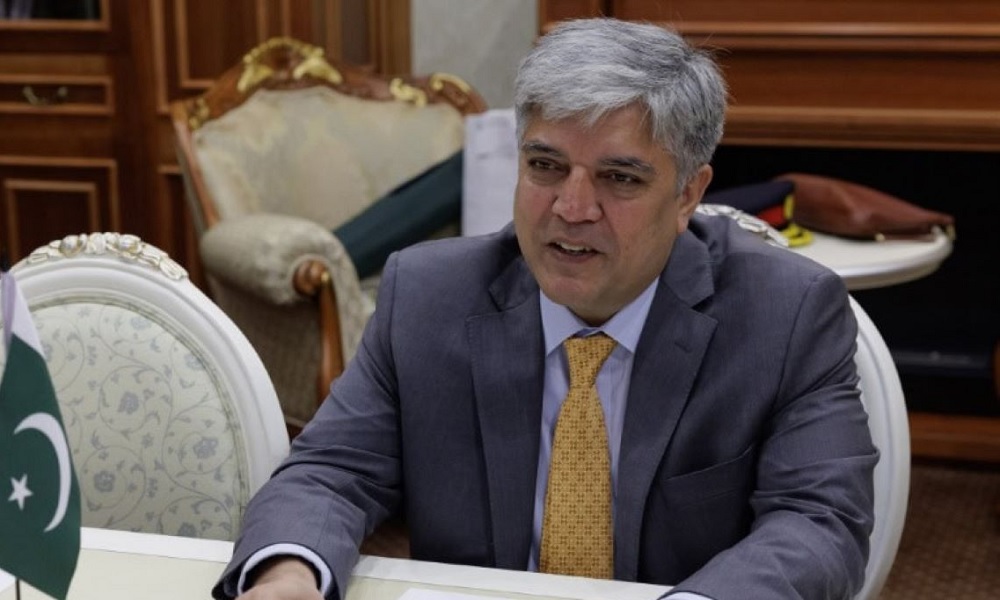
Pakistan on Sunday said it will continue to support all efforts aimed at addressing the humanitarian situation in Afghanistan, and the issue of lasting peace and stability in the country.
In a statement issued by Pakistan’s Foreign Office, spokesperson Shafqat Ali Khan thanked Jan Egeland, Secretary General of the Norwegian Refugee Council (NRC), for drawing attention to the humanitarian predicament of Afghanistan.
Egeland earlier warned that the humanitarian crisis in Afghanistan is being overlooked by the international community, with 22 million people in need of aid.
Speaking during a visit to Afghanistan, Egeland highlighted the dire situation faced by Afghan families, particularly women.
“Here in Herat, I met women who had been deported without their husbands back to deep poverty and hopelessness,” he said.
“Thank you @NRC_Egeland for drawing attention to the humanitarian predicament of Afghanistan. It would have been more appropriate had the world not abandoned the Afghan people after the war and if conducive socioeconomic conditions had been created inside the country for the Afghan people to prosper,” said FO spokesperson Shafqat Ali Khan.
He said: “Pakistan has generously hosted over four million Afghan refugees. Those sent back were residing illegally without any documentation or proof of residence. Progress on the cases of thousands of Afghan nationals who were promised resettlement in western countries remains painfully slow.
UN Humanitarian aid to Afghanistan remains critically underfunded with only 37.5% of the required funds secured last year.”
He said Pakistan and Afghanistan were tied together by historical, religious and cultural links that transcend time.
“Pakistan has been and will continue to support all efforts aimed at addressing the humanitarian situation in Afghanistan as well as for lasting peace and stability in the country,” he added.
Egeland highlights dire situation of return refugees
Jan Egeland, Secretary General of the Norwegian Refugee Council (NRC), on Monday highlighted the dire situation faced by Afghan refugees.
His warning came after his visit to the Islam Qala border crossing between Afghanistan and Iran.
Egeland revealed that significant numbers of Afghans are being expelled daily. “Iran wants to deport 2 million, and Pakistan has already sent back 800,000,” he stated.
These mass deportations come at a time when Afghanistan is grappling with severe humanitarian challenges, exacerbated by reduced international support.
According to Egeland, western donors have failed to uphold their commitments to Afghan girls and the broader population, slashing critical aid programs that were once lifelines for millions.
The Secretary General criticized the international community for neglecting its promises and leaving vulnerable Afghans to face worsening conditions.
The return of such large numbers of people is straining Afghanistan’s fragile infrastructure and economy, which remains in crisis following the IEA’s takeover in 2021.
NRC and other humanitarian organizations are calling for renewed international focus and resources to address the escalating needs of displaced Afghans and the communities struggling to absorb them.
As deportations continue and aid dwindles, the situation underscores a growing humanitarian crisis at Afghanistan’s borders, with countless families left to face an uncertain future.






Football fans across Afghanistan can watch Tottenham Hotspur take on Charlton Athletic live on Ariana Television Network (ATN) tonight, Wednesday, August 26, with coverage beginning at 23:15 Kabul time.
The two London clubs meet in the second round of the EFL Cup, with Tottenham looking to progress while Charlton will aim to produce an upset against their Premier League opponents.
Tottenham enter the match as favourites on paper, with their greater top-flight experience expected to make them the stronger side. However, cup football can produce surprises, and Charlton will be looking to take advantage of any opportunity at their disposal.
The match provides Tottenham with another chance to build momentum early in the season, while Charlton will see the tie as an opportunity to test themselves against one of England’s biggest clubs.
The EFL Cup remains an important route to silverware for clubs across the English football pyramid, with teams aiming to advance through each round toward the final at Wembley.
Afghanistan fans can watch Tottenham Hotspur vs Charlton Athletic live tonight on Ariana Television, from 23:15 Kabul time.
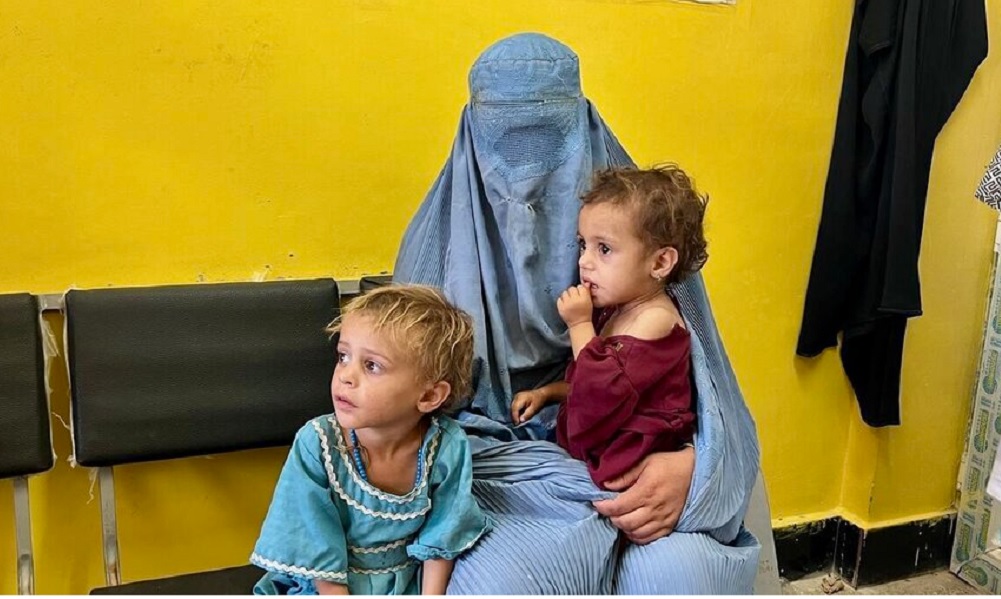
The United Nations has warned that around one million children in Afghanistan are suffering from life-threatening severe acute malnutrition and could die without urgent treatment.
UNICEF said on Tuesday that about 3.7 million children across Afghanistan are suffering from wasting, a condition caused by acute malnutrition.
Tajudeen Oyewale, UNICEF’s representative in Afghanistan, said around one million of these children are suffering from severe acute malnutrition, which is considered the most dangerous form of acute hunger.
“If there is no treatment and we are not able to act fast, that one million number are at risk of dying,” Oyewale said during a media briefing in Geneva, speaking from Kabul.
He said the nutrition crisis is worsening across the country, with more than 500,000 children requiring hospital care so far this year for moderate and severe wasting.
According to UNICEF, nearly 40 percent of children admitted to hospitals with severe wasting and medical complications are babies younger than six months. Children under the age of two account for more than 80 percent of severe acute malnutrition cases.
Oyewale said malnutrition is playing a major role in the increasing number of deaths among very young children in Afghanistan.
The situation has also placed growing pressure on hospitals. In July last year, around 6,000 severe malnutrition cases were recorded, while the number rose by about one-third to more than 8,000 cases by July this year.
“In parts of southern Afghanistan, some hospitals are now seeing three or four severely malnourished children for every available bed,” Oyewale said.


Tottenham face Charlton as ATN brings live EFL Cup action to Afghan fans

Trump administration issues pause on visa appointments for applicants worldwide

UNICEF warns one million Afghan children at risk of death from malnutrition

US spy chief visits Russia for meetings, media reports

Bagrami, Chahar Asyab set to become part of Kabul city

Pakistan’s governance system has ‘collapsed’: Mohsin Naqvi

Afghanistan exports first stone shipment to US in $100,000 trade milestone

AFC confirms clubs for 2026/27 competitions; draw set for August 18

Only two days to go before Afghanistan and Ireland begin ODI series

Four mediators struggle to secure lasting Pakistan-Afghanistan ceasefire

Tahawol: Aisha Wahab’s emphasis on US ties with IEA

Saar: Guterres’s concern regarding global conflicts discussed

Saar: Afghanistan’s uncertain future in SCO

Tahawol: IEA seeking Afghanistan seat at UN

Saar: U.S. sanctions against Iran
-
 Latest News3 days ago
Four mediators struggle to secure lasting Pakistan-Afghanistan ceasefire
-

 Latest News4 days ago
Syria and Saudi Arabia condemn Kabul bombing, express solidarity with Afghanistan
-

 Latest News4 days ago
US judge strikes down Trump visa suspension for 75 countries, including Afghanistan
-
 Business2 days ago
Afghanistan’s trade diversification challenges Pakistan
-

 Sport4 days ago
Afghanistan-India T20I series could see major schedule change
-
 Latest News4 days ago
Achakzai urges Pakistan to end hostility towards Afghanistan
-

 Latest News3 days ago
AfghanEvac warns US court ruling does not reopen door for Afghans
-

 Sport5 days ago
Abaseen Defenders clinch Khan Hospital Kabul Premier League Season 4 title