
Latest News
Preserving, Understanding Importance of Heritage Can Help Shape Peace

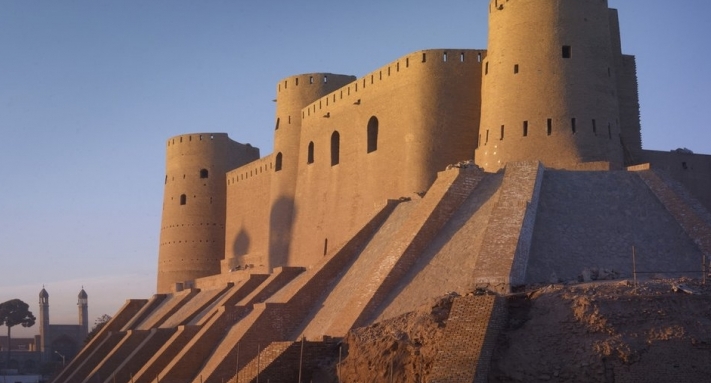
 At the joint invitation of the President of the French Republic and His Highness the Crown Prince of Abu Dhabi, an international Summit was held on December 2nd and 3rd, in coordination with UNESCO, for the protection of cultural heritage at risk in conflict areas.
Afghanistan featured prominently in this Summit, firstly because of the richness of its heritage and secondly because of the frequent attacks that have jeopardized it over the last decades.
The most recent destructions which have been perpetrated on cultural heritage by terrorist groups in Syria, Iraq or Mali highlighted to the world the importance of preserving the historical heritage for each country, and beyond for the whole of humanity.
As a matter of fact, building and keeping every nation’s unity implies the knowledge of its own history, and thus respecting and studying the heritage bequeathed by the generations that lived for thousands of years until our modern times, from archeological remains to contemporary audiovisual and digital archives.
This endeavor does not only concern the intellectual elites for the national historic heritage belongs to every citizen, even the most deprived or the less educated.
Heritage is indeed a constituent part of each citizen’s identity and helps shaping his cultural future. Preserving heritage and understanding its importance can also help shaping peace and understanding between the various sections of a Nation.
For so many years of occupation, civil war and terrorism, Afghanistan has suffered massive attacks on its heritage, be it the treasures of the Kabul Museum, the Buddhas of Bâmiyân, the Herat Citadel and many other pre-Islamic or Islamic historical sites or treasures, intentionally destroyed due to ignorance or plundered by greed.
As has Afghanistan also witnessed outstanding acts of conspicuous courage and dedication by institutions or simple citizens to save what could be saved.
Sharing Afghanistan’s experience with other Nations in Abu Dhabi was therefore particularly important, as is the restoration of historic buildings, in particular through the cooperation with the Agha Khan Development Network, or most recently the launching by President Ghani of the reconstruction of Darulaman Palace conducted under the leadership of the Minister of Urban Development.
As of today, destructions are no longer just the consequences of wars, such as those experienced by Afghanistan against the British in the 19th century or against the Soviets in the 20th century.
Today, terrorist groups wilfully threaten cultural heritage. They want to destroy it to impose a falsified history or even to erase history of mankind and thus achieve their apocalyptic goals.
But they do not just destroy: using networks of accomplices and traffickers well established in neighboring countries and linked with international art markets, these terror groups sell national treasures piece by piece to finance their terrorist actions, as they sell in bulk the natural resources of the territories over which they gained control.
In Abu Dhabi, on December 2nd and 3rd, the delegations coming from all around the world sought to build a common vision on how to prevent damages to heritage in times of peace, and how to protect sites and works in times of war or instability.
Furthermore, the delegations also sought to build a common vision on how to preserve and rehabilitate the sites and works for the times to come. These discussions included topics such as the involvement of private partners and the mobilization of public opinion.
Two proposals were on the table.
Delegations were invited to consider the establishment of an international fund to organize international solidarity for saving works and sites in danger or restoring them if they have been damaged.
This fund might also support the training of professionals dedicated to conservation and restoration of works and should involve public and private contributors.
Delegations also discussed the setting of an international network of countries offering safe havens for endangered treasures: preventive arrangements should be made for evacuating the threatened works to sheltering countries, as well as conditions for their conservation and protection therein and eventually their return to their homeland country, once situation permits.
France proposed to make available a safe haven in the northern part of our country, within the city of Liévin’s branch of the Louvre Museum. Currently, the French archaeological delegation in Afghanistan (DAFA), is working with Afghan authorities on a project initiated by President Ghani, in order to establish a digital archaeological map of the country.
This will undoubtedly prove as a unique tool in the world which will be essential for the future preservation and protection of the sites that are being mapped.
France wishes to collaborate closely with our Afghan partners for the success of this initiative, and beyond to cooperate as closely for the sake of the protection of Afghan heritage, which is both millennial and contemporary.
To this end, the support of the elected representatives of Afghanistan and the one of the population are essential because all Afghan citizens’ heritage is at stake. The education institutions will also prove crucial to ensure that new generations understand the importance of this endeavor.
François Richier, the current French Ambassador to Afghanistan

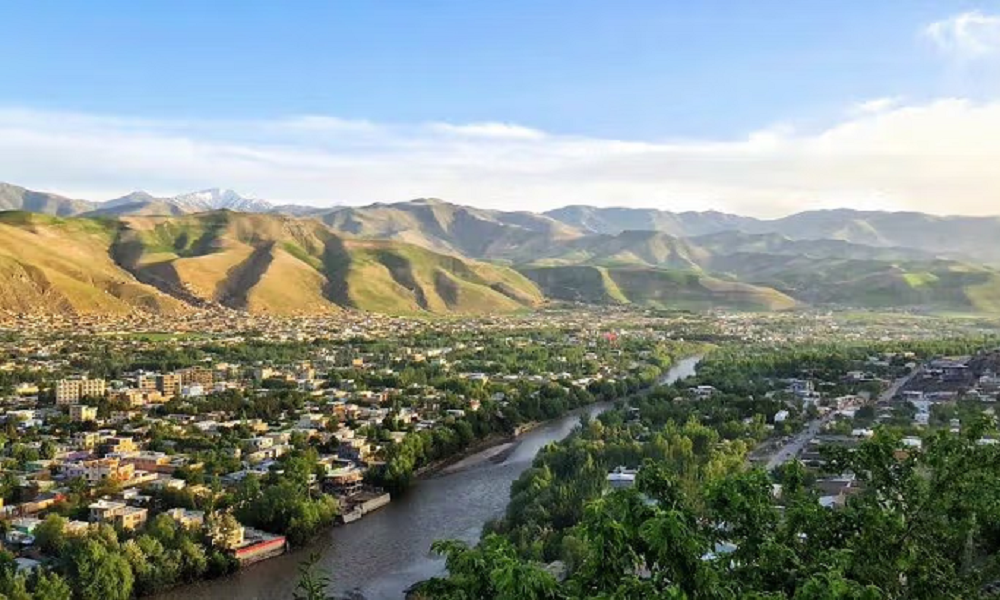
A strong earthquake measuring 5.8 on the Richter scale struck parts of Afghanistan on Friday night, according to the United States Geological Survey (USGS).
The epicenter was reported in Jurm district of Badakhshan province, with a depth of 186 kilometers.
There have been no immediate reports of casualties or damage.
Latest News
China says Afghanistan–Pakistan peace talks show progress
China has positioned itself as a facilitator, aiming to create conditions for dialogue and provide a platform for negotiations.
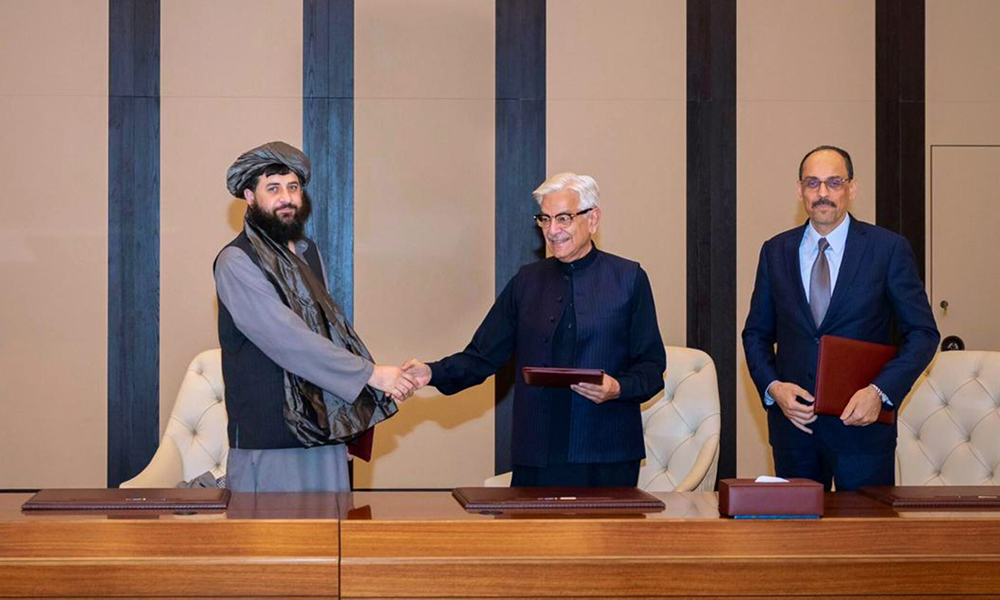
Negotiations between Afghanistan and Pakistan are making steady progress, China said on Friday, as efforts continue to ease tensions in their most serious conflict since the return of the Islamic Emirate of Afghanistan in 2021.
Speaking at a regular press briefing, Chinese foreign ministry spokesperson Mao Ning said both sides had welcomed Beijing’s mediation and were willing to resume dialogue. “This is a positive development,” she said, noting that China remains in close communication with both governments.
Beijing— which shares a border with both countries—has stepped up diplomatic engagement in recent months, including calls with foreign ministers and a visit by a special envoy in March. Previous rounds of talks have reportedly taken place in Urumqi, though officials did not confirm the latest venue.
China has positioned itself as a facilitator, aiming to create conditions for dialogue and provide a platform for negotiations. Mao said further details would be released jointly by the three countries “in due course.”
Clashes between Afghan and Pakistani forces since October have killed dozens on both sides, with Afghan civilians bearing the brunt of the violence. Islamabad has accused Kabul of harboring militants responsible for cross-border attacks—an allegation Afghan authorities deny, calling militancy a domestic issue for Pakistan.
The renewed diplomatic push signals cautious optimism that tensions between the neighbors could ease through sustained dialogue under Chinese mediation.
Latest News
Afghan doctors urged to support Iranian health institutions amid US and Israeli attacks
This appeal aims to emphasize the protection of healthcare facilities and the safeguarding of human health during times of war and crisis.
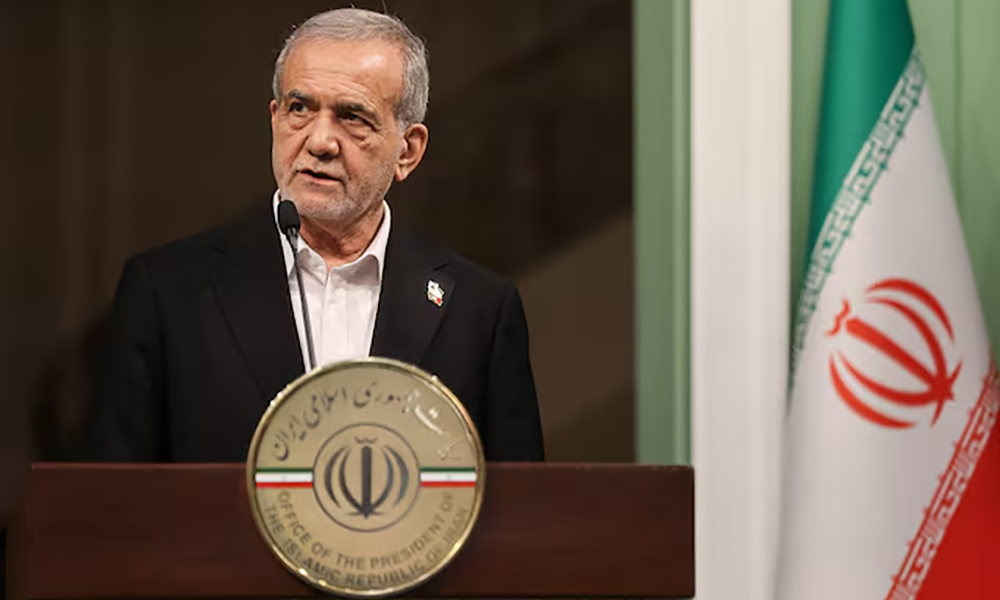
The Embassy of Iran in Afghanistan, citing Masoud Pezeshkian, President of Iran, has called on doctors worldwide to respond to recent attacks on hospitals, pharmaceutical companies, and medical research institutions in Iran by U.S. and Israeli forces.
The embassy specifically urged Afghan doctors and healthcare staff to support Pezeshkian’s appeal and, in coordination with international organizations, raise the voice of the medical community against what has been described as a blatant attack on humanity.
This appeal aims to emphasize the protection of healthcare facilities and the safeguarding of human health during times of war and crisis.
So far, the Islamic Emirate of Afghanistan has not issued any official response regarding this appeal.


5.8-magnitude earthquake shakes parts of Afghanistan

Tawsia: This week’s key economic developments in Afghanistan discussed

Iran claims it shot down US F-35 jet

Tripartite agreement to launch new Russia–Turkmenistan–Afghanistan transit corridor

China says Afghanistan–Pakistan peace talks show progress

Prominent Muslim scholar issues fatwa calling for Afghanistan-Pakistan ceasefire

IEA Supreme Leader issues Eid-ul-Fitr message urging unity and support for Islamic system

14 Pakistani soldiers killed after military post falls along Durand line: MoD

Afghanistan steps in to replace Iran in supplying fruits and vegetables to Russia

Afghan airstrikes target Pakistani military sites in retaliation for air attacks
Tawsia: This week’s key economic developments in Afghanistan discussed

Tahawol: Start of talks between Kabul-Islamabad in China discussed

Saar: Ongoing US and Israeli attacks on Iran discussed

Tahawol: Ongoing US–Israeli war with Iran discussed

Saar: Afghanistan-Pakistan talks in China discussed
-
 Latest News5 days ago
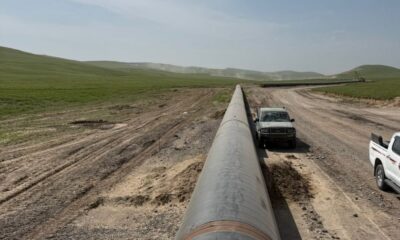
TAPI gas pipeline advances 25 km in Afghanistan
-
 Business5 days ago
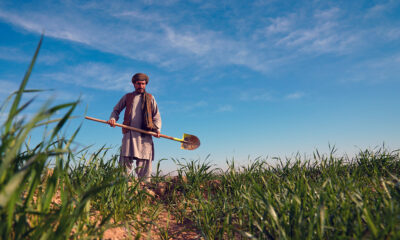
Afghanistan opens doors to agribusiness investments amid rising opportunities
-
 Latest News3 days ago
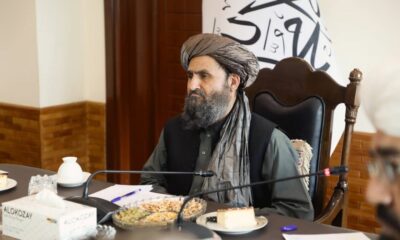
Baradar approves 17 projects worth over one billion AFN
-
 Latest News5 days ago
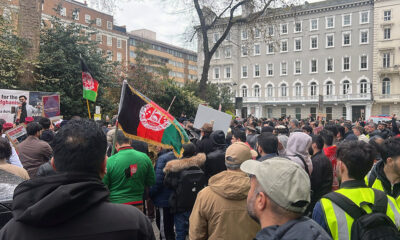
Afghan diaspora protests in London and Oslo over Pakistan strikes
-
 Latest News5 days ago
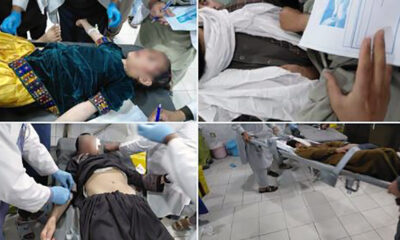
Pakistan shelling in Afghanistan’s Kunar leaves civilian casualties, says IEA
-
 Business4 days ago
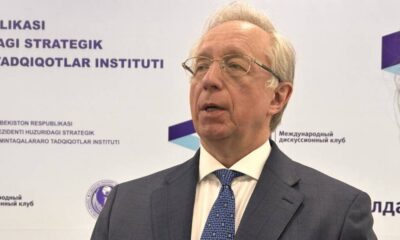
Russia backs Uzbekistan–Afghanistan trade hub, praises regional economic cooperation
-
 Sport4 days ago
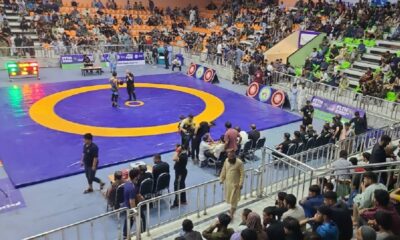
ATN secures broadcast rights for inaugural Afghanistan Wrestling Premier League
-

 International Sports5 days ago
Amnesty International raises alarm over deportations, protests ahead of FIFA World Cup