
Latest News
Trump administration food aid cuts put millions at risk, aid sources say
Assistance to Afghans provided by the State Department’s Bureau of Population, Refugees and Migration also was terminated, five sources said.

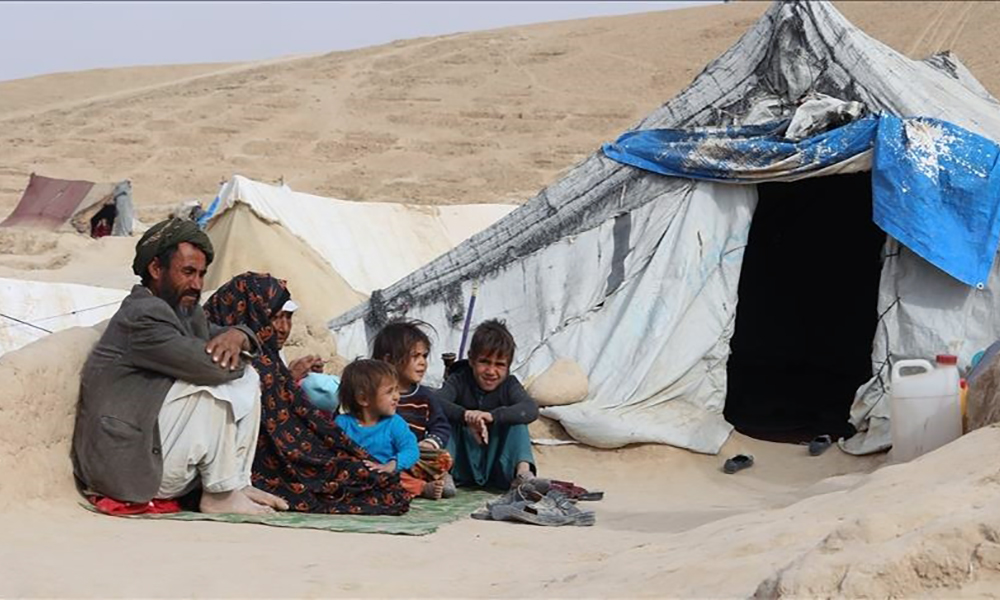
U.S. President Donald Trump’s administration is ending most, if not all, remaining U.S. aid for Afghanistan and Yemen, aid sources said on Monday, in what the U.N. World Food Programme said could be “a death sentence” for millions, Reuters reported.
The cuts were among numerous aid programs terminated for more than a dozen countries – including Somalia and Syria – over the weekend by the State Department and U.S. Agency for International Development, according to Sarah Charles, a former head of USAID’s humanitarian affairs bureau, and nine sources, including six current U.S. officials involved in humanitarian aid who spoke on condition of anonymity.
The total amount of aid cut was over $1.3 billion, according figures provided by Stand Up For Aid, a grassroots advocacy group. That includes $562 million for Afghanistan, $107 million for Yemen, $170 million for Somalia, $237 million for Syria and $12 million for Gaza.
The U.N. World Food Programme warned that the termination of U.S. funding for emergency food assistance “could amount to a death sentence for millions of people facing extreme hunger and starvation,” and said it was in contact with the Trump administration for more information.
In a Post on X, WFP chief Cindy McCain said funding cuts “will deepen hunger, fuel instability, and make the world far less safe.”
A State Department spokesperson referred Reuters to the White House when asked about the program terminations. The White House did not immediately respond to a request for comment. U.N. spokesperson Stephane Dujarric said the U.N. was trying to get details on the canceled contracts.
The cuts are the latest piece of the Trump administration’s drive to dismantle USAID, the main U.S. humanitarian aid agency. His administration has canceled billions of dollars in life-saving programs since the Republican president began his second term on January 20.
Many of the terminated programs had been granted waivers by U.S. Secretary of State Marco Rubio from cuts to foreign aid programs made by billionaire Elon Musk’s Department of Government Efficiency since February, three of the sources said.
The U.S. has been the largest aid donor to Islamic Emirate-ruled Afghanistan and to Yemen, most of which is controlled by Islamist militants of the Iran-backed Houthi movement. Both countries have suffered years of devastating war.
“Every remaining USAID award for Afghanistan was terminated,” said one source. The officials said the canceled funds included assistance for a U.N. agency that helps women and girls, the WFP and at least six non-governmental organizations.
Assistance to Afghans provided by the State Department’s Bureau of Population, Refugees and Migration also was terminated, five sources said.
The terminations will worsen the world’s humanitarian crises, putting millions of desperate people at risk of starvation, and could fuel new waves of illegal immigration, according to several sources and experts.
“Despite continued assurances that lifesaving programs would be protected during the Trump Administration’s ‘review’ of foreign assistance, DOGE spent the weekend canceling aid that the administration previously told Congress would be retained,” said Senator Jeanne Shaheen of New Hampshire, the top Democrat on the Senate Foreign Relations Committee.
She said the end of food assistance would “have devastating consequences” and she looked forward to hearing more from Rubio.
Among the cuts this weekend were $169.8 million for the WFP in Somalia, covering food assistance, nutrition for malnourished babies and children and humanitarian air support. In Syria, $111 million was cut from WFP food assistance.
Nearly 23 million people, more than half of whom are children, are in need of assistance in Afghanistan, according to the U.N. The WFP says it provided emergency food and cash to nearly 12 million Afghans last year, prioritizing the help for women and girls facing “extreme hunger.”
“The Afghan awards were very carefully targeted at the most life-saving activities,” said Charles, who left USAID in January 2024. “This will be devastating to the most vulnerable in Afghanistan who are … under the thumb of the Taliban (IEA).”
The U.N. says the U.S. has so far given $206 million in assistance for Afghanistan this year. Last year, it was the largest donor – giving $736 million – to the country wrecked by decades of war that ended with the Islamic Emirate seizing power as the U.S. withdrew its last troops in August 2021.
The United Nations Population Fund (UNFPA), which focuses on sexual and reproductive health, was first told at the end of February that a $24 million two-year grant for work in Afghanistan had been terminated. At the same time, a $17 million two-year grant for work in Syria was also terminated.
Both terminations were rescinded by Washington within days. On Friday, both grants were once again terminated, UNFPA said.
The cutoff of aid to Afghanistan also could unleash new economic instability as it will affect shipments of dollars to a private bank in Kabul for exchange into afghanis, the national currency, by the United Nations to fund aid operations.
The cuts may also stoke conditions that prompt people to join extremist groups like Islamic State’s Afghanistan-based branch, known as ISIS-K, U.S. officials said.
Reuters also reviewed the text of a USAID letter informing an undisclosed Yemen aid contractor that the termination was ordered by Jeremy Lewin, an acting USAID assistant administrator and a DOGE operative overseeing the dismantling of USAID, including the termination of thousands of employees.
“The decision to terminate this individual award,” the letter said, “is pursuant to a review and determination that the award is inconsistent with the Administration’s priorities.”
According to U.N. data, more than 19 million of Yemen’s 35 million people are in need of help, with some 17 million “food insecure.” The U.S., which has provided $768 million last year according to the U.N., has provided so far this year $15 million in assistance to Yemen.












Kazakhstan’s Foreign Minister Mukhtar Tileuberdi has called for pragmatic and coordinated international engagement with Afghanistan, saying the country’s long-term stability is closely linked to the security and sustainable development of Central Asia.
Speaking during the general debate of the 81st session of the United Nations General Assembly in New York on Friday, Tileuberdi said humanitarian assistance to Afghanistan remains essential but alone cannot break the cycle of poverty, displacement and dependency.
He said Kazakhstan supports a “pragmatic, coordinated and step-by-step” approach to international engagement with Afghanistan, with the United Nations playing a central role.
Tileuberdi also said Kazakhstan is working with the UN to operationalize the United Nations Regional Centre for the Sustainable Development Goals for Central Asia and Afghanistan in Almaty.
He said the success of the centre should be measured by the results and assistance it delivers to the region.


Abu Muslim Farah defeat Khurasan Faryab 2-0 in ACL season six

Saar: Concerns over Pakistan’s political crisis discussed

Afghanistan Champions League: Omar Zawak Herat beat Toofan Herat 1-0

Blast in Pakistan’s Dera Ismail Khan kills 11, injures 30

Ariana Afghan Airlines increases Kabul-Delhi cargo flights

Saudi energy group signs major Afghanistan deals covering gas exploration and pipeline plans

Trump floats idea of renaming Atlantic or Pacific Ocean

US hits Egyptian bank branches with Iran sanctions as war marks six months

Nepal flood rescue mission enters critical phase as thousands remain missing

Iranian clubs to face Gulf opponents at neutral venues in Asian Champions League Elite
Saar: Concerns over Pakistan’s political crisis discussed

Exclusive interview with Abdul Latif Mansoor, Minister of MRRD

Tawsia: Overview of Afghanistan’s iron mines

Tahawol: Discussion on fresh Pakistani airstrikes on Afghanistan

Saar: Calls for international support for Afghanistan discussed
-

 World5 days ago
CNN, MS NOW and Politico sue Trump, challenging White House ban
-

 Latest News4 days ago
Ariana Afghan Airlines ranks seventh among 45 Central Asian airlines
-

 Latest News5 days ago
UN reiterates call for respect for international law after Kunar airstrikes
-

 Regional4 days ago
US and Iran hold first talks since June after Trump’s ‘annihilation’ threat
-

 Latest News4 days ago
Silk Road highway in Wakhan corridor now reaches the China border
-

 Regional3 days ago
Iran airlines cancel flights as US sanctions hit
-

 Latest News5 days ago
Afghan Official: Pakistan’s airstrikes will not go unanswered
-

 Sport5 days ago
Afghan boxing referee heads to China for international festival