
World
Trump vows to punish Iran for Houthi attacks in Red Sea; oil surges over $100
After the Houthis said they had struck the two tankers on Thursday, Trump said he would hold Iran accountable for any further attacks by the fighters.

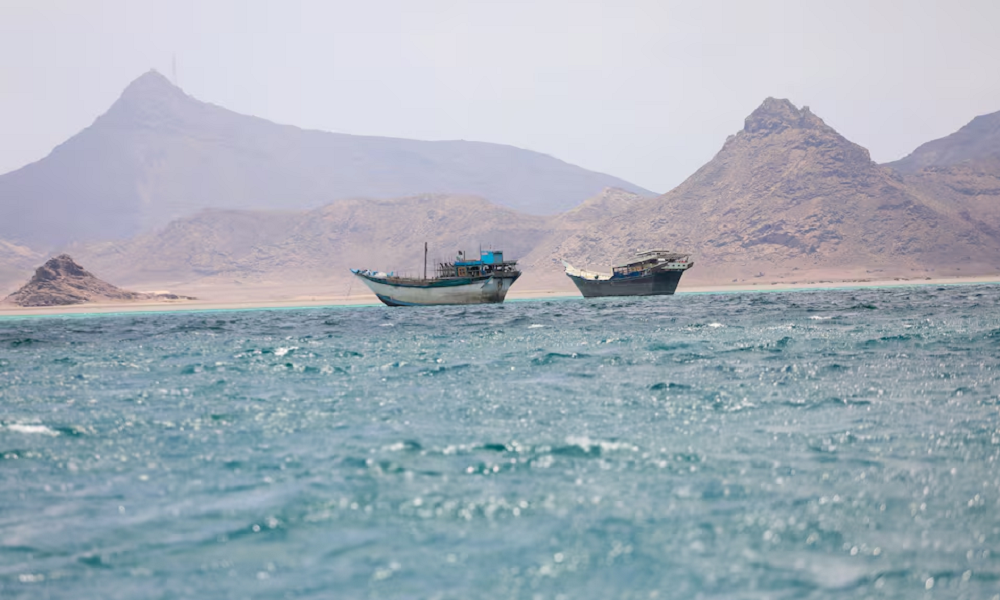
U.S. President Donald Trump promised “major military punishment” for Iran and its Houthi allies on Thursday after the Yemeni fighters struck two Saudi oil tankers in the Red Sea, extending the Middle East war to a second major shipping chokepoint.
Fears that disruption could widen further to block another sea route sent global oil prices surging in one of the steepest rises of the war. Brent crude rose more than 6%, breaking through $100 a barrel for the first time since May, Reuters reported.
Two weeks since the effective collapse of an interim truce meant to end the war, the U.S. military launched air strikes on Iran overnight into Thursday, prompting Iran to fire at neighbouring Arab countries that host U.S. bases. The U.S. military fired another round of missiles at Iran late Thursday and early Friday in the 13th consecutive night of attacks.
Iranian state media said on both nights that missiles struck Qeshm Island on the Strait of Hormuz, the virtually closed waterway that has become the focal point in a war well into its fifth month that has already killed thousands and raised fears of a global economic downturn.
TRUMP: IRAN HASN’T ‘RECEIVED ENOUGH PAIN YET’
After the Houthis said they had struck the two tankers on Thursday, Trump said he would hold Iran accountable for any further attacks by the fighters.
The Houthis, who control northern and western Yemen, said this week they were imposing a naval blockade on Saudi Arabia, which has diverted millions of barrels of oil per day by pipeline to the Red Sea to get around Iran’s blockade of Gulf oil through the Strait of Hormuz.
“If they do this again, the U.S. will hold Iran responsible, in that the Houthis are a Surrogate and/or Proxy of Iran, and major military punishment will be inflicted upon Iran and, of course, the Houthis, themselves,” Trump wrote on social media.
He told news outlet Axios he was considering relaunching major combat operations in Iran and was close to a decision. “They haven’t received enough pain yet,” Axios quoted Trump as saying.
On Thursday evening, Trump said on social media that “any and all damages done” to cargo ships would be paid for with “Iranian Money,” referring to frozen Iranian assets held by the U.S., but he did not say how this would work.
Sources in Iran and Yemen told Reuters that Iran had flown Revolutionary Guard commanders, military advisers and missile- and drone-related equipment into Yemen days before the Houthis announced their blockade. The Houthis dismissed the report.
The Houthis said their forces had carried out missile and drone strikes on Saudi oil tankers, the Encelia and the Layla.
A maritime security source said the Encelia had transmitted a distress call reporting it had been struck by a missile near the Saudi port of Jizan in the Red Sea just north of Yemen late on Wednesday. Saudi state news agency SPA said the strike had caused a fire at the bow.
Reuters could not immediately confirm the attack on the Layla, or other battlefield accounts, but Trump mentioned two attacks on Saudi tankers.
The insurance cost of shipping goods through the southern Red Sea doubled for some companies on Thursday, after the reported attacks, sources said.
Houthi attacks could close the strait known as the Bab el-Mandeb or “Gate of Tears” which controls access from the Red Sea to the Indian Ocean, the second most important route for energy shipments after the Strait of Hormuz at the mouth of the Gulf.
In the days since they announced their blockade in the Red Sea, several tankers have changed course to avoid the Bab el-Mandeb, heading north instead through the Suez Canal, potentially using a much longer and more expensive route to reach Asian customers by sailing around Africa.
IRAN REPORTS STRIKES ON JORDAN, KUWAIT
Iran said it attacked U.S. missile systems, weapons and fuel storage sites in Jordan, as well as U.S. military posts in Kuwait.
Jordan’s army said it engaged four Iranian missiles and six drones in the past day, intercepting all but one missile, which fell in an uninhabited area.
Iran’s Revolutionary Guards said it struck a U.S. electronic warfare unit at Al-Adiri base in Kuwait, causing unspecified casualties, in response to an overnight strike on Iran’s Shalamcheh border crossing with Iraq.
Neither the U.S. nor Kuwait has reported casualties at the base.
Iranian military spokesperson Brigadier General Mohammad Akraminia said Iran would keep retaliating as long as the U.S. continued to attack its infrastructure and coastal areas, Iranian state TV reported.
Since the U.S. and Israel began the war in February, Iran has demonstrated that it can hit U.S. targets in the region, despite Trump having said early on that the U.S. had wiped out Iranian military capabilities.
Four people familiar with U.S. intelligence said Iranian strikes on CIA targets in the Gulf earlier in the war had prompted U.S. intelligence to investigate whether Russia was assisting Iran with targeting information or drone technology.
CONGRESS
High oil prices are stoking inflation globally, and have put Trump’s Republican allies under pressure ahead of congressional elections in November.
The Republican-led U.S. House of Representatives backed legislation on Thursday directing Trump to halt U.S. military action against Iran, the latest rebuke of the Republican president from Congress, which the U.S. Constitution grants the exclusive power to “declare War.”
Lawmakers have passed similar resolutions repeatedly in recent months, but they have not led to cessation of the war. The Senate voted hours later to block a separate, similar measure.


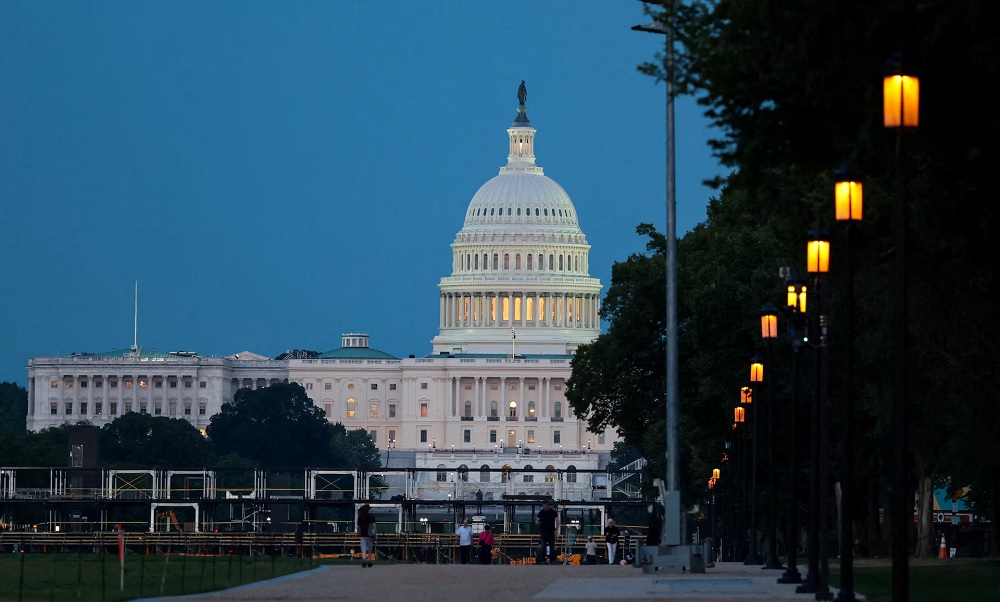
Nonpartisan analysts say Democrats stand a good chance of winning the US House of Representatives and possibly the Senate in the November 3 midterm elections, which would give them a slice of power in Washington after two years of Republican control.
Democrats argue that Republicans have allowed President Donald Trump’s administration to declare war and control spending, even though the US Constitution reserves those powers for lawmakers, according to Reuters.
Here are some ways a Democratic Congress could hem in Trump’s foreign policy.
CURB THE IRAN WAR
Trump did not secure approval from Congress before he launched the war with Iran on February 28, and Democrats have voted repeatedly to end the fighting unless he does so. One of these resolutions passed with support from a handful of Republicans, but Trump’s administration ignored it.
With control of the House or the Senate, Democrats could cut defense spending to pressure Trump to obtain permission from Congress to continue the war. They could also require administration officials to testify publicly about their plans.
FRESH SUPPORT FOR UKRAINE
Trump has largely halted direct US financial and military aid to Ukraine, despite broad support from Democratic and Republican lawmakers as it fights a Russian invasion.
Most recently, he has angered members of Congress, including many Republicans, by lifting sanctions on Russian diesel and waiving sanctions on Russian energy only weeks after signing them into law.
With a victory in both chambers in November, Democrats would be able to decide what gets voted on and when.
That could allow them to approve new aid to Ukraine, which likely would pass with the two-thirds majorities needed to overcome a Trump veto.
They could also target other Trump activities. For example, Representative Gregory Meeks of New York, who could head the House Foreign Affairs Committee if Democrats win control, has introduced bipartisan legislation to block Trump’s plan to bring Russian diesel back into the global market.
END MILITARY AID TO ISRAEL
Support for Israel has plummeted among Democrats over its conduct in the Gaza war, which has killed tens of thousands of Palestinian civilians. The ongoing violence in the Israeli-occupied West Bank and Israeli Prime Minister Benjamin Netanyahu’s close alliance with Republicans have also been factors.
Democrats could limit or end military aid to Israel, which amounted to $3.8 billion in the most recent fiscal year. That is more than was provided to any other country.
Nearly half of House Democrats voted this summer to cut off aid to Israel. Some of those who voted against that effort, such as Meeks, have backed limits on providing weapons like heavy bombs to Israel.
LIMIT MILITARY SPENDING AND RESTORE FOREIGN AID
Democrats are far more likely than Trump’s Republicans to limit military spending. Trump asked for an unprecedented 67% increase in the military budget this year, to $1.5 trillion, but Democrats blocked it in the Senate, citing his refusal to consult Congress about the Iran war and his steep cuts to social programs.
Trump has also withheld or canceled billions of dollars in foreign aid approved by Congress. Many Democrats have been angered by the cuts and say they will try to restore funding.
World
Senior UAE diplomat Lana Nusseibeh enters race for UN chief
Nusseibeh, 48, said she was approached by multiple countries during the last UN General Assembly to put herself forward. She previously led the UAE’s successful campaign for election to the Security Council. Diplomats in New York say she is respected as a competent manager.
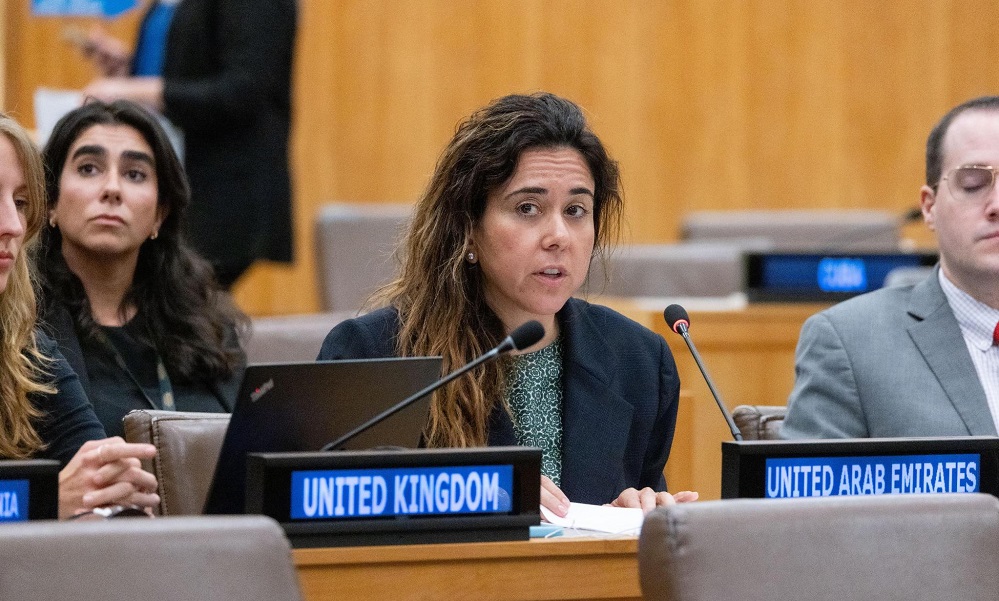
Senior UAE diplomat Lana Nusseibeh entered the race to become the next United Nations secretary-general on Wednesday, injecting a prominent Middle Eastern candidate into a contest that has struggled to produce a consensus choice among the Security Council’s most powerful members.
Nusseibeh, a former UAE ambassador to the UN for more than a decade, told Reuters she would seek to restore the world body’s role as a diplomatic problem-solver at a time of mounting global crises.
“It’s clear that today we need a secretary-general that can recommit to the future of multilateralism and the future of the United Nations as a problem-solver rather than as a spectator to the world’s crises,” she said shortly before going public with her candidacy.
Nusseibeh, the UAE minister of state for foreign affairs, is a late entrant to the race. An informal Security Council poll had placed former Costa Rican Vice President Rebeca Grynspan as the narrow frontrunner, sources have said.
Although Grynspan has led the informal “straw polls,” last week she and all other candidates received two or more opposing votes from the ultimately decisive five permanent members of the council — Britain, China, France, Russia and the US.
Council members are negotiating over whether to hold another poll this Friday or at a later stage.
ENTREPRENEURIAL DIPLOMACY
Nusseibeh, 48, said she was approached by multiple countries during the last UN General Assembly to put herself forward. She previously led the UAE’s successful campaign for election to the Security Council. Diplomats in New York say she is respected as a competent manager.
“It’s recognized today that we need someone who offers generational change for the organization,” she said.
Her UN tenure overlapped with the outbreak of the Gaza war in 2023 when she secured the adoption of Resolution 2720 paving the way for the delivery of humanitarian aid.
Nusseibeh said she secured support for the resolution by arranging a visit by council members to the Rafah border crossing to see for themselves the situation on the ground, describing the move as part of her “creative entrepreneurial diplomacy” that characterizes her approach.
RELENTLESS DIPLOMACY
As a top UAE diplomat, Nusseibeh has championed Abu Dhabi’s assertive foreign policy and heavy focus on countering political Islam.
The UAE has faced criticism over Sudan after UN sanctions monitors described allegations that it provided military support to the paramilitary Rapid Support Forces as credible. The UAE denies the allegations.
Asked how the allegations might affect her candidacy, Nusseibeh said she had taken leave from her UAE post and would focus on Sudan’s humanitarian crisis.
A Nusseibeh victory would make her the second UN chief from the Middle East, after Egypt’s Boutros Boutros-Ghali.
“I come from a country that is younger than the United Nations but our region is one that has been facing severe challenges,” she said.
She would also become the first woman to lead the UN, though Nusseibeh said she was not running on her gender.
“I think it would be great if the next secretary-general was a woman but I’m not running because I’m a woman; I’m running because I am stubbornly optimistic about the future of the United Nations and I believe we need someone who is relentless in the pursuit of diplomacy to open doors.”
World
Governments warn citizens over security risks in France after riots
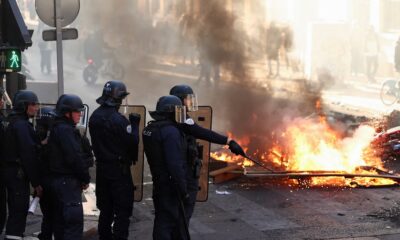
The unrest on Saturday saw clashes between protesters and police, looting at shops and a town hall set on fire, prompting several countries to update their travel advisories.
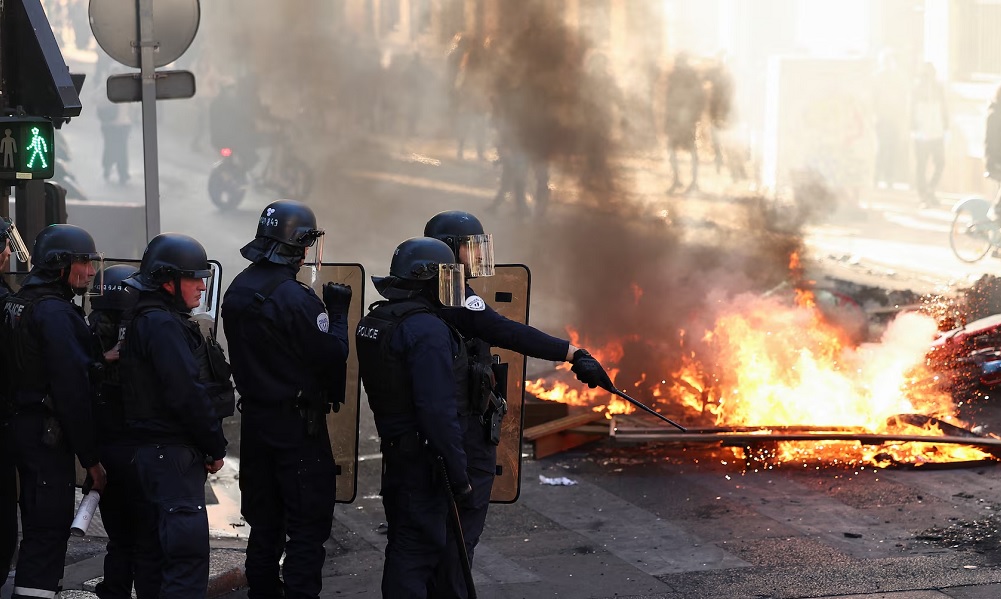
Governments across Europe and Asia have warned their citizens to exercise caution in France following violent protests over the rising cost of living and declining public services that erupted into riots over the weekend.
The unrest on Saturday saw clashes between protesters and police, looting at shops and a town hall set on fire, prompting several countries to update their travel advisories.
Italy urged its citizens in France to avoid large crowds and exercise extreme caution. Its foreign ministry also advised travellers to register their presence through an official website or mobile application to help authorities locate them if necessary.
Germany warned that further riots could occur in the coming days and urged its nationals to follow instructions from local police. It also cautioned that people could face fines or claims for damages if they failed to leave unauthorised demonstrations when ordered to do so.
The Czech Republic advised its citizens to stay away from demonstrations, marches and public gatherings, citing a deterioration in the security situation, the Czech news agency CTK reported.
Poland similarly urged visitors to avoid areas where demonstrations were taking place, although it made no changes to its overall assessment of France as a travel destination.
The Netherlands has also advised travellers to avoid protests, according to its travel guidance, last updated on October 7.
Denmark, Sweden, Finland and Norway issued similar warnings, urging their citizens in France to avoid demonstrations and follow instructions from local authorities.
Outside Europe, Malaysia’s Foreign Ministry said it was monitoring the demonstrations. While travel to France remained unrestricted, it advised Malaysians to consider postponing non-essential trips until the situation improved.
Malaysia’s embassy in Paris also urged citizens in France to remain vigilant and exercise caution.
The warnings reflect growing concern among foreign governments over the potential for further violence as France faces public anger over living costs and pressure on public services. Authorities have urged visitors and residents to monitor local developments and follow police instructions.

Tahawol: Ukraine war and ongoing peace efforts
Saar: Obama’s remarks on Iran war

Aino Mina edge Omar Zawak 5-4 in Afghanistan Champions League

ACL: Istiqlal Kabul and Sarsabz Yashlar play out 1-1 draw
Four ways US foreign policy could change if Democrats win in November

Cricket Bonanza: Afghanistan set for packed international schedule

Afghanistan on climate front line as Kabul faces groundwater warning

Afghanistan says 28 killed, 32 captured in Nuristan operation

ACB announces Afghanistan squads for Bangladesh, Zimbabwe series

Trump rejects Iranian proposal to open Hormuz and end fighting
Tahawol: Ukraine war and ongoing peace efforts
Saar: Obama’s remarks on Iran war
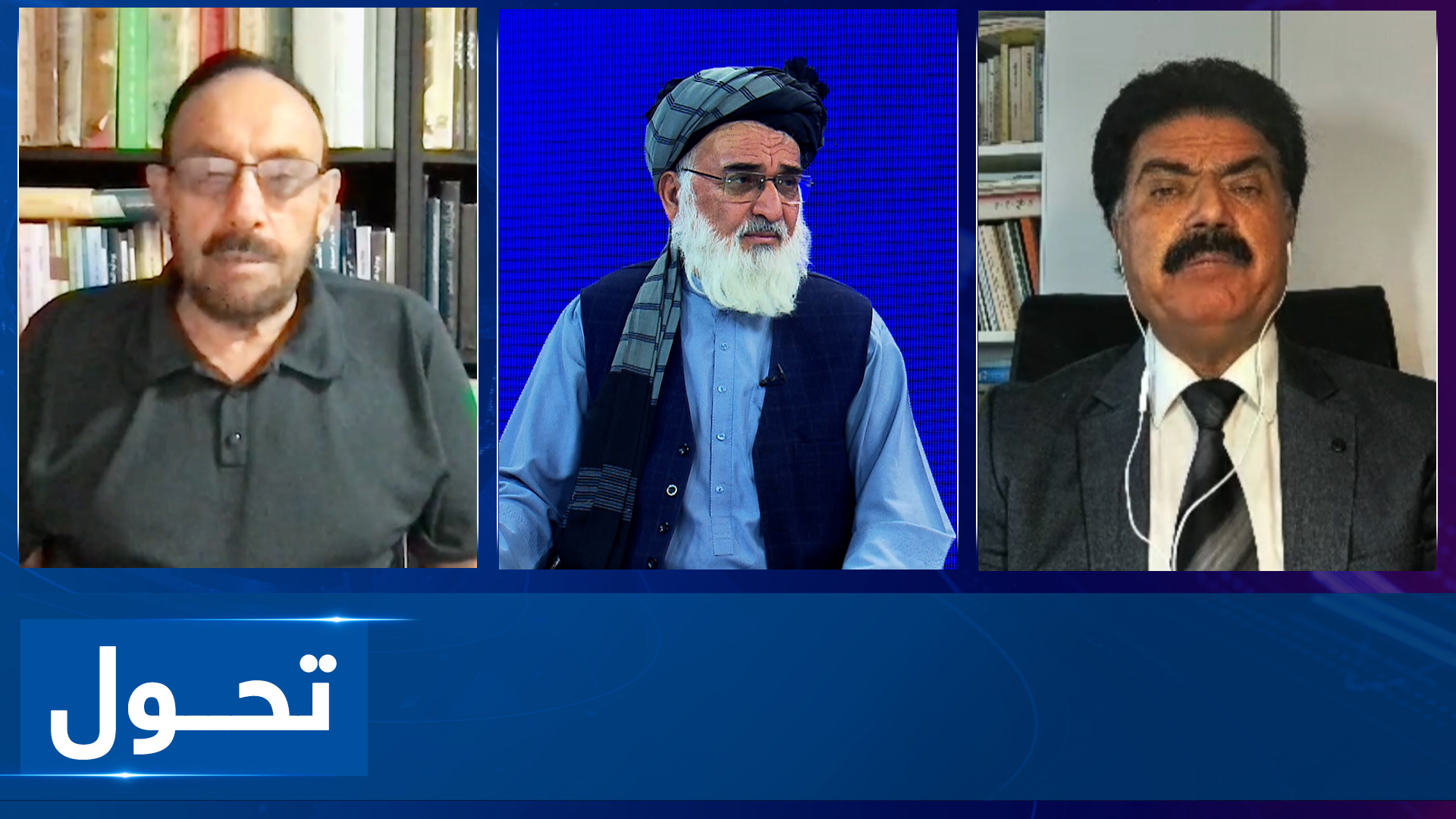
Tahawol: UN’s role in tackling global crises discsused
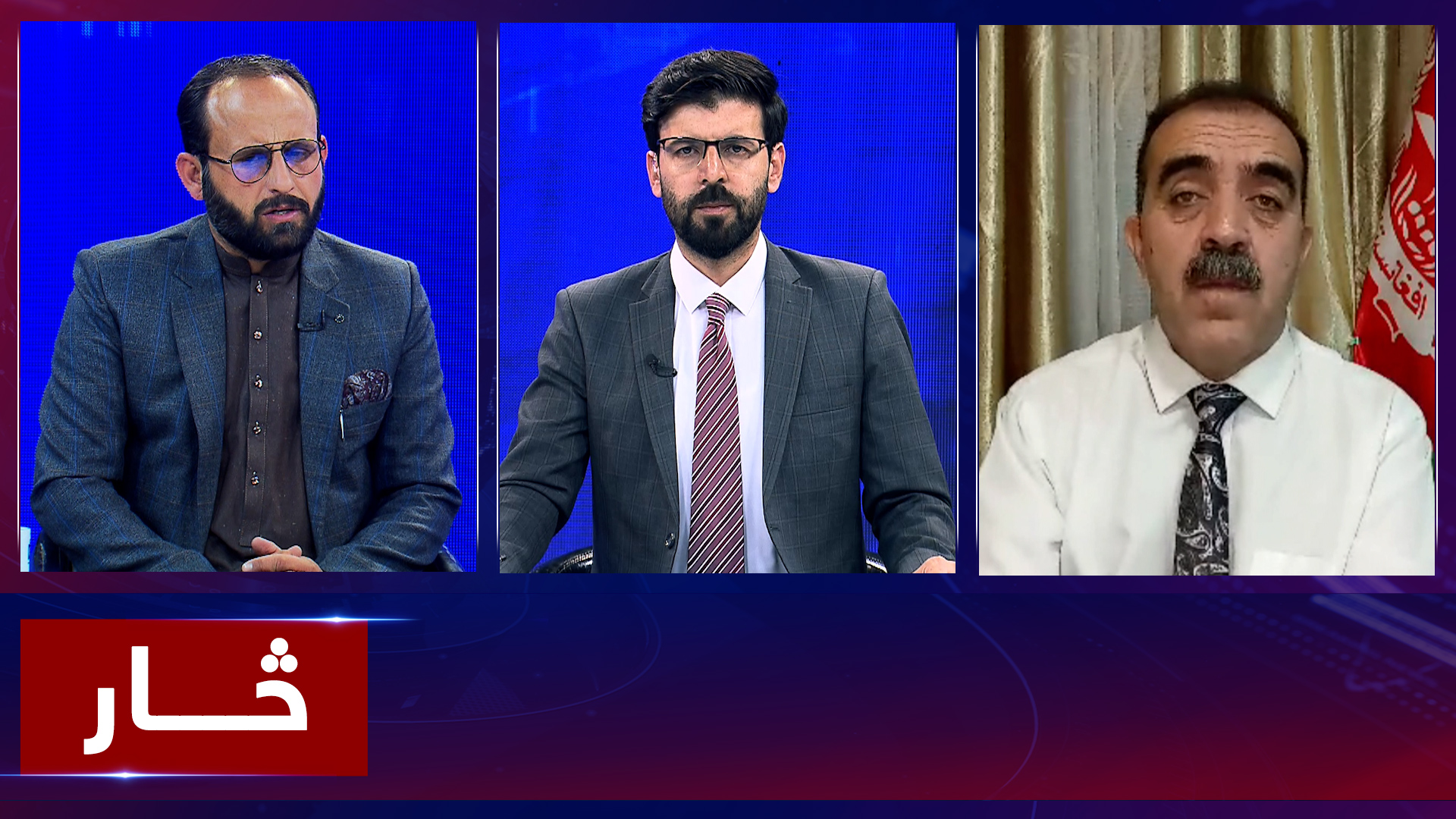
Saar: Pakistan’s blame on Kabul for its own failures discussed

Tawsia: New opportunities in Afghanistan’s energy, trade and agriculture sectors discussed
-
 Latest News3 days ago
Afghanistan’s new Wakhan road to China faces major hurdles
-
 Latest News5 days ago
Qatar calls for shift from humanitarian aid to economic recovery in Afghanistan
-

 Science & Technology4 days ago
Governments take websites offline as critical cyber flaws trigger global alert
-
 World4 days ago
Governments warn citizens over security risks in France after riots
-
 Business5 days ago
Transit of Afghan goods through Sheikh Abu Nasr Farahi border crossing doubles
-
 Latest News4 days ago
CSTO to supply Tajikistan with weapons to strengthen Afghan border
-
 Latest News3 days ago
Russia to expand security and defence cooperation with Afghanistan
-
 Regional5 days ago
Iran tells Pakistan army chief no talks with Washington until demands are met