
Latest News
Trump’s dream of retaking Bagram might end up looking like an Afghan re-invasion – Reuters

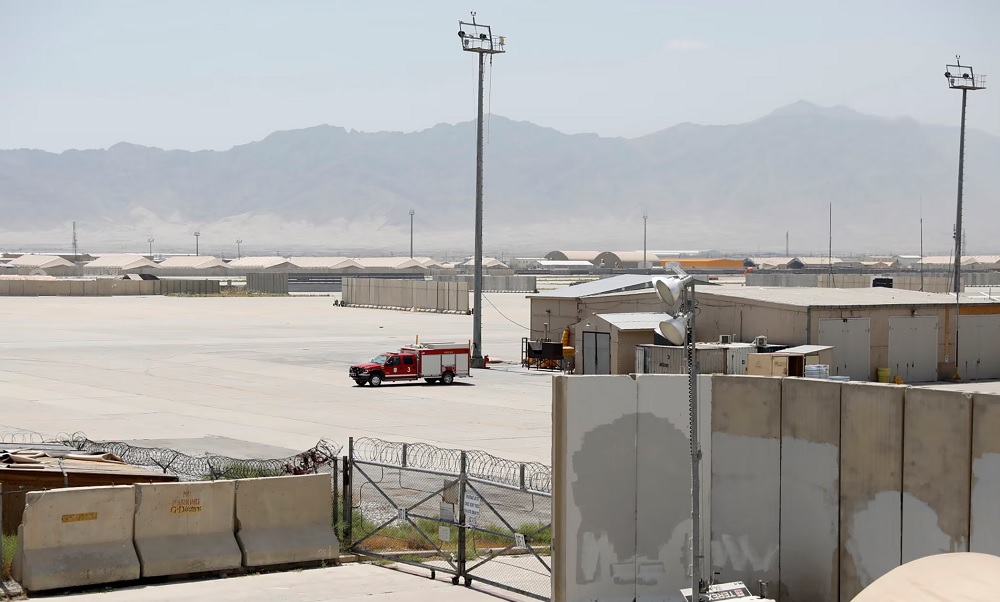
U.S. President Donald Trump’s goal of re-occupying Bagram air base in Afghanistan might end up looking like a re-invasion of the country, requiring more than 10,000 troops as well as deployment of advanced air defenses, Reuters reported citing current and former U.S. officials.
Trump, speaking to reporters on Thursday during a trip to London, said “we want that base back” and cited what he called its strategic location near China.
“It’s an hour away from where China makes its nuclear weapons,” Trump said.
The sprawling airfield was the main base for American forces in Afghanistan during the two decades of war that followed the September 11, 2001, attacks in New York and Washington.
Trump, who has previously said he wants the United States to acquire territories and sites ranging from the Panama Canal to Greenland, has appeared focused on Bagram for years.
He hinted on Thursday that the U.S. could acquire the base with some kind of the Islamic Emirate consent but it was unclear what form such an agreement might take. The Islamic Emirate has previously said that it will not allow the presence of foreign troops in Afghanistan.
The base once counted fast-food restaurants like Burger King and Pizza Hut catering to U.S. troops as well as shops selling everything from electronics to Afghan rugs. It also hosted a massive prison complex.
A U.S. official, speaking on condition of anonymity, said there was no active planning to militarily take over Bagram air base, which the U.S. abandoned along with the rest of the country when it withdrew from Afghanistan in 2021.
The official said any effort to reclaim the base would be a significant undertaking.
The official said it would require tens of thousands of troops to take and hold Bagram air base, an expensive effort to repair the base, and a logistical headache to resupply the base — which would be an isolated U.S. enclave in a landlocked country.
A former senior U.S. defense official played down the benefits of retaking the base, including the base’s proximity to China that was touted by Trump.
“I don’t think there’s a particular military advantage to being up there,” the former official said. “The risks sort of outweigh the advantages.”
In February, Trump complained that Biden had given up the base and said there had been a plan to keep a small U.S. force there, even though his February 2020 accord with the IEA required a pullout of all U.S.-led international forces.
Trump’s comments came as the Pentagon is carrying out a review into the United States’ chaotic withdrawal from Afghanistan in 2021, which many policy leaders in his administration viewed as a distraction from bigger challenges facing the United States — like competition from China.
Over the weekend, U.S. officials held talks with the authorities in Kabul over Americans held in Afghanistan.
Adam Boehler, the Trump administration’s special hostage envoy, and Zalmay Khalilzad, a former U.S. special envoy for Afghanistan, met the IEA’s foreign minister, Amir Khan Muttaqi.




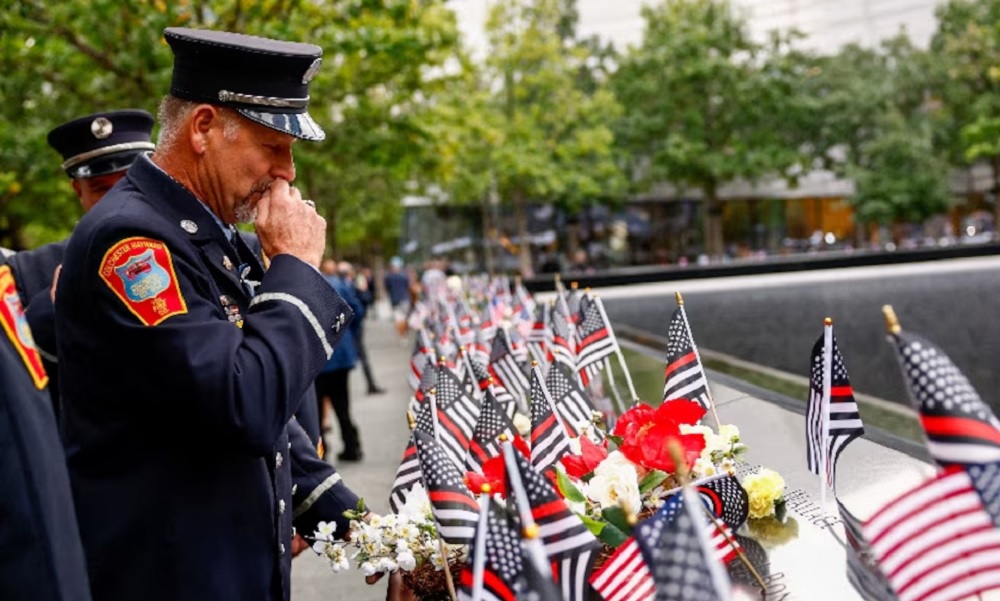
The attorneys general of 30 US states have asked the US Supreme Court to review a case involving around $3.5 billion in frozen assets of Da Afghanistan Bank that victims and families of the September 11 attacks are seeking to use for compensation.
The Iowa Attorney General’s Office said in a statement on Monday that the states filed a brief with the Supreme Court in support of the victims and their families, who have obtained compensation judgments in US federal courts.
According to the office, after years of legal proceedings, the victims and their families have secured nearly $17 billion in court-ordered compensation.
However, the US Second Circuit Court of Appeals ruled that around $3.5 billion in assets belonging to Afghanistan’s central bank cannot be used to satisfy those compensation awards.
The assets were frozen by the U.S. Treasury Department on August 15, 2021, the day the Islamic Emirate entered Kabul.
The state attorneys general argue that US law allows the frozen assets to be used to satisfy court-ordered compensation.
Iowa Attorney General Brenna Bird said the victims and their families had pursued justice and compensation through the US legal system and should be able to access the money awarded to them by the courts.
This comes as the Islamic Emirate has repeatedly called for the release of Da Afghanistan Bank assets.
Latest News
Ariana Afghan Airlines ends 15-year control of ticketing and operational systems by Pakistani firm
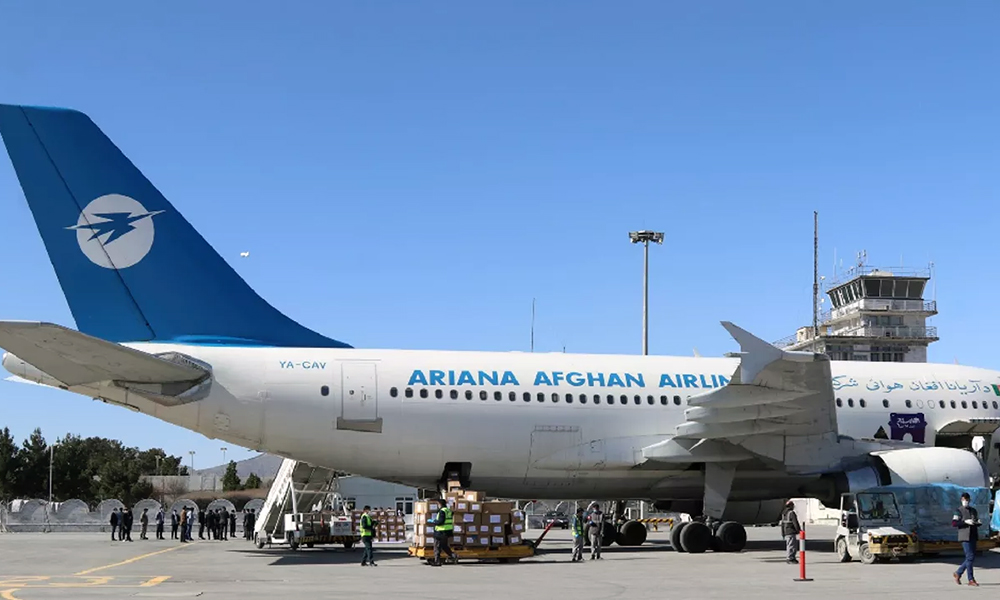
Ariana Afghan Airlines has ended a nearly 15-year arrangement under which a Pakistani company, Zapways, controlled the airline’s ticketing, operational systems and website, the airline said.
Ariana’s press office said Zapways had managed the airline’s ticketing and operational systems for years despite charging high fees. It added that technical information and data related to the systems were also held by the Pakistani company.
The airline said it has now launched a new system in cooperation with a Turkish company whose modern and standardized services are used by more than 80 international airlines across Europe, Asia and Africa.
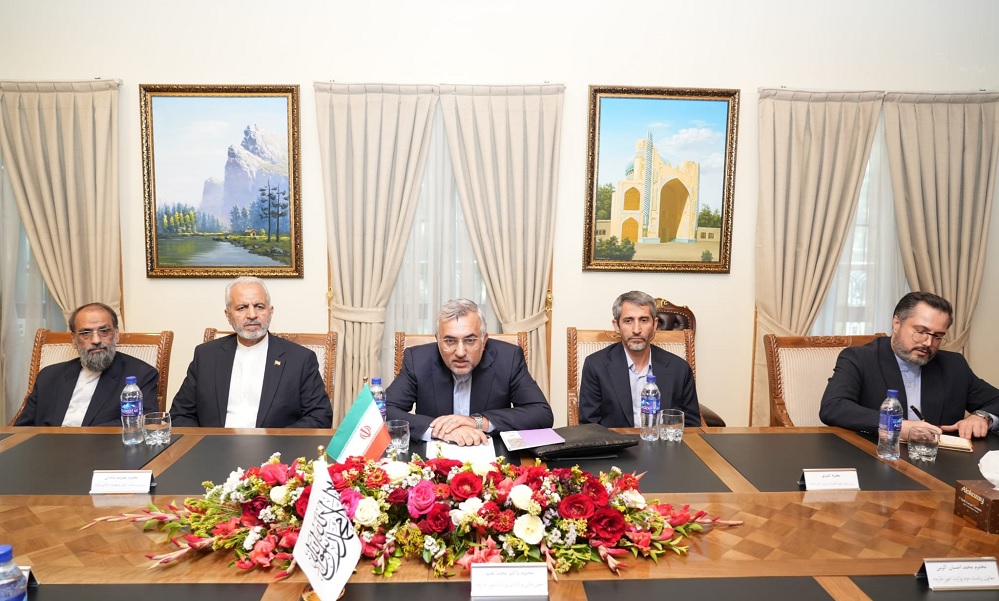
Afghanistan and Iran discussed expanding economic, political and trade ties, with Tehran offering to cooperate on major infrastructure and development projects, including the construction of the Herat-Mazar-e-Sharif railway.
The Afghan Foreign Ministry said its Deputy Minister for Finance and Administration, Mohammad Naeem, met with Hamid Qanbari, Iran’s Deputy Foreign Minister for Economic Diplomacy, to discuss bilateral relations, economic cooperation and ways to make better use of existing opportunities.
The two sides also discussed challenges facing Afghan migrants in Iran and ways to facilitate visa procedures, as well as closer cooperation on migration-related issues.
According to the ministry, Qanbari said Iran is ready to cooperate with Afghanistan in the construction of the Herat-Mazar-e-Sharif railway, mining and electricity generation.
Naeem described the expansion of economic relations between the two countries as important and stressed the need for joint efforts and cooperation in this area.
Iran’s Embassy in Kabul also said the two officials discussed expanding economic and trade cooperation, particularly in developing and strengthening infrastructure, including the Herat-Mazar-e-Sharif railway.


▶️Saudi Arabia, Turkey, Pakistan activate Mecca defense pact

Thirty US states seek access to Afghan assets for 9/11 victims

Yemeni government forces seize strategic strait from Houthis

Ariana Afghan Airlines ends 15-year control of ticketing and operational systems by Pakistani firm

Iran offers cooperation on Herat-Mazar railway, mining and power generation

Saudi energy group signs major Afghanistan deals covering gas exploration and pipeline plans

Khalilzad: Afghanistan ready to attract major investment

Imam Abu Hanifa exhibition to draw exhibitors from more than 20 countries

UAE firm eyes investment in Salang’s second tunnel and pharmaceutical factories

US envoys make first Kyiv visit amid Ukraine war peace push

Tahawol: Afghanistan-Iran: shared opportunities and challenges discussed

Saar: Pakistan’s hostile policy toward Afghanistan discussed

Tahawol: Doha process seeks new cooperation opportunities

Saar: Moscow forum 8th consultative meeting on Afghanistan

Tahawol: Escalation of internal political crisis in Pakistan discussed
-
 Latest News5 days ago
Four members of one family killed in Helmand in Pakistan airstrike
-
 Sport4 days ago
ACB announces Afghanistan squads for Bangladesh, Zimbabwe series
-
 Latest News4 days ago
Russia expects to ease Afghanistan-Pakistan tensions at Moscow Format meeting
-

 Sport5 days ago
Rashid Khan, Azmatullah Omarzai maintain top spots in ICC ODI rankings
-

 Sport23 hours ago
Cricket Bonanza: Afghanistan set for packed international schedule
-

 International Sports4 days ago
Afghanistan to face Pakistan, India and Australia at 2027 Cricket World Cup
-
 Regional4 days ago
Saudi-led coalition says Houthis attacked power station for Prophet’s Mosque in Medina
-
 Regional4 days ago
Cargo stacks up as Pakistan seizes containers to block capital routes