
Latest News
US still mulling type of footprint needed to secure airport and embassy

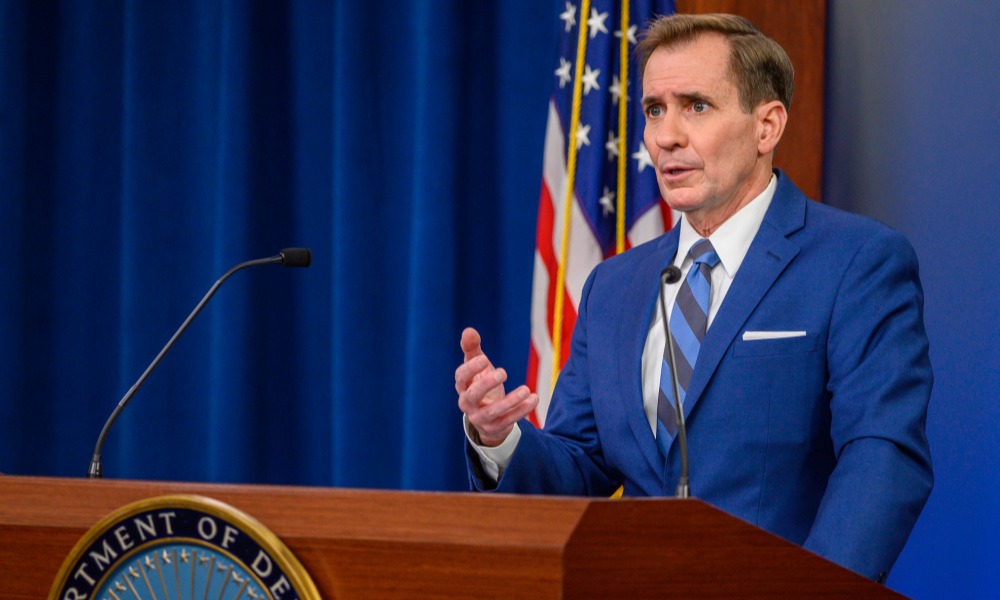
Pentagon Press Secretary John F. Kirby said in a press conference on Tuesday that discussions are still being held on the type of U.S. footprint needed in Afghanistan in order to protect American diplomats in the country.
In answer to a question about security at the Hamid Karzai International Airport in Kabul in order to keep an embassy presence for not only the United States but also for other countries after withdrawal, Kirby said the U.S. Secretary of Defense Lloyd Austin “recognizes the key hub that is the airport there in Kabul and the impact that will have not just (on) the United States but other nations in terms of their decisions about their own diplomatic presence.”
“So it is certainly a factor that is being brought into discussions and deliberations inside our government about what kind of a footprint would be required to help protect the work of our diplomats.
“The president (Joe Biden) has been clear that we will maintain a diplomatic presence in Afghanistan going forward. And again, as I said, that means having that airport be accessible and open. And we’re just not there yet in terms of what that looks like going forward,” he said.
While no decision had yet been taken, he said “clearly a measure of security at the Kabul Airport will be an important factor as we, again, pursue this new bilateral relationship with Afghanistan.”
Meanwhile, reacting to Republican Mitch McConnell criticizing the withdrawal of troops decision, Kirby said Biden has been very clear that our troops accomplished the mission for which they were sent to Afghanistan.
“And that was to prevent that country from being used a safe haven for terrorist attacks on our homeland and there hasn’t been another attack on the homeland emanating from Afghanistan since 9/11.
“So, the president believes the mission has been completed and he’s given us a new one. And that is to conduct a safe and orderly deliberate withdrawal from Afghanistan and that’s what we’re focused on right now. And so, the enemy at play here are terrorist attacks and terrorist groups that would do us harm.
“And again, the terrorist threat emanating from Afghanistan has been diminished. Not extinguished by any means but diminished. And that is also why the president has directed us to make sure that we can put in place an over the horizon capability so that we can continue to protect Americans from terrorist attacks emanating from that country and we’re going to do that, we’re working hard on that.”
Asked again by the number of troops in Afghanistan, Kirby said the U.S. could not reveal that information for security reasons stating “we are no longer talking about specific numbers in Afghanistan for all the reasons that I’ve covered with you guys before and that’s to maintain a measure of operational security.
“And so, we have definitely curtailed the delivery of some data with respect to Afghanistan for those reasons.”
Meanwhile, asked to clarify the term over-the-horizon counterterrorism capability, Kirby said the U.S. was “still putting the pieces together of exactly what” this would mean.
“I will add that — and you heard the secretary say this in Brussels, we already do have some over-the-horizon counter terrorism capabilities just by dent of forces we already have in the region, and other long-range capabilities that we have outside the region.



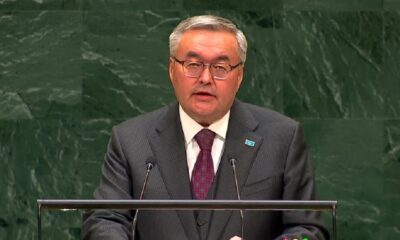





Kazakhstan’s Foreign Minister Mukhtar Tileuberdi has called for pragmatic and coordinated international engagement with Afghanistan, saying the country’s long-term stability is closely linked to the security and sustainable development of Central Asia.
Speaking during the general debate of the 81st session of the United Nations General Assembly in New York on Friday, Tileuberdi said humanitarian assistance to Afghanistan remains essential but alone cannot break the cycle of poverty, displacement and dependency.
He said Kazakhstan supports a “pragmatic, coordinated and step-by-step” approach to international engagement with Afghanistan, with the United Nations playing a central role.
Tileuberdi also said Kazakhstan is working with the UN to operationalize the United Nations Regional Centre for the Sustainable Development Goals for Central Asia and Afghanistan in Almaty.
He said the success of the centre should be measured by the results and assistance it delivers to the region.


Khalilzad questions Pakistan’s commitment to Afghan welfare

India, UN envoy discuss Afghanistan’s humanitarian needs

Kazakhstan calls for coordinated international engagement with Afghanistan

Pakistan PM, UN chief discuss Afghanistan amid rising Kabul-Islamabad tensions

Afghanistan to face India in Asian Games cricket quarter-final

Saudi energy group signs major Afghanistan deals covering gas exploration and pipeline plans

Trump floats idea of renaming Atlantic or Pacific Ocean

US hits Egyptian bank branches with Iran sanctions as war marks six months

Nepal flood rescue mission enters critical phase as thousands remain missing

Iranian clubs to face Gulf opponents at neutral venues in Asian Champions League Elite

Exclusive interview with Abdul Latif Mansoor, Minister of MRRD

Tawsia: Overview of Afghanistan’s iron mines

Tahawol: Discussion on fresh Pakistani airstrikes on Afghanistan

Saar: Calls for international support for Afghanistan discussed

Tahawol: Opening of the 81st UN General Assembly Session
-

 Sport5 days ago
Afghanistan to face Japan and Nepal in Asian Games cricket group stage
-

 World4 days ago
CNN, MS NOW and Politico sue Trump, challenging White House ban
-
 Health5 days ago
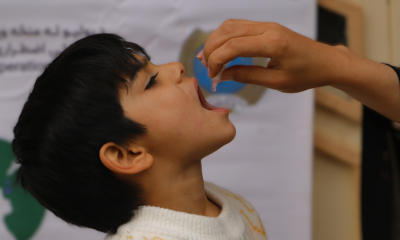
Four-day polio vaccination campaign begins across Afghanistan
-

 Latest News3 days ago
Ariana Afghan Airlines ranks seventh among 45 Central Asian airlines
-

 Latest News4 days ago
UN reiterates call for respect for international law after Kunar airstrikes
-
 Latest News5 days ago
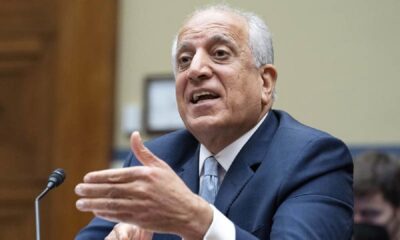
Khalilzad condemns Pakistan airstrikes, says current strategy is not working
-

 Regional3 days ago
US and Iran hold first talks since June after Trump’s ‘annihilation’ threat
-

 Latest News3 days ago
Silk Road highway in Wakhan corridor now reaches the China border