
Latest News
Integrity Watch Afghanistan called for early amendment of access to info law

Integrity Watch Afghanistan has warned that if President Ghani and National Council do not take any step for amendment of the law, Afghan people will face serious problems.
Officials in Integrity Watch emphasized that due to failure in access to information law, 70 % of Afghanistan population that includes women and disables are deprived of the access to information.
Previously, President Ashraf Ghani has signed the new Access to Information Act, ratifying the 6 chapters and 32 articles that deliver Afghans unprecedented transparency in the state institutions.
The law lives up to international standards and will have major effects in limiting corruption, localising democracy and strentghening the people’s political and social participation in state building.
People will gain access to state and public budgets, and official spokespeople will be inclined to share information with journalists and citizens.
“The access to information law has many gaps and weaknesses and we are afraid of its amendments failure that would cause many problems for Afghan people,” head of advocacy group of Integrity Watch, Habibullah Maqbel said.
“Parliament and the government should amend access to information law and also consider the recomandations of the civil society that the background of information provides,” Samiullah Popalzai, member of advocacy group of Integrity Watch said.
There is, however, still quite some way to go. Afghanistan is one of the most corrupt countries in the world, and having a great law on paper does not mean much if it is not implemented in practice.
Implementation of the law is one of the biggest challenges. A joint working force was developed between presidential office and civil society to monitor the implementation of the law.
The law follows the internationally accepted principle of maximum disclosure of information. That is, all information held by the government should be presumed to be public with minimal exceptions.
In Afghanistan’s new law, limitations on access to information are restricted to situations where disclosure poses legitimate harm to public or private interests.
This include cases where national security is concerned, where a citizen’s rights may be violated, where the release of information would obstruct the detection or investigation of a crime, or where the life, property, honor, or prestige of a person would be endangered.
It is hoped that the new rules surrounding access to information will help increase the public’s trust in government.
In a country that was ranked 172 out of 175 countries in Transparency International’s 2014 Corruption Perceptions Index, the potential benefits of the law are clear.
The lower house of the Afghan parliament (Wolesi Jirga) has approved Access to Information Law with some amendments by a majority of votes in June 30, 2014.

Latest News
UN warns of mounting pressures facing Afghans despite relative stability
Gagnon said many returnees are arriving with limited resources and face difficulties reintegrating into communities already struggling with economic hardship.
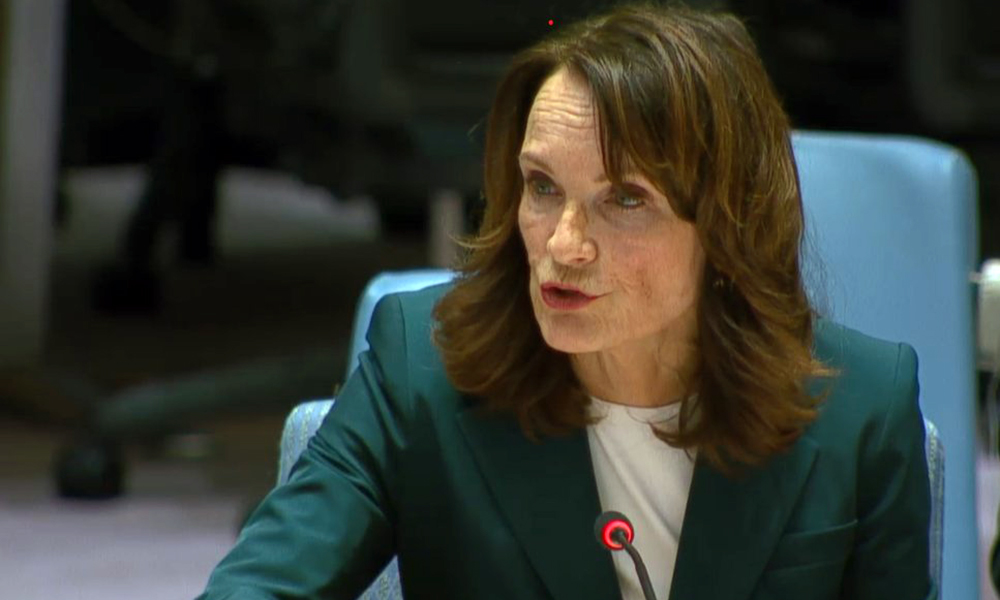
A senior United Nations official warned the Security Council on Monday that Afghans are facing growing economic, humanitarian and human rights challenges despite relative stability under the Islamic Emirate.
Addressing the Council, Georgette Gagnon, the UN Secretary-General’s Deputy Special Representative for Afghanistan, said the country remained free from any significant armed or political challenge to the current authorities, but cautioned that long-term risks continue to accumulate.
“On the surface, Afghanistan under the de facto authorities remains stable,” Gagnon said, noting that territorial and administrative control has been consolidated and that the authorities view nationwide peace and security as a key achievement.
However, she said economic and demographic pressures are increasing, particularly as millions of Afghans return from neighboring countries.
“Macroeconomic indicators reflect elements of stabilization: economic growth has been positive in absolute terms, with some long term-investments in infrastructure, fiscal stability has been maintained, and revenue mobilization has improved, despite challenges such as sanctions, wider regional tensions, and closure of the eastern border since last October.
“Relative stability has also allowed for positive measures such as sustained near eradication of poppy cultivation,” she said.
“Key risks remain, however, that underscore the fragility of current economic stabilization efforts with serious political impacts. The most significant is demographic. Large-scale returns from neighboring countries have led to a sudden population increase,” Gagnon said.
She pointed out that nearly 5.9 million people have returned to Afghanistan since 2023, while up to 2.8 million more are expected to return this year.
Gagnon said many returnees are arriving with limited resources and face difficulties reintegrating into communities already struggling with economic hardship.
She urged countries repatriating Afghans to ensure that returns are voluntary, safe and dignified and comply with international protection obligations.
The UN official also highlighted Afghanistan’s ongoing humanitarian challenges, noting that an estimated 21.9 million people – about 45 percent of the population – will require humanitarian assistance in 2026.
Gagnon said an estimated 3.8 million girls between the ages of seven and 18 are currently out of school, including more than 2.6 million adolescent girls. She warned that continued restrictions on education and employment opportunities for women are having long-term consequences for Afghanistan’s development and economy.
She also expressed concern over broader human rights issues, citing recent reports of the detention of around 30 women in Herat for allegedly violating dress code regulations, as well as arrests of journalists and the closure of media outlets.
On regional issues, Gagnon said relations between Afghanistan and Pakistan remain strained, with crossing closures and security incidents affecting trade, humanitarian operations and civilians on both sides of the frontier. She called for dialogue and de-escalation to address disputes.
The UN official reaffirmed the importance of continued international engagement with Afghanistan, stressing that dialogue does not constitute endorsement of the current authorities but is necessary to support the Afghan people and address regional and international concerns.
Gagnon urged participants in the Doha Process to maintain efforts aimed at supporting Afghanistan’s eventual reintegration into the international community.
In conclusion she said: “UNAMA remains invested in achieving this Council’s affirmed end state for Afghanistan. Ongoing and constant dialogue is essential, together with principled and pragmatic engagement, even where progress towards the end state is incremental. With strategic patience, coherent and coordinated diplomacy, and open dialogue, progress can be made in full support of the Afghan people.”
Latest News
IEA calls for greater engagement with Afghanistan ahead of UN Security Council meeting
The Security Council session is expected to review political, security, economic and humanitarian developments in Afghanistan over the past three months.
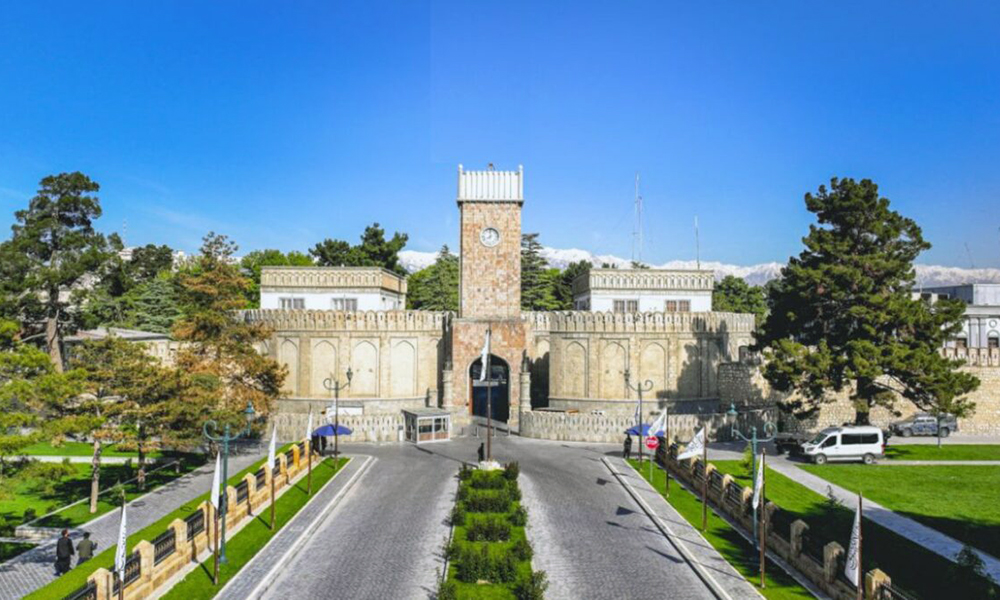
The Islamic Emirate has urged the United Nations Security Council to place political and economic engagement with Afghanistan at the forefront of discussions during its quarterly meeting on the country, scheduled for Monday.
Officials from the Islamic Emirate said Afghanistan’s current authorities should be invited to participate in future Security Council meetings on the country, arguing that direct representation would provide a more accurate reflection of conditions on the ground and ensure that the views of the Afghan government are heard.
The Security Council session is expected to review political, security, economic and humanitarian developments in Afghanistan over the past three months.
Council members are also set to discuss the future of international engagement with the country and the role of the United Nations Assistance Mission in Afghanistan (UNAMA).
The meeting comes as the Security Council prepares to decide on the future of UNAMA’s mandate, which is due to expire in less than eight days. Members are expected to consider an extension of the mission’s mandate.
Islamic Emirate officials have previously expressed concerns about some UNAMA reports, saying they place too much emphasis on issues they consider secondary while not sufficiently reflecting developments and realities within Afghanistan.
UNAMA remains the United Nations’ main mission in Afghanistan, overseeing humanitarian coordination, monitoring human rights issues and supporting engagement between Afghanistan and the international community.
Analysts say the Security Council’s deliberations could offer insight into the international community’s evolving approach to Afghanistan and help shape UNAMA’s role in the months ahead.

U.S. War Secretary Pete Hegseth says a comprehensive review of the American military withdrawal from Afghanistan is nearing completion and is expected to be released later this summer.
Speaking to reporters, Hegseth described the review as a “thorough” examination of what happened during the 2021 withdrawal, which ended the United States’ 20-year military presence in Afghanistan.
He said all major components of the review have now been completed, including interviews and the assessment of classified materials. Preliminary findings are already available, and the final report is being prepared for release after further verification.
According to Hegseth, the process has been treated with seriousness from the outset, emphasizing the importance of ensuring accuracy and accountability. He added that the review is not a question of whether it will be released, but when.
The upcoming report is expected to provide a detailed account of decision-making, operational challenges, and events surrounding the withdrawal, which has remained a subject of political debate in Washington since its execution.


UN warns of mounting pressures facing Afghans despite relative stability

Tahawol: The Shadow of War Returns to the Middle East

Saar: New report on US troop withdrawal from Afghanistan

IEA calls for greater engagement with Afghanistan ahead of UN Security Council meeting

Debutant Suthar shines as India secure Test victory over Afghanistan

Afghanistan signs $46 million deal to develop standard laboratory complexes

Large blast near Beit Shemesh part of pre-planned test: Israeli defense firm

Trump returns from China with stability but little progress

Afghanistan announce squad for India series

Afghanistan, Russia sign military cooperation agreement
Tahawol: The Shadow of War Returns to the Middle East
Saar: New report on US troop withdrawal from Afghanistan

SAAR: UN Security Council Holds Quarterly Meeting on Afghanistan

Tahawol: Impact of Middle East crisis on aid transfers to Afghanistan

Saar: Calls to strengthen economic and trade cooperation discussed
-

 Sport3 days ago
Gaikwad set to replace injured Kohli for Afghanistan ODI Series
-

 Sport5 days ago
Afghanistan name squad for A-team tri-series in Sri Lanka
-
 Business4 days ago
Afghanistan highlights strategic connectivity role at Termez Dialogue
-

 International Sports4 days ago
Eight Goalkeepers Set to Shine at the 2026 FIFA World Cup
-

 Latest News5 days ago
Kohli ruled out of Afghanistan ODI series with hamstring injury
-

 Latest News5 days ago
Belarusian defense minister warns Afghanistan-Pakistan tensions could fuel extremism in CSTO states
-

 Latest News5 days ago
Italian PM condemns ‘horrific’ killing of four migrant workers in Calabria, vows justice
-
 Business5 days ago
Afghanistan, Uzbekistan move to strengthen transit and trade cooperation