
Business
Tajikistan reduces power supply to Afghanistan from 350 to 40MW

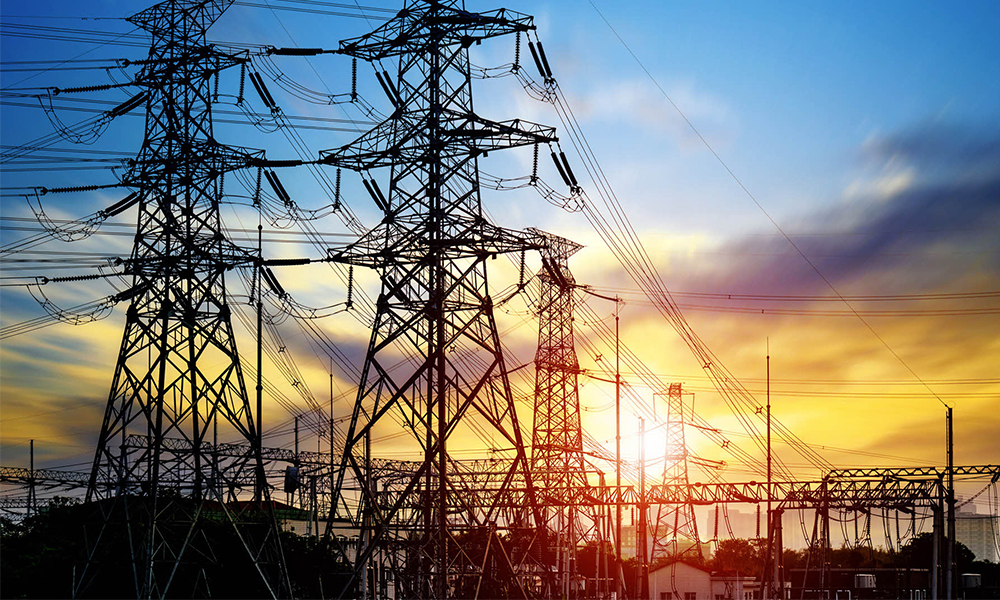
Da Afghanistan Breshna Sherkat (DABS), the country’s national power company, announced Monday that imported electricity from Tajikistan to Afghanistan has been reduced from 350 megawatts to 40 megawatts effective Tuesday.
In a statement released on Monday, DABS said the power has been reduced due to water shortages in Tajikistan.
However, DABS stated that an alternative had been found and that an additional 200 megawatts from Uzbekistan is being imported for Kabul and other provinces. DABS also said it was hoping to secure a further 200 megawatts as soon as possible.
“We faced the issue at 7am on Sunday, the electricity company was able to talk to Uzbekistan, and now we have provided 200 megawatts of electricity from Uzbekistan to Kabul,” Wahidullah Tawhidi, a spokesman for DABS said.
“Considering the domestic electricity, we have a total of 300 megawatts of electricity. We’re trying to get another 200 megawatts of electricity as soon as possible. The power in Kabul is relatively good right now,” he said.
According to DABS, electricity imported from Tajikistan serves Kabul, Nangarhar, Laghman, Logar, Pakita, Khost, Parwan, Panjshir, Kapisa, Baghlan, and parts of Kunduz provinces.
Meanwhile, economists say that more needs to be done to boost the domestic energy sector, especially regarding renewable energy and the production of energy from natural resources such as natural gas.
In November 2019, Bayat Power made history for Afghanistan when it successfully implemented the nation’s first 40-megawatt gas-powered Independent Power Producer (IPP) in over four decades using natural gas.
According to experts, Afghan Gas requires a lot of attention from the Afghan government in order to optimize its operations so as to sufficiently supply fuel for the 40MW power plant which is the only one of its kind in operation currently.
“If investments had been done on the electricity sector over the last decade, we would have become an exporter of electricity by now. I wish investors would successfully implement projects in the energy sector, similar to what Bayat Power did in Jawzjan and other provinces, lighting up thousands of homes,” an Afghan economist Hakimullah Sediqqi said.
“The government should think about this. In the long run, we should see the opening of dams, the opening of solar power, and have plentiful natural gas reserves worth billions of dollars. We should be able to use these resources to solve our problems of poverty and unemployment,” said Salim Toofan, an economic expert.
DABS meanwhile agreed that Afghanistan does have the means to produce power for the country.
“There is the capacity of using solar, gas, and water energy to generate electricity in Afghanistan,” said Tawhidi.
“Currently, the solar system in Kandahar province generates 40 megawatts, and the hydroelectric power dam of Helmand also generates 100 megawatts of electrical power,” he said.
However, noting private investors’ achievements in this sector, he said: “Bayat and Ghazanfar Groups have invested in power production utilizing natural gas in the northern part of the country, of which Bayat group’s electricity supply project is operational.”
He said: “There are opportunities for the private sector to invest in energy supply, and the government is ready to cooperate with them.”
The use of natural gas in energy production, specifically by Bayat Power – the first natural gas power plant in Afghanistan – has the potential to boost domestic energy production to 200MW as planned, provided Afghan Gas can deliver the much-needed fuel to operate the state of the art SGT-A45 Siemen’s turbines, which are the first to be deployed worldwide, in Afghanistan.








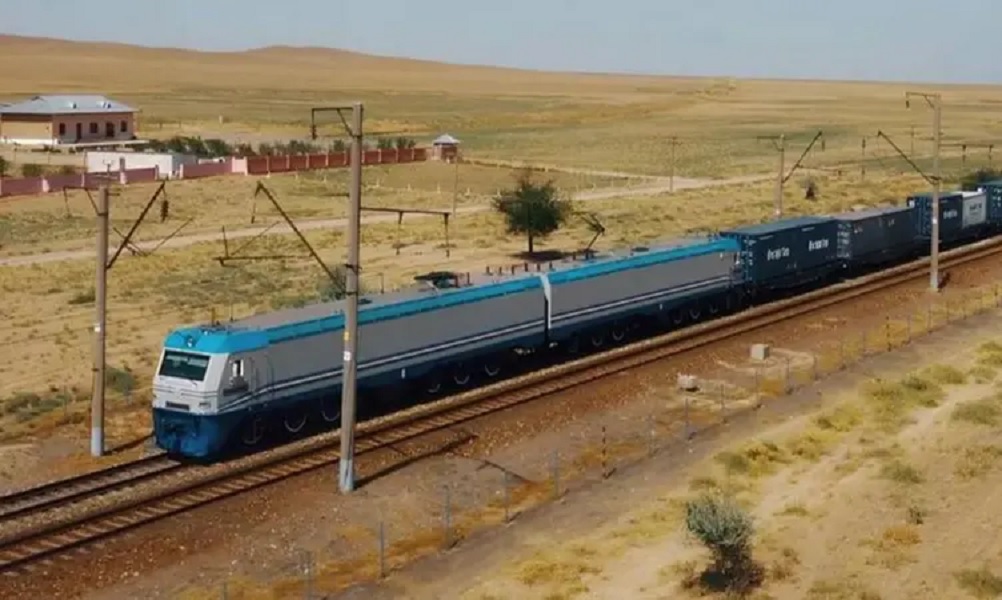
A new multimodal freight corridor linking China and Afghanistan via Turkmenistan has been officially launched, aiming to improve the speed and efficiency of overland cargo transportation across Central Asia.
According to the Turkmenistan Embassy in London, the country has become part of a newly established route designed to accelerate freight deliveries between China and Afghanistan.
The corridor, developed with the involvement of Uzbekistan Railways’ subsidiary Uztemiryulcontainer, covers approximately 7,400 kilometers and is expected to reduce transit time to around 30 days, improving overall logistics efficiency.
Under the new route, containers are transported by rail from China through the Altynkol station in Kazakhstan, continuing via Uzbekistan to a logistics hub in Bukhara. From there, cargo is transferred to road transport and moved across Turkmenistan before reaching Herat in Afghanistan.
Officials say the new system integrates rail and road networks into a unified logistics chain, making transport more predictable and efficient.
Business
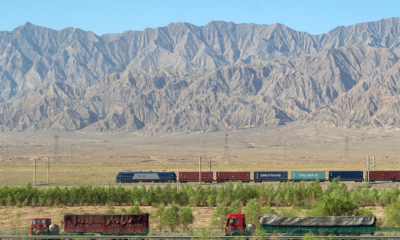
Uzbekistan launches new cargo corridor linking China and Afghanistan
From Uzbekistan, shipments will be transferred onto trucks and transported across Turkmenistan en route to Herat in western Afghanistan.
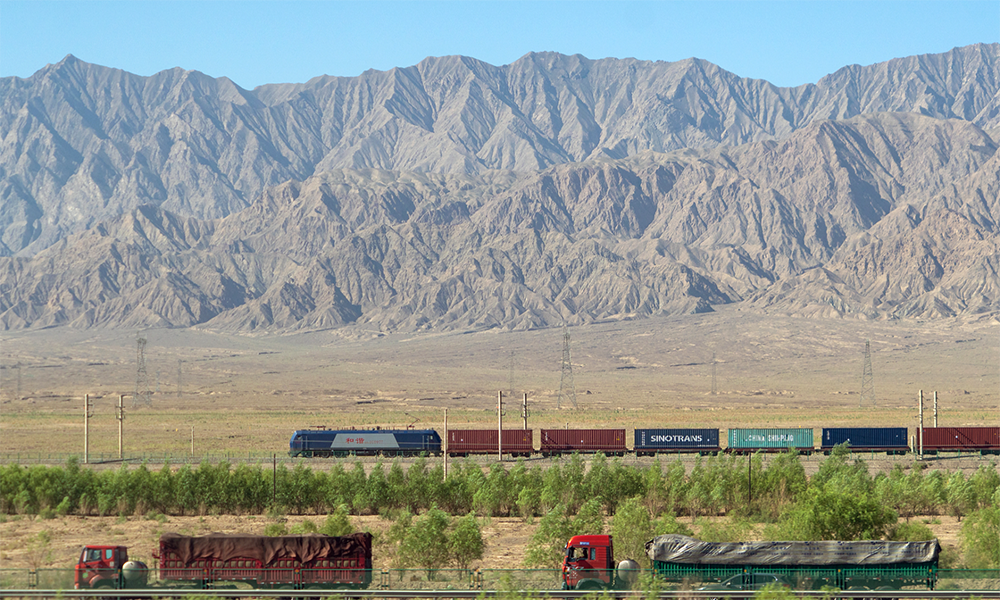
Uzbekistan’s national railway operator has announced the launch of a new multimodal freight route designed to strengthen logistics links between China and Afghanistan via Central Asia.
According to Trend news agency the new corridor will see container used goods transported by rail from China through Kazakhstan’s Altynkol station into Uzbekistan. Cargo will then be handled at the Bukhara logistics centre, operated by Uztemiryulkonteyner, before continuing its journey by road.
From Uzbekistan, shipments will be transferred onto trucks and transported across Turkmenistan en route to Herat in western Afghanistan.
Previously, freight along this trade corridor was largely routed via sea from China to Iran’s Bandar Abbas port, before continuing overland into Afghanistan. The new overland alternative is expected to streamline logistics and improve reliability.
Covering approximately 7,400 kilometres, the route is projected to reduce transit times to around 30 days, offering a more efficient option for regional cargo movement between East Asia and South Asia.
Business
Afghanistan presses Chinese contractor over delays in Mes Aynak copper project
During the meeting, the MCCT president assured that pending operations would be implemented in line with contractual provisions.
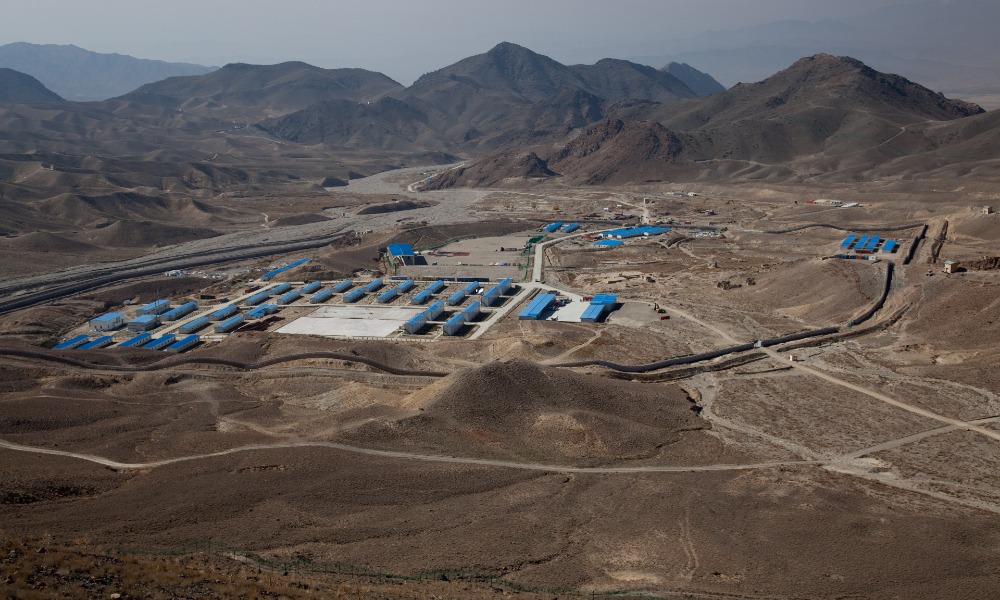
Afghanistan’s Minister of Mines and Petroleum Hedayatullah Badri has raised concerns over delays in the Mes Aynak copper project during a meeting with Chinese officials and company representatives.
The talks brought together the Chinese ambassador, the head of MCCT, and the chairman of MJAM, the contractor responsible for the major mining project. Discussions focused on the lack of progress and the failure to implement key obligations outlined in the mining contract.
Officials reviewed outstanding commitments that had previously been formally communicated to the company, with Afghan authorities stressing that agreed mining activities have yet to be carried out.
During the meeting, the MCCT president assured that pending operations would be implemented in line with contractual provisions.
Badri emphasized that the contractor must fully comply with all terms and conditions of the agreement, as well as follow the ministry’s formal directives. He called for concrete and immediate steps to accelerate the project and ensure full implementation of planned activities.
Mes Aynak copper project
The Mes Aynak copper deposit, located about 40 kilometres southeast of Kabul, is one of the world’s largest untapped copper reserves, with an estimated 11 million tonnes of copper.
The project was awarded to a Chinese consortium led by state-run Metallurgical Corporation of China in 2007 and formally signed in 2008 under a 30-year lease. Valued at roughly $3–4 billion, it was the largest foreign investment in Afghanistan at the time.
The agreement included plans to develop the mine along with major infrastructure such as railways, roads, and power facilities, although several of these commitments were later delayed or renegotiated.
Despite its scale, the project has seen little progress over the past decade. Work slowed significantly around 2013–2014, with ongoing delays attributed to security concerns, lack of infrastructure, and disputes over contractual terms. The presence of a significant archaeological site at Mes Aynak — containing ancient Buddhist remains — has also complicated development, requiring extensive preservation efforts.
Afghan authorities have repeatedly raised concerns over the contractor’s failure to meet key obligations and timelines, while Chinese companies have cited security and logistical challenges as major obstacles.
Since the political changes in Afghanistan in 2021, the project has repeatedly come under focus, with officials pushing to revive stalled mining initiatives as part of broader economic recovery efforts. Chinese firms have signaled continued interest, but meaningful progress has yet to materialize.
The project remains strategically important, with the potential to generate significant revenue, create jobs, and support Afghanistan’s long-term economic development — if longstanding challenges can be resolved.


IEA leaders contact Maulana Fazlur Rehman to express condolences over Sheikh Idris’s death

Mexico City to launch 2026 FIFA World Cup with star-studded opening ceremony

Trump releases government UFO files, more expected

Tawsia: Discussion on Afghanistan’s economic path and position

Former US officials urge halt to plan relocating Afghan refugees from Qatar to Congo

Bayat Power extends gas supply deal with Afghan Gas

Etihad Airways to expand Kabul–Abu Dhabi flights to daily service amid surging demand

Afghanistan’s new cricket head coach Richard Pybus arrives in Kabul

Afghanistan moves toward self-sufficiency in car battery production

Germany to launch online visa system for Afghan study and work applicants in Pakistan
Tawsia: Discussion on Afghanistan’s economic path and position

Tahawol: Pressure on Afghan refugees from Tajikistan to Europe discussed

Saar: Ongoing criticism of Pakistan’s Afghanistan policy discussed

Tahawol: Diplomatic turn in Iran–US confrontation discussed

Saar: Expanding interaction between countries and IEA discussed
-
 Sport5 days ago
Afghanistan set for Maldives four-nation tournament
-

 Business5 days ago
Kazakhstan grain exports to Afghanistan jump sharply
-
 Latest News5 days ago
Leadership reshuffle announced across Afghanistan’s admin and security sectors
-

 Latest News4 days ago
Pakistan’s Achakzai pushes for Afghanistan dialogue amid economic strain
-
 Business3 days ago
Afghanistan presses Chinese contractor over delays in Mes Aynak copper project
-
 Business3 days ago
Uzbekistan launches new cargo corridor linking China and Afghanistan
-
 Latest News4 days ago
Food prices surge 20% in Afghanistan as Hormuz crisis disrupts supply routes
-

 Latest News5 days ago
Austrian interior minister heads to Uzbekistan to finalize Afghan deportation deal