
Latest News
Hekmatyar set to launch mass protest action in Kabul

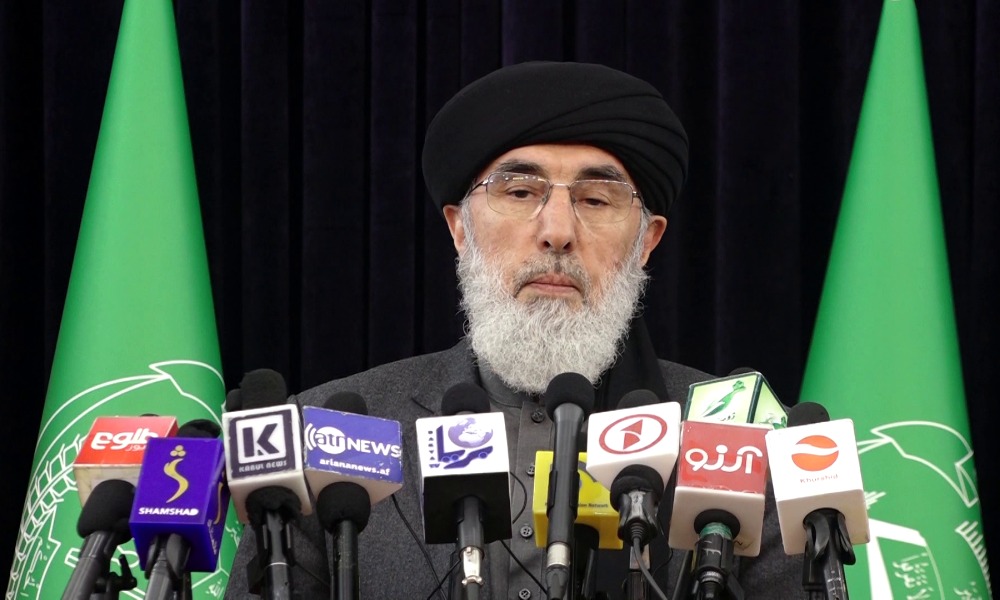
Gulbuddin Hekmatyar, leader of Hizb-e-Islami party, on Thursday said his party is going ahead with demonstrations in Kabul as government has not complied with the party’s demands, which include the release of Hezb-e-Islami prisoners, the integration of his forces within the security forces, and the government’s continued resistance to the peace process.
Speaking at a press conference in Kabul, Hekmatyar said the Hizb-e-Islami demonstrations will continue until the current government is dissolved and replaced by an interim government.
Last month a large number of Hizb-e-Islami protesters poured onto Kabul streets near the Presidential Palace chanting slogans against what they said were “those who hamper the peace process.”
Protestors gave government 10 days in which to meet their demands. At the time, protesters, led by Hekmatyar, accused government of orchestrating targeted attacks and called for an end to the violence.
“Preparations have been made for the demonstrations starting tomorrow, and security agencies have been notified,” Hekmatyar said.
Hekmatyar also said that demonstrations will start in other provinces in the near future.
“Our demonstration was supposed to start a few days ago, but the Moscow meeting postponed our demonstration,” he said.
He further added: “We call on government officials to stop the war and prepare for peace and agree on a government that is acceptable to all, and when these demands are met, we will stop our demonstrations,” Hekmatyar said.
Hekmatyar also said in addition to demonstrations, armed party members will hold meetings in parts of the country.
“In addition to the demonstrations, we may have armed Mujahideen meetings in some areas to show the nation and the international community that these forces have both weapons and areas under their control, but that they will not fight because of Hizb-e-Islami’s peace agreement with the government. They want to join the security forces, but the government did not fulfill its commitment,” said Hekmatyar.
He also said the Presidential Palace is under pressure and has realized the fact that it must give way to a new and acceptable government and be ready to transfer power.
Hekmatyar also raised the issue of President Ashraf Ghani’s early election plan but stated government does not have the support of “outsiders”.
“Agreeing to early elections means that the current government has no legitimacy, is not sustainable, and is no longer backed by outside supporters,” Hekmatyar added.
“At the Turkey Summit, talks should be focused only on withdrawal of foreign troops under the Doha agreement and the replacement of the current government with an acceptable transitional government,” he said.
Istanbul Summit preparations underway
Meanwhile, representatives of the United States, Turkey and the United Nations are in Doha currently and consulting with the Afghan Republic’s negotiating team and the Taliban.
According to sources, these meetings have been organized in order to set the agenda for the Istanbul Summit scheduled to be held in the next few weeks.
The High Council for National Reconciliation said Thursday that before the Istanbul Summit, the parties must reach an agreement on what is to be presented in Turkey.
“Representatives of the United States and Turkey, and the United Nations, are in Doha and, hosted by Qatar, have begun talks on how to set the agenda for a meeting between Turkey and the negotiating delegations of the two sides,” said Farooq Majroh, a member of the Afghan Republic’s negotiating team.







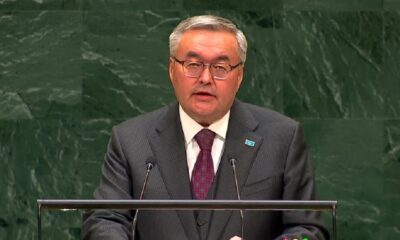




Kazakhstan’s Foreign Minister Mukhtar Tileuberdi has called for pragmatic and coordinated international engagement with Afghanistan, saying the country’s long-term stability is closely linked to the security and sustainable development of Central Asia.
Speaking during the general debate of the 81st session of the United Nations General Assembly in New York on Friday, Tileuberdi said humanitarian assistance to Afghanistan remains essential but alone cannot break the cycle of poverty, displacement and dependency.
He said Kazakhstan supports a “pragmatic, coordinated and step-by-step” approach to international engagement with Afghanistan, with the United Nations playing a central role.
Tileuberdi also said Kazakhstan is working with the UN to operationalize the United Nations Regional Centre for the Sustainable Development Goals for Central Asia and Afghanistan in Almaty.
He said the success of the centre should be measured by the results and assistance it delivers to the region.


Saar: Concerns over Pakistan’s political crisis discussed

Afghanistan Champions League: Omar Zawak Herat beat Toofan Herat 1-0

Blast in Pakistan’s Dera Ismail Khan kills 11, injures 30

Ariana Afghan Airlines increases Kabul-Delhi cargo flights

Khalilzad questions Pakistan’s commitment to Afghan welfare

Saudi energy group signs major Afghanistan deals covering gas exploration and pipeline plans

Trump floats idea of renaming Atlantic or Pacific Ocean

US hits Egyptian bank branches with Iran sanctions as war marks six months

Nepal flood rescue mission enters critical phase as thousands remain missing

Iranian clubs to face Gulf opponents at neutral venues in Asian Champions League Elite
Saar: Concerns over Pakistan’s political crisis discussed

Exclusive interview with Abdul Latif Mansoor, Minister of MRRD

Tawsia: Overview of Afghanistan’s iron mines

Tahawol: Discussion on fresh Pakistani airstrikes on Afghanistan

Saar: Calls for international support for Afghanistan discussed
-

 World5 days ago
CNN, MS NOW and Politico sue Trump, challenging White House ban
-

 Latest News4 days ago
UN reiterates call for respect for international law after Kunar airstrikes
-

 Latest News3 days ago
Ariana Afghan Airlines ranks seventh among 45 Central Asian airlines
-
 Latest News5 days ago
Khalilzad condemns Pakistan airstrikes, says current strategy is not working
-

 Regional3 days ago
US and Iran hold first talks since June after Trump’s ‘annihilation’ threat
-

 Latest News3 days ago
Silk Road highway in Wakhan corridor now reaches the China border
-

 Latest News4 days ago
Afghan Official: Pakistan’s airstrikes will not go unanswered
-

 Sport4 days ago
Afghan boxing referee heads to China for international festival