
Latest News
US and Ghani government ‘set the stage’ for the collapse of republic: SIGAR

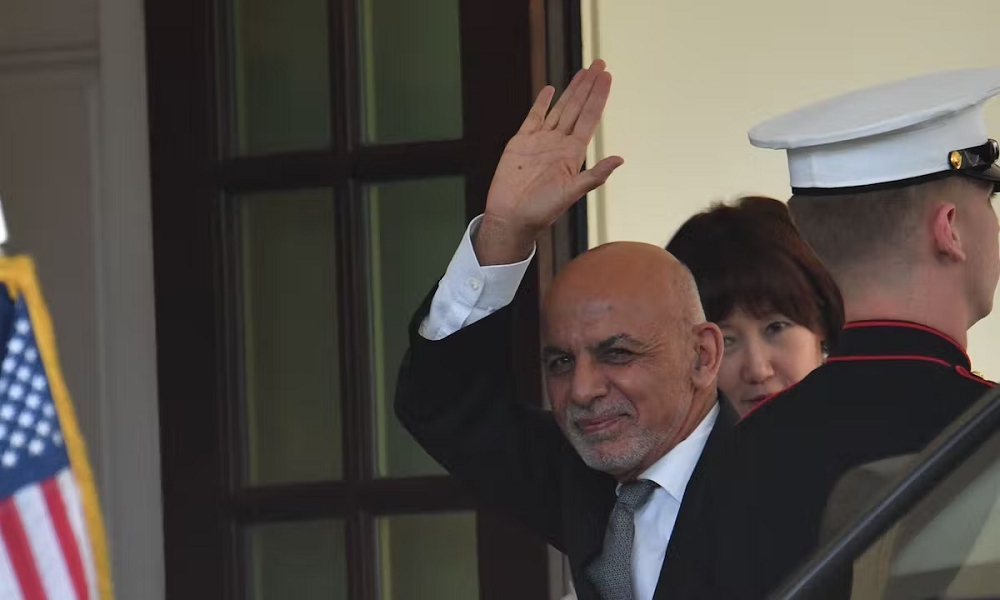
Washington’s Special Inspector General for Afghanistan Reconstruction (SIGAR) John F. Sopko stated in a report released Monday, that the agency found six short-term factors accelerated the collapse of the Afghan security forces in August 2021.
In his report to Congress, Sopko said first the decision by the United States to withdraw all U.S. military forces “fundamentally changed the behaviors of the United States, the [Ashraf] Ghani administration, and the Taliban (IEA).”
He said many Afghans thought the U.S.-Taliban agreement was an act of bad faith and a signal that the “United States was handing over Afghanistan to the enemy as it rushed to exit the country,” he said adding that “its immediate effect was a dramatic loss in ANDSF morale”.
In addition, the change in the U.S. military’s level of support to the ANDSF; the failure to establish a self-sustaining ANDSF; former President Ashraf Ghani’s frequent changes of ANDSF leaders and appointment of loyalists; the Afghan government’s failure to take responsibility for Afghan security through the implementation of a national security strategy; and the Islamic Emirate of Afghanistan’s (IEA) effective exploitation of ANDSF weaknesses, were also behind the collapse of the security forces.
“These six short-term factors worked together to cause the ANDSF’s collapse,” Sopko stated in the report.
He said, in addition, SIGAR identified eight systemic factors that explain why, after 20 years and nearly $90 billion in U.S.
security assistance, the ANDSF was vulnerable to collapse in the first place and ill prepared to sustain security following a U.S. withdrawal.
According to him, these factors were:
The length of the U.S. commitment was disconnected from a realistic understanding of the time required to build a self-sustaining security sector;
No one country or agency had ownership of the ANDSF development mission;
Advisors were often poorly trained and inexperienced for their mission, while frequent personnel rotations impeded standardization, continuity of effort, and institutional memory;
The lack of effective interagency oversight and assessment programs prevented a clear picture of reality on the ground;
Afghan corruption eroded ANDSF capabilities;
U.S training, logistics and weapons procurement policies undermined its stated goal of creating a self-sustaining Afghan military;
The United States perpetuated pre-existing ethnic and regional tensions rather than achieving stated mission goals of force diversity and unification;
The U.S. and Afghan governments failed to develop a police force effective at providing justice and protecting Afghan citizens from crime.
Sopko also stated that during SIGAR’s work looking at the accounting for and status of U.S.-provided equipment to the ANDSF and U.S.trained ANDSF personnel, the agency found that the United States lacked a full accounting of equipment and personnel even before the collapse.
He said the IEA is now using U.S.-provided military equipment in operations; and while some U.S.-provided aircraft have been recovered, others remain in limbo in other countries.
In addition, ANDSF personnel have escaped, are in hiding, have been killed, or may have joined extremist groups, Sopko stated.
Sopko also stated in the report that the US department of defense and the state departed declined to review the interim
Draft of the report and in turn denied SIGAR access to their staff, “and mostly declined to answer requests for information”.
“This limited SIGAR’s ability to perform this evaluation. Still, this final version includes additional information that we received from U.S. and former Afghan officials over the past eight months, without support from U.S. agencies.”












Kazakhstan’s Foreign Minister Mukhtar Tileuberdi has called for pragmatic and coordinated international engagement with Afghanistan, saying the country’s long-term stability is closely linked to the security and sustainable development of Central Asia.
Speaking during the general debate of the 81st session of the United Nations General Assembly in New York on Friday, Tileuberdi said humanitarian assistance to Afghanistan remains essential but alone cannot break the cycle of poverty, displacement and dependency.
He said Kazakhstan supports a “pragmatic, coordinated and step-by-step” approach to international engagement with Afghanistan, with the United Nations playing a central role.
Tileuberdi also said Kazakhstan is working with the UN to operationalize the United Nations Regional Centre for the Sustainable Development Goals for Central Asia and Afghanistan in Almaty.
He said the success of the centre should be measured by the results and assistance it delivers to the region.


Abu Muslim Farah defeat Khurasan Faryab 2-0 in ACL season six

Saar: Concerns over Pakistan’s political crisis discussed

Afghanistan Champions League: Omar Zawak Herat beat Toofan Herat 1-0

Blast in Pakistan’s Dera Ismail Khan kills 11, injures 30

Ariana Afghan Airlines increases Kabul-Delhi cargo flights

Saudi energy group signs major Afghanistan deals covering gas exploration and pipeline plans

Trump floats idea of renaming Atlantic or Pacific Ocean

US hits Egyptian bank branches with Iran sanctions as war marks six months

Nepal flood rescue mission enters critical phase as thousands remain missing

Iranian clubs to face Gulf opponents at neutral venues in Asian Champions League Elite
Saar: Concerns over Pakistan’s political crisis discussed

Exclusive interview with Abdul Latif Mansoor, Minister of MRRD

Tawsia: Overview of Afghanistan’s iron mines

Tahawol: Discussion on fresh Pakistani airstrikes on Afghanistan

Saar: Calls for international support for Afghanistan discussed
-

 World5 days ago
CNN, MS NOW and Politico sue Trump, challenging White House ban
-

 Latest News3 days ago
Ariana Afghan Airlines ranks seventh among 45 Central Asian airlines
-

 Latest News4 days ago
UN reiterates call for respect for international law after Kunar airstrikes
-

 Regional3 days ago
US and Iran hold first talks since June after Trump’s ‘annihilation’ threat
-

 Latest News3 days ago
Silk Road highway in Wakhan corridor now reaches the China border
-

 Latest News4 days ago
Afghan Official: Pakistan’s airstrikes will not go unanswered
-

 Sport4 days ago
Afghan boxing referee heads to China for international festival
-

 Regional3 days ago
Iran airlines cancel flights as US sanctions hit