
Latest News
Afghan embassy in India announces it will cease operations from Oct. 1

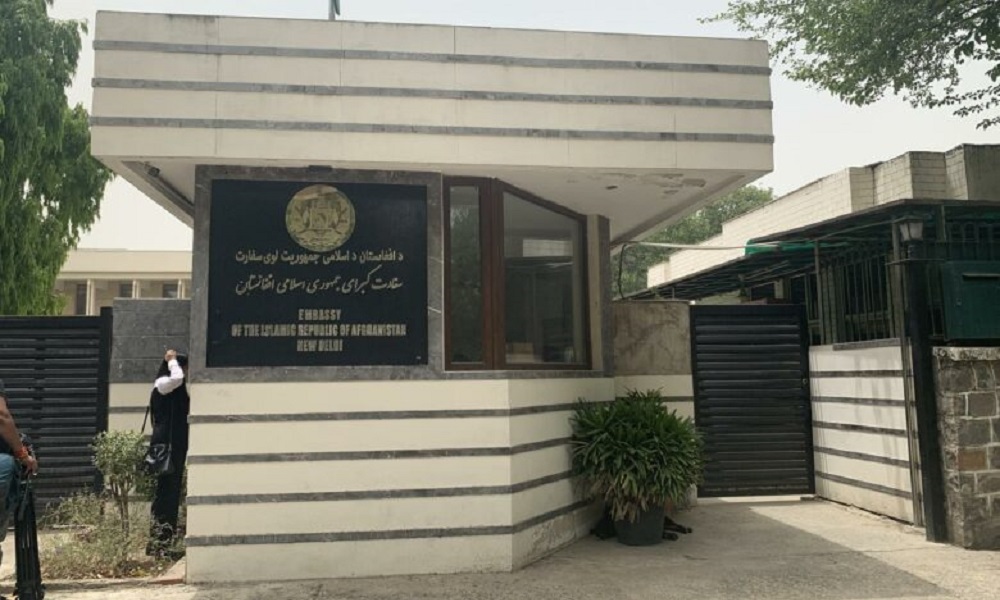
The embassy of Afghanistan in India’s capital New Delhi will cease operations from Oct. 1, due to a lack of support from India and a reduction in personnel and resources, the embassy said in a statement on social media platform X.
The embassy also said a failure to meet expectations in serving Afghanistan’s interests is another key factor in shutting of the embassy.
“Given these circumstances, it is with deep regret that we have taken the difficult decision to close all operations of the mission with the exception of emergency consular services to Afghan citizens till the transfer of the custodial authority of the mission to the host country,” the embassy said in the statement dated Sept. 30.
In its announcement, the Afghan Embassy also cited challenges like shortage of both personnel and resources available. “The lack of timely and sufficient support from visa renewal for diplomats to other critical areas of cooperation led to an understandable frustration among our team and impeded our ability to carry out routine duties effectively,” the statement read.
The embassy also refuted any “baseless claims” regarding internal strife or discord among its diplomatic staff or any diplomats using the crisis to seek asylum in a third country.
India does not recognise the Islamic Emirate of Afghanistan (IEA) as government, and closed its own embassy in Kabul after the IEA took control in 2021, but New Delhi had allowed the ambassador and mission staff appointed by the Western-backed government of ousted Afghan President Ashraf Ghani to issue visas and handle trade matters.







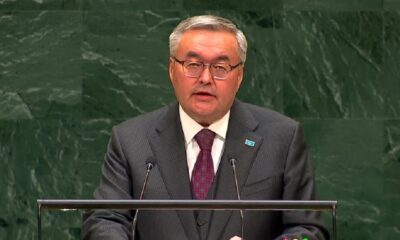




Kazakhstan’s Foreign Minister Mukhtar Tileuberdi has called for pragmatic and coordinated international engagement with Afghanistan, saying the country’s long-term stability is closely linked to the security and sustainable development of Central Asia.
Speaking during the general debate of the 81st session of the United Nations General Assembly in New York on Friday, Tileuberdi said humanitarian assistance to Afghanistan remains essential but alone cannot break the cycle of poverty, displacement and dependency.
He said Kazakhstan supports a “pragmatic, coordinated and step-by-step” approach to international engagement with Afghanistan, with the United Nations playing a central role.
Tileuberdi also said Kazakhstan is working with the UN to operationalize the United Nations Regional Centre for the Sustainable Development Goals for Central Asia and Afghanistan in Almaty.
He said the success of the centre should be measured by the results and assistance it delivers to the region.


Saar: Concerns over Pakistan’s political crisis discussed

Afghanistan Champions League: Omar Zawak Herat beat Toofan Herat 1-0

Blast in Pakistan’s Dera Ismail Khan kills 11, injures 30

Ariana Afghan Airlines increases Kabul-Delhi cargo flights

Khalilzad questions Pakistan’s commitment to Afghan welfare

Saudi energy group signs major Afghanistan deals covering gas exploration and pipeline plans

Trump floats idea of renaming Atlantic or Pacific Ocean

US hits Egyptian bank branches with Iran sanctions as war marks six months

Nepal flood rescue mission enters critical phase as thousands remain missing

Iranian clubs to face Gulf opponents at neutral venues in Asian Champions League Elite
Saar: Concerns over Pakistan’s political crisis discussed

Exclusive interview with Abdul Latif Mansoor, Minister of MRRD

Tawsia: Overview of Afghanistan’s iron mines

Tahawol: Discussion on fresh Pakistani airstrikes on Afghanistan

Saar: Calls for international support for Afghanistan discussed
-

 World5 days ago
CNN, MS NOW and Politico sue Trump, challenging White House ban
-

 Latest News3 days ago
Ariana Afghan Airlines ranks seventh among 45 Central Asian airlines
-

 Latest News4 days ago
UN reiterates call for respect for international law after Kunar airstrikes
-
 Latest News5 days ago
Khalilzad condemns Pakistan airstrikes, says current strategy is not working
-

 Regional3 days ago
US and Iran hold first talks since June after Trump’s ‘annihilation’ threat
-

 Latest News3 days ago
Silk Road highway in Wakhan corridor now reaches the China border
-

 Latest News4 days ago
Afghan Official: Pakistan’s airstrikes will not go unanswered
-

 Sport4 days ago
Afghan boxing referee heads to China for international festival