
Latest News
SIGAR reports a large percentage of US aid is being diverted to the IEA

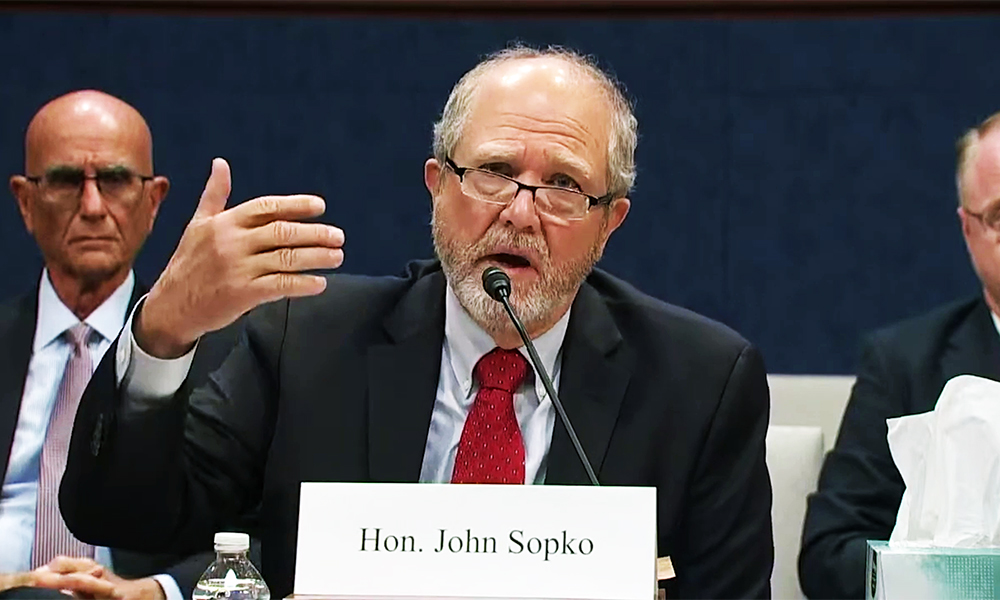
The US Inspector General for the Reconstruction of Afghanistan (SIGAR) John Sopko said Tuesday the Islamic Emirate is diverting or otherwise benefitting from a considerable amount of U.S. assistance.
Testifying at a hearing before the Committee on Foreign Affairs US House of Representatives, Sopko shared how US funds have been provided to or diverted by the Islamic Emirate of Afghanistan (IEA) since the collapse of the former government in August 2021.
He said: “SIGAR has found that Taliban (IEA) officials routinely pressure US partners to hire Taliban allies, insist that US partners contract with Taliban-affiliated companies, dictate which Afghans should receive US aid, demand payoffs from US partners before a project can begin, divert US food aid to Taliban soldiers, and tax recipients of aid once it is delivered.
“This interference in and diversion of US assistance is worrying and presents multiple risks,” Sopko said.
He stated however, “over the last 12 years, SIGAR documented extensive diversion of US assistance by the prior Karzai and Ghani regimes. Similarly, experts have noted that diversion and interference are common among other autocratic regimes the US government has sought to bypass to get aid directly to vulnerable populations. Nevertheless, the diversion of humanitarian assistance by the Taliban (IEA) is of particular concern given the humanitarian crisis the populace face as well as the Taliban’s terrorist ties.”
“Unlike with the prior Afghan governments, diverted funds now may fund terrorist activities in addition to enriching the pockets of corrupt officials,” he said.
Meanwhile in his opening speech to the House, at the same hearing, Michael McCaul, Chairman of the House Foreign Affairs Committee, criticized the Biden administration for its policies on Afghanistan and said there had been no plans in place to support the Afghan people nor to secure enduring peace post withdrawal.
He called the IEA “terrorists” who “oppress” the Afghan people, adding that “they steal humanitarian aid from starving Afghans.”
He also criticized the IEA for the edicts against women and girls.
“What troubles me is that the Biden administration is pursuing a policy of engagement at all costs and has failed to hold the Taliban (IEA) to account for their crimes.
“The Biden administration meet with the Taliban (IEA) frequently, praise the Taliban often, and haphazardly send billions of tax-payers dollars to Afghanistan.
“Through these policies the Biden administration has all but recognized the Taliban as the legitimate government of Afghanistan.
He also claimed the IEA had equipped the Tehreek-e-Taliban Pakistan (TTP) with weapons left behind by the US, and that the TTP is “increasingly conducting terrorist attacks while al-Qaeda remains”safely in Afghanistan under Taliban (IEA) protection.”
However, the Islamic Emirate rejected Sopko’s statements that the IEA is either benefiting or diverting US aid and said the claims were baseless.
“America and Western countries do not cooperate with and help the Islamic Emirate, and regarding the [special] inspector general of the United States of America for the reconstruction of Afghanistan that you mentioned, neither does it have any official office in Afghanistan, nor does it coordinate with the officials of the Islamic Emirate, so neither their statements nor their claims have any validity,” said Bilal Karimi, the IEA’s Deputy Spokesman.
The Islamic Emirate also rejected McCaul’s statements on the the IEA having close ties with terrorist groups including the TTP and al-Qaeda and said officials do not have any documents nor evidence to prove their statements, and that the claims were merely propaganda.

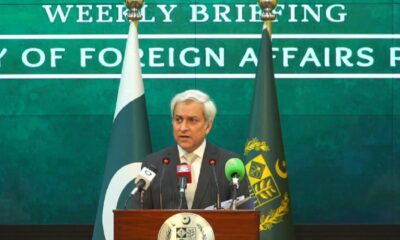



Pakistan says communities living along the Afghanistan-Pakistan Durand Line want peace and stability, despite ongoing security concerns in the region.
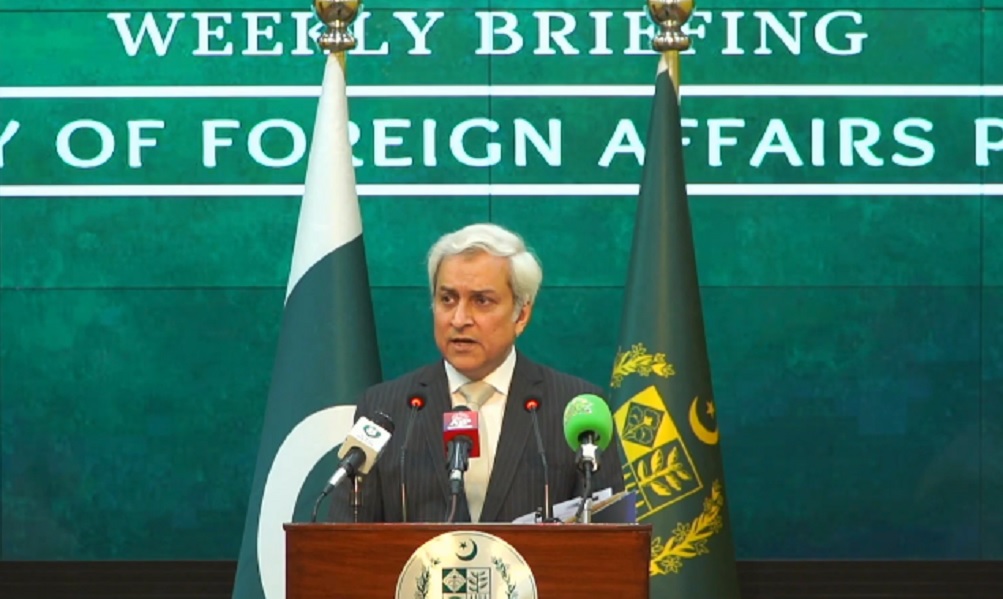
Speaking during a weekly media briefing, Pakistan Foreign Office spokesperson Tahir Andrabi said there are no major issues between the people of Afghanistan and Pakistan, adding that residents on both sides of the Durand Line want peaceful relations and greater regional stability.
However, Andrabi claimed that terrorism originating from Afghan territory continues to undermine peace efforts.
He said Islamabad believes militant activity crossing from Afghanistan remains a significant obstacle to improving regional security and bilateral ties.
The Islamic Emirate of Afghanistan has repeatedly rejected such allegations, maintaining that no militant group is allowed to use Afghan soil to threaten neighboring countries.
Andrabi also said Pakistan remains diplomatically engaged on regional matters involving Afghanistan, Iran, India, and Somalia, stressing that dialogue and diplomacy remain Islamabad’s preferred means of resolving disputes.
Latest News
Afghanistan-Gambia ties discussed during Doha meeting
Both sides also exchanged views on strengthening diplomatic engagement and exploring future economic cooperation.
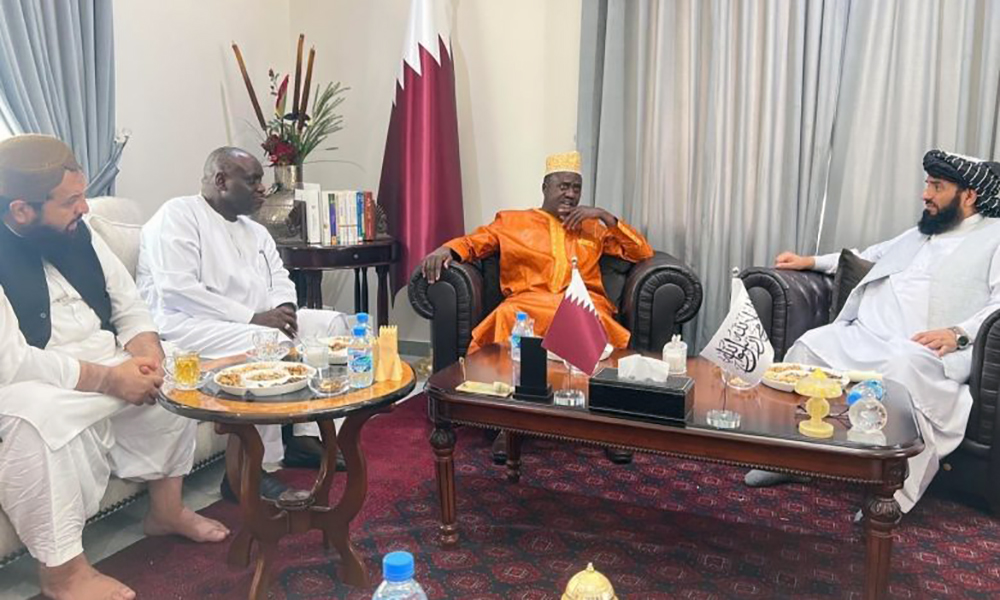
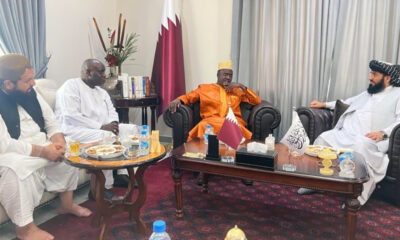
Suhail Shaheen, head of the Islamic Emirate’s embassy in Doha, has met with Omar Jah, Ambassador and Permanent Representative of The Gambia to Qatar, to discuss bilateral relations and areas of mutual interest.
According to a statement from the Afghan embassy in Doha, Jah also oversees Gambian diplomatic affairs related to Afghanistan.
The meeting focused on Afghanistan-Gambia relations, the current security situation in Afghanistan, and potential investment opportunities in the country.
Both sides also exchanged views on strengthening diplomatic engagement and exploring future economic cooperation.
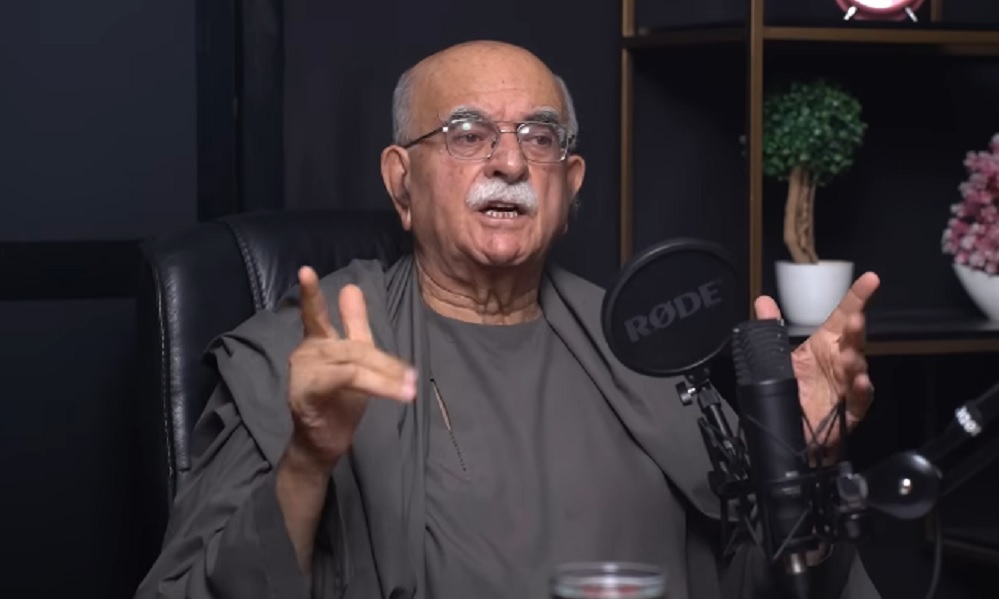
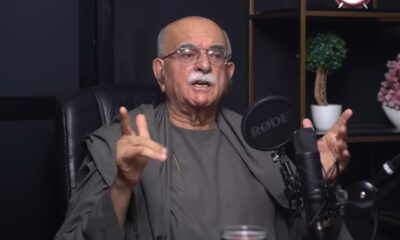
Mahmood Khan Achakzai, a member of Pakistan’s National Assembly and head of the Pakhtunkhwa Awami National Party, has said that if capable statesmen had been in power, people living on both sides of the Durand Line could have moved freely across the line.
Speaking during a podcast interview, Achakzai said that countries with histories of major conflict, including Russia, Germany and the United Kingdom, now maintain far more open borders despite past wars. He said that in many such regions, only a “paper line” remains, with limited border restrictions.
Drawing comparisons with the disputed Durand Line boundary between Afghanistan and Pakistan, Achakzai argued that a similar arrangement could have been possible in South Asia.
“What is the problem here? A Punjabi could dance in Kandahar and a Pashtun could come here. Even if we are not formally one country, we could have effectively functioned like one,” he said.
The Pakistani politician also referred to the Soviet invasion of Afghanistan and the later U.S.-led intervention, saying Afghanistan has the right to seek war reparations from those countries to support reconstruction efforts.
Achakzai further criticised the treatment of Pashtuns in Pakistan, alleging that individuals in cities including Lahore and Karachi have faced detention and deportation.


Saar: Ongoing criticism of Pakistan’s Afghanistan policy discussed

Jalal Jalali discusses health cooperation with head of CDE in Kabul

Pakistan says cross-Durand Line communities seek peace and stability

Afghanistan-Gambia ties discussed during Doha meeting

Ariana Snooker Championship Season 2 set to kick off next week

Bayat Power extends gas supply deal with Afghan Gas

Etihad Airways to expand Kabul–Abu Dhabi flights to daily service amid surging demand

Afghanistan’s new cricket head coach Richard Pybus arrives in Kabul

Afghanistan moves toward self-sufficiency in car battery production

ATN seals Ariana Snooker Championship deal for five seasons
Saar: Ongoing criticism of Pakistan’s Afghanistan policy discussed

Tahawol: Diplomatic turn in Iran–US confrontation discussed

Saar: Expanding interaction between countries and IEA discussed

Tahawol: Deportation of Afghan refugees from Germany discussed

Saar: Criticism over Pakistan’s policies discussed
-

 World5 days ago
Trump says US could restart Iran strikes ‘if they misbehave’
-
 Regional4 days ago
Iran says it has received US response to its latest offer for talks
-
 Business4 days ago
Afghan economic commission approves 12 major development projects across key sectors
-
 Sport3 days ago
Afghanistan set for Maldives four-nation tournament
-
 Latest News4 days ago
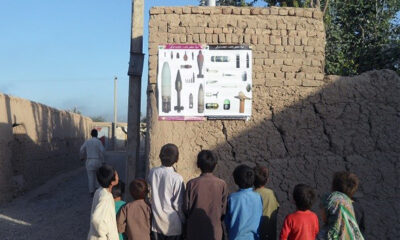
UN warns funding cuts are slowing mine clearance efforts in Afghanistan
-

 Business3 days ago
Kazakhstan grain exports to Afghanistan jump sharply
-
 Latest News4 days ago
Afghan officials say media should align with Islamic and national values
-
 Tahawol4 days ago
Tahawol: Efforts for US-Iran agreement