
Latest News
UN’s DiCarlo says trust and honesty needed by all parties for Afghanistan to move forward
“Human rights and especially the rights of women and girls , and inclusion of all members of society will continue to be an integral part of our discussions,” DiCarlo said.

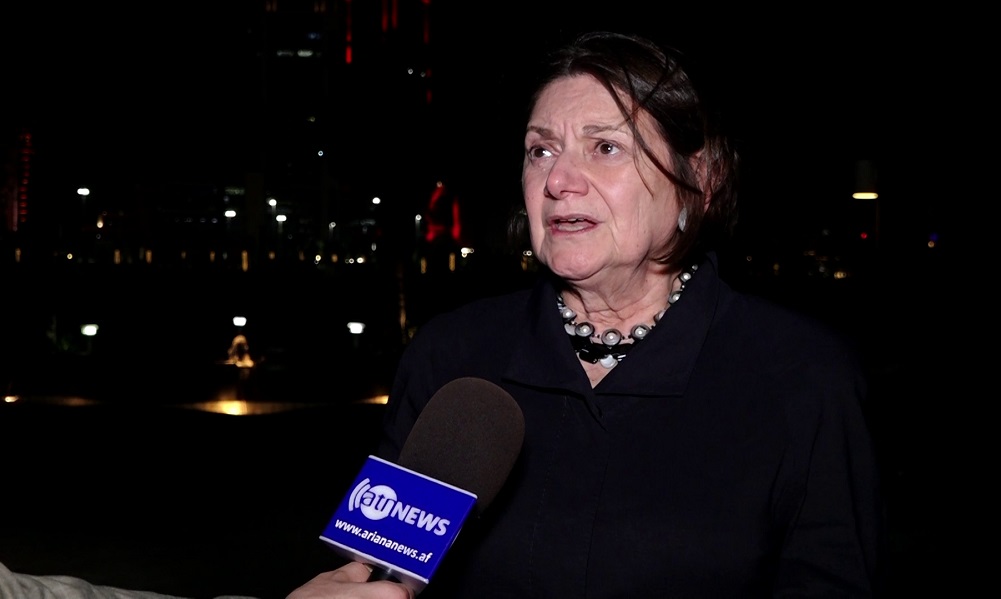
UN Under-Secretary-General for Political and Peacebuilding Affairs Rosemary DiCarlo said on Tuesday after meeting with members of Afghanistan’s civil society that there “really is a need to build trust on all sides”.
Addressing a press conference after her meeting, she said it was important to have dialogue “that’s built on honesty”.
“It’s got to be based on principles, those of the UN Charter, and various human rights treaties that Afghanistan is a party to.”
She said: “We are still at the beginning of this process.”
According to her there was a need for everyone to be patient and realistic.
“It’s a process based on the independent that the UN Security Council recognized last November; the assessment calls for a more coordinated and structured process, with clear conditions and expectations from all sides.
“It also calls for a principled, step-for-step approach with a clear understanding of the outcomes and commitments from all sides.
“Human rights and especially the rights of women and girls , and inclusion of all members of society will continue to be an integral part of our discussions.”
In terms of moving forward, DiCarlo said there had been a discussion in Monday’s meeting with special envoys and the Islamic Emirate on the possibility of establishing smaller working groups to discuss key issues.
“We are continuing that discussion on how to proceed forward,” she said.
Once again she reiterated that this process was in its early stages and would need time and patience.
“Really, our approach has one goal. And that’s helping all the people of Afghanistan.”
DiCarlo’s meeting with civil society representatives not part of the official agenda. Contrary to earlier reports that no envoys from foreign countries had attended this meeting, DiCarlo said there “had been a fair number of member states” at the meeting.
She pointed out attendance had been “optional”.
Asked whether civil society representatives were upset at having been sidelined from the 3rd Doha meeting she said: “Obviously, civil society, many would have like to be at the meeting but they were pleased to have the opportunity to speak with some of the envoys.”
DiCarlo was also asked why such the two-day meeting and the meeting with Afghan civil society representatives had been so shrouded in secrecy; and why the identities of the civil society members were being withheld.
In answer, she put it down to the UN “respecting the privacy” of individuals and that UN meetings are closed events.
She did however say the international community does feel that Afghanistan is not abiding by its international obligations.
However, at the very end of the two-day meeting, mention was made that eventually there would be a need for an “intra-Afghan dialogue”.
“What we are doing is not an intra-Afghan dialogue right now. We are just going through issues at this point; and we want to get various perspectives.
“Let’s be perfectly honest, the citizens and the de facto authorities are not ready for sitting down at the table with each other. At least they weren’t for this past meeting,” she said.
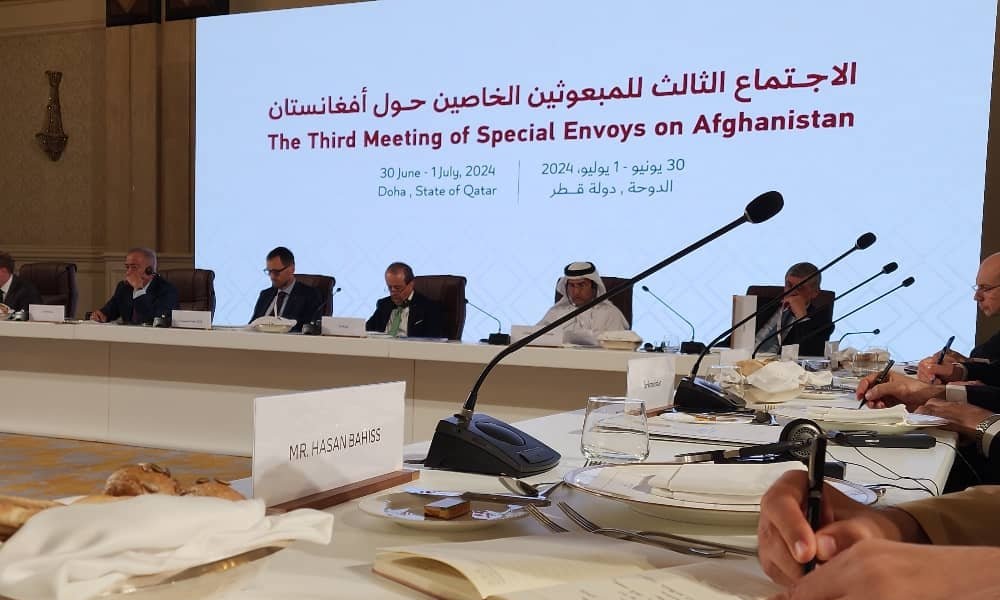
The two-day UN-led Doha meeting was the third of its kind but the first one that the Islamic Emirate attended.
However, representatives of Afghan civil societies had been barred from attending the event. Instead, DiCarlo and some foreign envoys met with them in a separate meeting on Tuesday.
Related stories:
UN keeps identity of Afghan activists at Doha meeting under wraps
Mujahid sums up Doha meeting, says most countries willing to cooperate with Afghanistan












Kazakhstan’s Foreign Minister Mukhtar Tileuberdi has called for pragmatic and coordinated international engagement with Afghanistan, saying the country’s long-term stability is closely linked to the security and sustainable development of Central Asia.
Speaking during the general debate of the 81st session of the United Nations General Assembly in New York on Friday, Tileuberdi said humanitarian assistance to Afghanistan remains essential but alone cannot break the cycle of poverty, displacement and dependency.
He said Kazakhstan supports a “pragmatic, coordinated and step-by-step” approach to international engagement with Afghanistan, with the United Nations playing a central role.
Tileuberdi also said Kazakhstan is working with the UN to operationalize the United Nations Regional Centre for the Sustainable Development Goals for Central Asia and Afghanistan in Almaty.
He said the success of the centre should be measured by the results and assistance it delivers to the region.


Abu Muslim Farah defeat Khurasan Faryab 2-0 in ACL season six

Saar: Concerns over Pakistan’s political crisis discussed

Afghanistan Champions League: Omar Zawak Herat beat Toofan Herat 1-0

Blast in Pakistan’s Dera Ismail Khan kills 11, injures 30

Ariana Afghan Airlines increases Kabul-Delhi cargo flights

Saudi energy group signs major Afghanistan deals covering gas exploration and pipeline plans

Trump floats idea of renaming Atlantic or Pacific Ocean

US hits Egyptian bank branches with Iran sanctions as war marks six months

Nepal flood rescue mission enters critical phase as thousands remain missing

Iranian clubs to face Gulf opponents at neutral venues in Asian Champions League Elite
Saar: Concerns over Pakistan’s political crisis discussed

Exclusive interview with Abdul Latif Mansoor, Minister of MRRD

Tawsia: Overview of Afghanistan’s iron mines

Tahawol: Discussion on fresh Pakistani airstrikes on Afghanistan

Saar: Calls for international support for Afghanistan discussed
-

 World5 days ago
CNN, MS NOW and Politico sue Trump, challenging White House ban
-

 Latest News3 days ago
Ariana Afghan Airlines ranks seventh among 45 Central Asian airlines
-

 Latest News4 days ago
UN reiterates call for respect for international law after Kunar airstrikes
-

 Regional3 days ago
US and Iran hold first talks since June after Trump’s ‘annihilation’ threat
-

 Latest News3 days ago
Silk Road highway in Wakhan corridor now reaches the China border
-

 Latest News4 days ago
Afghan Official: Pakistan’s airstrikes will not go unanswered
-

 Sport4 days ago
Afghan boxing referee heads to China for international festival
-

 Regional5 days ago
G7 foreign ministers call on Iran to stop arming Houthis