
Latest News
Afghanistan loses UN voting rights for third year amid fears of global isolation
IEA officials say Afghanistan’s inability to pay its UN dues stems from the lack of formal recognition of the current government, making direct payments to the UN impossible.


Afghanistan has been stripped of its voting rights at the United Nations General Assembly for the third consecutive year, following non-payment of its membership fees, in accordance with UN rules.
Under the UN Charter, any member state that fails to settle dues for more than two years automatically loses the right to vote in the General Assembly.
The development comes as Afghanistan faces severe economic pressures, a surge in refugee returns, and the mounting impacts of climate change. Experts warn that the country’s absence from international decision-making forums could further marginalize Afghan voices on the global stage.
Political analysts say the continued suspension of voting rights risks deepening Afghanistan’s isolation from global processes.
The Islamic Emirate of Afghanistan (IEA) has repeatedly requested that its representatives be allowed to occupy the UN seat, arguing that this would enable the country’s realities and governance perspectives to be represented internationally.
However, persistent disputes over human rights, particularly women’s rights, remain a major obstacle to formal recognition of the IEA government.
Speaking at a high-level UN General Assembly session marking the 30th anniversary of the Fourth World Conference on Women, UN Deputy Secretary-General Sima Sami Bahous highlighted Afghanistan as one of the countries where women are enduring the heaviest burdens of crisis.
“From Afghanistan to the Democratic Republic of Congo, Gaza, Sudan, Ukraine, and Yemen, women and girls are carrying the greatest weight of crises,” Bahous said. “We owe it to them to leave no effort spared in the pursuit of peace.”
She warned that if current trends persist, by 2030 more than 351 million women and girls could live in extreme poverty, while 676 million others could face deadly conflicts.
IEA officials say Afghanistan’s inability to pay its UN dues stems from the lack of formal recognition of the current government, making direct payments to the UN impossible. Afghanistan’s annual membership fee is approximately $200,000, but missed payments have pushed the country’s total debt to over $900,000.
Experts caution that the continued suspension of Afghanistan’s voting rights could weaken its influence in global decision-making and affect the flow of humanitarian aid and international economic cooperation.
“This comes at a critical moment in Afghanistan’s modern history,” one analyst noted. “Constructive engagement with the international community is essential to prevent further instability and isolation.”

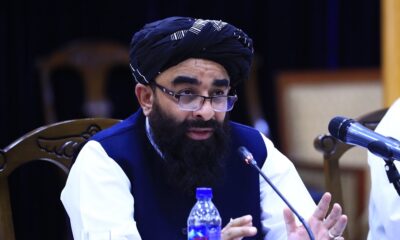


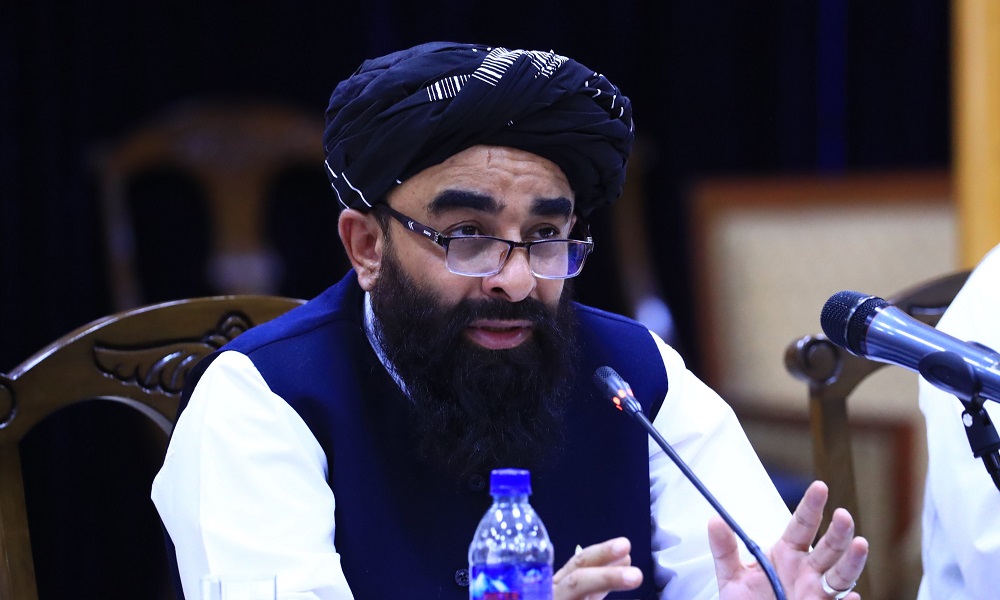
Zabihullah Mujahid, spokesperson for the Islamic Emirate, said for the first time publicly in an interview with the BBC that his real name is Tahir Shah Sediqi.
He did not however elaborate nor did he give any details as to why he goes by the name Zabihullah Mujahid.
Responding to a question about women’s rights, Mujahid said: “We are committed to women’s rights, freedom of expression and other issues within the framework of Sharia. Everything must be viewed through the lens of Sharia.”
Regarding women working in government offices, he said their presence in some offices could “lead to misconduct” and that “their dignity could be called into question.”
Mujahid also said that the issue of women’s education remains under consideration and that the Islamic Emirate needs a “Sharia-based solution” to the issue.
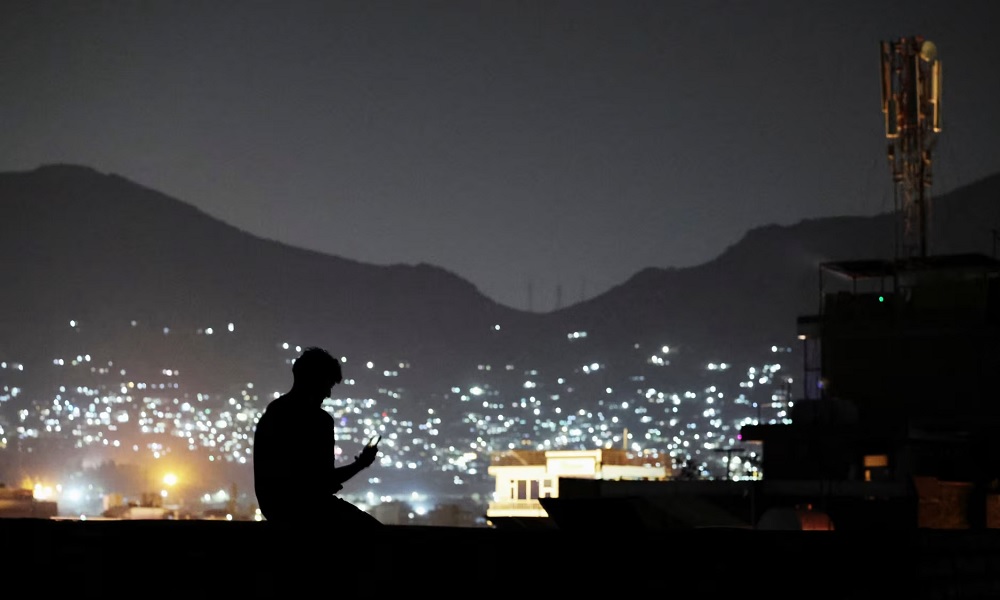
Only around 40 to 42 percent of Afghanistan’s population has access to the national power grid, according to the United Nations Development Programme (UNDP), which warns that unreliable electricity remains a major challenge for healthcare, education, livelihoods and local economic growth.
The UNDP says access to electricity remains particularly limited in remote areas, where many communities continue to lack adequate power services. Expanding the national grid to these areas also faces significant challenges.
“Across Afghanistan, access to reliable electricity remains one of the biggest challenges affecting healthcare, education, livelihoods, and local economic growth,” the UNDP said. “Although around 40–42% of the population has access to the national grid, nearly 90% of this access is concentrated in urban areas, while rural communities remain largely underserved.”
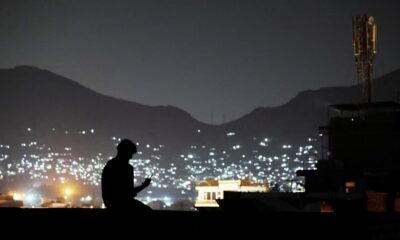
The lack of reliable electricity is also a growing concern among residents, particularly during the summer months. Several Kabul residents say they receive electricity for only a few hours a day and are calling for an increase in power generation and a reduction in frequent outages.
“We are suffering from the heat. There is no electricity throughout the night. It is difficult without a fan. The electricity shortage must be addressed,” said Mohammad Ismail, a Kabul resident.
Another Kabul resident, Hizbullah Krokhil, said electricity is an essential need for every household and urged the government to take action.
“Electricity is a necessity for everyone in society. We call on the government to take action so that people can be freed from the problem of electricity shortages,” he said.
Other residents say demand for electricity is increasing steadily and that work on power generation and infrastructure projects needs to be accelerated.
“Power outages should be reduced and more electricity should be generated. People are currently facing a major problem. We call on the government to work on electricity generation projects,” said Islamuddin, another Kabul resident.
Meanwhile, officials at Da Afghanistan Breshna Shirkat (DABS) say the country’s electricity shortage is a longstanding problem and cannot be resolved immediately.
Mohammad Sadiq Haqparast, a DABS spokesperson, said the utility company is working to address electricity shortages and reduce frequent outages.
“Breshna is working to address the electricity shortage, which has resulted in frequent power outages, so that the problem can be resolved as soon as possible. We have signed 17 contracts with different companies, and work on 10 of these projects is currently underway,” Haqparast said.
Afghanistan remains heavily dependent on imported electricity, with much of the country’s power supplied by neighboring states. The government pays significant amounts annually to import electricity, highlighting the need for increased domestic power generation and expansion of the national grid.
Latest News
SCO summit to be held without confirmed Afghan invitation
Afghanistan became an SCO observer in 2012, but its observer status was suspended following the Islamic Emirate’s return to power in August 2021.
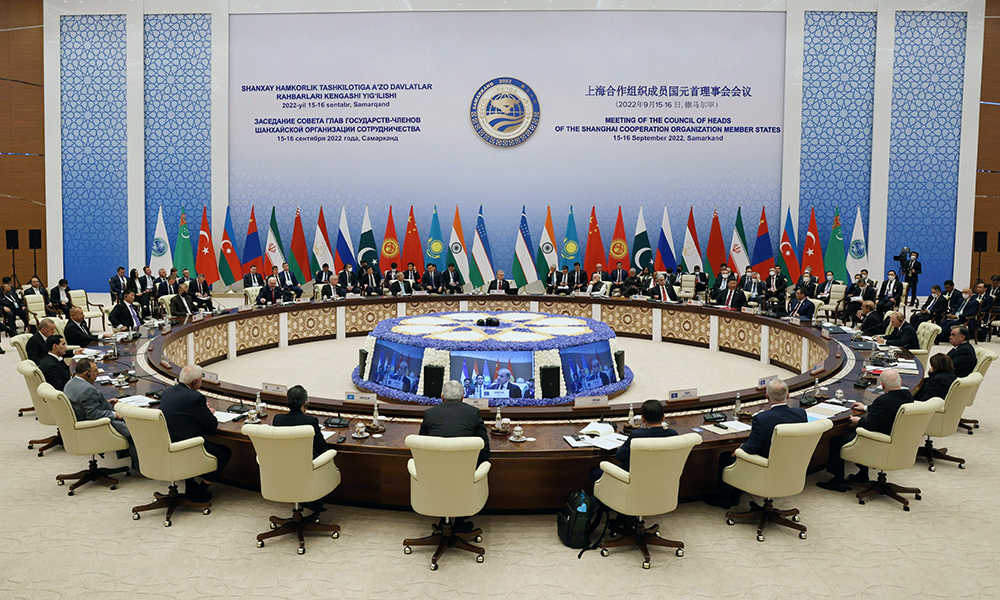
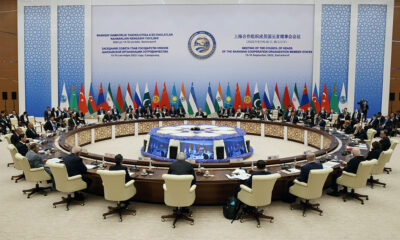
The Shanghai Cooperation Organization (SCO) summit is scheduled to take place on September 1 in Bishkek, the capital of Kyrgyzstan, with leaders of the organization’s 10 member states expected to attend.
However, no invitation for the Islamic Emirate of Afghanistan has so far been publicly announced.
Experts say Afghanistan’s participation in SCO meetings is important for regional security and stability, given the country’s strategic location and the direct impact of developments in Afghanistan on neighboring SCO members.
The Islamic Emirate has repeatedly called for Afghanistan to be included in regional discussions, arguing that Kabul’s views should be considered in decisions and initiatives concerning the future of the region.
Analysts say participation in SCO meetings could give Kabul an opportunity to strengthen engagement with regional countries, particularly on security and economic cooperation. They also believe Afghanistan’s presence could contribute to discussions on the country’s future role in regional security and economic mechanisms.
Afghanistan became an SCO observer in 2012, but its observer status was suspended following the Islamic Emirate’s return to power in August 2021.
Russian officials have previously said that the organization’s permanent members hold a positive view of restoring Afghanistan’s observer status.
Analysts believe restoring the status could provide Afghanistan with a platform for greater regional engagement and help expand cooperation with SCO members in areas such as security, trade and economic development.


Saar: Afghanistan’s uncertain future in SCO

Islamic Emirate spokesperson reveals his real name

Less than 42% of Afghans have access to national power grid: UNDP

Iran calls for fewer border barriers as trade with Afghanistan expands

Afghanistan squad announced for three-match T20I series against India

Pakistan’s governance system has ‘collapsed’: Mohsin Naqvi

Afghanistan exports first stone shipment to US in $100,000 trade milestone

AFC confirms clubs for 2026/27 competitions; draw set for August 18

Only two days to go before Afghanistan and Ireland begin ODI series

Iran seeks to establish free trade zone with Afghanistan and China
Saar: Afghanistan’s uncertain future in SCO

Tahawol: IEA seeking Afghanistan seat at UN

Saar: U.S. sanctions against Iran

Saar: Ongoing return of Afghan refugees from Iran and Pakistan discussed

Tahawol: Expansion of IEA’s diplomatic ties with countries discussed
-
 Latest News1 day ago
Four mediators struggle to secure lasting Pakistan-Afghanistan ceasefire
-
 Latest News3 days ago
Syria and Saudi Arabia condemn Kabul bombing, express solidarity with Afghanistan
-
 Latest News2 days ago
US judge strikes down Trump visa suspension for 75 countries, including Afghanistan
-
 Latest News3 days ago
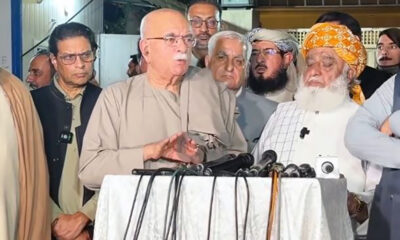
Achakzai urges Pakistan to end hostility towards Afghanistan
-
 Latest News4 days ago
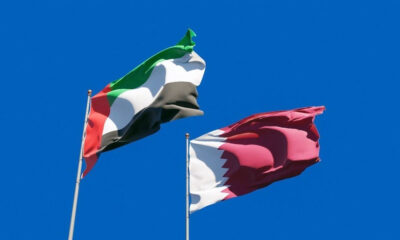
Qatar and UAE condemn Kabul school bombing that injured dozens
-

 Sport2 days ago
Afghanistan-India T20I series could see major schedule change
-
 Latest News5 days ago
Pakistan needs national dialogue on Afghan policy: security expert
-
 Science & Technology4 days ago
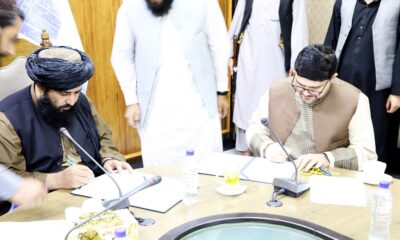
Ministry of Communications signs contract with AWCC to build 31 telecom towers