
Latest News
Anas Haqqani says Ghani’s exit forced rapid takeover of Kabul

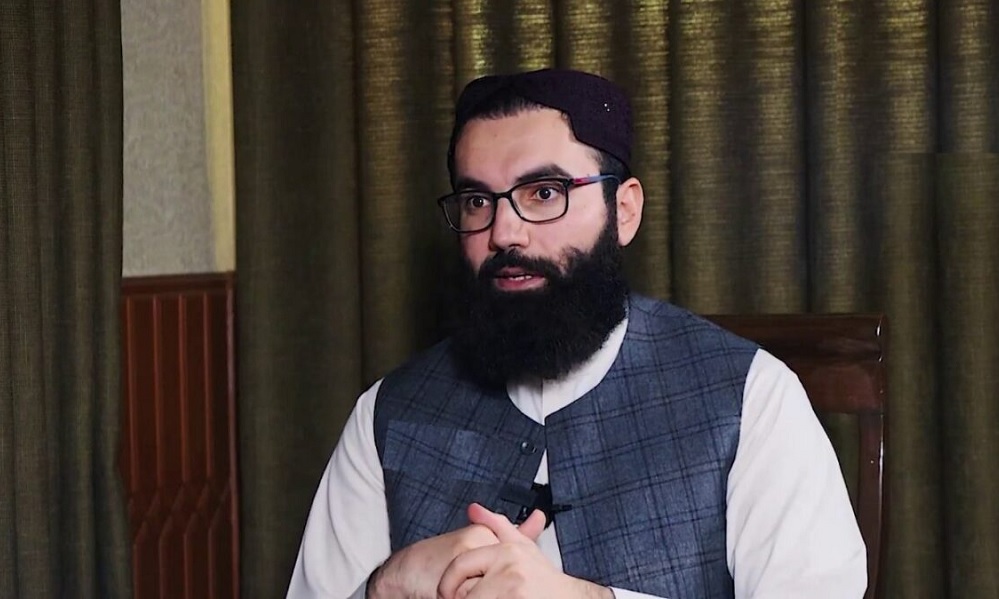
As Afghanistan approaches the fourth anniversary of the Islamic Emirate’s return to power, senior member Anas Haqqani has said the movement initially intended to enter Kabul through a negotiated settlement aimed at maintaining normal diplomatic relations with the international community.
However, he claimed, the sudden departure of former President Ashraf Ghani upended that plan and triggered a swift military entry into the capital.
In a recent interview, Haqqani said the leadership had been pursuing “serious efforts” for a peaceful transfer of power, underpinned by “extensive diplomacy” to reassure foreign governments. But the announcement of Ghani’s escape on August 15, 2021, created an immediate security vacuum.
“His departure created a power vacuum, looters began raiding, and chaos unfolded. The situation demanded our entry into Kabul,” Haqqani said, adding that the decision was made to prevent instability from spiraling.
Haqqani also revisited the 2020 Doha Agreement signed between the Islamic Emirate and the United States, describing it as “a symbol of U.S. defeat.”
While the IEA’s leadership believed the U.S. would eventually withdraw, he said there were lingering fears of a last-minute reversal, particularly with the impending U.S. presidential transition from Donald Trump to Joe Biden.
We wanted to secure their signature in front of the world, Haqqani said adding that that signature represented the U.S and NATO’s defeat and exit, even though they labeled it a peace agreement.
According to Haqqani, the Kabul-appointed negotiating team at intra-Afghan talks appeared to deliberately stall in hopes that a change in U.S. leadership would lead to the agreement’s cancellation.
The Islamic Emirate of Afghanistan regained control of Kabul on August 15, 2021, as IEA members reached the outskirts of Kabul. Ghani, who fled the country in a military helicopter, said later he left to avoid bloodshed.
Since then, the Islamic Emirate has faced sanctions, frozen assets, and a lack of formal recognition, with its policies—particularly restrictions on women’s rights—remaining a key sticking point in international engagement. The only country that has officially recognized the IEA government is Russia.












Kazakhstan’s Foreign Minister Mukhtar Tileuberdi has called for pragmatic and coordinated international engagement with Afghanistan, saying the country’s long-term stability is closely linked to the security and sustainable development of Central Asia.
Speaking during the general debate of the 81st session of the United Nations General Assembly in New York on Friday, Tileuberdi said humanitarian assistance to Afghanistan remains essential but alone cannot break the cycle of poverty, displacement and dependency.
He said Kazakhstan supports a “pragmatic, coordinated and step-by-step” approach to international engagement with Afghanistan, with the United Nations playing a central role.
Tileuberdi also said Kazakhstan is working with the UN to operationalize the United Nations Regional Centre for the Sustainable Development Goals for Central Asia and Afghanistan in Almaty.
He said the success of the centre should be measured by the results and assistance it delivers to the region.


Abu Muslim Farah defeat Khurasan Faryab 2-0 in ACL season six

Saar: Concerns over Pakistan’s political crisis discussed

Afghanistan Champions League: Omar Zawak Herat beat Toofan Herat 1-0

Blast in Pakistan’s Dera Ismail Khan kills 11, injures 30

Ariana Afghan Airlines increases Kabul-Delhi cargo flights

Saudi energy group signs major Afghanistan deals covering gas exploration and pipeline plans

Trump floats idea of renaming Atlantic or Pacific Ocean

US hits Egyptian bank branches with Iran sanctions as war marks six months

Nepal flood rescue mission enters critical phase as thousands remain missing

Iranian clubs to face Gulf opponents at neutral venues in Asian Champions League Elite
Saar: Concerns over Pakistan’s political crisis discussed

Exclusive interview with Abdul Latif Mansoor, Minister of MRRD

Tawsia: Overview of Afghanistan’s iron mines

Tahawol: Discussion on fresh Pakistani airstrikes on Afghanistan

Saar: Calls for international support for Afghanistan discussed
-

 World5 days ago
CNN, MS NOW and Politico sue Trump, challenging White House ban
-

 Latest News3 days ago
Ariana Afghan Airlines ranks seventh among 45 Central Asian airlines
-

 Latest News4 days ago
UN reiterates call for respect for international law after Kunar airstrikes
-

 Regional3 days ago
US and Iran hold first talks since June after Trump’s ‘annihilation’ threat
-

 Latest News3 days ago
Silk Road highway in Wakhan corridor now reaches the China border
-

 Latest News4 days ago
Afghan Official: Pakistan’s airstrikes will not go unanswered
-

 Regional4 days ago
G7 foreign ministers call on Iran to stop arming Houthis
-

 Sport4 days ago
Afghan boxing referee heads to China for international festival