
Latest News
Cuban Revolutionary Fidel Castro Dies at 90

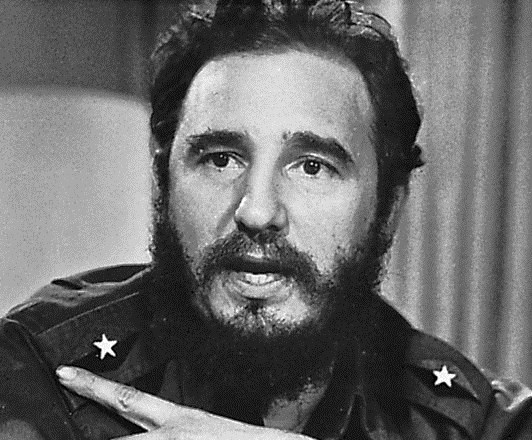
 Guerrilla revolutionary and communist idol, Fidel Castro was a holdout against history who turned tiny Cuba into a thorn in the paw of the mighty capitalist United States.
The former Cuban president, who died aged 90 on Friday, said he would never retire from politics.
But emergency intestinal surgery in July 2006 drove him to hand power to Raul Castro, who ended his brother’s antagonistic approach to Washington, shocking the world in December 2014 in announcing a rapprochement with US President Barack Obama.
Famed for his rumpled olive fatigues, straggly beard and the cigars he reluctantly gave up for health reasons, Fidel Castro kept a tight clamp on dissent at home while defining himself abroad with his defiance of Washington.
In the end, he essentially won the political staring game, even if the Cuban people do continue to live in poverty and the once-touted revolution he led has lost its shine.
As he renewed diplomatic ties, Obama acknowledged that decades of US sanctions had failed to bring down the regime — a drive designed to introduce democracy and foster western-style economic reforms — and it was time to try another way to help the Cuban people.
A great survivor and a firebrand, if windy orator, Castro dodged all his enemies could throw at him in nearly half a century in power, including assassination plots, a US-backed invasion bid, and tough US economic sanctions.
Born August 13, 1926 to a prosperous Spanish immigrant landowner and a Cuban mother who was the family housekeeper, young Castro was a quick study and a baseball fanatic who dreamed of a golden future playing in the US big leagues.
But his young man’s dreams evolved not in sports but politics. He went on to form the guerrilla opposition to the US-backed government of Fulgencio Batista, who seized power in a 1952 coup.
That involvement netted the young Fidel Castro two years in jail, and he subsequently went into exile to sow the seeds of a revolt, launched in earnest on December 2, 1956 when he and his band of followers landed in southeastern Cuba on the ship Granma.
Twenty-five months later, against great odds, they ousted Batista and Castro was named prime minister.
-Lawyer turned fighter-
Once in undisputed power, Castro, a Jesuit-schooled lawyer, aligned himself with the Soviet Union. And the Cold War Eastern Bloc bankrolled his tropi-communism until the Soviet bloc’s own collapse in 1989.
Fidel Castro held onto power as 11 US presidents took office and each after the other sought to pressure his regime over the decades following his 1959 revolution, which closed a long era of Washington’s dominance over Cuba dating to the 1989 Spanish-American War.
And Castro’s dangerous liaison with the Soviet Union took the world to the nerve-jarring edge of nuclear war in the 1962 Cuban Missile Crisis. It was sparked when Moscow sought to position nuclear-tipped missiles on the island just 144 kilometers (90 miles) off the US state of Florida.
After a tense standoff between the rival superpowers, the world pulled back from the abyss as Moscow agreed to keep the missiles off Cuban soil.
Castro strode the world stage as a communist icon when the Cold War was at its height.
He sent 15,000 soldiers to help Soviet-backed troops in Angola in 1975 and dispatched forces to Ethiopia in 1977.
The United States has variously been infuriated, embarrassed and alarmed at Castro’s defiance, and intensely frustrated by his survival in power despite the economic embargo Washington hoped in vain would spark rebellion.
The tempestuous Cuban president himself repeatedly pinned the blame for Cubans’ economic hardship on the embargo. The United States had invaded the island nation before, he reminded his 11 million people constantly, and could do so again at any time.
After a cutoff of Soviet bloc aid in 1989 nearly collapsed the economy, Castro allowed more international tourism and slight economic reform on the Caribbean’s largest island.
But as even China loosened economic reins, Havana backtracked and held tight to the centralized economic model. Instead, a new ally, Hugo Chavez, president of oil-rich Venezuela and also a foe of Washington, began bankrolling Castro’s regime.
– They called him ‘Fidel’-
Known widely among Cubans as simply “Fidel” or “El Comandante,” Castro broke off diplomatic ties with the United States in 1961 and expropriated US companies’ assets totaling more than one billion dollars.
In April 1961 he weathered an invasion attempt by some 1,300 CIA-trained Cuban exiles at the Bay of Pigs.
But the island suffered from an exodus of people and capital abroad, mainly to Florida where a large anti-Castro movement thrived.
Castro kept his private life largely private, but in recent years, more details became public.
In 1948, he married Mirta Diaz-Balart, who gave birth to their first son, Fidelito. The couple later divorced.
In 1952, Castro met Naty Revuelta, a socialite married to a doctor, and they had a daughter, Alina, in 1956.
He met Celia Sanchez, said to have been his main life partner, in 1957 and remained with her until her death in 1980.
In the 1980s, Castro reportedly married Dalia Soto del Valle, with whom he had five children: Angel, Antonio, Alejandro, Alexis and Alex.
After stepping aside in 2006, Fidel Castro recovered slowly from surgery and kept rallying on the sidelines to push his Revolution into the 21st century. It made it, in decidedly rough shape.
President Raul Castro, the former defense chief who is now (born June 3, 1931) himself, in the past few years kept dissent largely in check and economic reform limited, with the island’s economy in very dire straits.
Written by: AFP

Latest News
Eight dead after 5.8-magnitude earthquake hits Afghanistan
The family members who perished included a father, mother, four daughters, and two sons. In addition to the deaths, a child was reported injured in the incident.
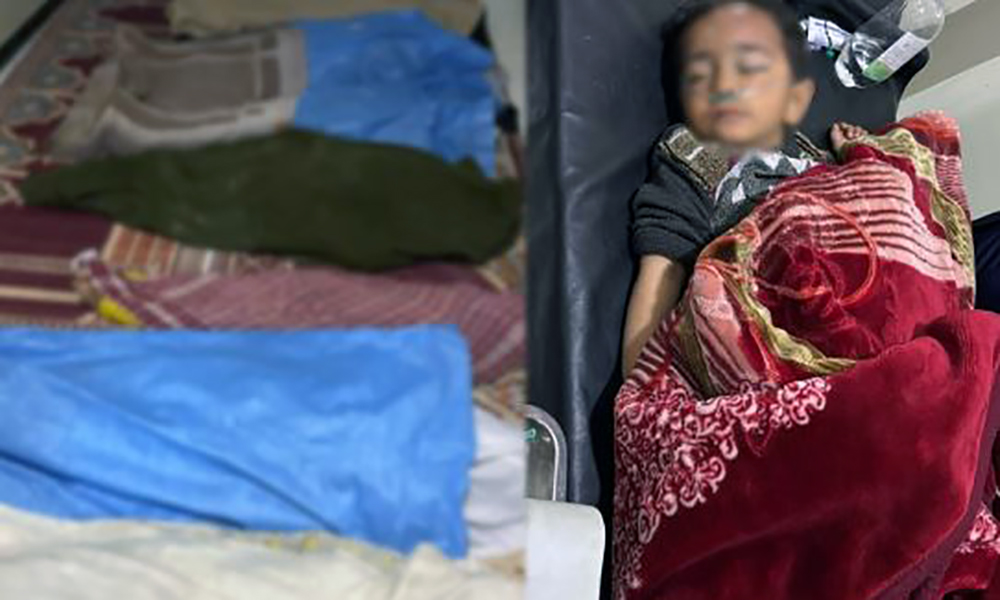
A powerful 5.8-magnitude earthquake struck Afghanistan on Friday, killing at least eight people and injuring a child when a house collapsed in Kabul. According to local officials, the victims were all members of the same family.
Hafiz Basharat, spokesperson for the Kabul Governor, confirmed that the fatalities occurred in the Bagrami district of Kabul. The family members who perished included a father, mother, four daughters, and two sons. In addition to the deaths, a child was reported injured in the incident.
The earthquake, which originated in the Hindu Kush region of Afghanistan, struck at a depth of approximately 177 kilometers, according to the German Research Centre for Geosciences. Tremors were felt across a wide area, including Kabul, Pakistan’s capital Islamabad, and India’s capital New Delhi.
Local authorities have yet to release additional details regarding the extent of the damage or any further casualties caused by the earthquake.
As rescue operations continue, Afghan authorities are assessing the full impact of the earthquake, which has left many concerned about the potential for more aftershocks in the region.
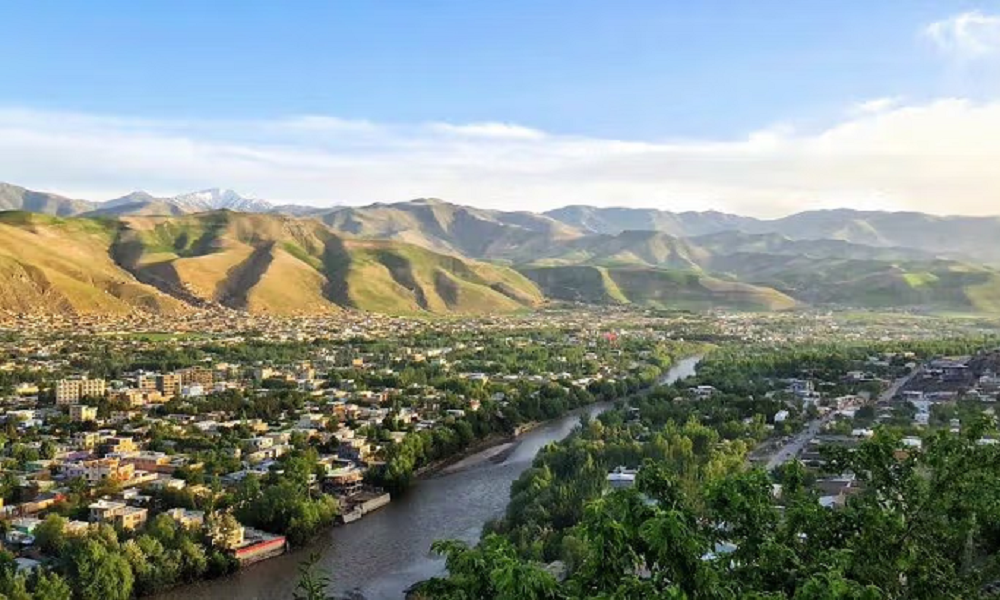
A strong earthquake measuring 5.8 on the Richter scale struck parts of Afghanistan on Friday night, according to the United States Geological Survey (USGS).
The epicenter was reported in Jurm district of Badakhshan province, with a depth of 186 kilometers.
There have been no immediate reports of casualties or damage.
Latest News
China says Afghanistan–Pakistan peace talks show progress
China has positioned itself as a facilitator, aiming to create conditions for dialogue and provide a platform for negotiations.
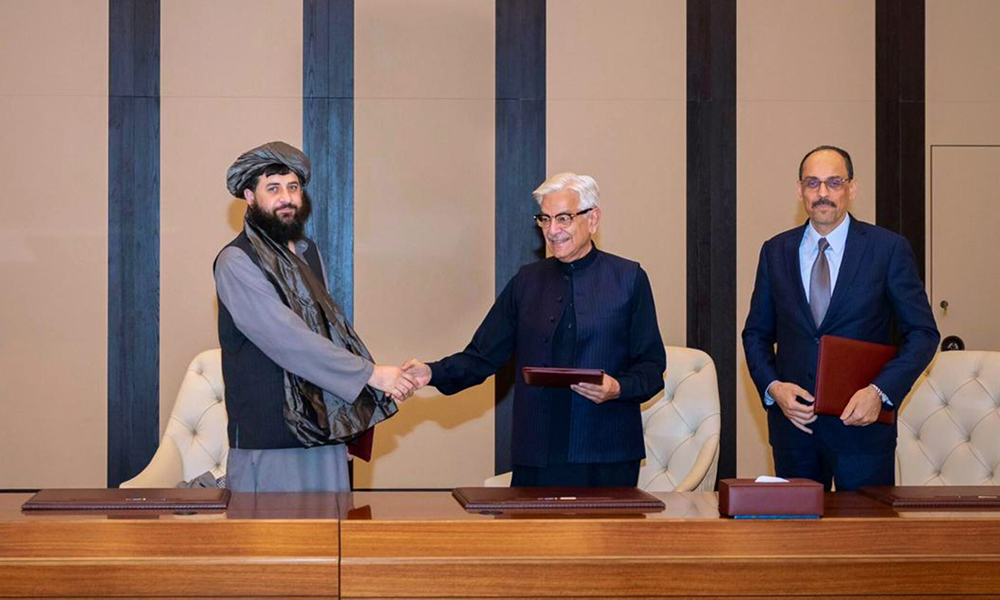
Negotiations between Afghanistan and Pakistan are making steady progress, China said on Friday, as efforts continue to ease tensions in their most serious conflict since the return of the Islamic Emirate of Afghanistan in 2021.
Speaking at a regular press briefing, Chinese foreign ministry spokesperson Mao Ning said both sides had welcomed Beijing’s mediation and were willing to resume dialogue. “This is a positive development,” she said, noting that China remains in close communication with both governments.
Beijing— which shares a border with both countries—has stepped up diplomatic engagement in recent months, including calls with foreign ministers and a visit by a special envoy in March. Previous rounds of talks have reportedly taken place in Urumqi, though officials did not confirm the latest venue.
China has positioned itself as a facilitator, aiming to create conditions for dialogue and provide a platform for negotiations. Mao said further details would be released jointly by the three countries “in due course.”
Clashes between Afghan and Pakistani forces since October have killed dozens on both sides, with Afghan civilians bearing the brunt of the violence. Islamabad has accused Kabul of harboring militants responsible for cross-border attacks—an allegation Afghan authorities deny, calling militancy a domestic issue for Pakistan.
The renewed diplomatic push signals cautious optimism that tensions between the neighbors could ease through sustained dialogue under Chinese mediation.


Eight dead after 5.8-magnitude earthquake hits Afghanistan

Punjab Kings clinch thrilling 5-wicket victory over Chennai Super Kings in IPL 2026

5.8-magnitude earthquake shakes parts of Afghanistan

Tawsia: This week’s key economic developments in Afghanistan discussed

Iran claims it shot down US F-35 jet

Prominent Muslim scholar issues fatwa calling for Afghanistan-Pakistan ceasefire

IEA Supreme Leader issues Eid-ul-Fitr message urging unity and support for Islamic system

14 Pakistani soldiers killed after military post falls along Durand line: MoD

Afghanistan steps in to replace Iran in supplying fruits and vegetables to Russia

Afghan airstrikes target Pakistani military sites in retaliation for air attacks
Tawsia: This week’s key economic developments in Afghanistan discussed

Tahawol: Start of talks between Kabul-Islamabad in China discussed

Saar: Ongoing US and Israeli attacks on Iran discussed

Tahawol: Ongoing US–Israeli war with Iran discussed

Saar: Afghanistan-Pakistan talks in China discussed
-
 Latest News5 days ago
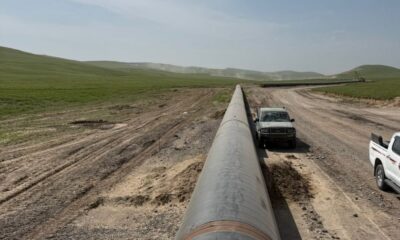
TAPI gas pipeline advances 25 km in Afghanistan
-
 Business5 days ago
Afghanistan opens doors to agribusiness investments amid rising opportunities
-
 Latest News3 days ago
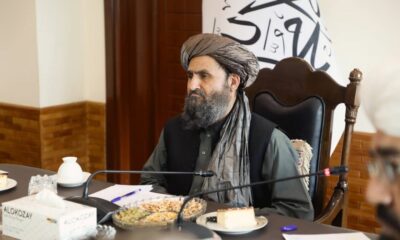
Baradar approves 17 projects worth over one billion AFN
-
 Latest News5 days ago
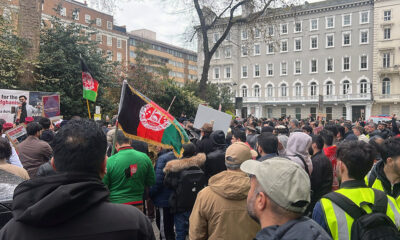
Afghan diaspora protests in London and Oslo over Pakistan strikes
-
 Business4 days ago
Russia backs Uzbekistan–Afghanistan trade hub, praises regional economic cooperation
-
 Sport4 days ago
ATN secures broadcast rights for inaugural Afghanistan Wrestling Premier League
-
 International Sports5 days ago
Amnesty International raises alarm over deportations, protests ahead of FIFA World Cup
-

 Sport3 days ago
ATN to broadcast second season of Ariana Snooker Championship