
Latest News
FAO, World Bank step up response to Afghanistan’s food security crisis

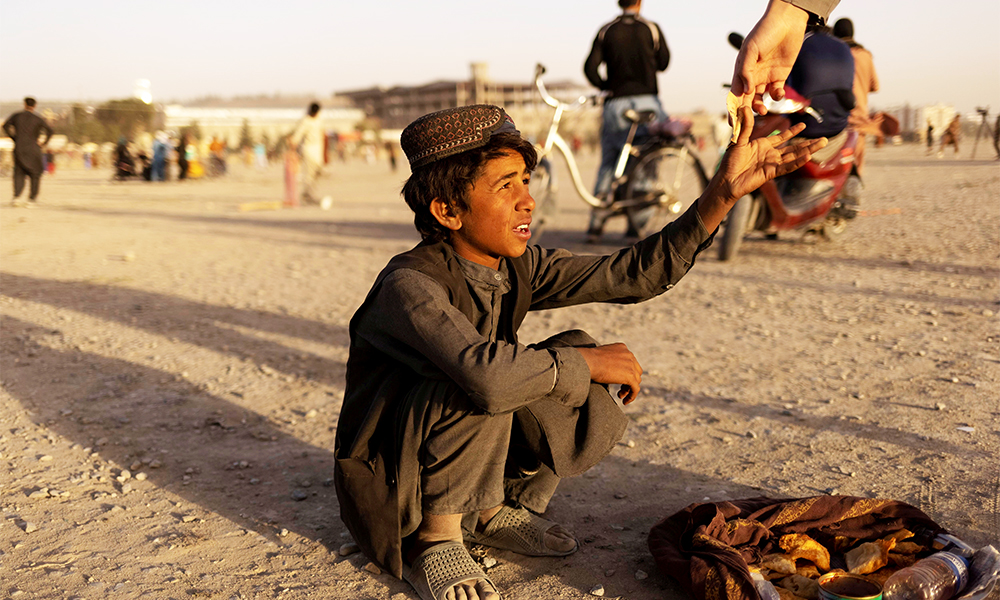
The UN’s Food and Agriculture Organization (FAO) welcomed an unprecedented $150 million contribution from the World Bank to provide critical livelihood and life-saving assistance to the most vulnerable rural populations in Afghanistan.
High levels of acute food insecurity persist across Afghanistan due to a combination of a collapsing economy and continuing drought, the FAO reported.
The ripple effects from the war in Ukraine are exacerbating the food security situation, pushing food prices to new highs, increasing the costs of vital agricultural inputs, especially fertilizer, and placing pressure on countries in the region supplying wheat to Afghanistan to restrict food exports, giving priority to their respective domestic consumption.
The new Afghanistan Emergency Food Security Project will boost the production of food crops for smallholder Afghan farmers and prevent the further deterioration of food security, the FAO stated.
This is the first tranch of a total amount of $195 million, another $45 million will be released within the next 24 months.
“We are grateful to the World Bank and its Members for the generous and timely contribution”, said FAO Director-General QU Dongyu .
“It is a historic moment for poor farmers in Afghanistan, and it represents an important milestone in our collective efforts to deliver results at scale, avert a looming catastrophe and make real transformative differences in the lives of vulnerable people”.
FAO will be the sole implementing partner for the funding and will focus on wheat production, supporting about 2.1 million people, and will provide focussed support on the nutritional needs of children, people with disabilities or chronic illness, and households headed by women by providing seeds and basic tools for backyard kitchen gardening and technical training on improved nutrition and climate-smart production practices.
Almost 1 million people will benefit from this support and these inputs, particularly targeting rural women.
FAO stated that 150,000 women will receive training on improved cultivation techniques and nutrition.
The project will also increase access to irrigation water, and improve soil and water conservation.
Under this component, more than 1.9 million people will benefit from cash for work activities for the restoration of irrigation infrastructure and watershed management.
The FAO food security project is one of the three projects totalling $793 million approved by the World Bank to provide urgent and essential livelihood and health services, in addition to food assistance, to the people of Afghanistan.






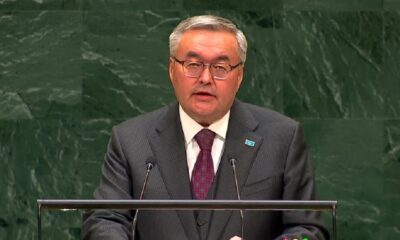




Kazakhstan’s Foreign Minister Mukhtar Tileuberdi has called for pragmatic and coordinated international engagement with Afghanistan, saying the country’s long-term stability is closely linked to the security and sustainable development of Central Asia.
Speaking during the general debate of the 81st session of the United Nations General Assembly in New York on Friday, Tileuberdi said humanitarian assistance to Afghanistan remains essential but alone cannot break the cycle of poverty, displacement and dependency.
He said Kazakhstan supports a “pragmatic, coordinated and step-by-step” approach to international engagement with Afghanistan, with the United Nations playing a central role.
Tileuberdi also said Kazakhstan is working with the UN to operationalize the United Nations Regional Centre for the Sustainable Development Goals for Central Asia and Afghanistan in Almaty.
He said the success of the centre should be measured by the results and assistance it delivers to the region.


Afghanistan Champions League: Omar Zawak Herat beat Toofan Herat 1-0

Blast in Pakistan’s Dera Ismail Khan kills 11, injures 30

Ariana Afghan Airlines increases Kabul-Delhi cargo flights

Khalilzad questions Pakistan’s commitment to Afghan welfare

India, UN envoy discuss Afghanistan’s humanitarian needs

Saudi energy group signs major Afghanistan deals covering gas exploration and pipeline plans

Trump floats idea of renaming Atlantic or Pacific Ocean

US hits Egyptian bank branches with Iran sanctions as war marks six months

Nepal flood rescue mission enters critical phase as thousands remain missing

Iranian clubs to face Gulf opponents at neutral venues in Asian Champions League Elite

Exclusive interview with Abdul Latif Mansoor, Minister of MRRD

Tawsia: Overview of Afghanistan’s iron mines

Tahawol: Discussion on fresh Pakistani airstrikes on Afghanistan

Saar: Calls for international support for Afghanistan discussed

Tahawol: Opening of the 81st UN General Assembly Session
-

 World4 days ago
CNN, MS NOW and Politico sue Trump, challenging White House ban
-

 Latest News3 days ago
Ariana Afghan Airlines ranks seventh among 45 Central Asian airlines
-

 Latest News4 days ago
UN reiterates call for respect for international law after Kunar airstrikes
-

 Latest News5 days ago
Khalilzad condemns Pakistan airstrikes, says current strategy is not working
-

 Regional3 days ago
US and Iran hold first talks since June after Trump’s ‘annihilation’ threat
-

 Latest News3 days ago
Silk Road highway in Wakhan corridor now reaches the China border
-

 Latest News4 days ago
Afghan Official: Pakistan’s airstrikes will not go unanswered
-

 Sport4 days ago
Afghan boxing referee heads to China for international festival